search expand

Ethnologie zerstört Traditionen?

Viele indigene Gesellschaften interessieren sich für vergessene Traditionen. Dabei greifen sie gerne auf historische Aufzeichnungen von Ethnologen zurück. Doch das ist nicht unproblematisch, schreibt Ethnologe Karl-Heinz Kohl in einem Gastbeitrag im ORF.
 
Denn so “traditionell” wie man gerne meint, war ja das Leben in diesen Ethnographien auch nicht. “Entgegen einer in Europa früher weit verbreiteten Überzeugung”, erinnert Kohl, “waren auch indigene Gesellschaften schon immer historischen Änderungen überlegen, haben neue Institutionen und Gebräuche hervorgebracht und Innovationen von benachbarten Ethnien übernommen.

Der ethnologische Präsenz älterer Werke täuscht:

Zieht man also in Betracht, dass Traditionen ständig im Fluss bleiben müssen, um ihre gesellschaftlichen Funktionen zu erfüllen, dann gibt es für sie eigentlich keine größere Gefahr, als durch ihre Verschriftlichung ein und für alle Mal fixiert zu werden.

Das aber ist in vielen Fällen durch die Reisenden, Missionare und Wissenschaftler geschehen, die den historischen Zustand, in dem sie die entsprechenden Gesellschaften angetroffen haben, als deren scheinbar unveränderliche “Traditionen” festgeschrieben haben.

>> weiter beim ORF

SIEHE AUCH:

Der zweifelhafte Einfluss der Ethnologie

“Untouched” Amazone hosted large cities

The French, colonialism and the construction of “the other”

Reconstructing tribal history

How gaming wealth is reviving American Indian traditions

Viele indigene Gesellschaften interessieren sich für vergessene Traditionen. Dabei greifen sie gerne auf historische Aufzeichnungen von Ethnologen zurück. Doch das ist nicht unproblematisch, schreibt Ethnologe Karl-Heinz Kohl in einem Gastbeitrag im ORF.
 
Denn so "traditionell" wie man gerne meint, war…

Read more

Nafisa.de – Frauen, Gesellschaft – Islam

screenshot

(via musafira)Drei muslimische Wissenschaftlerinnen – darunter auch eine Ethnologin- haben die Webseite Nafisa.de ins Leben gerufen. Nina Mühe, Silvia Horsch und Kathrin Klausing wollen den Diskurs über muslimische Frauen kritisch betrachten:

Wir – das sind drei muslimische Frauen und Wissenschaftlerinnen – beschäftigen uns aus persönlichen und beruflichen Gründen intensiv mit den Themenbereichen “Frau”, “Geschlecht”, “Islam” in einer pluralistischen Gesellschaft. Mit nafisa wollen wir über unsere Arbeit, Ansichten und Ergebnisse informieren. Dabei verfolgen wir zwei Ziele: Erstens möchten wir uns am gesellschaftlichen Diskurs über den Islam und muslimische Frauen beteiligen. Schon oft haben wir uns an einseitigen Debatten und tendenziöser Berichterstattung zu einer Reihe von Themen gestört und wollen deshalb unsere Sicht der Dinge in die Diskussion bringen.

Die Forscherinnen sind eifrig am Bloggen. Der neueste Eintrag handelt um Kopftuchstudien.

>> nafisa.de

screenshot

(via musafira)Drei muslimische Wissenschaftlerinnen - darunter auch eine Ethnologin- haben die Webseite Nafisa.de ins Leben gerufen. Nina Mühe, Silvia Horsch und Kathrin Klausing wollen den Diskurs über muslimische Frauen kritisch betrachten:

Wir - das sind drei muslimische Frauen und Wissenschaftlerinnen…

Read more

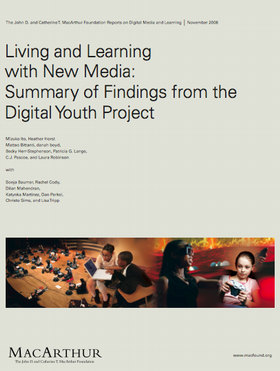
Ethnographic Study: Social Websites Important For Childhood Development

Many adults worry that children are wasting time online, texting, or playing video games. In the first in-depth ethnographic study of its kind, researchers of the Digital Youth Project found that the digital world is creating new opportunities for youth to grapple with social norms, explore interests, develop technical skills, and experiment with new forms of self-expression.

According to the report, youth could benefit from educators being more open to forms of experimentation and social exploration. Rather than assuming that education is primarily about preparing for jobs and careers, the researchers question what it would mean to think of it as a process guiding youths’ participation in public life more generally.

The report was presented at the annual meeting of the American Anthropological Association in San Francisco and is availbable online, as anthropologist Mizuko Ito, who lead the research, announced on her blog.

The major findings:

Youth use online media to extend friendships and interests.
They can be always “on,” in constant contact with their friends through private communications like instant messaging or mobile phones, as well as in public ways through social network sites such as MySpace and Facebook. With these “friendship-driven” practices, youth are almost always associating with people they already know in their offline lives. The majority of youth use new media to “hang out” and extend existing friendships in these ways.

Youth engage in peer-based, self-directed learning online.
In both friendship-driven and interest-driven online activity, youth create and navigate new forms of expression and rules for social behavior. By exploring new interests, tinkering, and “messing around” with new forms of media, they acquire various forms of technical and media literacy. By its immediacy and breadth of information, the digital world lowers barriers to self-directed learning.

New media allow for a degree of freedom and autonomy for youth that is less apparent in a classroom setting. Youth are often more motivated to learn from peers than from adults. Their efforts are also largely self-directed, and the outcome emerges through exploration, in contrast to classroom learning that is oriented by set, predefined goals.

“This was a large ethnographic project by far the most challenging and rewarding research project I’ve undertaken so far”, Mizuko Ito writes. She is particularly proud of the shared report, which was “a genuinely collaborative effort, co-authored by 15 of us on the team, and including contributions from many others”:

We took a step that is unusual with ethnographic work, of trying to engage in joint analysis rather than simply putting together an edited collection of case studies. We spent the past year reading each others interviews and fieldnotes, and developing categories that cut across the different case studies. Each chapter of the book incorporates material from multiple case studies, and is an effort to describe the diversity in youth practice at it emerged from a range of different youth populations and practices.

>> read more on Mizuko Ito’s blog

>> download the report

The report received a lot of media attention, see among others the San Francisco Chronicle and the Boston Herald

SEE ALSO:

Ethnographic study: Social network sites are “virtual campfires”

Ethnographic Study on “Digital Kids”

Technologies of the Childhood Imagination- new text by anthropologist Mizuko Ito

Cyberanthropology: “Second Life is their only chance to participate in religious rituals”

From housewife to mousewive – Anthropological study on women and Internet

Ethnographic Study About Life Without Internet: Feelings of Loss and Frustration

Interview with Michael Wesch: How collaborative technologies change scholarship

The Internet Gift Culture

Many adults worry that children are wasting time online, texting, or playing video games. In the first in-depth ethnographic study of its kind, researchers of the Digital Youth Project found that the digital world is creating new opportunities for youth…

Read more

antropologi.info voted nr 2 in Savage Minds awards

What are the best anthropology websites? Last night, at the annual meeting of the American Anthropology Association in San Francisco, the Savage Minds Awards were handed out. In the category “Most excellent blog”, antropologi.info was voted second best, behind my favorite, Culture Matters.

Thanks a lot for voting for antropologi.info :) ! Unfortunaltely, I could not be there.

Here are the results:

Most Excellent Blog
Runner up: Antropologi.info
Most Win: Culture Matters

Most Excellent Open Access Journal
Runner Up: Cultural Analysis
Most Win: Anthopology Matters

Most Excellent Blog or Journal that does not end in “Matters” (The Category formerly known as Most Excellent Unclassifiable Digital Thingamajob)
Runner Up: Digital Anthropology
Most Win: Neuroanthropology

Congratulations! As the above list and the list of the nominated sites show, there are a lot of great anthropology websites! There has been a huge development during the recent years. This is great news!

See also the announcement of the Savage Minds Awards and coverage by Culture Matters and Neuroanthropology

What are the best anthropology websites? Last night, at the annual meeting of the American Anthropology Association in San Francisco, the Savage Minds Awards were handed out. In the category "Most excellent blog", antropologi.info was voted second best, behind my…

Read more

Ny blogg om “antropologisk praksis”

Norske antropologer oppdager blogging: Igår skrev jeg om bloggen til Sandra Janzsó som utforsker Oslos sjekkemiljø. Idag får jeg (via Facebook) nyss om bloggen “Antropologisk praksis” av Trine Olsen-Slagman.

Bloggen skal handle om hvordan antropologi brukes utenfor akademia, bl.a. i næringslivet. Hun skriver:

Ønsket mitt er at denne bloggen kan bli et verksted hvor antropologiske begreper, verktøy, prosesser og tanker kan få lov å utvikles. Løfte frem gode, rare eller feilslåtte ideer som finnes blant verdens mange antropologpraktikere, og diskutere dem, studere dem og lære av dem. Samtidig er mitt ønske at denne bloggen blir et rom for artikulasjon og refleksjon omkring nytte og bidrag. Hva har vi å bidra med? Hvilken nytte er det at nettop vi gjør eller sier noe?

Tilslutt ønsker jeg at denne bloggen skal gi innspill til nyttig og fruktbart tverrfaglige samarbeid. Antropologer, som alle andre mennesker, er BEST sammen med andre. Ikke alltid – men svært ofte…

>> besøk bloggen

Antropologen jobber i firmaet Kulturell Dialog

SE OGSÅ:

antropologi.se – ny antropologisk møteplass

Antropress er tilbake!

Thomas Hylland Eriksen: – Antropologer må bli flinkere til å bruke nettet

On fieldwork: “Blogging sharpens the attention”

Paper by Erkan Saka: Blogging as a Research Tool for Ethnographic Fieldwork

Anthropology blogs more interesting than journals? or Why do anthropologists blog?

En vitenskaplig innføring i blogging

Norske antropologer oppdager blogging: Igår skrev jeg om bloggen til Sandra Janzsó som utforsker Oslos sjekkemiljø. Idag får jeg (via Facebook) nyss om bloggen "Antropologisk praksis" av Trine Olsen-Slagman.

Bloggen skal handle om hvordan antropologi brukes utenfor akademia, bl.a. i næringslivet.…

Read more