search expand

Vote for the best anthropology blog and journal!

The voting has begun – the winners will be announced at the annual meeting of the American Anthropological Association. antropologi.info is one of seven blogs that were nominated for the Most Excellent Anthropology Blog category (currently number two behind Culture Matters).

There are two more categories: “Most Excellent Open Access Journal in Anthropology” and “Most Excellent Uncategorizable Digital Thing-a-ma-job for Anthropology”

Read more about the Teh Savage Minds Awards Ceremony over at Savage Minds: http://savageminds.org/2008/11/14/teh-savage-minds-awards-ceremony/

The voting has begun - the winners will be announced at the annual meeting of the American Anthropological Association. antropologi.info is one of seven blogs that were nominated for the Most Excellent Anthropology Blog category (currently number two behind Culture…

Read more

– Snakk om fagets “nytteverdi” i undervisningen!

cover

Da hun begynte å studere antropologi i 1999 hadde hun ikke tenkt at hun etterpå skulle havne i en administrasjonsstilling. Men månedens antropolog Mari D. Bergseth ser ut til å være fornøyd med sin stilling som studie- og forskningskonsulent ved Senter for teknologi, innovasjon og kultur (TIK).

Antropologi-bakgrunnen er nemlig også nyttig i hennes jobb. “Jeg ser at min faglige bakgrunn gir meg muligheten til å nærme meg studieadministrasjonsfeltet på en litt annen måte enn kolleger med en annen bakgrunn”, skriver hun i teksten på hjemmesiden til Norsk antropologisk forening (NAF).

Slike innsikter, fagets “nytteverdi”, bør en snakke mer om i undervisningen, skriver hun:

Jeg mener at de ”klassiske” studiene har verdier og gir oss innsikt som lar seg overføre, både til næringsliv, offentlig forvaltning og studieadministrasjon. Men som novise i faget, kjente jeg på en frykt for at antropologien ikke skulle være nyttig utenfor Akademia.

Jeg er glad for at jeg får lov til å være med å formidle fagets nytteverdi til studentene, men jeg er også av den oppfatning at vi må tørre å lytte til studentenes tilbakemeldinger på dette området. Jeg vet at det finnes vilje til å inkorporere denne delen av faget vårt i undervisningsporteføljen, utfordringen ligger i mangel på pensumslitteratur.

Håpet mitt er at de møteplasser Norsk antropologisk forening setter opp – som Antronettkonferansen, årskonferansen og denne spalten – kan skape bidrag til denne undervisningen.

Bergseth har skrevet hovedoppgaven om unge europeere i Strasbourg. Hun mener at mange antropologer er for lite opptatt av Europa som studiefelt. Oppgavens tittel er “Forent mangfold. Strasbourgs europaagenter og deres europeiskhet” (tilgjengelig i fulltekst).

>> les hele teksten av Mari D. Bergseth på NAFs hjemmeside

Bergseth har også skrevet teksten “En polakk er ingen ekte europeer” i årboka Betwixt and Between 2006

cover

Da hun begynte å studere antropologi i 1999 hadde hun ikke tenkt at hun etterpå skulle havne i en administrasjonsstilling. Men månedens antropolog Mari D. Bergseth ser ut til å være fornøyd med sin stilling som studie- og…

Read more

Reggae, Punk and Death Metal: An Ethnography from the unknown Bali

cover

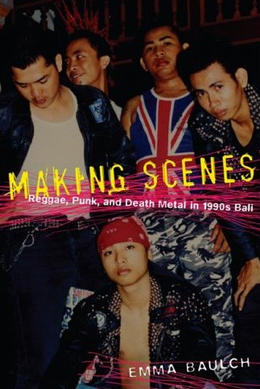
“This is a break from the norm of writing about Bali”, writes Laura Noszlopy enthusiastically about a new book by anthropologist Emma Baulch called “Making scenes: reggae, punk, and death metal in 1990s Bali”.

In 1996, Emma Baulch went to live in Bali to do research on youth culture. She hang out in the death metal scene among unemployed university graduates clad in black T-shirts and ragged jeans; in the punk scene among young men sporting mohawks, leather jackets, and hefty jackboots; and among the remnants of the local reggae scene in Kuta Beach, the island’s most renowned tourist area.

The scene that Baulch has accessed is a deliberately closed and marginalized one, though it is situated largely in Bali’s most ‘open’ places: Kuta and Denpasar. And it is a scene that anthropologists had overlooked or not have not been interested before according to Baulch.

Laura Noszlopy quotes the author who writes that sidewalks of Kuta she entered in 1996 were

… a gaping frontier land of which anthropology rarely spoke … they raged with charged encounters between tourists and street-side watch sellers, drug dealers, drivers, pimps, and whores … punk jams chafed against the pop soundscape emanating from the Hard Rock Café across the road. Mohawks, feigned brawls, Bad Religion, metal spikes, hefty jackboots, and leather jackets thrived (p. 1).

Noszlopy comments:

This is an image that may possibly be familiar to travellers who have stayed in Kuta, Bali’s largest resort. But is not one that is found in brochures or highlighted by Balinese cultural commentators, and neither is it one that anthropologists tend to write about

The book also explains the machinations of the various contesting groups within the scene(s):

This is fascinating stuff; I doubt that many observers of Balinese society, or Balinese themselves, will have any idea of the detailed differences and ‘othering’ that took place not from the perspective of counterculture juxtaposed against mainstream, but between the multiple shifting identities created amongst the various groups. And these, of course, ‘othered’ themselves against the reggae groups that played in tourist bars.

All, Baulch argues, are somehow part of a peripheral Balinese Other in a love-hate relationship with Jakarta’s Indonesian centre, rather than the predictable West. This rather radical and, to some traditionalists, surprising point that Balinese punk is somehow principally about Balineseness and regionalism recurs throughout the book.

“This is the kind of work about Bali that I would like to see more of”, Laura Noszlopy writes:

It is truly contemporary. It deals with the complexities of a set of subcultural groups juxtaposed against and yet parallel to the local and national hegemonies. It recognizes the particularities of these groups and many of the individuals who people them, rather than lumping them together as ‘youth culture’.

Baulch does not simplify the issues, avoid people’s chaotic agency, or seek neat conclusions. Her work seems to embrace the complexity of the process of making scenes in Bali. And it does all this while recognizing the global music scene and late capitalist cultural economy – what Appadurai called the ‘global modern’– of which it is also a small, but noisy, part. This is a refreshing change.

But the reviewer writes less enthusiastically about the language of the book (a well known problem in many ethnographies):

The main difficulty I found with the text, however, was the marrying of the sometimes opaque style of theoretical analysis with the much looser conversational mode of the ethnography. While consistently vibrant and entertaining, it was not always complementary. The mixed tone was also apparent across chapters.

The review appeared in the recent issue of Journal of the Royal Anthropological Institute (subscription required)

But I found this text by Emma Baulch: Punks, rastas and headbangers: Bali’s Generation X (Inside Indonesia 48: Oct-Dec 1996)

Together with several other researchers, she has written Poverty and Digital Inclusion: Preliminary Findings of Finding a Voice Project

SEE ALSO:

Ainu musicians in Japan: Cool to be indigenous

Anthropologist explores heavy metal in Asia, South America and the Middle East

Socially conscious hip-hop is worldwide phenomenon

cover

"This is a break from the norm of writing about Bali", writes Laura Noszlopy enthusiastically about a new book by anthropologist Emma Baulch called "Making scenes: reggae, punk, and death metal in 1990s Bali".

In 1996, Emma Baulch went to…

Read more

Anthronow – new magazine will make anthropology accessible to lay readers

logo (via somatosphere) “Other disciplines have a magazine for the general public. Why can’t we?” Now, we have it. The first issue of Anthronow is out. The editors Katherine McCaffrey, Emily Martin, Ida Susser, and Susan Harding (they’re all from American universities) write:

Other disciplines have a magazine for the general public. Why can’t we? Why can’t we have a “popular anthropology” magazine that would fill the gap between conventional news coverage of current events and topics and the more specialized analysis of similar events and topics in professional journals? If our scholarship were written in clear and accessible language and embellished with photographs and other visual materials, wouldn’t there be public interest in the ways that anthropological theory and research can inform and affect contemporary public discourse and public policy debates?

Anthropology Now’s mission is to make anthropological knowledge accessible to lay readers, and to enrich knowledge and debate in the public sphere. The magazine aims to reclaim a voice for anthropology in public debate, not by simplifying complex problems, but by conveying anthropological knowledge in clear and compelling prose. Anthropology Now will build on a growing commitment among anthropolo- gists to make our research findings open and accessible to the world outside of the confines of the academy.

It seems that there is both a paper and a webversion of Anthronow. All articles of the first issue are online. I hope they will continue to provide open access to future issues as well.

I havent’ had time to look at the articles yet. Have they succeeded in making anthropology accessible for the world outside of the universities?

>> visit Anthronow

PS: There is another “popular anthropology” magazine, not in the U.S, but in Germany. It’s called Journal Ethnologie. Are there more? Oh yes, maybe American Ethnography?

UPDATE: Debate about Anthronow and its future over at Savage Minds

logo

(via somatosphere) "Other disciplines have a magazine for the general public. Why can’t we?" Now, we have it. The first issue of Anthronow is out. The editors Katherine McCaffrey, Emily Martin, Ida Susser, and Susan Harding (they're all…

Read more

Neue Ausgabe von Journal Ethnologie ueber Georgien

“Seltsames Gefühl. Seit Jahren bereiteten wir ein Forschungsprojekt zu Georgien vor. Nach vier Jahren reichten wir endlich den Projektantrag ein und zu unserer großen Freude wurde das Projekt bewilligt. Kurze Zeit später geht das Land, in dem wir forschen wollten, in Flammen auf. Es war der 8. August: Georgien überfiel Zchinwali in Südossetien und Russland überfiel Georgien.”

So beginnt der einleitende Artikel Georgien. Eine Annäherung von Stéphane Voell in der neuen Ausgabe von Journal Ethnologie zum Thema Georgien. Wir finden darin auch einen Text ueber „Meskhetische Türken“, die eigentlich so gar nicht genannt werden wollen. Ethnologin Natia Jalabadzewar entdeckte kulturelle Traditionen aus christlicher und vorchristlicher Zeit im Leben der Meskheter. Im Text Christen oder Muslime? „Meskhetische Türken“ in der georgischen Samtredia-Region erklaert sie die Hintergruende.

Ausserdem i dieser Ausgabe: Über Rituale, Weinkeller und den Fortschritt auf dem Land. Eine deutsch-georgische Exkursion nach Chewsuretien und Kachetien (Von Godula Kosack), Georgien – ein Land mit vielen Bevölkerungsgruppen (von Ulrike Krasberg) und Begegnungen im Kaukasus (von Elke Kamm)

In Georgien leben viele Bevoelkerungsgruppen. Das Land hat eine internationale Geschichte. Dennoch reden die Autoren meist ueber “ethnische Gruppen” als feste Einheiten. Den Eindruck hatte ich zumindest nach einem Ueberfliegen der Texte.

“Immer wieder marschierten Völker nach Georgien ein und teilten die Region unter sich auf. Durch die Jahrhunderte konnte – nach Meinung vieler Georgier – die nationale Identität aber erhalten bleiben”, schreibt Stéphane Voell. Doch ist es nicht eher so, dass nationale oder ethnische Identitaet erst in Abgrenzung zu anderen Gruppen entsteht?

"Seltsames Gefühl. Seit Jahren bereiteten wir ein Forschungsprojekt zu Georgien vor. Nach vier Jahren reichten wir endlich den Projektantrag ein und zu unserer großen Freude wurde das Projekt bewilligt. Kurze Zeit später geht das Land, in dem wir forschen wollten,…

Read more