
search expand

Widerlegen den Mythos vom “Zerfall der Grossfamilie”

cover

Dass sich die Familie als gesellschaftliche Institution in der Krise befindet oder gar vom Zerfall bedroht ist, wird zwar immer wieder behauptet, stimmt aber so nicht. Das zeigen drei neue Publikationen von Forschern an der Universität Wien, meldet der Informationsdienst der Österreichischen Katholischen Presseagentur KATHPRESS.

Einer der Publikation stammt von der Wiener Ethnologin Elisabeth Timm und ihrer Göttinger Kollegin Heidi Rosenbaum. In “Private Netzwerke im Wohlfahrtsstaat” schreiben sie dass die Großfamilie “nur für einen kurzen Moment in der Sozialgeschichte der Familie” existiert habe, die Kleinfamilie habe eine lange Tradition und sei keinesfalls eine “Erfindung der Moderne”.

Der Blick auf den Zusammenhalt der Generationen werde differenzierter, “wenn man nicht auf die Haushalte blickt, sondern die Beziehungen zwischen den Haushalten betrachtet”: Immerhin 70 Prozent der Kinder würden in räumlicher Nähe zu den Eltern wohnen, so Rosenbaum und Timm. Dies begünstige “intensive soziale Kontakte, aber auch Hilfe und Unterstützung”.

Warum funktioniert das Modell des Zusammenlebens von zwei oder drei Generationen aber noch immer? Der Hauptgrund dafür liegt in der Sicherheit, die “Familie” den Beteiligten bietet, sagt Heidi Rosenbaum in einem Interview mit dem ORF:

Dass 15- oder 16-Jährige, von denen man eigentlich annehmen sollte, dass sie in schwerer Konfrontation mit ihren Eltern stehen und von etwas anderem träumen, sich dennoch nach Familie sehnen, hat etwas mit einer beständigen Konstante zu tun: Jenseits allen Ärgers und Zoffs, den man mit seinen Eltern hat, weiß man, das man angenommen ist.

Ich will nicht idealisieren, aber: Wenn Familie gut läuft, und das tut sie in der Mehrzahl aller Fälle, dann bekommt man Verlässlichkeit, Zuwendung, Solidarität, alles Dinge, die einem als heranwachsender Mensch Sicherheit geben. Und von so einer Basis aus kann man agieren und – pathetisch gesagt – den Herausforderungen des Lebens begegnen.

Ich betone: wenn es gut läuft. Es gibt bedauerlicherweise sehr viele Fälle, wo es nicht gut läuft. Wenn Jugendliche in solchen Fällen noch immer an die Familie als Wichtigste glauben, dann ist das ein Ideal, das sie vielleicht aus der Lektüre haben oder durch andere Vorbilder. Sie hoffen, es für sich selbst mit einer eigenen Familie realisieren zu können.

Diese Sicherheit kann natuerlich auch in Freundschaften gesucht werden, doch Verwandtschaftsbeziehungen seien stabiler:

Es gibt sicher Phasen im Leben, wo Freunde wichtiger sind. Das ändert sich oft in dem Moment, wo man selber Kinder hat, und die Kinder ihre Großeltern brauchen. Nicht unbedingt als Hilfe in allen Lebenslagen, sondern wo man selber merkt, dass man in einer Generationenabfolge steht – als mittlere Generation.

Wenn man vorher keine gute Beziehung hatte zu den eigenen Eltern, verbessert sie sich dann oft. Vielleicht auch weil einem dämmert, was sie alles für einen getan haben, um selber groß zu werden.

Es gibt sicher Einzelfälle, bei denen Freundschaften auch halten, aber gerade in prekären Situation sind Verwandtschaftsbeziehungen sehr leistungsfähig und stabil. Das hängt natürlich immer von einem selbst ab, wie viel man selber in die Beziehungen investiert hat. Der Verpflichtungsgrad in der Familie ist aber generell sehr hoch. Im Gegensatz zu Freundschaften kann man Verwandtschaften nicht aufkündigen. Verwandt ist man immer.

>> weiter zum Interview beim ORF

SIEHE AUCH:

Trend Klinik-Hopping: Ethnologin untersucht “Fortpflanzungstourismus”

Modern American family: Strained and losing intimacy

Neue Ethmundo über Polygamie, spiessige Lesben und andere “Beziehungen”

cover

Dass sich die Familie als gesellschaftliche Institution in der Krise befindet oder gar vom Zerfall bedroht ist, wird zwar immer wieder behauptet, stimmt aber so nicht. Das zeigen drei neue Publikationen von Forschern an der Universität Wien, meldet der Informationsdienst…
Read more

Thesis: The limits of youth activism in Afghanistan

What possiblities have Afghan youth to rebuild their country and to work for a better future? Which constraints do they meet? Anthropologist Elisabet Eikås has been on fieldwork among young people in Kabul from October 2003 to June 2004. The result is the thesis ‘It is open, but not so open’ – gaining access to participation among Kabuli youths.

Young people are often seen as agents of change. But they don’t act independently of the wider society. Eikås’ study provides an ambivalent picture of the young peoples’ possiblities.

There are lots of young people in different organisations who work for a better future. Many of them want to replace the political model of the elder and ethnicity & affiliation with a model based on equality: “All generations or sects should be involved in politics, everybody, every group should be represented in politics”, informant Amin said.

But the young peoples’ activism is a continuous struggle with the structures of the society.

A big problem for many young people is the strong position of the family. As the government is not able to provide satisfactory social services and security, the extended family is still regarded as the safety-net. The strong reciprocity of obligations and rights within the family is limiting the time young people can spend on political activism.

Eikås regards personal autonomy from the family as the main entrance to change.

Being in their 20s, the young activits are expected to marry – something that would mean further responsibilities and less time for political activities. Many informants try therefore to delay the time of marriage. One of her informants decided to move away from his family.

The tradition of respect of the elders was often mentioned as one of the major obstacles for the youths to contribute to society, this being in the family, at university, at work or in other social arenas, she writes. Patriarchy is not only concerned with male domination over females, but also dominance by seniors (“elders”) over juniors.

She describes a meeting with some board members in a youth organisation, when suddenly the leader of the organisation enters the room.

All stand up to greet him. (…) He sits down behind his 3X2 meter teak desk where there is a picture of himself, a framed table sign with his name and an Afghan flag. One of the others pours him a cup of tea and serves him. (…)

The feedback of the members to the leader, their behaviour towards him, shows similarities with how the youths describe the elders, or how the teachers at university expect to be treated. In the interaction with the regular members, the behaviour by the members are characterised by loyalty and respect towards the leader. They are hesitant to state critical comments, they usually wait for him to invite them to speak, and some of them to a certain degree expect the leader to have more knowledge and provide the answers.
(…)
The hierarchy within the youth organisations suggests that these organisations are not able to change the model of the elder for that of equality within their own organisations, and as such they alternate but still reproduce the patriarchy, however through a young leader

The most promising place for an alternative form of politics to evolve is the university. Despite the prohibition of political activities on campus enforced by the Ministry of Higher Education, student groups are established, and seminars, also concerning participation by students, are held, she writes.

At the university, students with diverse backgrounds, both ethnically, regionally and regarding gender, meet:

The proximity of these students, the diverse forums they meet in, in class, in the canteen (although that is segregated according to gender) and outside the classroom, builds the foundation for diverse networks to mingle and also the possibility of bridging networks to evolve, where their common status as students can be the main source of their solidarity.

The fact that they were able to arrange a seminar, where representatives from different student groups were gathered, further substantiates the potential, through co-operation, of a change in the political culture towards a more universalistic culture where equality between the different students can be the guiding principle.
(…)
On the other hand, there is also evidence that bonded loyalties prevail, also among the students. (S)ome students see their possibility of participation best secured through a bonding network adhering to particularistic values, whether this be family, kin, an external patron, political group or ethnicity.

Many problems are related to the long periods of war in Afghanistan. War leads to the breakdown of trust, and networks are usually narrowed:

My data seem to support Putnam’s understanding of trust to be developed through face-to- face contact, in lack of institutional trust, exemplified through how relations to political activities or aspirations only were discussed with ‘people one knows’. As such, Kabul University can be a promising place for increased trust to develop.

As I interpret much of the data in this thesis, I believe the lack of trust in the Afghan society, is one of the main reasons why both bonding networks and also patron- client relations prevail. It takes time to build trust in a population which has been at war. The people in Afghanistan have just started this process.

>> download the thesis

SEE ALSO:

Researched the sexual revolution in Iran

Online: Thesis about Up-Country Tamil Students

Conflict Resolution and Anthropology: Why more scholarship on violence than on peace?

What possiblities have Afghan youth to rebuild their country and to work for a better future? Which constraints do they meet? Anthropologist Elisabet Eikås has been on fieldwork among young people in Kabul from October 2003 to June…

Read more

Used anthropology to predict the financial crisis

She spent a year in Tajikistan during her PhD, looking after goats. Two years ago, she predicted the current financial crisis. “I happen to think anthropology is a brilliant background for looking at finance,” anthropologist Gillian Tett, assistant editor at the Financial Times, says in an interview with The Guardian:

Firstly, you’re trained to look at how societies or cultures operate holistically, so you look at how all the bits move together. And most people in the City (financial district of London) don’t do that. They are so specialised, so busy, that they just look at their own little silos. And one of the reasons we got into the mess we are in is because they were all so busy looking at their own little bit that they totally failed to understand how it interacted with the rest of society.

But the other thing is, if you come from an anthropology background, you also try and put finance in a cultural context. Bankers like to imagine that money and the profit motive is as universal as gravity. They think it’s basically a given and they think it’s completely apersonal. And it’s not. What they do in finance is all about culture and interaction.
(…)
“(Anthropology is) a weird background to have. But it’s helped me in covering the financial crisis. Having seen the Japanese financial crisis, I’ve always known that banks can fall apart. We never imagined that the Soviet Union would break up. And then in Tajikistan there was a horrific civil war. So that whole experience taught me that extraordinarily unexpected things can happen.

Tett was Japan correspondent for the Financial Times during the country’s financial collapse, and wrote a book about it, “Saving the Sun”:

The behaviour and the psychological mood of the markets in late July was almost identical to what happened in the autumn of 1997 in Japan. I was busy cancelling holidays and things. But it came out of the blue for many people – investors, policymakers, bankers, our readers were suddenly completely at sea, at a loss to make sense of it. The financial system is so dysfunctional, so tribal, that people just don’t communicate with each other.

More non-economics should be interested in finance, she says:

People who come from a background of arts and humanities and social studies tend to think that money and the City is boring and somehow dirty. But if you don’t look at how money goes round the world you don’t actually understand the world at all. When you try and join up the dots about how money can be linked to politics, can be linked to culture, then it’s electrifying.

>> read the whole interview in The Guardian

>> Gillian Tett’s articles in the Financial Times

SEE ALSO:

Gillian Tett: Investors need to understand the tribal nature of banking culture

Anthropologist Gillian Tett finds insight into Japan’s bad-loan crisis

She spent a year in Tajikistan during her PhD, looking after goats. Two years ago, she predicted the current financial crisis. "I happen to think anthropology is a brilliant background for looking at finance," anthropologist Gillian Tett, assistant editor at…

Read more

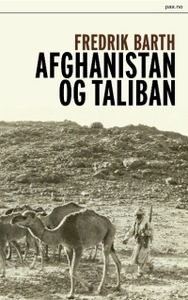
Slakter Fredrik Barths bok “Afghanistan og Taliban”

cover

Antropolog Fredrik Barth er en av Norges fremste Afghanistan-eksperter. Men Barths nye bok “Afghanistan og Taliban” er unyansert, dårlig dokumentert og preget av hastverk ifølge Stian Bromark i Dagbladet.

Han sammenligner Barths bok med en bok skrevet av en journalist (Al-Qaida og veien til 11. september av Lawrence Wright) og må konkludere med at journalisten er mer presis enn forskeren. Alle opplysninger er minst dobbeltsjekket.

“Barth har åpenbart mye kunnskap, men han har nok ikke brukt mange timer på å skrive denne 100-siders boka”, skriver Bromark:


Språket veksler mellom å være søvndyssende leksikalsk og så knotete at meningen tidvis er uforståelig. I tillegg inneholder den bastante påstander som man gjerne skulle sett dokumentert, men Barth opererer ikke med andre kilder eller referanser enn seg selv.

>> les hele saken i Dagbladet

SE OGSÅ:

Fredrik Barth for mer respekt for Taliban og “stammesamfunnene”

Fredrik Barth: “Jo tyngre NATO-krigføring, jo mer støtte til Taliban”

Fredrik Barth: Kunnskap gjør verden mindre truende

Fredrik Barth underviste Hæren om Afghanistan

– Norske antropologer bør si NEI – flere og flere antropologer jobber for Bush i Irak og Afghanistan

cover

Antropolog Fredrik Barth er en av Norges fremste Afghanistan-eksperter. Men Barths nye bok "Afghanistan og Taliban" er unyansert, dårlig dokumentert og preget av hastverk ifølge Stian Bromark i Dagbladet.

Han sammenligner Barths bok med en bok skrevet av en journalist (Al-Qaida…

Read more

Doktorgrad: Barn mer opptatt av tauhopping enn G-streng

Forsvinner barndommen i et stadig mer sexfiksert og kroppsfiksert samfunn? Nei da. Antropolog Mari Rysst har tatt doktorgrad på hverdagen til barn mellom ni og 13 år. Hun ble overrasket over noen av funnene, melder Avisenes nyhetsbyrå.

– 10-åringene i mitt materiale var hovedsakelig interessert i sport og fritidsaktiviteter, ballek, hoppe tau, være i skogen og bygge hytte og sånt som vi forbinder med tradisjonelle barneleker. De var mer opptatt av det enn jeg hadde trodd.

– Det foregår en kraftig seksualisering av barns omgivelser både ved reklame som erotiseres, seksualisering i popmusikk og i videoer, blader for både barn og voksne som er veldig opptatt av utseende, og det å være flott og sexy. Barna blir utsatt for et ganske stort trøkk utenfra, og det lærer de av. Men i mitt materiale ser det ut til at 10-åringer ikke lar seg påvirke av det i like stor grad som man har vært bekymret for.

10-åringer i dag lever på mange måter lever i tråd med tidligere tiders barndom, mener hun.

– Selvsagt med nye elementer, men de ønsker ikke å være særlig eldre enn de er, og de oppfører seg heller ikke som det. Men det handler jo om at disse barna lever i familier som kan begrense påvirkningen, og de får også normer og regler overført fra skolen og seg imellom.

Hun påpeker at hennes datamateriale ble samlet inn fra 2002 til 2004 og at bildet kan ha endret seg siden da. Antropologen vurderer en oppfølgingsundersøkelse blant dagens 10-åringer

>> les hele saken på siste.no

Rysst vil forsvare avhandlingen sin “I want to be me. I want to be kul“: An anthropological study of Norwegian preteen girls in the light of a presumed ‘disappearance’ of childhood” på tirsdag.

OPPDATERING (7.1.09): Intervju med Rysst i Kilden

Rysst har en interessant liste med publikasjoner. Jeg klikket på en del linker, men det ser ut som publikasjonene stort sett er hemmelige og ikke tilgjengelig på nett.

Se også tidligere saker om Mari Rysst:

– Unge presset til å virke eldre enn de er

For dyrt å være kul – Doktorgrad om “tweenagers”

Designerklær for barn: “Ønsker å vise hvem de er gjennom barna sine”

Forsvinner barndommen i et stadig mer sexfiksert og kroppsfiksert samfunn? Nei da. Antropolog Mari Rysst har tatt doktorgrad på hverdagen til barn mellom ni og 13 år. Hun ble overrasket over noen av funnene, melder Avisenes nyhetsbyrå.

– 10-åringene i…

Read more