search expand

Anthropology and fiction (part 1)

The reason why I became an anthropologist is that anthropology can include anything. Early in my studies, when I still aimed in an other direction, a professor told me that until her MPhil she had had a very broad field of interests, including reading French novels in their original language. But in order to reach her position, she had had to forsake much of that. Talking to her, made me realise that I wasn’t ready to give up on all my different interests in pursuing a career. So, if my future job wouldn’t spare me time to immerse myself in social and political issues, travel, film, literature and other things that interested me, I would have to take all that with me into my future job. And if I wasn’t a hundred percent sure when I started with anthropology, I certainly was after reading just a few pages of the introductory text Small places, Large issues. Anyway, the title says it all, doesn’t it?
[teaserbreak]
But if anything can become anthropology, then, conversely, a lot of other things converges on being anthropology as well? In my opinion, yes. I’ve had the opportunity to go on a little reading spree of fiction lately. And to be honest, no one does anthropology as well as novelists do. When I started thinking about this, I thought I remembered someone with a little more disciplinary authority than me saying something similar. But I realised that what I had in mind was a somewhat silly article by Maurice Bloch asking why others are able to make core anthropological issues, like fundamental questions of human nature, into blockbuster books while anthropologists don’t. The article was silly for several reasons I’ll not go into here, but I find his original question intriguing. Maybe more anthropologist should go deeper into fundamental questions, and maybe many anthropologists (and many other academics) should write in a more accessible manner for a larger public. At the same time, I’m almost tempted to say; but who cares, as long as we’ve got – not popular evolutionary biologists like Bloch was pointing to, but – novelists!

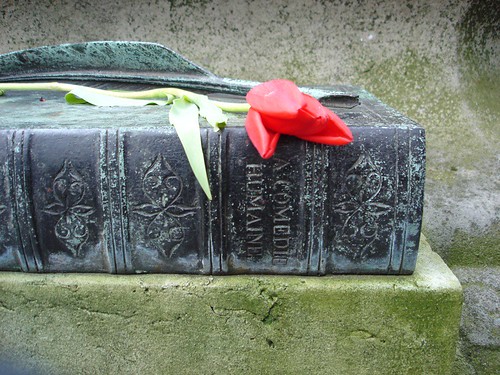
Balzac’s Human Comedy is hard to beat when it comes to fiction with anthropological components. His interest is society as a whole in the decades after the French revolution, (but perhaps particularly the life of the new bourgeoisie, because he’s less interested in the poor and the working classes than for instance Dickens.) Leo Tolstoy is another one, and as far as I remember, a far better depicter of the depth of the individual characters than Balzac, whose protagonists are mere types illustrating their social position within society. Another personal favourite is Michel Houellebecq’s outrageous analysis of human relations following the social changes in the 1960s.

Several of the books I’ve read lately have a streak of good anthropological description and analysis; The White Tiger on today’s booming India by Aravind Adiga, What is the What, the life history of the Sudanese refugee, Deng, by Dave Eggers, or The curious incident of the dog in the night which shows, from the native’s point of view, so to speak, the life of a young boy with Asberger Syndrome, by Mark Haddon.

But what I really want to come to in this post, is the Norwegian literary phenomenon Karl Ove Knausgård. In a novel in six volumes, in the process of being published in the span of one year, he explores is own life in detail within a clearly literary framework. What gives it anthropological overtones in my opinion is very different from what makes my previous examples anthropology-like, but perhaps one can say that he writes more in the vein that Bloch is asking for. Socio-political and economical analysis, as well as any opinions on such issues, is blatantly absent in his oeuvre. Neither are there, until volume three at least, any real analysis of social relations. Conversely, what there is, in abundance, is the world seen from the perspective of the native, the author himself. And it is exactly this description in detail ad absurdum if not nauseum, that made me think of ethnography in the first place. He tries to describe his life in as much detail and with as much honesty as his human imagination is capable of. That provides the reader with much description which is liberatingly free of any obvious purpose. Usually in fiction, everything the writer has put down on paper is supposed to mean something and add up to the story to come. Many of the passages in Knaugsgård’s book seem to be description for its own sake, exactly what theory oriented anthropologists would call butterfly collecting (while in some cases their own work might fit so rigidly into a theoretical framework that all real human life is lost. The best example here is perhaps the highly acclaimed The Nuer (see earlier post).) I would instead call it “thick description” and in line with the recommendations of sound ethnographic procedure (see earlier post). Knausgård himself says that he’s on a quest for what it means to be human, no less, and I certainly see his point. In going into detail into his own life, aspect after aspect of – universal, I would guess – human existential struggle is revealed.

I was one of the many who refused to bother with this seemingly overrated and overexposed project in the beginning. Then, I discovered that the commentaries in the newspapers read completely different things into the work. The novel was clearly so polyvalent that it inspired readings that varied to the point of seeming completely contradictory. Art historians, feminists, political reactionaries, priests, fellow authors… all focused on different aspects of the book and gave it different interpretations. It made me start to see the whole project as a piece of Bourriaud’s relational art, where the work of art comes into being in the meeting with it’s readers and the interaction it engenders. It became even clearer to me when I brought volume 2 with me to hospital, and almost every person I got in contact with there, be it the surgeon himself, the physiotherapist, one of the cleaners, hospital orderlies and of course many of the nurses, had something to say about the book or the fuss it created.

*

A point not to forget when I acclaimed Knausgård’s quest, is that much of it is clearly very good literature. It’s no doubt that it is a piece of art, and the question is, what can other representations of society and human life stand up with in comparison with art? That question has popped up in various guises lately.

The reason why I became an anthropologist is that anthropology can include anything. Early in my studies, when I still aimed in an other direction, a professor told me that until her MPhil she had had a very broad field…

Read more

Parisian performance poetry: a republican space for encounters?

Another presentation which I blatantly will fail to give (see this post), were to take place at a conference in Oxford in about one week’s time, Encounters and Intersections: Religion, Diaspora and Ethnicities.

The problematics of this paper give me the opportunity to look at two other aspect of the space created during a slam session: the particular quality of the encounters taking place. While only a very few of the participants talked explicitly about the political and subversive character of the slam phenomenon (see previous post), many more will describe it as a quite unique place for encounters. This is thus more of a native’s point of view than what is treated in the previous post. The ways many people describe the soirées echoes in my opinion important values of the French Republic. This is the next aspect I’ll introduce in the analysis of the space created during a session. In the previous post, I looked in the direction of connections between the local socio-political environment of the city and the soirées, in this it’s the connections between the soirées and the Republic herself I postulate. These problematics will go into chapter 2 and Chapter 5 (see the outline at the end of this post). Here’s my abstract for the conference:

Parisian performance poetry: a republican space for encounters?
Cicilie Fagerlid

In this paper, I will explore the space for encounters created during Parisian slam poetry sessions. Many participants characterise this performance poetry scene as a medium for rencontres (encounters) of people of different backgrounds. The sessions are among the most mixed events one can find in France, in terms of social and ethnic background as well as age and gender. It can thus be seen as an arch expression of the French republican ideal of mixité sociale and the value of vivre ensemble (“living together” – a term with similarities to the British notion of “community cohesion”).
The performances treat a vide variety of issues, expressed with a variety of different artistic styles, from rap to French traditional poetry via experimental theatre. However, seen from a British multiculturally inspired paradigm, the issues of collective religious or ethnic identities are conspicuously absent.
I will place the poetry sessions within the socio-political geography of East Paris (a popular, bohemian and increasingly gentrified area shaped by immigration) and the French republican paradigm of social integration. The paper is based on 16 months of fieldwork in East Paris. In addition, I will draw on my previous research project on British Asians in London.

Contact details:
Cicilie Fagerlid
Department of Social Anthropology/Cultural Complexity in the New Norway
Postboks 1091 Blindern
N-0317 Oslo
Norway

Cicilie Fagerlid is working on her PhD thesis with the preliminary title Society in the Making: Post Colonial Paris and the Slam Poetry Scene. She is employed at the Department of Social Anthropology and Cultural Complexity in the New Norway, strategic research programme, both at the University of Oslo.

Another presentation which I blatantly will fail to give (see this post), were to take place at a conference in Oxford in about one week’s time, Encounters and Intersections: Religion, Diaspora and Ethnicities.

The problematics of this paper give me…

Read more

The socio-political geography of East Paris: Parisian slam poetry – a space of resistance?

The most recent paper I failed to give (see previous post) was looking at the slam poetry phenomenon from the perspective of where it is situated, – socio-politically as well as geographically. I wanted to explore the connection between the slam scene’s geographical position in the North and East (and to some extent the 13th Arrondissement in the South) and the socio-political characteristics of these parts of the city. Here’s the abstract for the presentation:

Parisian slam poetry – a space of resistance?
Cicilie Fagerlid, PhD fellow at Cultural Complexity in the New Norway (strategic research programme at the University of Oslo)

In this paper, I will explore the relationship between the Parisian slam (performance) poetry scene and the socio-political landscape of North and East Paris, where the scene is situated. This part of the city is historically popular and left-wing with an important influence of bohemians and artists, and an equally long history of regional and international immigration.

I will argue that what is created during an evening of poetry performances, is to some extent a space of biopolitical resistance. Similar forms of resistance to standardisations of everyday life and/or governmental politics overflow the urban space of the northern and eastern Parisian neighbourhoods – in terms of streetart, political and artistic posters and stickers, low-cost and “alternative” film and music festivals, readings and talks in bookshops and cultural centers, a plethora of demonstrations filling the streets with colours and noise and a general, unruly everyday streetlife. I will situate the slam poetry within this landscape and discuss to what extent Antonio Negri’s notion of a (bio)space “in-between” power relations can be a helpful analytical perspective:

“Where is exodus at home? Where is the space for those who want to go into exodus from power and its domination?” For me, exodus sometimes requires force. And this is, paradoxically, an exodus that does not seek an “outside” of power, but which affirms the refusal of power, freedom in the face of power, in the hollow of its meshes (Negri, Petcou, Petrescu and Querrien 2008).

Negri,Toni, Constantin Petcou, Doina Petrescu and Anne Querrien 2008: “What makes a biopolitical space? A discussion with Toni Negri” in Eurozine at http://www.eurozine.com/articles/2008-01-21-negri-en.html (accessed 02.05.2008)

I’ve decided to continue working on the problematics of this paper during the summer, making it into the two first chapters of my thesis (see the end of this post for a preliminary outline). In the first chapter, I will describe and analyse some of the areas where the slam soirées take place (how I’m looking forward to wander the streets of Belleville and Ménilmontant in my imagination again!). In Chapter 2, I will ask how we can understand the particular space created during a slam – thus grasping the micro-dynamics of a soirée – and secondly, making a connection to chapter 1, I will look at what might be the relations between the slam phenomenon and the particular environment of the city where it is situated.

For some reason, the summer Oslo mood certainly inspires a delve back into my memory of Parisians streets and cafés…

The most recent paper I failed to give (see previous post) was looking at the slam poetry phenomenon from the perspective of where it is situated, – socio-politically as well as geographically. I wanted to explore the connection between the…

Read more

“Start in the middle”

Last week the amount of empirical data and loose ends unsettled me in my intentions to get on writing. I asked everybody I met if they could recommend me a technique to sort the data and how and where to start writing. The second best advice I got was to start listening through the interviews and jot down central themes and get inspired from that. It’s a good idea and I think the conversations and individuals were my point of departure for my Master thesis. But this time I doubt that the interviews are anywhere near my peak performance as a fieldworker. First, they were conducted in French. Second, and most importantly; my slammer acquaintances aka interviewees knew I’d not be able to anonymize them donc what they told me are mostly bland and well-groomed versions closer to what anyone can find on the internet than what one can see and hear on and around a slam session. On the other hand, the interviews certainly give me background information providing context for the individuals and their relationship to the slam… or whatever… I don’t know yet. I just know I felt ok about them but nothing more. They weren’t eye-opening enlightenments like most of the interviews I did in London.

“Start right in the middle, with the core of the issue,” a friend casually remarked during a conversation mostly about other things when I met her last week. Yes, of course, that’s obvious, I suddenly realised. I had started in the other end, in the margins, trying to track my own route of discovery from the beginning of my stay in Paris. I thought it would be an interesting journey to re-travel: Where and when and how did I come across certain topics and reach particular understandings? I realise now that first I have to determine for sure which are the important topics and understandings that need to be pinpointed – thus I have to start from the core…

And the core is… the soirées of course! I’ll go through them one by one, focusing on the different venues and events, starting with the four soirées I attended and filmed at L’Atelier du Plateau (already mentioned in this post). I don’t know yet what exactly will come out of this, but I’ll for sure get an overview of the variety of persons attending and the themes they approach. What a relief to find a way out of the empirical maze!

Last week the amount of empirical data and loose ends unsettled me in my intentions to get on writing. I asked everybody I met if they could recommend me a technique to sort the data and how and where to…

Read more

Steps to an analysis: from impressions to data

After I mapped out an outline two and a half months ago, my project has appeared amazingly ordered and under control. Perhaps it’s no wonder then, that I’ve postponed delving back into my fieldnotes for as long as I could, keeping myself busy with ordered and controllable intellectual activities like reading books for literature seminars and writing abstracts for upcoming workshops and conferences as well as even an article.
[teaserbreak]
But I know the kind of chaos that waits in my eight small notebooks and six larger ones, one personal diary, skype chats, e-mails, smses and scattered word documents, and what kind of threat it poses to the ordered outline. Is my fieldwork as I remember it to be? I try to start from the beginning, but quickly gets discouraged. The notes from my first months are chaotic. All kinds of impressions and observations are jumbled together, often without even reference to where and when:

“Nuit noire [“black night”, 17th Oct. 1961 when several hundred peaceful protesters against the war in Algeria were thrown into the Seine]: that was of course what that they were commemorating…” Who, where?!?

“Sarkozy – visit in the banlieue on the news a few days ago. He was thrown things at…” And my comment, without question mark, with capital letters: “what they show on tv”… If I’m not completely wrong and Sarkozy was thrown things at in the suburbs many times in October 2005, this must have been the time he uttered the (in)famous words about using a high-pressure water cleaner in the suburbs (nettoyer au kärcher) to get rid of the hoodlum (voyous). I think perhaps I was surprised that the interior minister got mixed up in such a violent confrontation and uncivilised behaviour and that they showed it on tv, but my comment is of little use.

On a more positive tone; my first fieldnotes indicate what issues I noticed and found worthwhile writing about. Sarkozy’s mediatised confrontation with people in the suburb happened just a few days before the death of the two teenagers that spurred the three weeks of riots in October-November 2005.

The month I was in Paris before the riots broke out, I was mostly concerned about various aspects of identity like gender, ethnic background and class in my neighbourhood in East Paris. Not so strange, since the reason why I had chosen to live in that particular area was it’s ethnic mix. However, I think the link between identity categories and public space was not something I had planned to look for. A blog post from two weeks after my arrival, signals how early that interest struck me. In my fieldnotes, in between page after page with descriptions of interaction between strangers, I found this comparisons between middle class and working class behaviour in the partly gentrified area:

On my way to the bus stop, I walk behind a very agile 6-7 years old girl in full rollerblades gear, and her mom, apparently, wearing a spring green skirt and shirt in another bright colour. A boy, just a little younger, turns to look when the girl swirls past. He tries to copy her superb turn- and break movement (with her heal) and says something to his mother (or grandmother) in French. She (rather plump, in tight-fitting trousers in polyester) replies brusquely in a Slavic language. She takes his hand, and stops, indicating that he should make space for me to pass.

I had just read Distinction by Bourdieu, and I was thinking about the bourgeoisie [in this case a typical bobo bourgeois bohemian] who teach their children to be self-assured about the space they take up in the world, while the children of the working class should be seen but not heard

For about a month, before the riots started, the weather was wonderful and I spent much time outdoors, just walking around, getting a feeling for this part of the city, for gender, class, ethnic background, age… the presence, mixing and variations of these variables. And then came the riots, and emphasised even more strongly the connection between space and categories of people.

After I mapped out an outline two and a half months ago, my project has appeared amazingly ordered and under control. Perhaps it’s no wonder then, that I’ve postponed delving back into my fieldnotes for as long as I could,…

Read more