search expand

Anthropology and fiction (part 1)

The reason why I became an anthropologist is that anthropology can include anything. Early in my studies, when I still aimed in an other direction, a professor told me that until her MPhil she had had a very broad field of interests, including reading French novels in their original language. But in order to reach her position, she had had to forsake much of that. Talking to her, made me realise that I wasn’t ready to give up on all my different interests in pursuing a career. So, if my future job wouldn’t spare me time to immerse myself in social and political issues, travel, film, literature and other things that interested me, I would have to take all that with me into my future job. And if I wasn’t a hundred percent sure when I started with anthropology, I certainly was after reading just a few pages of the introductory text Small places, Large issues. Anyway, the title says it all, doesn’t it?
[teaserbreak]
But if anything can become anthropology, then, conversely, a lot of other things converges on being anthropology as well? In my opinion, yes. I’ve had the opportunity to go on a little reading spree of fiction lately. And to be honest, no one does anthropology as well as novelists do. When I started thinking about this, I thought I remembered someone with a little more disciplinary authority than me saying something similar. But I realised that what I had in mind was a somewhat silly article by Maurice Bloch asking why others are able to make core anthropological issues, like fundamental questions of human nature, into blockbuster books while anthropologists don’t. The article was silly for several reasons I’ll not go into here, but I find his original question intriguing. Maybe more anthropologist should go deeper into fundamental questions, and maybe many anthropologists (and many other academics) should write in a more accessible manner for a larger public. At the same time, I’m almost tempted to say; but who cares, as long as we’ve got – not popular evolutionary biologists like Bloch was pointing to, but – novelists!

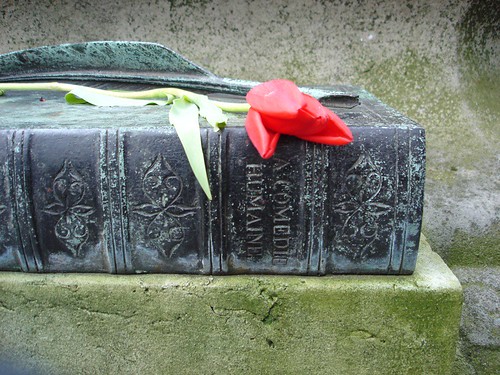
Balzac’s Human Comedy is hard to beat when it comes to fiction with anthropological components. His interest is society as a whole in the decades after the French revolution, (but perhaps particularly the life of the new bourgeoisie, because he’s less interested in the poor and the working classes than for instance Dickens.) Leo Tolstoy is another one, and as far as I remember, a far better depicter of the depth of the individual characters than Balzac, whose protagonists are mere types illustrating their social position within society. Another personal favourite is Michel Houellebecq’s outrageous analysis of human relations following the social changes in the 1960s.

Several of the books I’ve read lately have a streak of good anthropological description and analysis; The White Tiger on today’s booming India by Aravind Adiga, What is the What, the life history of the Sudanese refugee, Deng, by Dave Eggers, or The curious incident of the dog in the night which shows, from the native’s point of view, so to speak, the life of a young boy with Asberger Syndrome, by Mark Haddon.

But what I really want to come to in this post, is the Norwegian literary phenomenon Karl Ove Knausgård. In a novel in six volumes, in the process of being published in the span of one year, he explores is own life in detail within a clearly literary framework. What gives it anthropological overtones in my opinion is very different from what makes my previous examples anthropology-like, but perhaps one can say that he writes more in the vein that Bloch is asking for. Socio-political and economical analysis, as well as any opinions on such issues, is blatantly absent in his oeuvre. Neither are there, until volume three at least, any real analysis of social relations. Conversely, what there is, in abundance, is the world seen from the perspective of the native, the author himself. And it is exactly this description in detail ad absurdum if not nauseum, that made me think of ethnography in the first place. He tries to describe his life in as much detail and with as much honesty as his human imagination is capable of. That provides the reader with much description which is liberatingly free of any obvious purpose. Usually in fiction, everything the writer has put down on paper is supposed to mean something and add up to the story to come. Many of the passages in Knaugsgård’s book seem to be description for its own sake, exactly what theory oriented anthropologists would call butterfly collecting (while in some cases their own work might fit so rigidly into a theoretical framework that all real human life is lost. The best example here is perhaps the highly acclaimed The Nuer (see earlier post).) I would instead call it “thick description” and in line with the recommendations of sound ethnographic procedure (see earlier post). Knausgård himself says that he’s on a quest for what it means to be human, no less, and I certainly see his point. In going into detail into his own life, aspect after aspect of – universal, I would guess – human existential struggle is revealed.

I was one of the many who refused to bother with this seemingly overrated and overexposed project in the beginning. Then, I discovered that the commentaries in the newspapers read completely different things into the work. The novel was clearly so polyvalent that it inspired readings that varied to the point of seeming completely contradictory. Art historians, feminists, political reactionaries, priests, fellow authors… all focused on different aspects of the book and gave it different interpretations. It made me start to see the whole project as a piece of Bourriaud’s relational art, where the work of art comes into being in the meeting with it’s readers and the interaction it engenders. It became even clearer to me when I brought volume 2 with me to hospital, and almost every person I got in contact with there, be it the surgeon himself, the physiotherapist, one of the cleaners, hospital orderlies and of course many of the nurses, had something to say about the book or the fuss it created.

*

A point not to forget when I acclaimed Knausgård’s quest, is that much of it is clearly very good literature. It’s no doubt that it is a piece of art, and the question is, what can other representations of society and human life stand up with in comparison with art? That question has popped up in various guises lately.

The reason why I became an anthropologist is that anthropology can include anything. Early in my studies, when I still aimed in an other direction, a professor told me that until her MPhil she had had a very broad field…
Read more

Time catching up with me (not yet visa versa)

The writing of my thesis has moved into a new phase. Today is the first day that I spend at home of my six month’s leave. I’m supposed to change focus from what has occupied my mind more or less full time since I left for Paris late September 2005. So far on this day of leave, I’ve read some chapters in the excellent classic neighbourhood study Street Corner Society – from an Italian area in Chicago in 1937-9, sorted some baby clothes (thinking what a strange world of circuits of baby stuff that exists out there; we’ve been included in five different ones going exclusively through the female line, partly through kin but mainly through friends – should check with Argonauts of the Western Pacific to what extent it could be compared to the Kula circuits… ;-) ) and I’ve had a quick visit from a friend of mine also on maternity leave. When she left, I felt overwhelmed by spare time, thinking immediately what kind of work I could do.

Then I realised that I could for the first time sit down at the table with my MacBook, in my new living room, with a new view, and have time to do just this. I wanted to reflect a little on what has happened in the writing process since the last time I reported from it here on my blog-diary. But when I turn on the stereo to put on a cd fit for writing, a well-known voice from the excellent music program Jungeltelegrafen, says: “…from the man who hates the notion World Music more than anybody else… Nitin Sawhney!”. (How I enjoy having one of the great participants in my previous thesis described like that!) But how am I supposed to take a break from work when work just turns up everywhere!? Nitin Sawhney contributed extensively to my Master thesis with his musical eclecticism and profound and interesting thoughts on British society. Now he has come with a new cd which musically treats what has happened to London after 7/7 2005:

… On 7.7.2005 a bomb exploded on a London bus. A singer and friend of mine, Natty, was there. Two weeks later he was present at the shooting of a Brazilian man – Jean Charles de Menezes. Last year we wrote a song together. Natty, like myself, feels something indefinable has shifted. London’s has changed. … (Nitin Sawhney 2008 London Undersound).

The CD starts quietly with “Days of fire”, Natty rapping the lyrics, and Sawhney playing the guitar and piano and doing the programming. (Hear the song on youtube with a slideshow from the events in London here)

On these streets where I played
And theses trains that I take, I saw fire
But now I’ve seen the city change in –
Oh so many ways, since the days of fire
Since the days of fire
(Nitin Sawhney & Natty 2008, “Days of fire” on London Undersound)

So far in my listening, I’ve found several tracks I really appreciate. A review of the cd can be found in The Observer here.

Strangely – or maybe not; maybe the world is just that small – one of the first people I got to know in Paris told me unpromptedly how he had taken his father to a concert with Nitin Sawhney. He appreciated to hear that Sawnhey had participated in my previous study, and now he’d help me out in the present one.

Being on leave has so far been difficult, but I’m sure it will be far easier to put work behind me next week when things start to get serious.

The writing of my thesis has moved into a new phase. Today is the first day that I spend at home of my six month’s leave. I’m supposed to change focus from what has occupied my mind more or less…

Read more

Choices… List of (some of) what I lost out on the last one and a half week

I scribbled down this text à l’arrache a day all my plans disappeared and I was still under influence of the fieldwork fatigue. Since then, I’ve not become less fatiguée, but at least I enjoy my fieldwork again. I think actually that the change came right when I took a step back and wrote this post…
[teaserbreak]
Saturday, I skipped everything else and went to Parc Floral for the first jazz concert of the year. Last year I was there almost every weekend, either with friends or with my notebook to write up my last fieldwork adventures. I had planned to get some writing done this time as well, but when I got there I just sat down on the grass and listened to jazz for a couple of hours, being puzzled over the strange sensation of feeling my muscles slowly relaxing. What an unfamiliar feeling these days…

Saturday night was the first evening of three where I tried to go and see D’ de Kabal’s play Ecorce les peines – on the (personal) history of slavery and life in the suburbs – but moved along too slowly to get there in time. [I’ve finally seen it now after two weeks of inertia in that respect. It was well worth it and I’m already quite sure that two of his texts will end up in my thesis: one commenting on the finir avec la repentance (“finish with the repentance” concerning France’s colonial past) speech of Sarkozy the night he was elected president and the text nous, on vit là (“we, we live here”) on living in the infamous suburbs. At the theatre, I got into a conversation with a Haitian poet. Such things – going to interesting events any time I want, meeting interesting people just by chance – happen all the time in this city, and I know I’m going to miss it badly in a few weeks time… ]

Sunday, I went to Aubervilliers for the monthly Slam Caravane open mic event for writing workshops in the (same infamous) 93 suburbian department, started by the same D’ – who, by the way also initiated the slam in Louvre happening with Toni Morrison I wrote about 9 months ago. Slam Caravane was great as usual, with an enormous variety in themes and performers. To get to Le Theatre de la commune in the obviously quite deprived suburb Aubervilliers, I took the 65 bus all the way from République. On the bus I caught myself thinking, again, that there aren’t many kinds of people I don’t see in this city. I’ve only come across one Inuit, and that was on a party a few years ago (were someone gave me the unforgettable chat-up line: “Can you (vous, of course) live by your poetry?” The world is a stage and every Parisian worthy of the title knows it…). The 65 bus travels through the South Asian part of Paris, up north, and from the window I saw piles of mango crates stacked up outside the shops announcing the yellow mango season, just like at Tøyengata back in Oslo.

Monday, I ditched my interview object, as I’ve already lamented, and down the drain also went an opportunity to go with him to a radio show at an independent radio station in an art collective in the 13th Arrondissement.

Tuesday, I went to the classic slam soirée by 129H at Lou Pascalou. Earlier in the day, I had spent three hours chez une slammeuse, looking at her paintings, getting a generous pile of fanzines she had edited in the early days of Parisian slam and interviewing her. She lives in the (rather chic) suburb Les Lilas, which lies in the other end of Rue de Belleville, on the other side of the hill. So, I cycled up, up, up and crossing the ring road La Perhiphèrique in an enormous roundabout, and there I was in the little village Les Lilas. I love this kind of straight streets – or bus lines – which takes you from one side of the city to another.

Wednesday I thought I had a lot lined up. Most workshops for youth and children take place on this weekday, as school only lasts half day to leave time for cultural, sportive or religious activities in the afternoon. This Wednesday I had forsaken 2-3 other workshops in favour of one particular with pensioners and youth, and then interview some of the participants afterwards. Once in a while – at completely irregular and unforeseen intervals, it seems to me, but I have a bad suspicion that it’s only me not staying up to date…. – the workshop takes place at a local home for elderly people. So also that Wednesday. Last time I was there, one of the pensioners had been very kind and shown me the way. This time I got instructions from one working at the youth house where I thought the workshop was to take place, but he knew his knowledge of the subject was limited and wished me good luck. Of course I didn’t find the place. Instead, I got the chance of doing some participant observation on a suburban bus in the rush hour. The bus to Aubervilliers had air-conditioning, this one hadn’t. As this is the daily life of very many people, it was an interesting experience, but I don’t know if it was the best way of spending this Wednesday afternoon.

– Particularly since I had erased by accident videos of two slam sessions with people from the workshop I didn’t show up for an appointment with… Methodologically, I constantly feel trapped between being too superficial in everything I do because I try to cover it all and on the other hand having serious gaps in my data material because I don’t manage to capture everything… Put differently; should I concentrate on a few or should I try to get a comprehensive overview? Whom, in that case? As this study starts to become rather comprehensive, I’m worrying about the gaps, while the depth have worried me for a long time: I starting to know everybody but do I really know anyone well enough? –

Thursday afternoon I didn’t mess up anythingk I just lost out on several other things (when I chose to go to a recording session with a 16-yearold and his teacher from the workshop. Afterwards I did an interview with the former.) in the night, I messed up getting to D’s theatre play in time again. This time it was my bourgeois looking but utterly crappy bike that did me in.

Friday finally, had no failure. I went to the most chaotic open mic event I’ve ever been to, in a narrow one-way street behind the huge market and roundabout and shopping centre at Porte de Montreuil. Thinking about it no, I certainly didn’t fell completely up to I that day either I lefte quite rapidly after la soirée bordelique and on the way home I couldn’t understand why I had been in such a hurry.

All these choices, all these challenges for doing the right hing all the time is perhaps one of the most tiring experiences of fieldwork. I know for certain that I n the long run I’ll forget about all my little regrets like this, but when I’m standing there, having to make choices like that at least once a day (should I stay or should I go, and which of the places should I go) one could get the fatigue from less.

Saturday, I had wine for lunch (at the University of Chicago Paris branche), and in addition to the unexpected downpour, all my other plans dissolved (my other plan was a workshop followed by an open mic event with Slam o Feminin up north in Porte de Montmartre. In the evening, once more, strangely, I missed out on D’s theatre play, but got a nice bicycle ride instead and could fall asleep before midninght over Steven Feld’s Sound and sentiments (on poetics in Papua New Guinea).

Sunday was a peak in this week’s feeling of insufficiency. Instead of going to Bobibny and Canal 93 for the restitution of tall the workshops there (not only slam poetry, but also music, dance…) I chose the jazz concert in Parc Floral, and ended up stuck under a tree in a neverending torrent. I cucled home in the warm but heavy summer rain and refused to considered going out again. Afterwards, several people (amongst them the 16.years old and his prof) told me it had been interesting, even great in Bobigny…

Monday, I forgot about the slam event in the campaign for legalising cannabis (which certainly not will have any success under the present presidency), and there was another alternative event I knew about but couldn’t find the address for, and lastly I ignored a concert and open mic – I later heard from several sources that it had been excellent – with a person I shortly afterwards discovered would provide me with lots of interesting material that goes straight in to my thesis. But my evening had been of the better ones, spent with people I like listening to music (and poetry) I also like.

Today, I had a really tight schedule with got fucked up partly by me, partly by external forces: I woke up before 7 from a mouse eating noisily at my bedside table. I wanted to scream for my coloc to immediately put up the mousetrap again, but he’s always asleep at this time of the day and he’s also just got a new boyfriend so I realised it wasn’t the time. Luckily, I managed to fall asleep again, but felt far from awake when the alarmclock disturbed me later to hurry me off to an appointment at a radio station in a suburb. At Chatelet, waiting for the RER local train, I realised I had miscalculated the time and I went all the way home again. Consequently, I missed out on the planned interview with the radio presenter (and slammeur, bien sûr) as well.

My busy scheduled day trickled away, I’m not-so-ashamed to admit. The workshop I was going to attend on Batofar, the concert venue on a boat at the Seine, was cancelled due to lack of interest and organisational problems. Now, I’m content to be slacking in the shade, writing blog posts by hand, looking at other summer time slackers by the canal. It’s a warm day, the hottest since the heat wave in April. It finally feels like summer. I suddenly feel a spark of absence in my constant bad conscience for not doing enough, not making the right choices, never staying long enough, talking enough to people. I fell utterly content – almost – just sitting here with my paper and pencil… And in the evening, I’ll try once more to go and see D’s play.

I scribbled down this text à l’arrache a day all my plans disappeared and I was still under influence of the fieldwork fatigue. Since then, I’ve not become less fatiguée, but at least I enjoy my fieldwork again. I think…

Read more

Finally a slam poetry video: Ucoc at L’Atelier du Plateau

L’Atelier du Plateau is a little neighbourhood theatre on top of hilly Belleville, near Parc Buttes Chaumont. After going down a narrow, cobbled-stoned cul-de-sac, one enters one, large white painted room under a high ceiling. A bar and a small kitchen (serving for the occasion quiche lorraine, vegetarian pizza, each for 3€, massalé de fruits de mer 7€ and gateau chocolat, also 3€), occupies a corner of the room, while low chairs circling red, oriental carpets marking the “stage” take up the rest of the space.

[teaserbreak]
Every sixth week or so, the slammeur and rappeur Dgiz hosts a slam poetry session here. Last Monday – the blue, blue day after the elections – it was packed, with more people standing than sitting. While many presented newly written texts about the elections or at least made reference to it, the example I will give here did not. (The lyrics of “Destiny” ).

Ucoc was one of the first slammeurs I discovered. Late a Friday night in early June 2006, I was standing in the open doorway in the tiny bar Plex y Glass in Rue Oberkampf, when a screaming man fought himself through the crowd right towards me. I had just returned to Paris after an adventurous trip in the suburb Fontenay-sous-Bois (find the post here), where I had attended my (second) first soirée slam. Ucoc’s colère (anger) convinced me instantly that finally, after many months of searching, I had found a focus for my research. As I post more videos here, it will be clear that Ucoc has a very particular style… Enjoy, or bon courage.

The saxophonist is the jazz musician Louis Sclavis. (The cellist Vincent Courtois did not play on this track).

Ucoc’s Myspace site can be found here and OMind, his cooperation with Chantal Carbon, here (with more videos). He is also a frequent contributor to the site www.generationslam.com

The introduction to slam, I can thank a person I had just met on a punk concert, just around the corner from where I lived at the time, in support of the accused after the anti-CPE protests (labour law) some months earlier. After discussing the protests for a while, he said – despite having participated in them himself – that he would like to introduce me to something that was far more important than street protests: poetry! (after quite a few months of dissatisfaction with this incomprehensible society, I had finally started to like it, so a comment like that pleased me immensely). A few days afterwards, he, a friend and colleague of him and the anthropologist headed for the suburbs and back to town again – and since then I haven’t been a week in Paris without attending at least one soirée slam

L’Atelier du Plateau is a little neighbourhood theatre on top of hilly Belleville, near Parc Buttes Chaumont. After going down a narrow, cobbled-stoned cul-de-sac, one enters one, large white painted room under a high ceiling. A bar and a small…

Read more

Discussing slam poetry on TV and the schism in French slam

When I was contemplating a title for this post, the first thing that came to mind was the revolution will not be televised (Gil Scott-Heron’s eternal phrase). This association might seem a bit far off, but watching TV as rarely as I do, makes me surprised how crappy that medium is to pass on intelligible and sensible information. (Apropos French elitism versus Norwegian anti-elitism which I wrote about some posts ago; stating that one doesn’t watch TV is commonplace and almost expected in my circles in France, in Norway on the other side it’s seen as verging on elitism :D )

The show in question is a 30 minutes “debate” on French slam between four slameurs and an interrupting and not very knowledgeable journalist, called “Slam: from the bistro to the telly” (Slam: du bistrot à la télé). It was broadcasted 13.11.06 on France 3, and to my knowledge it’s not widely discussed in slam circles, and when it’s brought up it’s mostly in order to diss the fourth participant, which will also be my subject in this post (in addition to dissing TV in general)… I found it on the Internet here. In addition to a lot of interruptions and all-speaking-at-the-same-time (typical French TV entertainment), it also contains some throwing of water and some short slam performances. I’ll give a short résumé…
[teaserbreak]
The show is recorded just after Toni Morrison invited the slam poets with her to Louvre, and it starts with a reportage from the event, first showing Yo (who hangs around in bars in Belleville and whom I just saw animating the monthly open microphone soirée Slam Caravane taking place in the banliues in Seine-Saint-Denis (9-3)), then Astien [myspace] (whom I just met at a huge slam tournament in Le Mans) and ending with D’ de Kabal (who is one of the initiators of Slam Caravane as well as the event at Louvre, my photo here).
The latter was also present in studio, together with Grand Corps Malade (a photo from the soirée in Saint Denis here), Dgiz [myspace, his old site with some old songs] and Pilote Le Hot. The four seems to me a fairy representative choice, except from – as Dgiz remarked during the séance – où sont les slameuses? (“Where are the female slammers?”) GCM is the blockbuster guy, D’ the one initiating a million events, Dgiz for his personal and artistic trajectory and Pilote le Hot for being (one of) the first to introduce slam poetry to France and for being the central figure in a huge slam network. (Links to Slameur and Fédération Française du Slam Poésie).

It’s not a coincidence that I haven’t mentioned Pilote Le Hot before. The network he belongs to is – with very few people overlapping – almost entirely separated from the milieus I’m frequenting. I don’t know yet how I’ll incorporate this other milieu in my thesis. Initially, I was thinking of making it a small comparative case, but I’m not sure if I’ve got time to treat it properly (Any suggestions?)

The TV programme serves as a good introduction to this schism in French slam, as it turned out to be just a big fight over the definition of slam: For D’, it as a space for free speech (espace de parole libre), GCM emphasised the word partage (“sharing”) – of a text, words and emotions and of a stage – as well as free access to speech (accès libre à la parole) and Dgiz defined slam as taking place through l’écoute ((attentive) listening) and as an ephemeral, poetic moment. He continued by pointing to how representative he found the four slammers present there; un black (D’), un blanc (“white”, GCM), un beur (“Arab”, Dgiz) et un animal (Pilote – who quickly became on edge with everyone) [it was here Dgiz asked where the female slammers were]. D’ de Kabal followed by saying that the slammers is not a community like les jeunes (“the young”) and les rebeus (“the Arabs”) [he’s of course ironic here…], they have different opinions. Neither do they have a leader who tells them how to do things… Pilote on the other hand insisted – by interrupting, monologuing and not listening to the others – to such a degree on the original US-American definition of slam poetry as a competition with a jury in the audience, that GCM ended up calling him a fundamentalist (integriste).

Sharing, listening, free speech and the cosmopolitan environment are characteristics I often hear about the French slam scene. However, for Pilote le Hot, apparently only the rules set down in by Mark Smith Chicago in 1984 counts [wikipedia on history of American slam]. For an anthropologist this conflict between purism and cultural translation is of course interesting, but as I said, I don’t yet know how I best can integrate that other scene into my study – and if I’m not already to integrated myself into one part after the schism to cross the boundary to the other.

Towards the end of the program, the four slammers perform a text (Pilote, with a paper on what he claims slam is, D’ knows his – in rememberance of slavery – by heart, Dgiz improvises on the situation and GCM performs the start of Attentat Verbal – also on slam – from his record). As Pilote is not listening to D’, he throws him a glass of water, Pilote retaliates and later says to GCM that in your text you say that whoever can come and do whatever on stage and say that is slam, but that is not the case… and the slam will soon be a competition in elitisme d’underground… GCM calls him an integriste, Dgiz says that you can slam in French and you’ve got French slam now where you can do whatever you want… GCM says Pilot; you’ve certainly given a beautiful picture of what slam is tonight, but he also invites everyone to come to the small bars and cafés where the real slam is going on and see for themselves what it is. D’ almost gets the last word by saying something like (it’s hard to hear because of the noise…) slam is like a large pavement where everyone can find their place but where one sometimes finds a dog turd, and points in direction of Pilote…

Compared to the law of 20 sec concentration span obviously ruling on talk shows on TV, the three minutes recommended time for a slam seems like ages. But the journalist was perhaps happy with the noisy, distracted show he got…

When I was contemplating a title for this post, the first thing that came to mind was the revolution will not be televised (Gil Scott-Heron’s eternal phrase). This association might seem a bit far off, but watching TV as rarely…

Read more