search expand

Balance

A little red robin just whistled outside the bedroom window. My son takes his midday nap in my lap this summer. For a long time now, he has let us know that midday laps are a waste of time, and the only way to get him to sleep is to make the environment as boring, but cosy as possible. I bunk up with a cup of tea and a novel or a pencil and paper, and for an hour or so I can slouch peacefully in the bedroom in the middle of the day.
[teaserbreak]
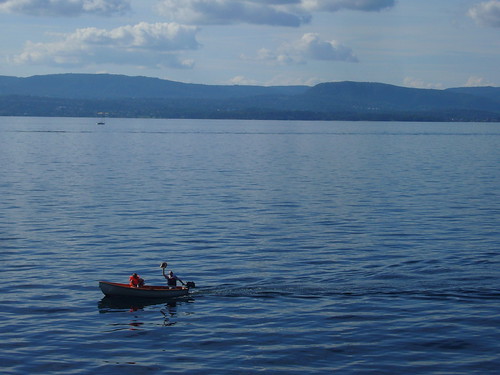
In the summer cabin, the bedroom window faces a steep rocky hill full of different trees, flowers, roses, green leaves, moss, forest berries, squirrels and the odd bird, like this red robin. In the distance, I can hear the waves, the sound of the engine from a boat, or sometimes the rain tapping on the roof.

Before this little pause, I had two hours off from family life where I sat by myself and watched the sea and sky as I composed an outline for my paper on narration and migration in Linköping. I translated a poem by Ucoc Lai about the particular moment when he left Vietnam for France where he after four years of waiting had been granted status as a political refugee from Cambodia. I will also translate a beautiful, lyrical text by Souleymane Diamanka about the nomadic Fulani’s voyage up north to France, and their life “under the baobabs of beton” in the Bordeauxan suburbs, called Fulani Winter. I will argue something like that through writing their histories into the history of France, without severing the ties with other parts of the world, they weave the histories together. Like that, their stories and experiences contribute to a more inclusive, open and wider understanding of what France is… something like that.

With little Leo in my nap, I continued working, finishing the outline of the narratives of nation-paper, and an abstract to a conference in Sicily on borders. I want to talk about the internal borders created by a nation’s imagery. In have in mind particularly how action/interaction and environment shape each other in relation to these internal borders between what is French and what is not. The lines of inclusion and exclusion function differently in different parts of the city, in different urban spaces, I think the idea is. And these lines are constructed completely differently in the open and inclusive, however very “French”, space that is created during slam sessions in east Paris. I don’t know if my paper will be accepted as the conference seems to focus on eastern Europe, but I very much want to go to Sicily in the end of January, to tell the truth, and the venue for the conference, an old monastery in the second largest city in Sicily, seems fantastic… And, well, my material would surely benefit from being studied from such a perspective on internal borders.
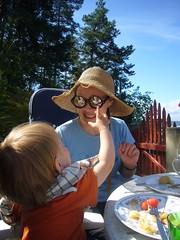
And what I think about once in a while when I stop scribbling on my sheets of paper, is that sometimes life feels in complete balance. I don’t feel torn between academia and family life, far from it. The two, equally all-absorbing and rewording in their own but very different rights, usually complement each other perfectly. I didn’t expect that, but that’s really how I feel.

A little red robin just whistled outside the bedroom window. My son takes his midday nap in my lap this summer. For a long time now, he has let us know that midday laps are a waste of time, and…
Read more

Anthropology and fiction (part 1)

The reason why I became an anthropologist is that anthropology can include anything. Early in my studies, when I still aimed in an other direction, a professor told me that until her MPhil she had had a very broad field of interests, including reading French novels in their original language. But in order to reach her position, she had had to forsake much of that. Talking to her, made me realise that I wasn’t ready to give up on all my different interests in pursuing a career. So, if my future job wouldn’t spare me time to immerse myself in social and political issues, travel, film, literature and other things that interested me, I would have to take all that with me into my future job. And if I wasn’t a hundred percent sure when I started with anthropology, I certainly was after reading just a few pages of the introductory text Small places, Large issues. Anyway, the title says it all, doesn’t it?
[teaserbreak]
But if anything can become anthropology, then, conversely, a lot of other things converges on being anthropology as well? In my opinion, yes. I’ve had the opportunity to go on a little reading spree of fiction lately. And to be honest, no one does anthropology as well as novelists do. When I started thinking about this, I thought I remembered someone with a little more disciplinary authority than me saying something similar. But I realised that what I had in mind was a somewhat silly article by Maurice Bloch asking why others are able to make core anthropological issues, like fundamental questions of human nature, into blockbuster books while anthropologists don’t. The article was silly for several reasons I’ll not go into here, but I find his original question intriguing. Maybe more anthropologist should go deeper into fundamental questions, and maybe many anthropologists (and many other academics) should write in a more accessible manner for a larger public. At the same time, I’m almost tempted to say; but who cares, as long as we’ve got – not popular evolutionary biologists like Bloch was pointing to, but – novelists!

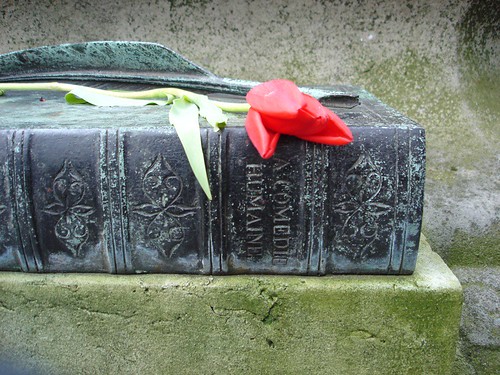
Balzac’s Human Comedy is hard to beat when it comes to fiction with anthropological components. His interest is society as a whole in the decades after the French revolution, (but perhaps particularly the life of the new bourgeoisie, because he’s less interested in the poor and the working classes than for instance Dickens.) Leo Tolstoy is another one, and as far as I remember, a far better depicter of the depth of the individual characters than Balzac, whose protagonists are mere types illustrating their social position within society. Another personal favourite is Michel Houellebecq’s outrageous analysis of human relations following the social changes in the 1960s.

Several of the books I’ve read lately have a streak of good anthropological description and analysis; The White Tiger on today’s booming India by Aravind Adiga, What is the What, the life history of the Sudanese refugee, Deng, by Dave Eggers, or The curious incident of the dog in the night which shows, from the native’s point of view, so to speak, the life of a young boy with Asberger Syndrome, by Mark Haddon.

But what I really want to come to in this post, is the Norwegian literary phenomenon Karl Ove Knausgård. In a novel in six volumes, in the process of being published in the span of one year, he explores is own life in detail within a clearly literary framework. What gives it anthropological overtones in my opinion is very different from what makes my previous examples anthropology-like, but perhaps one can say that he writes more in the vein that Bloch is asking for. Socio-political and economical analysis, as well as any opinions on such issues, is blatantly absent in his oeuvre. Neither are there, until volume three at least, any real analysis of social relations. Conversely, what there is, in abundance, is the world seen from the perspective of the native, the author himself. And it is exactly this description in detail ad absurdum if not nauseum, that made me think of ethnography in the first place. He tries to describe his life in as much detail and with as much honesty as his human imagination is capable of. That provides the reader with much description which is liberatingly free of any obvious purpose. Usually in fiction, everything the writer has put down on paper is supposed to mean something and add up to the story to come. Many of the passages in Knaugsgård’s book seem to be description for its own sake, exactly what theory oriented anthropologists would call butterfly collecting (while in some cases their own work might fit so rigidly into a theoretical framework that all real human life is lost. The best example here is perhaps the highly acclaimed The Nuer (see earlier post).) I would instead call it “thick description” and in line with the recommendations of sound ethnographic procedure (see earlier post). Knausgård himself says that he’s on a quest for what it means to be human, no less, and I certainly see his point. In going into detail into his own life, aspect after aspect of – universal, I would guess – human existential struggle is revealed.

I was one of the many who refused to bother with this seemingly overrated and overexposed project in the beginning. Then, I discovered that the commentaries in the newspapers read completely different things into the work. The novel was clearly so polyvalent that it inspired readings that varied to the point of seeming completely contradictory. Art historians, feminists, political reactionaries, priests, fellow authors… all focused on different aspects of the book and gave it different interpretations. It made me start to see the whole project as a piece of Bourriaud’s relational art, where the work of art comes into being in the meeting with it’s readers and the interaction it engenders. It became even clearer to me when I brought volume 2 with me to hospital, and almost every person I got in contact with there, be it the surgeon himself, the physiotherapist, one of the cleaners, hospital orderlies and of course many of the nurses, had something to say about the book or the fuss it created.

*

A point not to forget when I acclaimed Knausgård’s quest, is that much of it is clearly very good literature. It’s no doubt that it is a piece of art, and the question is, what can other representations of society and human life stand up with in comparison with art? That question has popped up in various guises lately.

The reason why I became an anthropologist is that anthropology can include anything. Early in my studies, when I still aimed in an other direction, a professor told me that until her MPhil she had had a very broad field…

Read more

London and Paris part 4: It was twenty years ago…


From the artist squat La Générale in Belleville

…that I went to Paris for the second time, but this time on my own with friends. Perhaps Paris isn’t as eternal as Rome, but it’s far more eternal than London. London must be the capital of fads and fashions and subcultures (last time I was reminded of this was when I saw the film This is England about skinheads in the early 1980s), while Paris is almost the opposite. It might import foreign subcultures like Anglo-American punk and hip-hop (and put its distinct mark on them), but all it can come up with by itself is bohemians, poets, artists and anarchists dating from the 19th century and a whole range of philosophical fads from the 20th. All with their distinct attire and ways of life, of course. And these historical types still somehow live on among almost all age-sets (perhaps not among the youngest, who seem mostly to be into hip-hop). So, we didn’t go to Paris to go to punk concerts and try to find squats. We went there to experience some of this eternal Paris (and of course we found it!) And if we had found the squats, that would have been strange and distinctly Parisian as well, as the most well-known squats in Paris are artist squats, and not the kind of art one finds in squats in Northern Europe, but real avant-garde plastic arts and poetry (slam, for instance) and that kind of stuff.
[teaserbreak]
I think this is reflected in the Parisian slam poetry as well. The slam scene is not one kind of subculture dominated by people of a certain age who are into a certain poetic style. Instead, all kinds of different people of different styles and ages mix. But this comment on the slam phenomenon is not the reason why I write blog post. Instead, I try to go back in time and explore my relationship to my two favourite cities, Paris and London. How do I see them? And what has shaped this understanding of them? This is not only reveries and reminiscences from my part, although it is that as well. It has also a scientific goal as I try to explore why I chose particular topics and projects.

(and it isn’t forty years since Sergeant Pepper, but forty years since The Beatles split…).

From the artist squat La Générale in Belleville

…that I went to Paris for the second time, but this time on my own with friends. Perhaps Paris isn’t as eternal as Rome, but it’s far more eternal than London. London must…

Read more

Cities part 3: It was twenty years ago…

…not today, but this spring, at least. The students were protesting in Tiananmen square, my favourite teacher was soon to give me a poem saying something like “when I was 18 I knew everything…” and I was going to Paris with three friends for three weeks. (And on the radio, they frequently reminded us that it was twenty years ago that Sergeant Pepper’s Lonely Heart Club Band was released. 1969 seemed like another world in 1989. I find it hard to believe that the same amount of time had passed between ‘69 and ’89, as between ‘89 and now. For kids today the same is of course the case: “Ha! You didn’t live in the 80ies!” my boy… eh husband was told when he lectured some kids in the library where he works some facts about that decade. For my son, born two days after the election of the first black American president, the1980ies will in an ancient millennium long time passed.)
[teaserbreak]
I had been to Paris for two days the year before with a language school. Four of us had been allowed to hang around by ourselves, because one of the Swedes had spent a couple of years in Paris with his parents when he was around 5. (His mother, an artist of some kind, actually made a children’s book about him going to an authoritarian and hierarchical French kinder garden.) We went to Jim Morrison’s grave at Père Lachaise, of course (it was 1988), and dined at something which must have been the old existentialist hangout at the left bank, La Coupole.

– Already here in my writing, thus also in my experiences from that city, the hallmark of my relationship with it is present. Paris has always been a bit different for me. I do different things there than I do in other place, because it is different. When I went to London with my mum when I was thirteen, I was crazy about Boy George and English decadent popculture with transvestites, post-punks, drugs, costumes and make-up and discos and parties I could never go to. I looked at the diversity of people in the streets of London with awe and… VÆÆÆ! Enough for today, obviously!

…not today, but this spring, at least. The students were protesting in Tiananmen square, my favourite teacher was soon to give me a poem saying something like “when I was 18 I knew everything…” and I was going to Paris…

Read more

Cities: It was twenty years ago. Part 2

The roar is not really loud, it’s rather tiny, but with a high pitch. He learns and develops new sounds at the moment, the books say and we’ve certainly noticed that. On the brighter side; he’s also learning to laugh. I find that wonderful and such a good symbol of the human condition (as a product both of nature and society): the urge to laugh (and smile of course) is innate but babies has to learn to make the right sounds! So, now my son opens his mouth and tries to make the “h” sound…
[teaserbreak]
Well, yes, his roars and laughter is my concern at the moment. But there is of course plenty of time to think of updates for this blog, I could tell my friend who made jokes about it in the previous post. When I nurse or stroll the little lion in his pram there often isn’t much else do than letting the mind wander. And it often wanders familiar streets in Paris and goes through my experiences from the time I lived there. Certain of these streets, the “feel” of them and what they meant to me is one such possible update. I imagine myself walking certain routes – along the canal, to the bakery, down the boulevard… – Another is my relationship to Paris throughout the years. What has this city meant to me?

I started thinking of that as a possible blog post long time ago, when I heard a letter from the correspondent from the Norwegian Broadcasting Corporation stationed in Berlin. He had gone there on inter rail in his early twenties, in 1989 when the wall fell and he’s letter talked about how the city appeared to him at that time and how it had changed (the notes I made are in my office, where I haven’t set foot since early November). In 1989 we went to Berlin by train, too. When the wall was torn down some months afterwards, I felt a personal victory after what I saw of the East German border police with their eager examination of the train compartments and the passengers. But Berlin hardly made an impression on me compared to the three weeks we spent in Paris. At the time I found it curious that my Dad let me go and stay there in an hotel with four friends while there was no way he would let me go to the Roskilde festival before I was 18. When my son is 17, I would say the same thing. Drinking and smoking is part and parcel of the Roskilde festival, there’s hardly a way to escape it, while we hardly tasted a drop of alcohol t in Paris. Why should we? Just being there was an adventure in itself. In fact, just hanging around at the lawn at Les Halles and at Place Beaubourg outside Centre Pompidou all the time was enough for us. I think perhaps we went to Père Lachaise to see Jim Morrison and Oscar Wilde’s graves once and we made a couple of more excursions, but most of the time we spent less than 10 minutes away from the hotel. And there we watched people and even made some friends.

The funny thing is, that we, just by chance, stumbled upon the cool place to be in Paris at the time, I learnt from one of my slammer-friends. He told me he used to go to Place Beaubourg at the same time to try to chat up young models and actresses, as far as I remember. The friends we made in Paris, was the kind one meets when one travels and which one remembers the rest of one’s life even though one only spends a week or even just a day together. “That trip to Paris is 20 years ago in 2009” my friend told me on new years eve when I told her about the blog updates I was thinking about. The following parts of this post will be about what that and other trips to Paris has meant to me and how they have shaped my understanding of the city and France. This part, however, I would like to finish with a personal thought on time and life. I think I resigned and thought that I could as well settle down with a family when I – to my big surprise – realised things like it’s 20 years ago since I considered myself at the height of my youth. Then it’s time to do something completely different, like marvel at the wonders of nature that make humans with an innate urge to smile and laugh long before they are three months old!

The roar is not really loud, it’s rather tiny, but with a high pitch. He learns and develops new sounds at the moment, the books say and we’ve certainly noticed that. On the brighter side; he’s also learning to laugh.…

Read more