search expand

Anthropologists and novelists, part two

Anthropology is just one way among many fields that try to make sense of and represent social life. A post ago I stated that it probably isn’t even the most superior at it. Funnily, in the days after I wrote that post, I read in the papers several similar comments made by other social scientists.

“The best novelists and playwrights are – almost by definition – those who understand human nature better than others” (the social and political theorist Jon Elster quoted by the ditto theorist Rune Slagstad in Morgenbladet 19-25, 2010. Jon Elster is interested in the role emotions play in relations to knowledge and behaviour. And no social scientist gets as deep into these intricacies as authors.

The gender researcher and novelist Wencke Müleisen has provided some fine social science inspired analyses of Knausgård’s writing earlier, and some days ago in a feminist column in Klassekampen she, too, ended her comment by singing the praise of novels:

A friend told me that while reading volume three [about childhood], she realised for the first time that her mother had behaved similarly [passive] in relation to her father’s aggressive behaviour. … It is hard to understand how this passive feminine violence seeps so invisibly into a kind of cultural gender pattern that one simply just doesn’t see it. In that respect, it is telling that in Knaugsård’s novel, [the mother’s deceit] is staged [“iscenesatt”] as absence and silence. Much seem to indicate that more readers get activated unpleasant memories of fathers’ aggression and mothers’ betrayals. The visibility of masculine violence makes us blind of the feminine passive acceptance. Language at work [“språkarbeid”] is needed. Novels can do that. (KK 22.02.2010, my translation)

Why is that? How do novelists do that? Does it have anything to say that the versimilitude (truthlikeness) of their depiction of the world within and around us resonate with the reader’s experience, rather than hinge on the logics of scientific methodology? Or is it a function of the literary language compared to concise concepts?

Anthropology is just one way among many fields that try to make sense of and represent social life. A post ago I stated that it probably isn’t even the most superior at it. Funnily, in the days after I wrote…

Read more

An Ariadne’s thread?


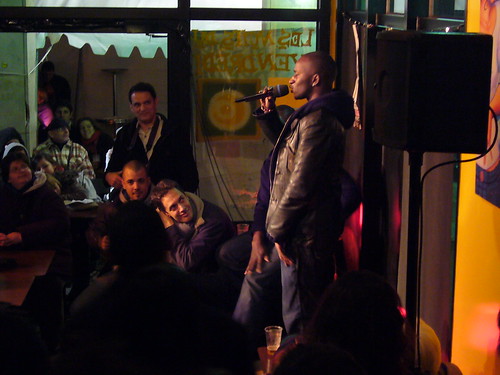
Souleymane Diamanka at Café Culturel in Saint Denis in the suburbs outside Paris

Haven’t I claim that French slam poetry can be seen as a commentary on and/or a representation of French society? Yes, certainly I have. From my very first slam session, I’ve felt that there was a strong connection between scene and society. And then, when I was exploring further the relations between anthropology and literature I wrote about in the previous post (and which I’ll come back to soon), I made a giant step forward in getting to grips with the relationship. Suddenly, I saw a clear connection between the slam scene in the years 2006-2007 and the riots in the autumn 2005 and the deepest oppositions in French society. All thanks to the ritual and performance theorist who for a long time has been looming in the background, or rather in the middle of the heaps of books I’m building my project upon. This is not to reduce the artistic element of the slam phenomenon. On the contrary, good ol’ Victor Turner conjoins the two – theatre and social drama – on a deeper level and shows how the two actually feed off each other.

Souleymane Diamanka at Café Culturel in Saint Denis in the suburbs outside Paris

Haven’t I claim that French slam poetry can be seen as a commentary on and/or a representation of French society? Yes, certainly I have. From my very first…

Read more

Anthropology and fiction (part 1)

The reason why I became an anthropologist is that anthropology can include anything. Early in my studies, when I still aimed in an other direction, a professor told me that until her MPhil she had had a very broad field of interests, including reading French novels in their original language. But in order to reach her position, she had had to forsake much of that. Talking to her, made me realise that I wasn’t ready to give up on all my different interests in pursuing a career. So, if my future job wouldn’t spare me time to immerse myself in social and political issues, travel, film, literature and other things that interested me, I would have to take all that with me into my future job. And if I wasn’t a hundred percent sure when I started with anthropology, I certainly was after reading just a few pages of the introductory text Small places, Large issues. Anyway, the title says it all, doesn’t it?
[teaserbreak]
But if anything can become anthropology, then, conversely, a lot of other things converges on being anthropology as well? In my opinion, yes. I’ve had the opportunity to go on a little reading spree of fiction lately. And to be honest, no one does anthropology as well as novelists do. When I started thinking about this, I thought I remembered someone with a little more disciplinary authority than me saying something similar. But I realised that what I had in mind was a somewhat silly article by Maurice Bloch asking why others are able to make core anthropological issues, like fundamental questions of human nature, into blockbuster books while anthropologists don’t. The article was silly for several reasons I’ll not go into here, but I find his original question intriguing. Maybe more anthropologist should go deeper into fundamental questions, and maybe many anthropologists (and many other academics) should write in a more accessible manner for a larger public. At the same time, I’m almost tempted to say; but who cares, as long as we’ve got – not popular evolutionary biologists like Bloch was pointing to, but – novelists!

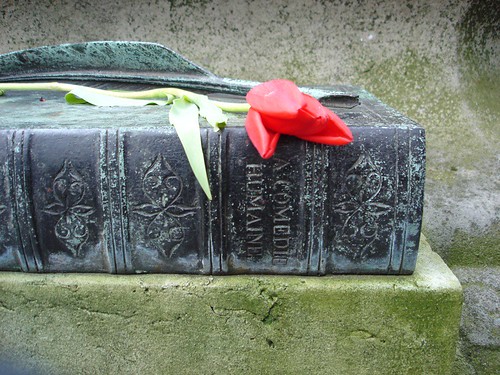
Balzac’s Human Comedy is hard to beat when it comes to fiction with anthropological components. His interest is society as a whole in the decades after the French revolution, (but perhaps particularly the life of the new bourgeoisie, because he’s less interested in the poor and the working classes than for instance Dickens.) Leo Tolstoy is another one, and as far as I remember, a far better depicter of the depth of the individual characters than Balzac, whose protagonists are mere types illustrating their social position within society. Another personal favourite is Michel Houellebecq’s outrageous analysis of human relations following the social changes in the 1960s.

Several of the books I’ve read lately have a streak of good anthropological description and analysis; The White Tiger on today’s booming India by Aravind Adiga, What is the What, the life history of the Sudanese refugee, Deng, by Dave Eggers, or The curious incident of the dog in the night which shows, from the native’s point of view, so to speak, the life of a young boy with Asberger Syndrome, by Mark Haddon.

But what I really want to come to in this post, is the Norwegian literary phenomenon Karl Ove Knausgård. In a novel in six volumes, in the process of being published in the span of one year, he explores is own life in detail within a clearly literary framework. What gives it anthropological overtones in my opinion is very different from what makes my previous examples anthropology-like, but perhaps one can say that he writes more in the vein that Bloch is asking for. Socio-political and economical analysis, as well as any opinions on such issues, is blatantly absent in his oeuvre. Neither are there, until volume three at least, any real analysis of social relations. Conversely, what there is, in abundance, is the world seen from the perspective of the native, the author himself. And it is exactly this description in detail ad absurdum if not nauseum, that made me think of ethnography in the first place. He tries to describe his life in as much detail and with as much honesty as his human imagination is capable of. That provides the reader with much description which is liberatingly free of any obvious purpose. Usually in fiction, everything the writer has put down on paper is supposed to mean something and add up to the story to come. Many of the passages in Knaugsgård’s book seem to be description for its own sake, exactly what theory oriented anthropologists would call butterfly collecting (while in some cases their own work might fit so rigidly into a theoretical framework that all real human life is lost. The best example here is perhaps the highly acclaimed The Nuer (see earlier post).) I would instead call it “thick description” and in line with the recommendations of sound ethnographic procedure (see earlier post). Knausgård himself says that he’s on a quest for what it means to be human, no less, and I certainly see his point. In going into detail into his own life, aspect after aspect of – universal, I would guess – human existential struggle is revealed.

I was one of the many who refused to bother with this seemingly overrated and overexposed project in the beginning. Then, I discovered that the commentaries in the newspapers read completely different things into the work. The novel was clearly so polyvalent that it inspired readings that varied to the point of seeming completely contradictory. Art historians, feminists, political reactionaries, priests, fellow authors… all focused on different aspects of the book and gave it different interpretations. It made me start to see the whole project as a piece of Bourriaud’s relational art, where the work of art comes into being in the meeting with it’s readers and the interaction it engenders. It became even clearer to me when I brought volume 2 with me to hospital, and almost every person I got in contact with there, be it the surgeon himself, the physiotherapist, one of the cleaners, hospital orderlies and of course many of the nurses, had something to say about the book or the fuss it created.

*

A point not to forget when I acclaimed Knausgård’s quest, is that much of it is clearly very good literature. It’s no doubt that it is a piece of art, and the question is, what can other representations of society and human life stand up with in comparison with art? That question has popped up in various guises lately.

The reason why I became an anthropologist is that anthropology can include anything. Early in my studies, when I still aimed in an other direction, a professor told me that until her MPhil she had had a very broad field…

Read more

The long and winding road of a research project

My previous research project followed a typical comedy structure. It was a difficult but steady upward struggle, with hard work overcoming challenges and a quite happy ending. The present one, however, staggered right from the outset into a maze of existential brooding and substantive challenges. Some of the challenges pertaining to the research in Paris as compared to the study in London, I’ve written about elsewhere. But there’s more to a life in research than just research difficulties.
[teaserbreak]
The Monday I started my PhD, I learnt that a friend of mine and her two years old child were lost in Thailand after the Tsunami. Within a few days, I was also told that my supervisor-to-be was seriously ill with cancer again. I turned 33 that month, and I started wondering if it was no coincidence that Buddha’s as well as Jesus’ existential brooding started in their early thirties. When Buddha was around 30, he discovered old age, illness and death. His life had been shielded until then, so the discovery made a profound impact. When death and illness came into my life, I had already been pondering over the viciousness of old age for some months. This was really just too much to accept and cope with without giving it some deep thought. In Norwegian, the concept of a generation (mannsalder – “age of man”) counts 33 years. Maybe that what’s it takes to realise and understand the last mysteries of life?

What I was looking for, wasn’t some religious explanation à la what the equally aged Jesus and Buddha found, but I needed to set my mind at peace with the existence of these phenomena in our life here on earth. Maybe I also started feeling restless in my own life. Had I made the right choices on how to live in the face of possible illness, probable old age and certain death? In the comedy structure of my research in my twenties, such matters never disturbed me. Luckily, I’ve never questioned myself if anthropology was the right career for me. On the contrary, anthropology had risen as the luminous answer to my existential worries of my twenties. That research in cosmopolitan Paris was what I wanted to do, was clear, however, fieldwork now also needed to be existential work.

When I finally found my focal point in the field, the gloom was long gone. And as if to put a final end to it, strangely, the host for the first slam poetry night I attended was called MC Tsunami, and the person who had taken me there and also truly liven up my Paris stay in general, shared the name with the two years old child who had disappeared.

But the winding road of the research project wasn’t finished with finding meaning in life in the face of death and finding a suitable field for research. Then, there was the 25% teaching as part of the Ph.D-detour. And there was a baby-detour. And now finally, a titan hip-detour. The longest, and hopefully last of this maze of a project. A comedy, it’s certainly not, but I’m quite sure it’s neither a tragedy. I think it’s just time I get hold of Ariadne’s thread and start winding it up.

My previous research project followed a typical comedy structure. It was a difficult but steady upward struggle, with hard work overcoming challenges and a quite happy ending. The present one, however, staggered right from the outset into a maze of…

Read more

Research and ethics: France on Facebook

All of a sudden, people I knew from different circles in France started appearing on Facebook, about two years after the craze hit Norway. It reminded me of a question brought up in a seminar preparing graduate students for fieldwork I lead a while ago: Should one include one’s informants on one’s regular Facebook account? A girl wondered whether to keep two accounts; one for the fieldworker and one for her private self. If not, all attempts at anonymising would of course be futile.
[teaserbreak]
There are several reasons why two accounts wouldn’t work. It would just be easier for the locals to puzzle out who is who on the more limited “research account”. An equally important objection is that immersed in the field, the researcher needs friends and for me and many others, it’s nothing more natural than to find them among one’s “informants”.

In Paris this is not a problem for me, as I have no intention of anonymising the slam poets. In my fieldwork in London, however, the situation is different, as the thesis was full of sensitive issues and all but a few people had to be unrecognisable. So even though I’ve found many of my former “informants” on Facebook and I would love to use that tool to get in touch with them again, I hesitate to include them in my network for everybody to see.

All of a sudden, people I knew from different circles in France started appearing on Facebook, about two years after the craze hit Norway. It reminded me of a question brought up in a seminar preparing graduate students for fieldwork…

Read more