search expand

Bienvenu à mon blog de Charonne

It’s been more than two weeks now, since I’ve moved house. This move has made me realise that I in fact lived in a village before, and now I seem to have moved downtown. In downtown Charonne, I’m not recognised by the baker the second time I enter his shop, and the same faces don’t surround me on the street every day. In our little neighbourhood in Ménilmontant I saw familiar faces all the time, and even a shy person like me got to know the local merchants in not much time. As I think about how quickly I got a sense of the village-like place I moved from, I realise that I’m not able to give a good description of my new quarter yet, despite having lived here for a while.
[teaserbreak]
Part of the impersonal atmosphere of Charonne – a quartier populair a little northeast of Place de la Bastille – comes down to it being wintertime. There are no longer chairs and tables outside the cafés and bistros, and people don’t hang around outside but hurry home and inside on their way from the metro or bus. And crossing a local square, I only come across some youths asking for cigarette papers or the odd loner, doing nothing on a bench. The parents and children, staying for hours after school time in the warm days of autumn are long gone. December is a hard month discovering an area…

My impression so far is that the middleclass bohemian bourgeoisie (‘bobo’) creeping down, or up, the hill in Ménilmontant, have not reached here yet. There is a small gallery of modern, figurative paintings and a little shop of ceramics in my street – in addition to an appealing little shop for making your own hanging garden – but I suppose a gallery or two doesn’t qualify a Parisian area as gentrified. The working classes seem for the most part still left by themselves. (There is however a couple of all right restaurants around including a sushi place, but still I’d claim that it doesn’t count as gentrification). My impression is strengthened when considering the food on offer in the local supermarkets; my amateur guess is that the number of ecological products at sale might be an indicator of the social class of the area. The only ecological groceries you can get here, are staple foods and other long lasting products (usually quite dusty). There are no ecologically grown bananas or other fruits or vegetables… I haven’t checked for organic meat, I’ll have a look next time. (When talking about supermarkets; one thing I like about French supermarkets is the loooong time many people spend in front of the cheese counter). Similarly, only one supermarket around here sells expensive and small (thus easily stealable?) beauty products like facial creams and razor stuff. In that particular store they are also more persistent in asking their customers to leave their bags in custody when entering the shop. Is there a connection? I’m only guessing.

I learnt by coincidence – on a screening of a film from a local elementary school on the 100 years anniversary for the law on laïcité (the separation of church and state) – that the local schools are in fact classified as educational priority. Being a ZEPzone éducation prioritaire – means there exist a number of socio-economical disadvantages here. (I’ll for sure return to the question of ZEP, as it has played an important role in the debates both before and after the November riots/revolts. ZEP is the French version of affirmative action; habitants of particular areas, instead of particular (ethnic) categories, are considered as disadvantaged and thus entitled to special attention).

When thinking about it, I think perhaps my description has been a bit one-sided. If I’ve given the impression that the area is in any way shabby, I should correct myself. I find the area ordinary and a bit impersonal, but far from shabby. The streets are incessantly being washed by small, green cars here, as in the rest of the city. The squares, the flowerbeds and the trees lining the boulevard are being well kept. And the buildings, greyish by pollution, are well maintained.
Apart from a couscous take-away, a yet uncounted number of tiny bars where (mostly) men seem to hang around the counter at every hour of the day, a surprisingly tidy food-market twice a week, an abundance of pharmacies (at least as many as there are newsagents but fewer than there are bakeries and patisseries), my local area also comprises an anarchist bookshop (Quilombo). Perhaps my very favourite thing of Paris life is walking down a street, an anonymous just normally picturesque Parisian street, and then you stumble upon an amazing graffiti, or a café so charming that you just have to enter – or an anarchist bookshop, just around the corner on your way to the supermarket.

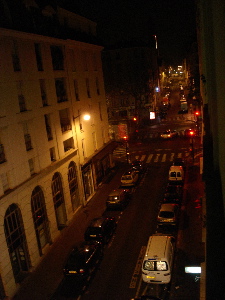
When I finished writing this post, I realised that I had not taken any photos of the area (perhaps another sign of how impersonal I find it), so I had to take one right now, out of my bedroom window. Thus, Charonne by night…

It’s been more than two weeks now, since I’ve moved house. This move has made me realise that I in fact lived in a village before, and now I seem to have moved downtown. In downtown Charonne, I’m not recognised…
Read more

Riffraff of France

Sunday's message at Place de la Nation
Message at bus stop at Place de la Nation, Sunday 11th December

I should have provided a proper welcome to my blog from Charonne (as I’ve moved house) and to the new name (Cicilie amongst the Parisians), but I’ll leave that for later. We’ll jump right into the action with an in medias res report from this sunny winter Sunday. Today I went hunting for posters from Les Racailles de France (the Riffraff of France). This group, consisting mainly of girls in their twenties from the suburbs of Paris, has put up 300 “commemorative plaques” in key areas of the capital, saying things like: “A homage to hundreds of thousands of immigrants who came to construct and reconstruct a France which keeps them, their children and grandchildren outlawed from society. When will there be a law on the positive role of immigration?”
[teaserbreak]
They ask, of course, for a law asserting the positive sides of immigration since the parliament in February voted for a law on valorising in education the positive role of colonialism. Not surprisingly, this law has been a hot potato from the moment it was passed. After the November riots, the hot potato has gained in importance and is now setting the political agenda of the Republic. Last week, the Interior Minister Sarkozy had to cancel a trip to Martinique because Martiniquais – from the poet Aimé Césaire to members of Sarkozy’s own (right wing) party – obviously weren’t keen on welcoming him.

The last week also included the bicentenary of the battle of Austerlitz, won by Napoleon. The government avoided turning up on any official commemoration, and the tepid celebration in fact taking place was eclipsed by the demonstration. The emperor seems finally to have turned into a persona non grata – for reinstating slavery. Hence, the headline of the day turned out to be not the battle of Austerlitz, but whether Napoleon could be compared to Hitler or not.

So Les Racailles de France seize the moment to demand a rewriting of French history. Immigration is not a yo-yo, they say to the newspaper Le Monde, and points out that the population seen as a problem now, was needed as soldiers protecting France in the wars. This and other groups continue the fight with words instead of fire, and it seems they have come long way in just a few weeks. The commemoration the 11/11, the day of the Armistice (ending the First World War), the former colonial combatants were hardly mentioned in the French news – in stark contrast to the same commemoration in Britain. (There, the recognition came in the late 1990s). Less than a month later, the colonial past of this country is present to the point of being able to set the political agenda day after day.

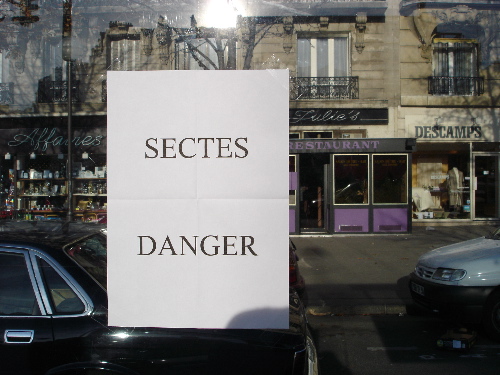
So, today I went down to Place de la Nation to see if I could find some of the posters put up by Les Racailles de France. I went around the enormous square-cum-roundabout two times. On my way I passed a slightly junky Christmas market, a chef opening oysters outdoors for a restaurant, half a dozen couples kissing, more than a dozen lapdogs (many of them dressed for the cold), a kid playing Gameboy as he was walking (as a Parisian kid version of the typical Parisian ‘walking while reading a book’) and many Sunday strollers and vegetable market shoppers, but I saw no posters from The Riffraff of France. Others had now put up sheets of paper in the bus shelters, in order to voice their opinion on present day politics. DANGER. SECTS, it said. And nothing more. Sects are very dangerous here in this country, I’ve learnt yesterday at a public meeting commemorating the centenary of la laïcité (the separation of state and church). Was the poster ironic or not? I don’t know. Anyway, the meeting, the dangers of sects and religion and the whole debate around la laïcité must wait for a now.

Sunday's message at Place de la Nation

Message at bus stop at Place de la Nation, Sunday 11th December

I should have provided a proper welcome to my blog from Charonne (as I’ve moved house) and to the new name (Cicilie amongst the Parisians), but I’ll leave that…

Read more

Information overload 2 / internet fieldwork

A day at work…: I was about to get outside (its freezing, but sunny). Unfortunately, it was time for 12 o’clock news before I managed to escape.

[teaserbreak]

Oh, here we go again. La ligue de droits de l’homme and MRAP (Mouvement contre le Racisme et pour l’Amitié entre les Peuples) are interviewed concerning the expulsion of troublesome foreigners with or without their residence permit in order. Ok, that’s certainly very interesting, but it’s not news to me.

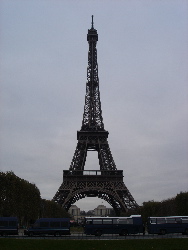
But then the journalist mentions that a gathering is to take place at Champs de Mars tomorrow. That I’ve not heard before. I’ve got to search the Internet. Nothing on the sites of MRAP or Le ligue de droits de l’homme, but on Paris.indymedia I find something interesting. It starts right on: “Putain, are you all in front of the TV-set or what?” Then he(?) goes on to recount to the indymedia radicals his voyages in cyberspace of a very different France, skyblog. (See for instance cites2france.skyblog.com . Skyblog has, for some reason still unknown to me, become the site for the banlieue bloggers.) Obviously, this guy(?) is mad at his commerades at indymedia: « banlieues, villes et campagnes tous ensemble » et personne n’y répond… But now we’ve got the chance, he says, and reveals the news he found on skyblog about the upcoming gathering. For this indymedia-blogger, the event is already inscribed in the revolutionary French history (he refers to the fight for one week paid holiday in 1936, 1968 and of course the commune…). Ok, that was sociologically interesting, but I still don’t know much about what will take place tomorrow. I try google: “rassemblement tour eiffel”.

And what do I find? Great, I’m doing a whole sociological la distinction tour d’internet here. Le Weblog du 7ème Arrondissement (a posh district indeed…) refers to another blog, the Parisist. The Parisist asks if Paris will burn on Friday, since les banlieues are planning to pay us a visit, – with reference of course to messages circulating on skyblog. On the 7th Arrondissement blog one can read this: “There are good reasons for organizing such an event for all the honest citizens who have had enough of all this violence. On the other hand, certain others seems to want to use this gathering in order to throw gunpowder on the fire.” And it cites: ON VA CRAME PANAME COUSIN ON VA VENIR ENCULER SARKO CHEZ LUI (we’ll burn Paris (cousin= cousin or police informer), we’ll go fuck Sarko at his place). The Parisist one the other hand, seems a little less sensational as it drily comments the same citation; “evidently, we prefer the second suggestion.”

It’s already two o’clock. I still don’t really know what will happen tomorrow. So what should I do now; continue searching or finally manage to get out of here?

A day at work…: I was about to get outside (its freezing, but sunny). Unfortunately, it was time for 12 o’clock news before I managed to escape.

[teaserbreak]

Oh, here we go again. La ligue de droits de l’homme and MRAP (Mouvement…

Read more

Le square

When I think about it, one of my favourite things to do in Paris is to hang out in squares (public gardens) after school time.

[teaserbreak]

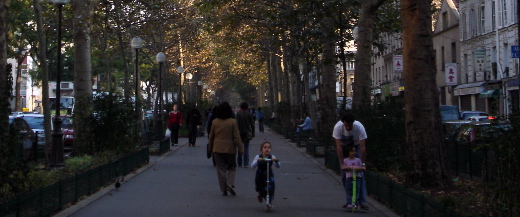
What’s so nice about that? It seems like all children go to their local public garden with their parents around four or five o’clock in the afternoon. I’ve seen this neighbourhood phenomenon many places around Paris. The children run around and play with each other, while their parents chat, read or just watch the children play. It’s such a nice and neighbourhood-ly thing to do. After an hour or two, depending on the weather, they all leave and pick up a baguette in their local bakery on their way home.

Today it’s been wonderful weather (at least 20°). After I had a coffee at a bistrot at Place de Ménilmontant (partly in order to check out if my suggestion yesterday that the ethnic and gender mix is even here (I was correct, at least it was even around 16h30 on a Monday…)), I walked up the hill to my local square and had a Quiche thon et tomate on a shady bench, right in time to be reminded of how pleasant life in Paris can be for its inhabitants. This public garden worked exactly as the ones I knew well from my stay in Le Marais (4eme Arr.): In Marais there were two perfectly gardened and groomed squares next to each other; one small reserved (by some tacit consent, obviously) for readers, people just wanting to sit quietly by themselves for a while and those speaking in a low voice, and one larger where noisy children ran freely around watched by their parents. (The level of noise children in Paris make when they play seems to be markedly higher than the equivalent level in Norway, – according to someone who is more expert than I on such issues. An nonauthoritative guess would be that there is more discipline in schools here, thus more need to rebel elsewhere…??). The local square here is so lager that it can incorporate both usages, but also here the reading area seem to be kept neatly separated from the play zone (this must be confirmed by more visits to the park…).

I’m not going to write about ethnic mix today, just suggesting that it does not seem to be as even as at Place de Ménilmontant, but far more even than Porte de Montreuil, St. Sulpice, Canal St. Martin or heavily gentrified Marais (an area I’ll return to later). Class mix is a complicated issue I haven’t even started to probe yet… Concerning gender; women were in majority accompanying children, but there were quite a few fathers as well (of all ethnic backgrounds, for those who are interested in such details…).

When I think about it, one of my favourite things to do in Paris is to hang out in squares (public gardens) after school time.

[teaserbreak]

What’s so nice about that? It seems like all children go to their local public garden…

Read more

Dimanche…

Today I was making another attempt on getting a bike. I tried yesterday, at a one-off bicycle market arranged by Mieux se déplacer à bicyclette utside the church Saint Sulpice (between St. Germaine des-Prés and Jardin du Luxembourg, south of the river). But it was too orderly organised for my taste – or patience – with tickets, queuing and waiting, so I didn’t bother.

[teaserbreak]

Too much organising didn’t spoil the market at Porte de Montreuil, where I looked for a bike today. At Montreuil they have most things, to not say absolutely everything. Just getting off the bus, I even saw a Ford cabriolet for sale for 1600 € (ca 12800 NOK), but both the car and its seller was under quite severe scrutiny by three police officers…

The market is situated just by La Périphérique (the motorway circling Paris), thus the name Porte. At the bus from Gambetta (close to where I live) three black kids (dressed in hip hop gear; hooded training jacket or sweatshirt, large sagging jeans or track suit bottoms), commented loudly that this must be the banlieu, 93 (postal codes, Paris has 75), when we approached the market. A Maghrebi (North African) looking elderly woman sitting in front of them intervened: no, it’s the 20th Arrondissement (district). I don’t know exactly what he meant by suggesting that this was a banlieu, but he could very well have implied that the character of the place was quite different from the one we had left – just a ten minutes bus ride up the road.

Porte de Montreuil is in the same arrondissement as where I live, but on the way the ethnic and class mix have changed very much (here with a predominance of Maghrebis and blacks). Paris changes enormously much from neighbourhood to neighbourhood. Later in the day I experienced that the gender and age mix changed as well, just strolling down a boulevard.

After I had wandered around among second-hand and cheap street fashion clothes (and loads of grey and dark suit jackets – now I know where many of the old Maghrebi men get their suits) bric à brac, nylon underwear, kitchen utensils and Adidas trainers for a while, I took a packed bus northward to an “Open Gallery Day” along Canal St. Martin in the 10th Arrondissement. Still the east side, still a quite deprived area, – but of course, who goes to “Open Gallery Days” in such areas if not the Parisian bobos (and tourists of course)? Bobos are Bourgeoises Bohêmes (middleclass bohemians), and this part of town is filled with them (or us, I should say…).

Following Boulevard de la Villette and Boulevard de la Belleville on my way home, I first walked amongst Sunday strollers of Maghrebi, white or East Asian origin (a few blacks, but not so many). Many rode bikes, rollerblades, tricycles, skateboards or pushbikes (depending on age, of course, and preference), which are typical Sunday activities in Paris. A couple of women in djellabas (female kaftans in soft fabrics) where sitting chatting on a bench looking after their kids on tricyles, but my impression so far is that more fathers than mothers (if not both) undertake the Sunday entertainment. Further down the boulevard the crowd increased, many of the East Asians were not leisurely strolling at all but burdened with stuffed grocery bags. As I approached Place de Belleville the ethnic mix changed again, tipping towards a predominance of Maghrebis. Certain sidewalk cafés where full of non-consuming “customers” (Ramadan…), – while on the café next there would be non-Muslim consumers amongst its fasting clientele. And suddenly most of the Maghrebi looking women had disappeared, while the boulevard and cafés were overcrowded with men… It was afternoon and soon time to break fast, that might have got something to do with it, I don’t know… Reaching Place de Ménilmontant, the ethnic and gender mix got more even again, – despite that there are always a small “overrepresentation” of North African men with a white moustache, suit jacket and a hat or wool hanging out in the square.

A trip from tourist and chic St. Sulpice, to “banlieu-like” Porte de Montreuil, to yuppiefying/gentrifying Canal St. Martin and back again to a Belleville under Ramadan is not that much of a trip geographically speaking, but socially, and in terms of class, its an Odyssey. To read Bourdieu’s Distinction has become a must for me after crossing Paris, or just walking down a boulevard…

Today I was making another attempt on getting a bike. I tried yesterday, at a one-off bicycle market arranged by Mieux se déplacer à bicyclette utside the church Saint Sulpice (between St. Germaine des-Prés and Jardin du Luxembourg, south of…

Read more