search expand

The Stage is all the World, and the Players are mere Men and Women: Performance Poetry in Postcolonial Paris – What it is, and the questions it answers

Yesterday afternoon, an email popped up with the names of the members of the evaluation committee and a date for the possible public defence. It came completely out of the blue, as I was sure this process would take ages. And also, until I read the names of the two women who will scrutinise and judge it, and decide whether I’m ready to become a doctor or not, I think it hadn’t been really real to me that the work is coming to a conclusion. If everything goes well, the defence will take place in first half of June, which means that the verdict of the committee should be ready in early May. After that, preparation will probably occupy more and more of my time, particularly when the theme of the trial lecture is settled, two weeks before the defence. That leaves three months from now where I can get on with my new project. I feel a definite need however to sum it all up before I put the pile of sheets (it won’t be properly printed before it is accepted) on the shelf for a while.
[teaserbreak]
The thesis starts with four introductory chapters. First, I explain what Parisian slam poetry is and why I’ve chosen the title The stage is all the world, and the players are mere men and women: Performance poetry in postcolonial Paris. Parisian slam is open, extremely varied and most performances bring along much of the real life of the performer. Second, I try to clarify which political, socio-geographical and existential questions Parisian slam answers. It was my supervisor who posed me these two fundamental questions. When I began trying to answer them, I realised the evident importance of spelling out this to the reader at an early stage. I claim, nothing less than that the slam session can be seen as a (cosmogonic) return to the pivotal Tennis Court Oath in the early days of the 1789 Revolution where each head – independent of status and rank – is allotted the time to speak and be heard under as equal circumstances as possible.

In addition to this eternal democratic challenge of equality, slam reiterates concerns over alienation and consumption in contemporary life that have been addressed in various artistic milieus since the Situationists. The slammers themselves do not relate to the French politico-artistic movement of the 1950s and 60s, however their sessions are undoubtedly more inclusive to all kinds of poetic subjects, more concerned with real life and more alive than any of the situations the Situationists were capable of creating (see e.g. this description by Guy Debord himself).

Finally, and which I think I find most beautiful about it, is the poetry – the poiesis, the bringing forth or revelation of a truth – of human existence the public and participative performances search for, and sometimes reach. Now, time for other commitments. More summing up later.

Yesterday afternoon, an email popped up with the names of the members of the evaluation committee and a date for the possible public defence. It came completely out of the blue, as I was sure this process would take ages.…
Read more

The narrow-mindedness of finishing a thesis

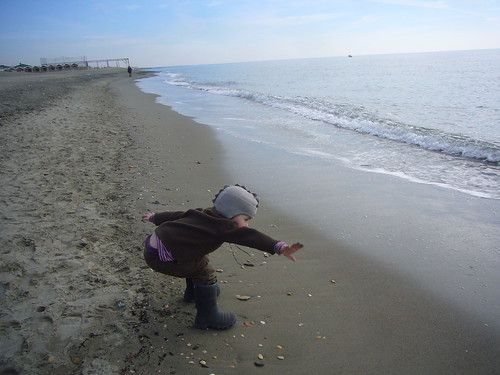
Leo og Middelhavet

It’s time to start summing up not only the last months where I’ve been conspicuously absent from this blog (again) but also, finally, the whole research project! The only thing left now is to wait for the verdict of the opponents and the ensuing, hopefully, public defence of the thesis. My desk is almost cleared, notes and scribbled scraps of paper are thrown away, books and articles are stuffed back into the shelves, and I’ve made small steps in other academic and bureaucratic directions. I’m therefore no longer among the Parisians, either physically or mentally. (Very soon I’ll be among some suburbanites outside Oslo.)

People have of course told me that wrapping up take longer than one thinks. And I have of course thought that, oh no, not for me. But yes it has taken a little longer than I thought. The stretch of time I’ve spent neglecting almost every other engagement (not familial, however), has consequently become quite long. In fact so long that I’ve problems getting back into doing different things during a day again, not only the predictable thesis-thesis-thesis-visit father-pick up in kindergarten-make dinner-thesis related stuff, or perhaps the occasional newspaper-bed. Now, I need a calendar again, and I must read the emails I get concerning seminars and stuff, and I must remind myself that I’m not only available for sporadic socialising, but it’s also a nice and good thing to do.

I’ve not been very stressed during the final 18 or so months of writing up, but I’ve been extremely narrow-minded. There have only been a handful of activities that succeeded in diverting my attention. The most time-consuming was reading about the 22 July terrorist attack and the sombre universe it sprang from. I’ve hardly read a work of fiction, and hardly seen a film. Now, it’s time to climb out of the cave and see what’s going on. It’s definitely time to look a little wider. And it’s time to reply to inquiries and attend seminars, time to write, and – definitely – time to look for new work, and time to start a new research project and think entirely new thoughts.

Leo og Middelhavet

It’s time to start summing up not only the last months where I’ve been conspicuously absent from this blog (again) but also, finally, the whole research project! The only thing left now is to wait for the verdict of the…

Read more

Pieces into place 2

Now, all but one chapter have found their final form, with only minor polishing and weaving together left to do. As this blog has helped me to keep a more coherent and exterior perspective on what I’m doing throughout the various stages of the project, I would very much have liked to keep this diary updated as the nuts and bolts, long lines and small steps took shape. But although this final phase has been all about making sense of and making accessible all the preceding work – thus the writing of the small posts in this research blog writ large – it’s been difficult to find time to write here. Since August last year the writing has been flowing almost seamlessly (after I lost my presentation due to a ridiculous back-up mistake the day before I headed off to a conference, and I had no choice but to speed up considerably and quickly fill the gaps with top-of-the-head translations of French slam poetry). And the pieces have fallen into place with astonishing precision. – Here comes a few examples, from the remaining chapter which I’m working on now and which is still in a mess: The seemingly low level of education has puzzled me (although none of the people I asked about it agreed that it was particularly low). Then I – a bit late perhaps, but some differences are less obvious to look out for than others – found out that there’s a far lower percentage of university degrees and even final general high school exams in France than in both the US and Norway. In the same book where I read this – The Dignity of Working Men, a comparison of working class moral boundaries in the US and France – I also learnt that class solidarity and class struggle are still overwhelmingly present in France, despite the decline of the communist parties and the exceptionally low percentage of labour union membership. This puts the emphasis on solidarity and equality of the slam sessions into a far broader context than I initially thought and lead me to re-read The Distinction by P. Bourdieu. And oh my, what exhilarating surprises! Almost on every page there were things to enter into discussion with, and I started to wonder if the slam milieu could provide an example of an community and art form of liquid modernity (Z. Bauman) – thus were coherent boundaries have dissolved – but which has retained a strong sense of (class) solidarity… Well, well, more on this later when the bits and pieces of this chapter also find their place.

The point of this post was to state that I’m still here, thinking about this fieldwork and writing up blog has followed me through thick and thin of the last five, soon six, years. Now, it’s no more than a few months left, and I hope to be able to leave a trace of this final phase, as the last threads find their places in the tapestry.

Now, all but one chapter have found their final form, with only minor polishing and weaving together left to do. As this blog has helped me to keep a more coherent and exterior perspective on what I’m doing throughout the…

Read more

Manifesto for faster writing and shorter workdays

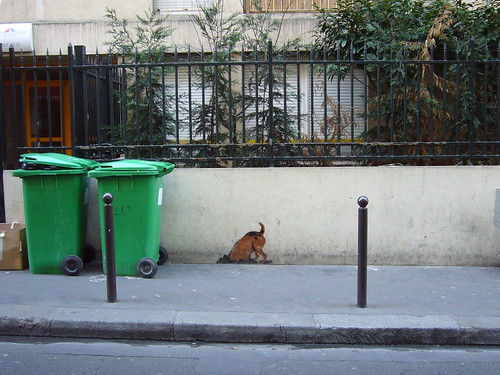
Belleville streetart
To my surprise I discovered that it was easy to change my way of writing and even my way of working more generally. The writing came easiest. When I wrote my master thesis, on very good days I could produce half a page. I could file and mould every sentence for hours, a technique I think contributed to the far too dense structure. Not only is the fluency easily lost, but I also started to find it a boring way to work.
[teaserbreak]
I then read a tip that helped me out of it right away. Now, regularly write at least a 1000 words on a regular workday. It’s just to write on, without any censorship – don’t erase anything, just switch paragraph – and preferably no checking of sources during the first draft. [Write everything you want like to check in square brackets]. One should start first thing in the day (or rather, in the work day, for us with children) and keep it going for two hours. Often it goes so well that it is just to continue. They way I wrote earlier made me so fed up with my own text that I never rewrote and hardly even read through it. – But even then I had to restructure the text, both within and between chapters. Now, this editing work is much easier on all levels. It’s far easier to delete since my sentences and paragraphs haven’t had the time to become particularly dear darlings, and it is far easier to rewrite and restructure.

This writing exercise also helped me with the more challenging task to change work habits. When it suddenly was necessary for me to get as much work done as possible, it almost seemed like I needed to change personality. Until then, for as long as I can remember my way of working can be likened to a heavy, heavy steam engine setting off from last chance saloon. I could (can) spend hours getting started. I’ve waited until the absolute deadline, than procrastinated a little longer before slowly pulling my forces together, in order to finally work for a loooong, looooong time with an increasing speed and enthusiasm. Then of course, after a period of intense effort and concentration, some kind of break is desperately needed, and it will once again take a long time – and usually a last call – to get the steam engine going again.

Then circumstances just came and changed the pattern. Circumstances demand that I get a minimum of 6-7 hours of sleep every night (if not things can get very nasty between Mrs Surpæt [untranslatable old dialect related to ‘grumpy’] and her offspring. Circumstances also demand that (at least the first part of) the office day must end around 15H. That leaves me with no more than 5-6 successive work hours, something which was unthinkable under my previous regime. I sometimes force myself to take a lunch break, and I still rarely write less than my 1000 pages. – If it is not one of these awful, annoying, aggravating days that keep me from getting on with the writing right from the beginning. Because, the thing is, if I get hung up in some petty task of searching for something or clearing some space on my desk or some administration of some kind, I’m almost certainly unable to recover that day’s work spirit.

But if I’ve prepared rightly and know where to start (either by thinking it through the day before or on the way to work), and I sit down without too much fuss, it’s almost as if the fewer work hours I have in front of me, the more I get done. Down to a certain limit of course, but working concentrated for around 5-6 hours (with or without a break, is really perfect). This scheme worked amazingly well for more than four months in the autumn, a very lengthy leg which it would have been impossible to beat under earlier circumstances.

Now the question is: My thesis needs about 33 000 more words. Can I get them written in 33 days (divided on 4 days a week, – also due to certain circumstances), thus a little less than two months?

Belleville streetart

To my surprise I discovered that it was easy to change my way of writing and even my way of working more generally. The writing came easiest. When I wrote my master thesis, on very good days I could produce…

Read more

Create expectations for the reader

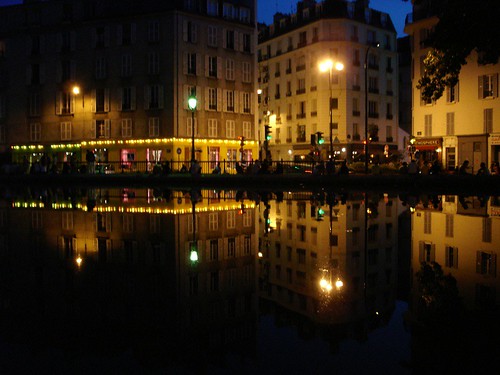
Canal St. Martin, summer in Paris

I wrote about my expectations of Hemingway’s little book from his early years in Paris, A moveable feast, a while ago. Silly me thought I would find the reason why it was particularly hard to write about Paris in his book, as he wrote so evocatively: [teaserbreak]

Maybe away from Paris I could write about Paris as in Paris I could write about Michigan. I did not know it was too early for that because I did not know Paris well enough. But that was how it worked out eventually (A moveable feast, 2007, p. 4).

It took me quite a while – silly me – after finishing the book to understand what kind of answer he had given, because the answer wasn’t straight, as I had hoped it to be. It was in Paris that he decided to quit reportage and journalism, at which he seemed quite successful, and test his luck in literature – despite having a wife and child to support. And it was in Paris he acquired his characteristic style of writing and building up a story:

Then I started to think in Lipp’s [he’s writing in the old cafés in the old artist and intellectual quarters at the west bank :-)] about when I had first been able to write a story after losing everything. … It was a very simple story called ‘Out of Season! And I had omitted the real end of it which was that the old man hanged himself. This was omitted on my new theory that you could omit anything if you knew that you omitted and the omitted part would strengthen the story and make people feel something more than they understood (A moveable feast, 2007, 43).

Of course he wouldn’t answer my question, I realised. Merde. Now I have to figure it out myself, and that would probably take me a whole lifetime. Because, after all:

If you are lucky enough to have lived in Paris as a young man, then wherever you go for the rest of your life, it stays with you, for Paris is a moveable feast (Hemingway, in a letter to a friend

On the more positive side, I got an excellent lesson in the important skill of creating expectations for the reader. Before Christmas, the feedback I got on one of the core chapters in my thesis surprised me to the extent of first annoy and discourage me, then – and I hope I’m there now – spurring me on to produce better texts. I had described in detail a slam session where I highlighted a handful of texts and people in order to go more in depth. But what had grasped people’s attention was not at all what I had found interesting when being present that night, neither what I had wanted to convey to the readers. If I had managed to create any expectations at all through my chapter, it had certainly been the wrong ones…

After some days of gloomy afterthought, I came to the conclusion that the whole core of the thesis needed to be restructured. I don’t think it’s very much work, but it will alter the way people read my argument (if there is any?!) fundamentally. And readers’ expectations and their gradual fulfilment (which in the case of literature can be days, weeks or even years after you finished the book) are everything.

Canal St. Martin, summer in Paris

I wrote about my expectations of Hemingway’s little book from his early years in Paris, A moveable feast, a while ago. Silly me thought I would find the reason why it was particularly hard to write about Paris in his…

Read more