search expand

“Start in the middle”

Last week the amount of empirical data and loose ends unsettled me in my intentions to get on writing. I asked everybody I met if they could recommend me a technique to sort the data and how and where to start writing. The second best advice I got was to start listening through the interviews and jot down central themes and get inspired from that. It’s a good idea and I think the conversations and individuals were my point of departure for my Master thesis. But this time I doubt that the interviews are anywhere near my peak performance as a fieldworker. First, they were conducted in French. Second, and most importantly; my slammer acquaintances aka interviewees knew I’d not be able to anonymize them donc what they told me are mostly bland and well-groomed versions closer to what anyone can find on the internet than what one can see and hear on and around a slam session. On the other hand, the interviews certainly give me background information providing context for the individuals and their relationship to the slam… or whatever… I don’t know yet. I just know I felt ok about them but nothing more. They weren’t eye-opening enlightenments like most of the interviews I did in London.

“Start right in the middle, with the core of the issue,” a friend casually remarked during a conversation mostly about other things when I met her last week. Yes, of course, that’s obvious, I suddenly realised. I had started in the other end, in the margins, trying to track my own route of discovery from the beginning of my stay in Paris. I thought it would be an interesting journey to re-travel: Where and when and how did I come across certain topics and reach particular understandings? I realise now that first I have to determine for sure which are the important topics and understandings that need to be pinpointed – thus I have to start from the core…

And the core is… the soirées of course! I’ll go through them one by one, focusing on the different venues and events, starting with the four soirées I attended and filmed at L’Atelier du Plateau (already mentioned in this post). I don’t know yet what exactly will come out of this, but I’ll for sure get an overview of the variety of persons attending and the themes they approach. What a relief to find a way out of the empirical maze!

Last week the amount of empirical data and loose ends unsettled me in my intentions to get on writing. I asked everybody I met if they could recommend me a technique to sort the data and how and where to…

Read more

Steps to an analysis: from impressions to data

After I mapped out an outline two and a half months ago, my project has appeared amazingly ordered and under control. Perhaps it’s no wonder then, that I’ve postponed delving back into my fieldnotes for as long as I could, keeping myself busy with ordered and controllable intellectual activities like reading books for literature seminars and writing abstracts for upcoming workshops and conferences as well as even an article.
[teaserbreak]
But I know the kind of chaos that waits in my eight small notebooks and six larger ones, one personal diary, skype chats, e-mails, smses and scattered word documents, and what kind of threat it poses to the ordered outline. Is my fieldwork as I remember it to be? I try to start from the beginning, but quickly gets discouraged. The notes from my first months are chaotic. All kinds of impressions and observations are jumbled together, often without even reference to where and when:

“Nuit noire [“black night”, 17th Oct. 1961 when several hundred peaceful protesters against the war in Algeria were thrown into the Seine]: that was of course what that they were commemorating…” Who, where?!?

“Sarkozy – visit in the banlieue on the news a few days ago. He was thrown things at…” And my comment, without question mark, with capital letters: “what they show on tv”… If I’m not completely wrong and Sarkozy was thrown things at in the suburbs many times in October 2005, this must have been the time he uttered the (in)famous words about using a high-pressure water cleaner in the suburbs (nettoyer au kärcher) to get rid of the hoodlum (voyous). I think perhaps I was surprised that the interior minister got mixed up in such a violent confrontation and uncivilised behaviour and that they showed it on tv, but my comment is of little use.

On a more positive tone; my first fieldnotes indicate what issues I noticed and found worthwhile writing about. Sarkozy’s mediatised confrontation with people in the suburb happened just a few days before the death of the two teenagers that spurred the three weeks of riots in October-November 2005.

The month I was in Paris before the riots broke out, I was mostly concerned about various aspects of identity like gender, ethnic background and class in my neighbourhood in East Paris. Not so strange, since the reason why I had chosen to live in that particular area was it’s ethnic mix. However, I think the link between identity categories and public space was not something I had planned to look for. A blog post from two weeks after my arrival, signals how early that interest struck me. In my fieldnotes, in between page after page with descriptions of interaction between strangers, I found this comparisons between middle class and working class behaviour in the partly gentrified area:

On my way to the bus stop, I walk behind a very agile 6-7 years old girl in full rollerblades gear, and her mom, apparently, wearing a spring green skirt and shirt in another bright colour. A boy, just a little younger, turns to look when the girl swirls past. He tries to copy her superb turn- and break movement (with her heal) and says something to his mother (or grandmother) in French. She (rather plump, in tight-fitting trousers in polyester) replies brusquely in a Slavic language. She takes his hand, and stops, indicating that he should make space for me to pass.

I had just read Distinction by Bourdieu, and I was thinking about the bourgeoisie [in this case a typical bobo bourgeois bohemian] who teach their children to be self-assured about the space they take up in the world, while the children of the working class should be seen but not heard

For about a month, before the riots started, the weather was wonderful and I spent much time outdoors, just walking around, getting a feeling for this part of the city, for gender, class, ethnic background, age… the presence, mixing and variations of these variables. And then came the riots, and emphasised even more strongly the connection between space and categories of people.

After I mapped out an outline two and a half months ago, my project has appeared amazingly ordered and under control. Perhaps it’s no wonder then, that I’ve postponed delving back into my fieldnotes for as long as I could,…

Read more

Authoring a PhD continued

In Authoring a PhD: How to plan, draft, write and finish a doctoral thesis or dissertation by Patrick Dunleavy, I’ve found numerous advice on how to structure my work more efficiently. I’ll try to sum some of them up here and give a brief account of how I’m making use of them.
[teaserbreak]
In the previous post, I quoted Dunleavy’s (citation) of what constitutes an intellectual question: You have a starting situation and certain means to change it [or say something substantial about it]. The thesis should focus on your own “value added” which

means keeping a critical eye on the extent to which you have transformed or enhanced or differentiated the starting materials of your analysis (Dunleavy 2003: 31).

My starting material was the environment of East Paris, the slam poetry scene and public debates on what constitutes France and French history, (in addition to a huge amount of literature more or less present in my mind). My starting material is in fact a lot more, but I’ve narrowed it down as I think it’s in these areas I find most of my “value added”.

In Dunleavy’s opinion, a thesis should constitute 75% original material (that means material that is more than just review of literature, I suppose), ant that it’s better to concentrate this “value add” in the core 5/8ths of the thesis. The lead-in and lead-out shouldn’t be more than two chapters each (p. 50-51).

Your thesis title, abstract chapter headings, contents page, preface, introductory chapters and organisers need to highlight, set up and frame the core material… As of your lead-in chapter(s): ‘What do readers need to know in order to appreciate the value-added elements to come in the core chapters?’ (Dunleavy 2003: 52).

The thesis title (p. 200-202)
Dunleavy suggests to write down all the key terms you can think of in various combinations, before and after a colon (p. 202).

Your title should introduce the central analytic concepts used or the major argument themes developed. Normally thesis titles have a colon in the middle… to separate out thematic, analytic or theoretical ambitions on the one hand, and empirical references or limiting features on the other (Dunlavy 2003: 200).

The title of my master thesis was Beyond ethnic boundaries? British Asian cosmopolitans. “British Asians” are of course the empirical as well as limiting feature, while “beyond ethnic boundaries” was meant to situate me in discussion with the classical Ethnic groups and boundaries by Fredrik Barth from 1969. Cosmopolitans signals partly a theoretical ambition (which I’m not quite sure I managed to follow up), but it’s also designating and limiting the empirical field: my thesis are not about all “second generation British Asians”, but a certain cosmopolitan stratum.

In the title Society in the making: The Parisian slam poetry scene and Postcolonial Paris, the first part is again meant to situate my work in relation to a theoretical perspective by Fredrik Barth, this time from his book Cosmologies in the making from 1989. The second part emphasises the empirical field as well as pointing to a certain theoretical take on – to see Paris as postcolonial – as well as what empirical aspect of Paris I’m focusing on.

Dunleavy provides a list of questions by the help of which one can scrutinise the perspective of the thesis:

Does the current title really capture what you have done in your draft chapters?
Does it define exactly the central research question which you have answered? Does it avoid drawing attention to any gaps or deficiencies in your research?
Does your title’s vocabulary include the main theoretical concepts or innovations or themes that run through your research, which are used in the chapter texts and do an important job of work there? Does it signal your line of argument in a reasonably substantive way? Are the words used ones, that you will want to talk about and explain at length, in your oral exam?
Does the title make clear the empirical referents of your research, and the necessary limitations you have set for its scope and approach? (Dunleavy 2003: 201-2).

The first chapter (p. 205-6)
“should set out a small number of intellectual themes stemming from the central question of the thesis” (p. 205). Dunleavy suggests 2- 4 themes, with subthemes. The themes should

run all the way through the thesis, synthetisizing your arguments, setting up and framing your research conclusions, and putting the thesis value-added into sharp focus (Dunleavy 2003: 200).

My main themes, I envision for the moment to be aspects of landscape, architecture and environment, various aspects of identity, colonial connections and cosmopolitanism, and the theoretical issue of the process of creating a society (on whatever level).

The conclusion section of the middle chapters (p. 206-7)
Each of the substantive chapters … should be flexibly linked via their conclusions ot the themes from the opening chapters. … The theme that each conclusion links to should be wholly relevant to the specific materials in the chapter and also adapted to the role which the chapter plays in the thesis as a whole. The job of the conclusions section is to pull the focus away from the research detail, to bring out the chapter’s key findings in a stand-back mode. … Each of your chapters should do a discrete and distinctive job, well signalled from its start, and effectively building the thesis. … Check carefully that the ‘need to know§ criterion is being met in terms of the order of the chapters so that contextual information arrives in the right sequence for readers to follow the analysis at all points! (Dunleavy 2003: 2006-7).

The final chapter (p. 207)

First part:
reprise each of the same themes or theory ideas used to structure the first chapter

the discussion of each theme should be grounded securely in the experience of the middle chapters

focus… on establishing clearly what has been shown by your research, and how it is relevant to your central thesis question and the themes set out at the start

What has been achieved by your research? How much has your thesis moved professional discussion along?

not go … into detailed accounts from the middle chapters. Instead is should compare across those chapters, pulling together their themes and connecting up their key messages

Second part:
group its themes together under broader labels or higher-order issues. …. Open out into a discussion of relevant wider professional debates … considering some viable directions in which future research might go from where your work leaves off (Dunleavy 2003: 207).

My outline-in-progress looks like this per now:
In “Introduction: A night in Paris and the suburbs or how I discovered French slam poetry”, I give a chronological account of a trip from Paris to a suburb and back again, in order to introduce a number of central issues.

In “Chapter 1: Socio-political geography of East Paris” the aim will be to describe the areas of East Paris which have a dual importance in terms of its numerous waves of immigration and the slam poetry scene. Here, I will also introduce the theoretical perspective of inhabitation from Tim Ingold.

In Chapter 2-4 I will look at the slam scene from various perspectives: at one generic soirée, the participants with their texts and finally with an analytical angle on the space created during the session.

The rest of the chapters will provide various forms of contest: In Chapter 5, I will try to discuss what is French about the French slam poetry and what can we learn about French society from studying this milieu. This chapter can perhaps be a bridge between the findings in chapter 4 and the methods discussion in chapter 6.

In “Chapter 7: Postcolonial re-appropriation of French history seen in the light of Eric Wolf’s Europe and the People without history” I look at the recent struggle over French history. In Ch. 1, I looked at an appropriation of space (in East Paris by immigrants, street artists…), while here the issue at hand is a parallel appropriation of time.

The comparison I initially intended to do between France and Great Britain is limited to Chapter 8, and here I for the most part intend to highlight the political specificities of the French context, I think…

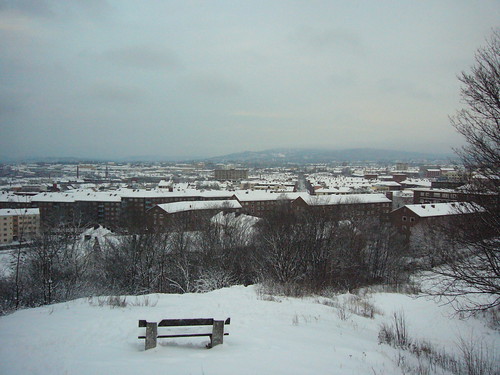
In Authoring a PhD: How to plan, draft, write and finish a doctoral thesis or dissertation by Patrick Dunleavy, I’ve found numerous advice on how to structure my work more efficiently. I’ll try to sum some of them up here…

Read more

To formulate a thesis question

I’ve got one year and six months pay left of my research grant and with the help of organised writing I hope it won’t be a problem to finish in time. But I realise that the writing must be organised this time, so no more writing 140 pages too much like I did with my previous thesis. For the sake of organising myself, I read Authoring a PhD last Christmas (on a black volcanic beach on La Gomera in the Atlantic ocean, so the book is full of dark grains of sand). (Thanks to Mary Stewart for recommending the book on her research blog here).
[teaserbreak]
Manage your readers expectations is the first advice Patrick Dunleavy (2003: 15-16). When I wrote my Master thesis I was so sure I had something interesting to tell, that I couldn’t give a damn about readers expectations… How naïve one can be. This time I’ll follow Tim Ingold’s advise and write more like the swishy swashy pictorial language of We’re going on a bear hunt, and lead my readers on every step through East Paris and her suburbs. In addition to “orienting devices” like headlines etc and “signposts” (indicating the sequence of topics to be handled) (p. 272, 274), Dunleavy suggests an aphorism from Nietzsche so not to forget about the audience during the writing process:

Never ignore, never refuse to see what might be thought against your thought
(Nietzsche quoted in Dunleavy 2003: 134)

When I presented an unfinished article to various readers a while ago, I reminded myself of this quote – in order to handle the at times contradictory feedback I got.

The second good advice I found in Dunleavy’s book was the five components making up an interesting intellectual problem (une problématique, en problematikk), thus how to phrase a thesis question:

1) a goal or objective which can tell how to judge the outcomes, how to see that an improvement has been achieved

2) an initial state, the starting situation, and the resources available to be used

3) a set of operations that can be used to change the initial state and resources (a toolkit of research methods and new date)

4) constraints: designating certain kinds of operations as inadmissible

5) an outcome

Or put differently: “Problematizing your thesis question” means “setting the answer you hope to give within a framework which will show its intellectual significance” ((from Robert Nozick, Dunleavy 2003: 23)

My (preliminary) aim – component number 1 – is to describe and makes sense of a former colonial metropolis as fundamentally marked by its past and present global connections. Thinking about readers’ expectations, I realise that already in this sentence, my choosing of words points in the direction of a specific perspective. Instead of writing just “Paris”, I say “a former colonial metropolis”, for instance…

Component 2: the starting situation and the resources available in an anthropological study I guess must be a specific empirical ground/arena and certain perspectives by which I look at it, in order to generate data and knowledge. I’ve divided the overall aim into a threefold perspective:

i) a microstudy of the creation of a cosmopolitan space: the slam poetry scene

ii) an analysis of the process of inhabitation (from Ingold) in cosmopolitan East Paris

iii) an analysis of France as inherently postcolonial, seen from the perspective delineated by Eric Wolf in Europe and the people without history

The initial states are thus i) the existing slam poetry scene (very mixed in terms of gender, age and social and ethnic background), ii) East Paris (visibly marked by former and present immigration) and iii) the ongoing debates on what constitute France and the history of France, + Eric Wolf’s and similar perspectives on global connections

Component 3: my research methods and new data:

i) observation, participation and filming on about 100 slam soirées → data on the places, audiences, performances, participants… In addition to some “off stage” participation with some of the participants, poetry texts, myspace sites, interviews… + literature on space/place and phenomenology…

ii) observations, hanging around and living in East Paris which give me some idea of how the process of inhabitation can be an appropriation of space. Examples are how the waves of immigration have made their marks on the environment, all the streetart, posers and writings on the wall, and finally the various places, cafés and bars, where the slam is taking place. + literature on performance, oral poetry and…?

iii) to answer the third question, I will draw on my findings from the two previous fields of investigation, in addition to literature and media coverage on the public debates on history and France.

Component 4: the constraints affecting my work, I’ll discuss soon in another dull post on methodology and scientific criteria.

Component 5: the outcome: hopefully a satisfactory description and sense-making of a Society in the Making: The slam poetry scene and Postcolonial Paris…

The final useful point I’ll mention from Authoring a PhD this time, is to try to work out as soon as possible what one will be able to say something about, in order to make a close fit between the question asked and the answer delivered. The author also recommends to formulate the thesis question so as to showcase your own findings, instead of going on and on about other people’s research (Dunleavy 2003: 24-5). That fits well with my aim to write descriptive and swishy swashy, very far away from the language and content of this blog post…

I’ve got one year and six months pay left of my research grant and with the help of organised writing I hope it won’t be a problem to finish in time. But I realise that the writing must be organised…

Read more

Yes, my research blog is really supposed to continue…


Oslo one month ago

Three recent events have inspired me to get this blog going again. The last drop must have been a post by the incredibly prolific research blogger Mary Stevens. In her last post, she tells about her PhD viva and her examiners’ interest in her research blog:

One of the things they were particularly interested in – and of which I didn’t make that much in my write-up – was this blog and the specific contribution it had made to the research experience. I talked about the inspiration, in particular C. Wright Mills‘ idea of the research file, and how it helped extend my presence in the ‘field’ into the virtual arena. Overall, they seemed to think that in an ideal world all researchers would be blogging, as a way of communicating their research to their peers and to the general public, and as a means to keep a kind of intellectual diary. Their enthusiasm has inspired me to find some way to carry on, although I suspect in a new form, as I think this blog has outlived its usefulness (as my failure to post over the last few months has amply illustrated). (Read the whole post on Mary Steven’s blog here.)

As I’ve been chronicling my experiencing continuously, I feel I shouldn’t stop now: The strange things happening after leaving the field, when experiences are turned into data and written documentation, are of course as part and parcel of the research process as is the hanging around in Paris-life I was writing about until last summer. But until now I haven’t

The second event spurring me on to continue blogging, was a brief remark from one of my colleagues who recently got back from his fieldwork: “It’s funny how your friends slowly turn into your informants when you get back to academia and start writing up,” he said. How right! That uncomfortable fact is exactly what’s been churning around in my mind for months now, and I feel it’s urgent to voice this phenomenon/experience in a research blog at this stage.

The third event is the sheer joy and inspiration it gives me to read the research blogs from some of the Master students I was teaching in the spring who now are out in the field all over the world: Rakel blogs (with photos!) from Malta, Nina from Cuba and Inger from India (I think she’s a photographer, ‘cos her photos are really incredible)…

Ah finally, there it’s done, my first post for more than three months…

Oslo one month ago

Three recent events have inspired me to get this blog going again. The last drop must have been a post by the incredibly prolific research blogger Mary Stevens. In her last post, she tells about her…

Read more