
What’s the point of science when the public lacks access to it and researchers hide in their ivory towers? The internet provides new ways for researchers and the public to exchange knowledge. How do antropologists make use of blogging, Facebook, YouTube and new modes of publishing, for example Open Access journals?
Sharing Knowledge: How the Internet is Fueling Change in Anthropology is the title of Owen Wiltshire’s master’s thesis in anthropology at Concordia University, Montreal.
“Plans to study anthropological online communities and Open Access movement”, I wrote three years ago, when I first heard about his project. A few weeks ago, he’s defended his thesis. So, here’s a short email interview with him.
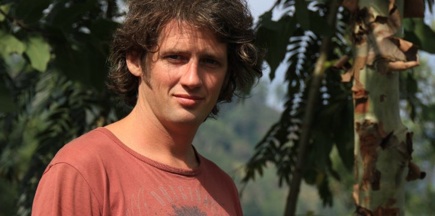
Owen Wiltshire. Photo: private
– How was the thesis defense? What kind of reactions did you get?
– It was much more dramatic than I expected. One reader took offense to what I had written in Chapter 2 about the history of anthropology. She felt the entire chapter should be removed.
The history of anthropology section was meant to reveal that anthropologists have reasons for increased collaboration with non-anthropologists, reasons to engage with public audiences, reasons to give people outside academia a place to respond to what anthropologists write.
Unfortunately, the way I did this led some people to think I was attacking them and their profession.
– Why did you choose to study your own discipline online instead of studying mobile phone use in Papua New Guinea or immigrants in Toronto?
– I saw open access publishing and new online publishing options as being important new developments that might contribute to “decolonizing” the creation and dissemination of anthropological work.
– So how is internet fueling change in Anthropology? Can you give us 3 examples?
– The desire for changes in anthropology that I discuss had been occurring well before the Internet became popular. But the Internet, of course, is a revolutionary technology that allows anthropologists to target all sorts of different audiences in new ways.
The main points of change I addressed were:
1. Open Access (OA) publishing is helping researchers disseminate work that might normally remain geographically bound due to the costs to access it.
As Max Forte pointed out, most OA journals in anthropology come from what would be the periphery of anthropological publishing. This is interesting when we see that that academic publishing, at least in terms of the American Anthropological Association, continues to be very geographically centered, even ethnocentric to a degree.
Open Access journals are a way for international scholars to make their work accessible to researchers abroad. OA might help scholars in places like Brazil have their work recognized in North America. Of course language divides remain.
2. Blogging and other ways of creating publicly accessible, archived, discussions are an awesome way to develop ideas throughout and after the research process!
It really opens the door for anyone to participate, to react, and to help guide research through feedback (however nasty it might be). It helps make writing research reports a more iterative process, where researchers can bounce ideas off each other and other audiences, prior to publishing.
For anthropologists who have been criticized for misrepresenting communities (as I have with anthropology!) it makes sense to work in as much discussion like this as possible. I tried to show how this could occur by incorporating blog responses into the thesis. Where I may have been wrong about anthropology as a whole (you can make that decision yourself), I think my biases are balanced out to a degree by the included responses.
3. Welcome the uncensored, unreviewed voice of the anthropology students.
I think we can be a pain in the ass, but I can’t imagine going through the program without reading so many other blogs by people going through the same thing in different institutions.
– Anthropologist have been described as “the last primitive tribe on earth”: They hide in their ivory towers and look with suspicion upon new technologies like the internet. Does your research challenge this assumption?
– I made this argument in my thesis, and its true to a degree, but I take it more as a argumentative point. Anthropologists and other academics are making use of the internet and just about every new tool that comes their way.
The point I make in my thesis is that the ivory tower remains even when we use these tools in public.
I used the distinction which had been developed in discussion with a number of anthros, including some people at Savage Minds, and Max Forte, and Erkan Saka, of there being “anthropology in public” and “public anthropology”.
Even if you write about anthropology in public, it doesn’t mean you are addressing interests outside the ivory tower. That is where public anthropology comes in, where anthropologists address issues outside the ivory tower. When they do this however, it is a challenge to identify what makes the work academic. Michael Wesch’s youtube videos are a great example of this that I discussed very briefly in the thesis.
Thanks for the coverage Lorenz!
Thanks for the interview, Owen – and for your research!
Great Interview! I love to hear insight on how the internet is changing this field. PJ Thomas has a theory on it too http://themoreproject-tlj.blogspot.com/p/qualitative-vs-quantitative-research.html
Anthropology, like philosophy, is pushing the boundaries of its areas of interest and research. Understanding is paramount in order for the wider, non-academic community to share some of our enthusiasm, and to value the work being carried out.