
search expand

How To Present A Paper – or Can Anthropologists Talk?

My wishlist:

1. Tell us your main points and findings before you start (“I will show that the Earth is flat” or so) and sum up your paper at the end.

2. Tell us why we should listen to you. Yes, it’s interesting that you have studied childhood in India. But why can your research be interesting or relevant for us who are not specialists in your field? What new insights does your paper give regarding general theories in anthropology and being a human?

3. 20 minutes are 20 minutes. Stop talking when your time is over. Check the length of your presentation a few days before the conference, so that you avoid struggling with the introduction few minutes before your time is over.

4. Don’t read from your paper. Talk to and with your audience! By reading from your paper you show disrespect to your audience. This is the most important point and can’t be stressed enough. Many speakers at conferences and seminars don’t bother presenting their papers in a way that is understandable for us who came to listen. We have discussed anthropological writing. Maybe we should also talk about anthropological talking. Anthropologists can’t write. Maybe they can’t talk either.

UPDATE 1:

Steve Portigal, a customer research consultant using ethnography, has written a brilliant post about his experiences at academic conferences, among others about a conference with both anthropologists and designers.

Meanwhile, the theory presentations emerged. And here we saw the academic tradition, I believe, where instead of a presentation or a talk, a paper was delivered. Several people in a row stood in, some without any visual aids, and read. For forty-five minutes. They read. At least one person had the ability to jump in and out of his text, make eye contact, and spontaneously offer up a clarification or a hand gesture. But others simply read. It was horrifying. The density of prose was (as with the 7-minute DUX example above) way beyond my ability to parse and it was boring and not engaging.

(…)

But back to the reading. What the hell? Is this standard? How is this a way to convey information or start a dialog? I got a lot of grumbling from my colleagues about this; some would have rather read the paper on their own time, rather than coming a great distance to watch someone else read it. Others just stopped coming into the sessions.

A common experience: The speakers go over time. Five minutes before their offical time is over, they still struggle with their introduction. I always wondered why they haven’t checked the length of their presentations before.

Steve Portigal writes:

(…)
a read paper could not be modified when time ran out, and so facilitators inched closer to presenters in the hopes of having them wrap things up, but no, darn it, I’ve written these 20000 words and I’m going to spit them at you regardless of what time it is. The emphasis was not on making connections between people and other people and ideas. It was really a drag.

>> read the whole post by Steve Portigal

UPDATE 2:

Denise Carter comments:

Reading How To Present A Paper – or Can Anthropologists Talk? had me nodding along in agreement at the wishlist.
(…)
I’ve had some experience of conference presentations in various parts of the world with poor presentations that had left me bored and fidgety. Hence I have already decided NOT to write a paper, but instead, to write a presentation around my topic ‘Order and Disorder in the Virtual City’. My intention is that a fruitful and enlightening dialogue will emerge that will clarify some of my ideas – resulting in a more rounded and polished paper that will address some important issues.

>> read the whole post

UPDATE 3:

See also What’s the point of anthropology conferences?

Links updated 17.9.2021

My wishlist:

1. Tell us your main points and findings before you start ("I will show that the Earth is flat" or so) and sum up your paper at the end.

2. Tell us why we should listen to you. Yes, it's…
Read more

“We want children to be their own ethnographers”

How to study children? “You can’t just interview children because most children will find interviews boring and walk away. So we need to facilitate a way for children to explain their own lives with you. We want children to be their own ethnographers, so children can reflect on their own lives and examine them”, anthropologist Pamela Reynolds and Veena Das explain in The Johns Hopkins Newsletter.

Pamela Reynolds studied children in a shantytown in South Africa. Veena Das did fieldwork among young girls infected with HIV. Together in 2003, Reynolds and Das created the Child On The Wing Fellowship. The message of Child On The Wing is that children are far from only victims; they have agency and ability to create change in their worlds.

Reynolds explains:

“In some ways, when you’re a child in these situations, you’ve got to invent your roots, your manner of coping, and often that invention is very creative, surprising and successful, given the circumstances.”

So how can we grasp the childrens’ point of view?

She [Das] gave an example of a participant who wanted to study the experience of children growing up as dalit, the untouchable caste in India, but from a new angle that hadn’t been examined. He chose to study their paintings, bringing in aspects of psychoanalysis in his work. It was a perfect melding of anthropology and the field of psychology, which rarely interrelate. In Das’ words, it “bridged the humanities and social sciences gap.”

>> read the whole story in The John Hopkins Newsletter

I remember from a conference on children research that several anthropologists used digital cameras in their studies: They let the children document their own daily life and explain it to the researchers by talking about the photos.

UPDATE: Charu at Mindspace points to more relevant links, among others The Conflict in Darfur Through Children’s Eyes, using drawings and The Kalleda photoblog project by kids at Kalleda Rural School in Andhra Pradesh, India – “glimpses that would otherwise never be available to the outsider”. >> read Charus post: Children as ethnographers

SEE ALSO:

Child on the Wings: Two anthropologists are taking a child-centered approach. (Arts and Science Magazine, John Hopkins University)

Pamela Reynolds: Where Wings Take Dream: On Children in the Work of War and the War of Work (The Journal of the International Institute, Univ of Michigan)

Veena Das: Stigma, Contagion, Defect: Issues in the Anthropology of Public Health (Conference Paper)

Seeing Children and Hearing Them, Too: Anthropologists now realize that transmitting values is a two-way street (The Chronicle of Higher Education)

Ethnographic Study on “Digital Kids”

Technologies of the Childhood Imagination- new text by anthropologist Mizuko Ito

How to study children? "You can't just interview children because most children will find interviews boring and walk away. So we need to facilitate a way for children to explain their own lives with you. We want children to be…

Read more

Two more Anthro-blogs and an anthropological consultancy

My so-called anthropology newspaper is getting more and more crowded. The most recent addition is Cultural commentary”, a blog by anthropologist Marcel J. Harmon. He is partner and founding member of the consultancy Human Inquiry, that “applies anthropological/ethnographic methods within an evolutionary framework” to among others “improve human applications of technology, increase profits, and maximize productivity by analyzing how people use technology – from laptop computers to architectural spaces – thus enhancing the enjoyment, comfort, efficiency, satisfaction, and safety of both customers and employees”.

Also added: The life of PhD with the subtitle “Writing a PhD can be fun, but it can also be torture. This is my space for coming to terms with writing my thesis”. Many thoughts about the writing and working process!

>> anthropology newspaper

>> anthropology newsticker

My so-called anthropology newspaper is getting more and more crowded. The most recent addition is Cultural commentary", a blog by anthropologist Marcel J. Harmon. He is partner and founding member of the consultancy Human Inquiry, that "applies anthropological/ethnographic methods within…

Read more

Fieldwork as cab-driver: "An amazing other world"

(LINKS UPDATED 15.9.2022) It seems as if anthropologist Robert Leonard has written a fascinating book according the Des Moines Register. It’s called Yellow Cab:

When anthropologist Robert Leonard took a second job as a cab driver out of economic necessity, he found an “amazing other world.” He learned about capitalism from drug dealers and prostitutes and hope from carnival workers; he learned about broken families from businessmen and thankfulness from broken vagabonds.

The cab as an ideal place to conduct fieldwork? Leonard says:

“People, in general, are unappreciated. No one says, ‘Tell me about yourself.’ We don’t ask each other that. But people want to talk about themselves. They don’t want to be in a cab, so they talk, knowing they are not likely to see you again.”

“You develop a sixth sense about people just by how they look at you. I’m an observer. I’m used to looking at things closely. I could sense danger by the way they approached the cab. But it really reinforced my positive view of humanity. I met a lot of the smartest people I’ve met in my life.”

>> read the whole story in the Des Moines Register

(LINKS UPDATED 15.9.2022) It seems as if anthropologist Robert Leonard has written a fascinating book according the Des Moines Register. It's called Yellow Cab:

When anthropologist Robert Leonard took a second job as a cab driver out of economic necessity,…

Read more

The Journals of Knud Rasmussen: The impact of Christianity among the Inuit

rasmussen-film

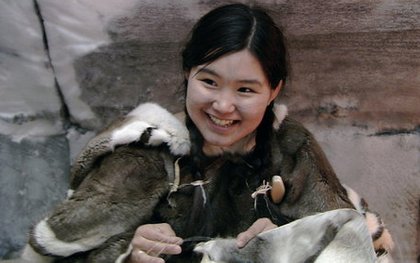
(LINKS UPDATED 30.9.2020) A new film by Inuit film maker Zacharias Kunuk (53) explores how missionaries force-fed Christianity to the Inuit in the 1920s. It’s called The Journals of Knud Rasmussen. Before its official world premier at the Toronto International Film Festival, a preview was held for Kunuks home community Igloolik, a cultural hub of the Arctic, 2,800 kilometres north of Toronto. Gayle MacDonald from The Globe and Mail has been there and reports:

The frigid temperature (30 C below) does not faze these people, who came in droves — some by prop plane from as far away as Qaanaaq, Greenland; and Nunavut’s capital, Iqaluit — to watch Kunuk’s latest cinematic creation. (…) “One of my friends left the seal hunt early so that he could get here before the show starts,” Kunuk, himself an avid hunter, adds proudly.
(…)
The shy filmmaker explains that his new film, shot in the relatively balmy months of April and May last year, is the story of explorer Knud Rasmussen, who travelled through this area in the 1920s, chronicling the conversion to Christianity of the great shaman Avva (played by local resident Pakak Innukshuk) and his willful daughter Apak (Leah Angutimarik).

The local Inuits appreciated that he took on taboo topics:

Some say they liked Atanarjuat, based on an Inuit legend, better. Others attest to being equally touched by this film, about the last great Inuit shaman, Avva. But all say they were glad Kunuk took on a taboo topic: shamanism, which the early missionaries dubbed devil worship, and which still sits uneasily with some of the town’s most religious Anglican, Roman Catholic and evangelical residents.

Kunuk’s production company, Igloolik Isuma Productions is according to the article one of the few success stories, periodically employing hundreds of local people as actors and film crew while injecting several million dollars into the economy. The people, by and large, are poor. Suicide (especially among those under 20), alcoholism, drug use and spousal abuse are rampant.

>> read the whole story in The Globe and Mail (replaced by copy)

Journals of Knud Rasmussen - trailer - IFFR 2007

SEE ALSO:

Isuma preps to film Igloolik’s history. Kunuk’s new film documents the arrival of Knud Rasmussen, Christianity (Nunatsiaq News, 10.9.04)

Study examines how Inuit coped with contact

Eskimo Folk-Tales collected by Knud Rasmussen

Inuit play makes fun of anthropologists

rasmussen-film

(LINKS UPDATED 30.9.2020) A new film by Inuit film maker Zacharias Kunuk (53) explores how missionaries force-fed Christianity to the Inuit in the 1920s. It's called The Journals of Knud Rasmussen. Before its official world premier at the Toronto International…

Read more