search expand

What happened at the AAA meeting in San Francisco?

The American Anthropological Association’s annual meeting is over – here a quick round-up of the conference coverage on the web.

Anthropology and the military was a hot topic this year as well as Inside Higher Ed informs in three articles:

According to the article Anthropological Engagement, for Good and for Bad?, the debates were “generally civil but at times pointed”. During a “consistently unorthodox question and answer session cut the moderator, Rob Borofsky of Hawaii Pacific University follow-up questions and at one point barked at an audience member “That’s, it! Down!” as if addressing a dog. Many questioners grew unsettled with the panelists’ answers.

The Network of Concerned Anthropologists submitted a letter to AAA’s president, Setha Low, accompanied by 1,056 signatures of anthropologists who signed a “Pledge of Non-participation in Counterinsurgency.”Ethics and Militarization Dominate Anthropology Meeting, see Ethics and Militarization Dominate Anthropology Meeting (Inside Higher Ed 21.11.08)

Montgomery McFate cancelled her presentation. She was invited to give a keynote lecture at a conference of the Southwestern Anthropological Association, see Raised Eyebrows over Keynote Choice (Inside Higher Ed, 20.11.08)

Other topics:

On an inter-generational panel on mothering, anthropology and fieldwork the question “How do we mix our passion for anthropology, which is rooted in fieldwork, and our passion for parenting, which is often rooted in schedules and routines and a sense of normalcy?” was discussed, see Fieldwork with Three Children (Inside Higher Ed, 25.11.08)

“Religion in Evolutionary Perspective” was the topic of the session by Barbara King. See Dispatch From the AAA Annual Meeting (Science and Religion Today, 24.11.08)

“The Encultured Brain session went very well yesterday”, we read on the blog Neuroanthropology. They have previously presented their topic in several posts, among others Daniel Lende, Ethnography and Addiction (which includes links to several papers) – update Greg Downey put his paper ‘Balancing Between Cultures: A Comparative Neuroanthropology of Equilibrium in Sports and Dance.’ online

Dave Gottwald writes about a multi-disciplinary panel about architecture and anthropology. The panel’s purpose was to expand on the dialogue between architecture and anthropology, and included case studies on place branding, contemporary lifestyle and retail stores, shopping malls and theme parks, and casinos around the world.

The Damito has written an interesting round up of six different panels and even another one

Iceland Review reports about an Icelandic student at the Lawrence University in Wisconsin, Sveinn Sigurdsson. Together with his research partner Ashlan Falletta-Cowden,he received an award for their project on Icelandic food habits from the AAA.

The AAA Public Affairs Blog has collected links to press coverage.

Finally, there is a brief wrap up at Savage Minds and readers are asked to leave comments on the highlights/low points of the AAA-meeting

The American Anthropological Association’s annual meeting is over - here a quick round-up of the conference coverage on the web.

Anthropology and the military was a hot topic this year as well as Inside Higher Ed informs in three articles:

According…
Read more

Ethnographic Study: Social Websites Important For Childhood Development

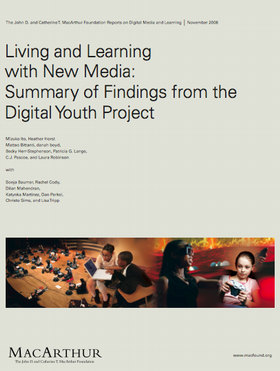
Many adults worry that children are wasting time online, texting, or playing video games. In the first in-depth ethnographic study of its kind, researchers of the Digital Youth Project found that the digital world is creating new opportunities for youth to grapple with social norms, explore interests, develop technical skills, and experiment with new forms of self-expression.

According to the report, youth could benefit from educators being more open to forms of experimentation and social exploration. Rather than assuming that education is primarily about preparing for jobs and careers, the researchers question what it would mean to think of it as a process guiding youths’ participation in public life more generally.

The report was presented at the annual meeting of the American Anthropological Association in San Francisco and is availbable online, as anthropologist Mizuko Ito, who lead the research, announced on her blog.

The major findings:

Youth use online media to extend friendships and interests.
They can be always “on,” in constant contact with their friends through private communications like instant messaging or mobile phones, as well as in public ways through social network sites such as MySpace and Facebook. With these “friendship-driven” practices, youth are almost always associating with people they already know in their offline lives. The majority of youth use new media to “hang out” and extend existing friendships in these ways.

Youth engage in peer-based, self-directed learning online.
In both friendship-driven and interest-driven online activity, youth create and navigate new forms of expression and rules for social behavior. By exploring new interests, tinkering, and “messing around” with new forms of media, they acquire various forms of technical and media literacy. By its immediacy and breadth of information, the digital world lowers barriers to self-directed learning.

New media allow for a degree of freedom and autonomy for youth that is less apparent in a classroom setting. Youth are often more motivated to learn from peers than from adults. Their efforts are also largely self-directed, and the outcome emerges through exploration, in contrast to classroom learning that is oriented by set, predefined goals.

“This was a large ethnographic project by far the most challenging and rewarding research project I’ve undertaken so far”, Mizuko Ito writes. She is particularly proud of the shared report, which was “a genuinely collaborative effort, co-authored by 15 of us on the team, and including contributions from many others”:

We took a step that is unusual with ethnographic work, of trying to engage in joint analysis rather than simply putting together an edited collection of case studies. We spent the past year reading each others interviews and fieldnotes, and developing categories that cut across the different case studies. Each chapter of the book incorporates material from multiple case studies, and is an effort to describe the diversity in youth practice at it emerged from a range of different youth populations and practices.

>> read more on Mizuko Ito’s blog

>> download the report

The report received a lot of media attention, see among others the San Francisco Chronicle and the Boston Herald

SEE ALSO:

Ethnographic study: Social network sites are “virtual campfires”

Ethnographic Study on “Digital Kids”

Technologies of the Childhood Imagination- new text by anthropologist Mizuko Ito

Cyberanthropology: “Second Life is their only chance to participate in religious rituals”

From housewife to mousewive – Anthropological study on women and Internet

Ethnographic Study About Life Without Internet: Feelings of Loss and Frustration

Interview with Michael Wesch: How collaborative technologies change scholarship

The Internet Gift Culture

Many adults worry that children are wasting time online, texting, or playing video games. In the first in-depth ethnographic study of its kind, researchers of the Digital Youth Project found that the digital world is creating new opportunities for youth…

Read more

antropologi.info voted nr 2 in Savage Minds awards

What are the best anthropology websites? Last night, at the annual meeting of the American Anthropology Association in San Francisco, the Savage Minds Awards were handed out. In the category “Most excellent blog”, antropologi.info was voted second best, behind my favorite, Culture Matters.

Thanks a lot for voting for antropologi.info :) ! Unfortunaltely, I could not be there.

Here are the results:

Most Excellent Blog
Runner up: Antropologi.info
Most Win: Culture Matters

Most Excellent Open Access Journal
Runner Up: Cultural Analysis
Most Win: Anthopology Matters

Most Excellent Blog or Journal that does not end in “Matters” (The Category formerly known as Most Excellent Unclassifiable Digital Thingamajob)
Runner Up: Digital Anthropology
Most Win: Neuroanthropology

Congratulations! As the above list and the list of the nominated sites show, there are a lot of great anthropology websites! There has been a huge development during the recent years. This is great news!

See also the announcement of the Savage Minds Awards and coverage by Culture Matters and Neuroanthropology

What are the best anthropology websites? Last night, at the annual meeting of the American Anthropology Association in San Francisco, the Savage Minds Awards were handed out. In the category "Most excellent blog", antropologi.info was voted second best, behind my…

Read more

Vote for the best anthropology blog and journal!

The voting has begun – the winners will be announced at the annual meeting of the American Anthropological Association. antropologi.info is one of seven blogs that were nominated for the Most Excellent Anthropology Blog category (currently number two behind Culture Matters).

There are two more categories: “Most Excellent Open Access Journal in Anthropology” and “Most Excellent Uncategorizable Digital Thing-a-ma-job for Anthropology”

Read more about the Teh Savage Minds Awards Ceremony over at Savage Minds: http://savageminds.org/2008/11/14/teh-savage-minds-awards-ceremony/

The voting has begun - the winners will be announced at the annual meeting of the American Anthropological Association. antropologi.info is one of seven blogs that were nominated for the Most Excellent Anthropology Blog category (currently number two behind Culture…

Read more

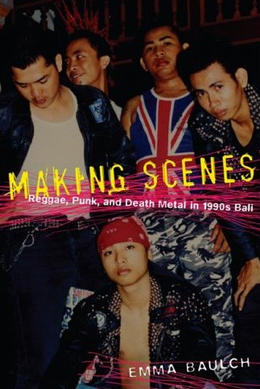
Reggae, Punk and Death Metal: An Ethnography from the unknown Bali

cover

“This is a break from the norm of writing about Bali”, writes Laura Noszlopy enthusiastically about a new book by anthropologist Emma Baulch called “Making scenes: reggae, punk, and death metal in 1990s Bali”.

In 1996, Emma Baulch went to live in Bali to do research on youth culture. She hang out in the death metal scene among unemployed university graduates clad in black T-shirts and ragged jeans; in the punk scene among young men sporting mohawks, leather jackets, and hefty jackboots; and among the remnants of the local reggae scene in Kuta Beach, the island’s most renowned tourist area.

The scene that Baulch has accessed is a deliberately closed and marginalized one, though it is situated largely in Bali’s most ‘open’ places: Kuta and Denpasar. And it is a scene that anthropologists had overlooked or not have not been interested before according to Baulch.

Laura Noszlopy quotes the author who writes that sidewalks of Kuta she entered in 1996 were

… a gaping frontier land of which anthropology rarely spoke … they raged with charged encounters between tourists and street-side watch sellers, drug dealers, drivers, pimps, and whores … punk jams chafed against the pop soundscape emanating from the Hard Rock Café across the road. Mohawks, feigned brawls, Bad Religion, metal spikes, hefty jackboots, and leather jackets thrived (p. 1).

Noszlopy comments:

This is an image that may possibly be familiar to travellers who have stayed in Kuta, Bali’s largest resort. But is not one that is found in brochures or highlighted by Balinese cultural commentators, and neither is it one that anthropologists tend to write about

The book also explains the machinations of the various contesting groups within the scene(s):

This is fascinating stuff; I doubt that many observers of Balinese society, or Balinese themselves, will have any idea of the detailed differences and ‘othering’ that took place not from the perspective of counterculture juxtaposed against mainstream, but between the multiple shifting identities created amongst the various groups. And these, of course, ‘othered’ themselves against the reggae groups that played in tourist bars.

All, Baulch argues, are somehow part of a peripheral Balinese Other in a love-hate relationship with Jakarta’s Indonesian centre, rather than the predictable West. This rather radical and, to some traditionalists, surprising point that Balinese punk is somehow principally about Balineseness and regionalism recurs throughout the book.

“This is the kind of work about Bali that I would like to see more of”, Laura Noszlopy writes:

It is truly contemporary. It deals with the complexities of a set of subcultural groups juxtaposed against and yet parallel to the local and national hegemonies. It recognizes the particularities of these groups and many of the individuals who people them, rather than lumping them together as ‘youth culture’.

Baulch does not simplify the issues, avoid people’s chaotic agency, or seek neat conclusions. Her work seems to embrace the complexity of the process of making scenes in Bali. And it does all this while recognizing the global music scene and late capitalist cultural economy – what Appadurai called the ‘global modern’– of which it is also a small, but noisy, part. This is a refreshing change.

But the reviewer writes less enthusiastically about the language of the book (a well known problem in many ethnographies):

The main difficulty I found with the text, however, was the marrying of the sometimes opaque style of theoretical analysis with the much looser conversational mode of the ethnography. While consistently vibrant and entertaining, it was not always complementary. The mixed tone was also apparent across chapters.

The review appeared in the recent issue of Journal of the Royal Anthropological Institute (subscription required)

But I found this text by Emma Baulch: Punks, rastas and headbangers: Bali’s Generation X (Inside Indonesia 48: Oct-Dec 1996)

Together with several other researchers, she has written Poverty and Digital Inclusion: Preliminary Findings of Finding a Voice Project

SEE ALSO:

Ainu musicians in Japan: Cool to be indigenous

Anthropologist explores heavy metal in Asia, South America and the Middle East

Socially conscious hip-hop is worldwide phenomenon

cover

"This is a break from the norm of writing about Bali", writes Laura Noszlopy enthusiastically about a new book by anthropologist Emma Baulch called "Making scenes: reggae, punk, and death metal in 1990s Bali".

In 1996, Emma Baulch went to…

Read more