

search expand

How anthropologists should react to the financial crisis

cover

Anthropologists have largely left the global effects of economic globalisation to economists. Now in this worldwide financial crisis it is the time for anthropologists to renew an engagement with political economy, Keith Hart and Horacio Ortiz write in their guest editorial in the new issue of Anthropology Today:

Anthropology’s relevance to the world would be enhanced if some of us adopted a more self-conscious strategy of seeking to understand the present crisis and its consequences for society at all levels.
(…)
We should try to bring the distributive consequences of finance down to a concrete level. Readers might then be able to engage with money not as a superhuman force with devastating effects, but as the outcome of ideas and institutions that can and should be changed by human action.
(…)
The breakdown of the economists’ intellectual hegemony represents a chance for us to link our engagement with people’s lives to anthropology’s original mission to understand humanity as a whole.

There are many ways to do this:

One method of doing so would be to analyse the everyday practices of professionals in financial corporations, states and regulatory bodies (Ortiz 2008), but also those of the people who entrust their monetary resources to them or are barred from access to the process.
(…)
Kula objects have magical power for those who exchange them, but anthropologists have shown their social logic and instrumentality. We have always invented concepts to describe and explain social processes quite different from those familiar at home. The current crisis presents us with a compelling reason to do so again, this time in a global context.

Anthropologists can do no better than to renew their engagement with the writings of Marcel Mauss and Karl Polanyi. Their perspectives on political economy can help us to make sense of the current situation and to recommend alternative paths forward according to Hart and Ortiz.

In his famous work “The Gift”, Mauss observed,

…that in contemporary capitalism the wealthy classes acted increasingly as if they did not belong to a social order that made redistributive obligation a condition of their hierarchical privilege. Their amnesia when it came to the ‘gift’ was not just a function of power, but of an accumulation of power that considered itself to be socially unbounded. As a result, heightened strife put the social order itself at risk.

Polanyi showed in his famous work The great transformation (1944) how markets became disembedded from the rest of society. Like Mauss, Polanyi was concerned with the ideas that defined money, the rules of its use and the social distinctions that made its circulation possible and legitimate:

He too contended that the classes who benefited from markets, particularly high finance in the decades before the First World War, neglected the interests of the rest of the population, with devastating consequences for society. (…) He identified the historical dialectic or ‘double movement’ whereby the drive of capitalists to escape from social constraints met the countervailing power of classes and institutions (such as those adhering to the welfare state) acting in society’s self-defence. (…) The distribution of resources, according to him, should not be left to the search for profit in market relations, but needed also to acknowledge solidarity between all members of society.
(…)
Anthropologists following him would thus explore how the social struggles over money are understood by the participants, and with what consequences for distribu- tion itself. This would offer a critique of the pretence that economics is not social or political; beyond that, it would constitute a research programme.

Polanyi and Mauss made sure that their more abstract understandings of political economy were grounded in the everyday lives of concrete people:

An unblinking focus on distribution at every level from the global to the local reveals how the social consequences of political economy and the way it is understood by those who make it are one and the same social process. The current crisis renders this insight particularly visible, since it challenges contemporary financial ideas, while its tangible distributive effects are felt and feared throughout the world.

It is no coincidence that economic anthropology was last a powerful force in the 1970s, when the world economy was plunged into depression by the energy crisis, Hart and Ortiz write:

Now, if ever, is the time for anthropologists to renew an engagement with political economy that went into abeyance then. The prize at stake for our discipline as a whole is much larger than the revival of one of its parts.

Anthropology’s highest mission is to start from where people are and go with them wherever they take you. That means engaging with their visions of the world, perhaps to catch a glimpse of the world humanity is making together. What better time to follow this imperative than when the model the world has been compelled to live by for three decades is in such disarray?

The editorial is not accessible for readers outside the university world, but Keith Hart has published a different version of the editorial on his website (and many related papers as well)

SEE ALSO:

Used anthropology to predict the financial crisis

Anthropologist: Investors need to understand the tribal nature of banking culture

What anthropologists can do about the decline in world food supply

The last days of cheap oil and what anthropologists can do about it

After the Tsunami: Maybe we’re not all just walking replicas of Homo Economicus

Why were they doing this work just to give it away for free? Thesis on Ubuntu Linux hackers

cover

Anthropologists have largely left the global effects of economic globalisation to economists. Now in this worldwide financial crisis it is the time for anthropologists to renew an engagement with political economy, Keith Hart and Horacio Ortiz write in their…
Read more

The anthropology of nudity: New issue of American Ethnography Quasimonthly

(LINKS UPDATED 13.8.2020) “Why are you, with your impeccable credentials, studying nude dancing?” “I am an anthropologist. Anthropologists study human behavior”, answered Judith Lynne Hanna when she did her field work on striptease clubs. Hoochy Coochy Dancing and Fantasy Love is the topic of the new issue of American Ethnography Quasimonthly.

Exotic Dance Adult Entertainment. Ethnography Challenges False Mythology by Judith Lynne Hanna is one of the texts in the November issue. Furthermore, there is a chapter of the book “G-Strings and Sympathy” by anthropologist Katherine Frank on strip clubs and a photoessay by Juliana Beasley who worked eight years as a professional nude dancer.

Sociologist Danielle Egan also worked as a striptease dancer and wrote about it and we can read an excerpt from her book “Dancing for Dollars and Paying for Love”.

There are also two historical contributions: Anthropologist Patsy Holden writes about the history of the Waltz and Swing, and we can read the first chapter of Thomas Faulkner’s book From the Ball-Room to Hell (1892)

There is open access to all articles.

SEE ALSO:

New e-zine: American Ethnography Quasimonthly

Researched the sexual revolution in Iran

Sexual anthropologist explains how technology changes dating, love and relationships

“Prostitution is not sex for money”

Anthropologist: “Decriminalize prostitution! It’s part of our culture”

(LINKS UPDATED 13.8.2020) “Why are you, with your impeccable credentials, studying nude dancing?” “I am an anthropologist. Anthropologists study human behavior”, answered Judith Lynne Hanna when she did her field work on striptease clubs. Hoochy Coochy Dancing and Fantasy Love…

Read more

Ethnographic Study: Social Websites Important For Childhood Development

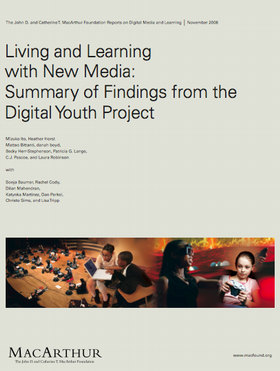
Many adults worry that children are wasting time online, texting, or playing video games. In the first in-depth ethnographic study of its kind, researchers of the Digital Youth Project found that the digital world is creating new opportunities for youth to grapple with social norms, explore interests, develop technical skills, and experiment with new forms of self-expression.

According to the report, youth could benefit from educators being more open to forms of experimentation and social exploration. Rather than assuming that education is primarily about preparing for jobs and careers, the researchers question what it would mean to think of it as a process guiding youths’ participation in public life more generally.

The report was presented at the annual meeting of the American Anthropological Association in San Francisco and is availbable online, as anthropologist Mizuko Ito, who lead the research, announced on her blog.

The major findings:

Youth use online media to extend friendships and interests.
They can be always “on,” in constant contact with their friends through private communications like instant messaging or mobile phones, as well as in public ways through social network sites such as MySpace and Facebook. With these “friendship-driven” practices, youth are almost always associating with people they already know in their offline lives. The majority of youth use new media to “hang out” and extend existing friendships in these ways.

Youth engage in peer-based, self-directed learning online.
In both friendship-driven and interest-driven online activity, youth create and navigate new forms of expression and rules for social behavior. By exploring new interests, tinkering, and “messing around” with new forms of media, they acquire various forms of technical and media literacy. By its immediacy and breadth of information, the digital world lowers barriers to self-directed learning.

New media allow for a degree of freedom and autonomy for youth that is less apparent in a classroom setting. Youth are often more motivated to learn from peers than from adults. Their efforts are also largely self-directed, and the outcome emerges through exploration, in contrast to classroom learning that is oriented by set, predefined goals.

“This was a large ethnographic project by far the most challenging and rewarding research project I’ve undertaken so far”, Mizuko Ito writes. She is particularly proud of the shared report, which was “a genuinely collaborative effort, co-authored by 15 of us on the team, and including contributions from many others”:

We took a step that is unusual with ethnographic work, of trying to engage in joint analysis rather than simply putting together an edited collection of case studies. We spent the past year reading each others interviews and fieldnotes, and developing categories that cut across the different case studies. Each chapter of the book incorporates material from multiple case studies, and is an effort to describe the diversity in youth practice at it emerged from a range of different youth populations and practices.

>> read more on Mizuko Ito’s blog

>> download the report

The report received a lot of media attention, see among others the San Francisco Chronicle and the Boston Herald

SEE ALSO:

Ethnographic study: Social network sites are “virtual campfires”

Ethnographic Study on “Digital Kids”

Technologies of the Childhood Imagination- new text by anthropologist Mizuko Ito

Cyberanthropology: “Second Life is their only chance to participate in religious rituals”

From housewife to mousewive – Anthropological study on women and Internet

Ethnographic Study About Life Without Internet: Feelings of Loss and Frustration

Interview with Michael Wesch: How collaborative technologies change scholarship

The Internet Gift Culture

Many adults worry that children are wasting time online, texting, or playing video games. In the first in-depth ethnographic study of its kind, researchers of the Digital Youth Project found that the digital world is creating new opportunities for youth…

Read more

Reggae, Punk and Death Metal: An Ethnography from the unknown Bali

cover

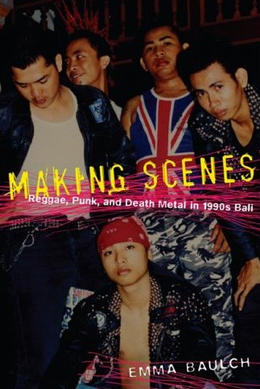
“This is a break from the norm of writing about Bali”, writes Laura Noszlopy enthusiastically about a new book by anthropologist Emma Baulch called “Making scenes: reggae, punk, and death metal in 1990s Bali”.

In 1996, Emma Baulch went to live in Bali to do research on youth culture. She hang out in the death metal scene among unemployed university graduates clad in black T-shirts and ragged jeans; in the punk scene among young men sporting mohawks, leather jackets, and hefty jackboots; and among the remnants of the local reggae scene in Kuta Beach, the island’s most renowned tourist area.

The scene that Baulch has accessed is a deliberately closed and marginalized one, though it is situated largely in Bali’s most ‘open’ places: Kuta and Denpasar. And it is a scene that anthropologists had overlooked or not have not been interested before according to Baulch.

Laura Noszlopy quotes the author who writes that sidewalks of Kuta she entered in 1996 were

… a gaping frontier land of which anthropology rarely spoke … they raged with charged encounters between tourists and street-side watch sellers, drug dealers, drivers, pimps, and whores … punk jams chafed against the pop soundscape emanating from the Hard Rock Café across the road. Mohawks, feigned brawls, Bad Religion, metal spikes, hefty jackboots, and leather jackets thrived (p. 1).

Noszlopy comments:

This is an image that may possibly be familiar to travellers who have stayed in Kuta, Bali’s largest resort. But is not one that is found in brochures or highlighted by Balinese cultural commentators, and neither is it one that anthropologists tend to write about

The book also explains the machinations of the various contesting groups within the scene(s):

This is fascinating stuff; I doubt that many observers of Balinese society, or Balinese themselves, will have any idea of the detailed differences and ‘othering’ that took place not from the perspective of counterculture juxtaposed against mainstream, but between the multiple shifting identities created amongst the various groups. And these, of course, ‘othered’ themselves against the reggae groups that played in tourist bars.

All, Baulch argues, are somehow part of a peripheral Balinese Other in a love-hate relationship with Jakarta’s Indonesian centre, rather than the predictable West. This rather radical and, to some traditionalists, surprising point that Balinese punk is somehow principally about Balineseness and regionalism recurs throughout the book.

“This is the kind of work about Bali that I would like to see more of”, Laura Noszlopy writes:

It is truly contemporary. It deals with the complexities of a set of subcultural groups juxtaposed against and yet parallel to the local and national hegemonies. It recognizes the particularities of these groups and many of the individuals who people them, rather than lumping them together as ‘youth culture’.

Baulch does not simplify the issues, avoid people’s chaotic agency, or seek neat conclusions. Her work seems to embrace the complexity of the process of making scenes in Bali. And it does all this while recognizing the global music scene and late capitalist cultural economy – what Appadurai called the ‘global modern’– of which it is also a small, but noisy, part. This is a refreshing change.

But the reviewer writes less enthusiastically about the language of the book (a well known problem in many ethnographies):

The main difficulty I found with the text, however, was the marrying of the sometimes opaque style of theoretical analysis with the much looser conversational mode of the ethnography. While consistently vibrant and entertaining, it was not always complementary. The mixed tone was also apparent across chapters.

The review appeared in the recent issue of Journal of the Royal Anthropological Institute (subscription required)

But I found this text by Emma Baulch: Punks, rastas and headbangers: Bali’s Generation X (Inside Indonesia 48: Oct-Dec 1996)

Together with several other researchers, she has written Poverty and Digital Inclusion: Preliminary Findings of Finding a Voice Project

SEE ALSO:

Ainu musicians in Japan: Cool to be indigenous

Anthropologist explores heavy metal in Asia, South America and the Middle East

Socially conscious hip-hop is worldwide phenomenon

cover

"This is a break from the norm of writing about Bali", writes Laura Noszlopy enthusiastically about a new book by anthropologist Emma Baulch called "Making scenes: reggae, punk, and death metal in 1990s Bali".

In 1996, Emma Baulch went to…

Read more

Anthronow – new magazine will make anthropology accessible to lay readers

logo (via somatosphere) “Other disciplines have a magazine for the general public. Why can’t we?” Now, we have it. The first issue of Anthronow is out. The editors Katherine McCaffrey, Emily Martin, Ida Susser, and Susan Harding (they’re all from American universities) write:

Other disciplines have a magazine for the general public. Why can’t we? Why can’t we have a “popular anthropology” magazine that would fill the gap between conventional news coverage of current events and topics and the more specialized analysis of similar events and topics in professional journals? If our scholarship were written in clear and accessible language and embellished with photographs and other visual materials, wouldn’t there be public interest in the ways that anthropological theory and research can inform and affect contemporary public discourse and public policy debates?

Anthropology Now’s mission is to make anthropological knowledge accessible to lay readers, and to enrich knowledge and debate in the public sphere. The magazine aims to reclaim a voice for anthropology in public debate, not by simplifying complex problems, but by conveying anthropological knowledge in clear and compelling prose. Anthropology Now will build on a growing commitment among anthropolo- gists to make our research findings open and accessible to the world outside of the confines of the academy.

It seems that there is both a paper and a webversion of Anthronow. All articles of the first issue are online. I hope they will continue to provide open access to future issues as well.

I havent’ had time to look at the articles yet. Have they succeeded in making anthropology accessible for the world outside of the universities?

>> visit Anthronow

PS: There is another “popular anthropology” magazine, not in the U.S, but in Germany. It’s called Journal Ethnologie. Are there more? Oh yes, maybe American Ethnography?

UPDATE: Debate about Anthronow and its future over at Savage Minds

logo

(via somatosphere) "Other disciplines have a magazine for the general public. Why can’t we?" Now, we have it. The first issue of Anthronow is out. The editors Katherine McCaffrey, Emily Martin, Ida Susser, and Susan Harding (they're all…

Read more
