search expand

Hvilke mannsidealer?

(Lenker sist oppdatert 23.9.2022) Hanne Nabintu Herland har skrevet en heller konfus og ufokusert kronikk i Aftenposten der hun sauser sammen feminisme- og multikulturalismekritikk med sitater fra Zygmunt Bauman og FrP-forsvar og samtidig slår et slag for å “gjenreise det klassiske mannsideal”:

Overidealiseringen av myke kvinneidealer skaper i lengden en ubalanse i kulturen der sårt tiltrengte maskuline verdier fordamper. Vi trenger en reetablering av respekten for det klassiske mannsidealet.

Masterstudent i sosialantropologi ved Universitetet i Oslo, Rannveig Svendby, har valgt å ta Herlands kronikk alvorlig og det er kanskje en riktig strategi siden folk som Herland fort får mye innflytelse. Og Svendby gjør en god jobb som antropolog – ikke minst fordi hun viser at “maskuline verdier” og “mannsidealer” ikke er noe statisk. Idealet som Herland sannsynligvis etterlyser – machomannen – er bare et av mange idealer som har eksistert i tidenes løp.

I kronikken Den tapte manndommen i Bergens Tidende viser antropologen hvordan mannsidealene har endret seg i samspill med samfunnsstrømningene. Det fantes tider der det ble ansett som mannlig å gråte. Det var ikke før gråt ble knyttet opp mot kvinnelighet at det ble «feil» for en «ekte» mann å gi utløp for tårene ifølge den svenske kjønnsforskeren Clas Ekenstam, skriver hun:

Når Herland kan snakke om «det klassiske mannsidealet» uten å forklare hva dette faktisk går ut på, så er det fordi det er en underforstått idé i vårt samfunn om hvilke egenskaper som er «naturlig» maskuline. Det er åpenbart det motsatte av de «myke» idealene, som Herland uten videre knytter opp mot kvinner.

En slik logikk kollapser i møte med historien, som ikke tillater at vi opphøyer visse egenskaper og knytter dem kategorisk opp mot ett kjønn.

Det er dessuten forskjell mellom mannsidealer og mannlighet:

Mannsidealer er forestillinger om hvordan menn bør være. I tillegg har idealer den ulempen at de færreste faktisk er slik. Hvordan kan de da fortsatt forveksles med å være en «ekte» eller «naturlig» mann?

Mannlighet, derimot, må ikke presteres. Mannlighet er representert gjennom hver enkelt mann som vandrer rundt på jorden med sine ulike preferanser, holdninger og erfaringer. Er du en mann, så vil alt du er og gjør pr. definisjon være – nettopp – mannlig. La oss slippe taket i kjønnsidealene for en stund, og heller konsentrere oss om friheten – til å være menneske.

>> les hele kronikken i Bergens Tidende

For to uker siden skrev Rannveig Svendby en kronikk om høye hæler og andre tvilsomme skjønnhetsidealer

SE OGSÅ:

Unge fedre er annerledes

Hovedoppgave om muslimske menn: “Jeg vil ikke være barnas sjef, jeg vil være barnas venn”

Feminisering av hjemmet: Menn jages ut

– Vi vet for lite om voldelige menn

Ny doktoravhandling: Nordsvenske ungkarers jakt etter kjærligheten

The Anthropology of Wrestling

(Lenker sist oppdatert 23.9.2022) Hanne Nabintu Herland har skrevet en heller konfus og ufokusert kronikk i Aftenposten der hun sauser sammen feminisme- og multikulturalismekritikk med sitater fra Zygmunt Bauman og FrP-forsvar og samtidig slår et slag for å "gjenreise…
Read more

96 year old anthropologist starts blogging

(via AAA-blog) He was both president of the American Anthropological Association (AAA) and editor of the journal American Anthropologist. Now Walter Goldschmidt, born in 1913, is joing the growing anthropological blogging community at http://waltergoldschmidt.wordpress.com/

He writes:

Electronic communication, and these things called “blogs,” represent a medium I am singularly unready for. My amanuensis has suggested that I use it to place various of my essays and monographs for public use, and I do find this appeals to me, and invite you to make what use of them you may. Among these, I shall offer presentation of a book of memoirs that I have long intended to write but am only now getting around to.

During the recent weeks and months, many other anthropologists have started blogging as well. Among others, there are two new group blog projects: Anthropoliteia – a blog about police, policing and security from an anthropological perspective and Anthropologyworks – a more general anthro blog that also provides overviews over “anthropology in the news”. It is a project of the Culture in Global Affairs (CIGA) research and policy program at The George Washington University in Washington, D.C.. Then there is the blog Economics in Cultural Perspective that also looks very interesting. I’m very glad to see that two anthropologists from Scandinavia have joined us: Daniel Winfree Papuga with his blog Recontextual – Expressive culture in new formations and Johanna Sommansson who is blogging about her fieldwork in India at Anthromodernity.

Not all of them can be found on the blog overview at http://www.antropologi.info/blog/ I’ll update it later today tomorrow.

SEE ALSO:

“Blogging sharpens the attention”

Paper by Erkan Saka: Blogging as a Research Tool for Ethnographic Fieldwork

Professor lets students blog their field experiences: More than 20 new blogs online!

Anthropology blogs more interesting than journals?

5 years antropologi.info

(via AAA-blog) He was both president of the American Anthropological Association (AAA) and editor of the journal American Anthropologist. Now Walter Goldschmidt, born in 1913, is joing the growing anthropological blogging community at http://waltergoldschmidt.wordpress.com/

He writes:

Electronic communication, and these things called…

Read more

“Og himmelen, det er en jobb som gir mening”

Norsk antropologisk forening (NAF) er igang igjen med sin serie månedens antropolog. Aina Landsverk Hagen er månedens antropolog i august.

Vi får vite at hun jobber som aksjonsforsker på SINTEF Teknologi og samfunn og tar en doktorgrad på arkitekters kollektive kreativitet.

“Himmelen, det er en jobb som gir mening”, skriver hun. Hun har ikke alltid vært i himmelen med jobben. Prosessen med å skaffe seg jobb, er i grunn et nytt feltarbeid, skriver hun. Anvende antropologen i seg. Hva gjør meg glad?

Etter et år som redigerer i en norsk tabloidavis, vil jeg svare, nei, det er ikke alltid mulig å gjøre en forskjell, å være antropolog. Noen ganger, i noen jobber gjør man meningsløse ting, som å vurdere et forfyllet bilde av Britney opp mot et annet forfyllet bilde av Britney. (…) Når hele poenget med utdannelsen, jobben, livet, ikke bare er å studere verden i all dens uforståelige fylde, men å endre verden til å bli et bedre sted å være – og da helst for noen andre enn meg selv – da må man videre.

Så jeg spør deg (og siterer Reason & Bradbury, 2006), siden kimen til endring ligger implisitt i det aller første spørsmålet vi stiller et menneske: Hva gjør deg glad? Blir du for eksempel glad av å spørre andre mennesker, gjerne vilt fremmede mennesker, om hva som gjør dem glad, ja da skal du kanskje vurdere å bli som meg – aksjonsforsker.
(…)
Blir du glad av å lære bort det du har lært, kjenner du deg fullendt når du har forklart og noen har forstått? Det finnes utallige former for avlæring, innlæring, opplæring, du kan bli mellomleder i en bedrift, professor på et institutt, lærer på en skole. Er du derimot aller mest glad når sola skinner på ansiktet ditt? Forhåpentligvis valgte du å gjøre feltarbeid på Madagaskar, i Thailand eller Brasil. (…)

>> les hele teksten på NAFs hjemmeside

Norsk antropologisk forening (NAF) er igang igjen med sin serie månedens antropolog. Aina Landsverk Hagen er månedens antropolog i august.

Vi får vite at hun jobber som aksjonsforsker på SINTEF Teknologi og samfunn og tar en doktorgrad på arkitekters kollektive…

Read more

Why anthropologists should politicize mental illnesses

(Links updated 8.9.2019) How to deal with “mental illness”? Are people who are labelled ill actually ill? Is it ok that psychologists call “adolescent rebellion” for “Oppositional Defiant Disorder”? What is anthropologists’ role here? Eugenia Tsao discusses these questions in an article in Counterpunch and in a paper in the open access anthropology journal Alterities.

The extent to which our lives and livelihoods have been “colonized by the reductive logic of pharmaceutical intervention” is breathtaking, she writes. Drugs are touted with increasing regularity as a treatment of choice for entirely natural responses to conditions of unnatural stress – although medical textbooks and even drug advertisements have admitted uncertainties in psychiatric research (“While the cause [of depression] is unknown, Zoloft can help”):

How have we been persuaded to equate such things as recalcitrant despair (“Dysthymic Disorder,” DSM-IV-TR 300.4), adolescent rebellion (“Oppositional Defiant Disorder,” DSM-IV-TR 313.81) and social apathy (“Schizoid Personality Disorder,” DSM-IV-TR 301.20) with aberrant brain chemistry and innate genetic susceptibilities rather than with the societal circumstances in which they arise? What does it mean when increasing numbers of people feel as though they have no choice but to self-medicate with dubious chemical substances in order to stay in school, stay motivated, stay employed, and stay financially solvent?
(…)
As Laurence Kirmayer of McGill University has suggested, the millennial rise of a “cosmetic” psychopharmaceutical industry, wherein drugs are “applied like make-up to make us look and feel good, while our existential predicaments go unanswered,” raises disturbing questions about the consequences of our willingness to use chemicals to treat forms of distress that would seem to signal not biological but social maladies.

When psychiatrists lament that over half of depressed people are “treatment-resistant,” Tsao stresses, they do not consider that it is a strenuous aversion to being told that one’s existential grievances are irrational, a mere result of a pathological neurochemical imbalance, that discourages many people from seeking medical help.

Anthropologists have an important role to play here, Tsao explains:

(A)nthropologists who seek to honor their informants’ narratives and confute clinical meta-narratives may find it useful to illuminate the perils of overliteralization: to explain why it is that those who are sick and suffering will so often thumb their noses at those who presume to offer help; to highlight the tragicomedy in the seemingly bottomless capacity of highly educated MDs and PhDs to overlook simple things like the anaesthetizing comforts to be found in a bottle or at the edge of a razor blade, or why a person might choose to act out of anguish rather than economic rationalism.
(…)
I ultimately argue that an efficacious anthropology of psychiatry must adopt as its point of departure the candidly transformative objective of repoliticizing mental illnesses as historical rather than congenital events. Anthropologists must, in short, develop ethnographic, historiographic, and rhetorical strategies for destabilizing the biological with the biographic.
(…)
(A)nthropologists should pay careful attention to regional histories, local processes of identity formation, and other kinds of social transactions paradigmatically excluded from biomedical narratives in order to distinguish necessary etiological agents from sufficient ones. While certain congenital factors may precondition an individual’s susceptibility to, for example, schizophrenia, the cultural factors that activate the disorder will in most cases determine whether or not an individual ultimately develops the condition – as corroborated by numerous studies on identical twins (Levy 1992:215-216).

Tsao presents theories by Robert Levy, Hans A. Baer, Merrill Singer, Ida Susser, and Nick Crossley. From them, she extracts “four fundamental methodological criteria that a robust anthropology of psychiatry must be equipped to meet”:

• An adequate means of distinguishing proximate and ultimate causes of specific mental illnesses.
• An explicit aim of recontextualizing, repoliticizing, and rehistoricizing mental health issues through elucidations of pathogenic conditions.
• Methods for critiquing the specific ways in which hegemonic texts (e.g. the DSM, clinical scripts, standardized questionnaires) systematically delegitimize and obscure social etiologies.
• Methods for reinserting alternative etiological narratives into mainstream medical conversations and, ultimately, into lay discourse.

Anthropologists challenge is according Tsao twofold: (1) to sharpen our interdisciplinary literacy with biomedicine and its cognates, but in a critical rather than deferential manner; and, in so doing (2) to elucidate the emergent, rather than immanent, character of illness experiences.

>> Eugenia Tsao: Inside the DSM. The Drug Barons’ Campaign to Make Us All Crazy (Counterpunch 20.8.09)

>> Eugenia Tsao: Primum Non Nocere. Evaluating and Amalgamating Competing Blueprints for a New Anthropology of Psychiatry (Alterities 1/2009)

For more articles by Eugenia Tsao, see her website

The blog Neuroanthropology has more information on anthropology and mental illness.

SEE ALSO:

Medicine as power: “Creates new categories of sick people”

Shanghai: Study says 1 in 4 youths thinks about taking own life

Poverty and health policies: Listening to the poor in Bangladesh

“Ethnographic perspectives needed in discussion on public health care system”

(Links updated 8.9.2019) How to deal with "mental illness"? Are people who are labelled ill actually ill? Is it ok that psychologists call "adolescent rebellion" for “Oppositional Defiant Disorder”? What is anthropologists' role here? Eugenia Tsao discusses these questions in…

Read more

The Anthropology of Wrestling

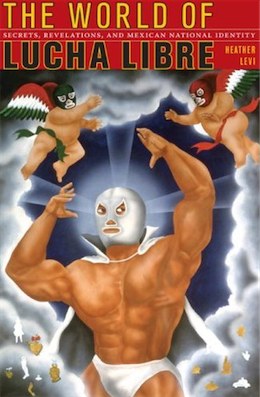
How do you study wrestling as an anthropologist? By becoming a wrestler yourself! Heather Levi’s book The World of Lucha Libre: Secrets, Revelations, and Mexican National Identity is featured in the new issue of American Ethnography on Lucha libre – Mexican wrestling.

A long excerpt from the second chapter can be read there – an example of good anthropological writing and according to Martin Høyem, editor of American Ethnography, the best ethnography of 2008.

I found some reviews of the book. According to the Los Angeles Times the book is actually “entertaining”. And it places wrestling in a political context:

“The success of figures like Superbarrio lay in the capacity of lucha libre to invoke a series of connections between sometimes contradictory domains: rural and urban, tradition and modernity, ritual and parody, machismo and feminism, politics and spectacle,” she writes. And in that tight sentence, Levi nails the appeal lucha libre has had among working-class Mexicans for decades. The various intersections she describes — class, sexuality, gender, xenophobia — are frequently lost on American audiences but make the sport so enjoyable.

“The World of Lucha Libre is one of the most interesting cultural studies of a key pastime in Mexico for many years” according to the Latin American Review of Books, while the Seattle newspaper The Stranger insists that “the first few chapters are pretty dry”. But this is to be expected: “Most anthropological writing simply isn’t for general audiences”.

But the academic nature of the text is something to be overcome:

Levi lays the entire world of lucha libre at the reader’s feet, from the adulation of the crowd to the metallic smell of blood in the ring, and the act of creativity, installing the personal narrative, is the reader’s job. This is excellent reportage on an endlessly fascinating subject, and Levi should be commended for standing back and letting the luchadores take center stage.

As in previous issues, American Ethnography is really interdisciplinary: It includes images from the Bolivian Lucha Libre scene, a review of a book by photographer Lourdes Grobet on the Mexican wrestling scene and a glimpse into American wrestling magazines from the 1970’s on “apartment wrestling”, where women – according to the magazine Sports Review Wrestling in 1978 “clash with the fury of primitive savages fighting for their gods!”

SEE ALSO:

New e-zine: American Ethnography

How do you study wrestling as an anthropologist? By becoming a wrestler yourself! Heather Levi's book The World of Lucha Libre: Secrets, Revelations, and Mexican National Identity is featured in the new issue of American Ethnography on Lucha libre -…

Read more