search expand

Forsk på innvandringsmotstanden!

Kronikken Drøm fra Disneyland der FrPerne Kent Andersen og Christian Tybring Gjedde hevder at innvandringen “river landet vårt i filler” har vakt stor oppmerksomhet. Men de to karene sier egentlig lite nytt. Kronikken er bare en oppsummering av rasismen i nettavisenes kommentarfelt vi leser hver eneste dag og som vi også finner på nettsteder som document.no.

I diverse avis- og blogginnlegg blir kronikken slaktet, for eksempel av Marte Michelet i Dagbladet (“Tybring-Gjedde minner oss på hva FrP egentlig er”), Jonas Gahr Støre i Aftenposten (“Norsk kultur står klippefast i et moderne norsk mangfold.”), religionshistoriker Cora Alexa Døving i Aftenposten (“Det flerkulturelle Norge er ikke en fiks idé fra Arbeiderpartiet, men en konsekvens av globalisering“) og antropolog Bischoff (“Norge blir visst revet i filler“), mens Konrads tankesmie har “oppdaget” et dokument fra 1938, skrevet av en viss “Christian Pudding-Gjedde” med tittelen “Jødene ødelegger norsk kultur“.

Det er sikkert viktig å debattere kronikkens påstander, men jeg er ikke sikker på om “fakta” er det viktigste. Kanskje det kan være mer interessant å studere innvandringsmotstanden i seg selv, gjerne i et komparativt perspektiv: Hvorfor blir noen innvandrings-/islammotstandere?

Motstanden handler om utrygghet i dagens nyliberale globale verden, mener for eksempel mediesosiolog Gavan Titley.

Og hvorfor blir andre innvandringstilhengere eller kosmopolitter? Og når er man det ene eller det andre?

For ikke alle som sier rasistiske ting er rasister og slett ikke hele tida slik antropologen John L. Jackson påpeker.

Eighteenth- and 19th-century slavemasters were racists, but they weren’t only racist. They were also revolutionaries and humanitarians, adventurers and religionists. To call someone racist isn’t about explanatory exclusivity.
(…)
We often imagine ourselves to be looking for racists who are racist 365 days out of the year. To chronicle the several days each week or month or lifetime when they are not demonstrably racist is either (i) to dismiss such fallow periods as exceptions (or mere performance) or (ii) to offer them up as proof that said accusations are false. But it doesn’t make sense to think of racism the way we think of, say, racial identity (as something we conspicuously carry around with us all the time, everywhere we go).

Han nevner Officer John Ryan i filmen Crash fra 2004 som eksempel:

In one scene, Ryan is a working-class cop who mercilessly harasses a middle-class black couple during a traffic stop, clearly relishing his racial privilege and lauding it over his intimidated victims. In another scene, he can risk his own life to pry that same black woman from a burning car before it explodes.

Oppdatering Haha, satire-nettstedet 5080.no kommenterer Frpernes kronikk i Aftenposten:– Aftenposten-kronikker plagierer våre nettdebatter:

– Kronikken er nesten identisk med et par av de kommentarene vi fjernet for to uker siden. Alt Aftenposten har gjort er å rydde opp i skrivefeil og kutte ned på antall utropstegn, sier debattredaktør i Dagbladet, Jo Randen.

Dagbladet mener Aftenposten undergraver markedet for rasistiske og hatske meninger når de velger å betale bidragsyterne.

SE OGSÅ:

Antropolog studerte FrP-lokallag

Anfindsen mot Hylland Eriksen: Hvordan kommunisere med meningsmotstandere?

Antropolog: Slutt å bruke ordet “innvandrer”!

Integrering: “Snakk mer om norsk kultur!”

Thesis: That’s why there is peace

– Highlight the connections between people!

Identity politics: Have anthropologists gone too far?

Kronikken Drøm fra Disneyland der FrPerne Kent Andersen og Christian Tybring Gjedde hevder at innvandringen "river landet vårt i filler" har vakt stor oppmerksomhet. Men de to karene sier egentlig lite nytt. Kronikken er bare en oppsummering av rasismen i…
Read more

Parisian overture, or getting a locksmith in the holiday season


Back in Belleville, – if only for a short visit

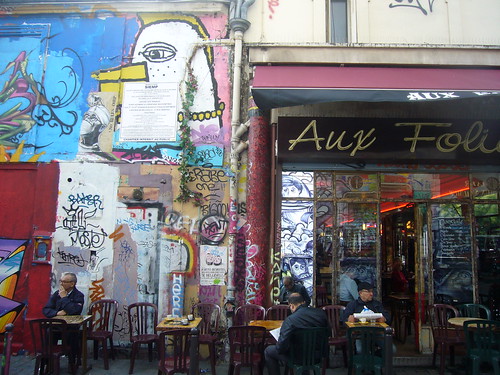
Finding a place to stay in Paris is one of the worst things I know (except from at a hotel, which is easy.) I’ve lived at six different places in the city, and almost every time some kind of trouble has been involved. (The only exception had a quite boring neighbourhood which was almost eventless in terms of fieldwork relevance.) This time, everything went unbelievably smooth. Even arriving with a small child was just enjoyable. Until I made a horrible mistake after ten minutes when I closed the high security fucking reinforced door when we were just popping across the street to get something for Leo’s supper. With a draught of wind, the door was closed with a spare key in the key hole on the inside. The next few hours involved a dozen of kind and welcoming neighbours, the wonderfully helpful cleaning lady and her wonderfully caricatural companion taken right out of a film by Jean-Pierre Jeunet (or maybe comics by Tardi), three conmen and three policemen.
[teaserbreak]
It all happened late in the afternoon a Saturday in the end of the French public holiday month. At such times, locksmiths can charge an exorbitant amount of money for opening a door. But not more than 1800€ which these conmen tried to get out of the newly arrived foreigners. Then the caricatural companion phoned the police, and they ran off. Luckily after having let us in, with our tired and impatient little baby, – by demolishing the high security lock completely, but leaving a hole in our door which could not be repaired until the weekend high rate period was over and the honest locksmiths were back from holidays. Then one of the conmen came back (for the “bill” with phone number and everything they had left in the hurry) and shouted outside our damaged but bolted door, and I found it best to call the cleaning lady (for the tenth time), and she sent the police.

Tomorrow, Monday, we’ll hopefully get a new lock and be able to leave the fall all three together.

This time it was my own fault and bad luck, but It seems like I continue to get into trouble and lose money over Parisian flats. I dare not think of what might happen if I ever get the chance of setting in motion my dream of getting my own place to stay in this labyrinth of industrious scoundrels and laborious jurisdiction.

Back in Belleville, - if only for a short visit

Finding a place to stay in Paris is one of the worst things I know (except from at a hotel, which is easy.) I’ve lived at six different places in the…

Read more

Can a conference be a family occasion?


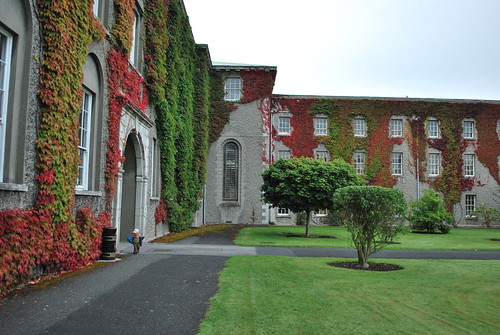
Early morning, Maynooth Campus

Taking one’s family along to a conference is obviously not that uncommon. “Where can I sign up for that anthropologists’ wife association?” my partner wondered, as he saw yet another man pushing a stroller along on the campus here in Maynooth. This month I’ve tried both, conference – or festival, as I often missay it – with and conference without husband and child. With is definitely not much of a festival, but it’s got other charms.
[teaserbreak]
As long as my son isn’t busy with his trucks and tractors in kindergarten, I tend to choose his company. And I’ve to admit that a workshop or plenary must look more than moderately interesting to beat an opportunity to go rabbit spotting in the Gothic garden where we live or clap for street musicians (who play the theme from the Godfather on saxophone and accordion in Balkan fashion) at Grafton street with him.

I’ve managed sort of a mix, but the selective and quick dip into the flood of academic activities a joint family & work solution offers, has deprived me of what I like most about conferences. This happens also to be the reason behind my frequent Freudian slip of calling it festivals. I experienced some of the same phenomenon during the last championship in football: The more you see the more fun it gets. The more anthropology (or other academic genres) I engage in during a 3-4 days period, the more engaging it gets. Listening to debates and commenting on papers during the day, and discussing , chatting and mingling during the night, with too little sleep in-between high-wire the brain in a very creative and inspiring fashion. The first time I experienced it, weeklong camping on rock festivals was still fresh in my memory, and that experience was what an anthropology conference reminded me of. Music, hanging around, meeting new people and much too little sleep until one feels extrovert and elated by nature. Or, in the case of academic festivals; until one dreams of fieldwork and can’t go anywhere without a notebook to jot down the ceaseless spinning of the mind.

So, yes, it’s been nice – Leo abroad for the first time and some new ideas for my thesis (e.g. here) – but not the best of two worlds like I wrote about some posts ago, and not like the balance I seem to have found at work between a short, but hyper-efficient workday and the relaxed and focused time before and after. Probably conference with family is never going to be a festival, but just a plain conference and a nice family event. Next is family at fieldwork.

Early morning, Maynooth Campus

Taking one’s family along to a conference is obviously not that uncommon. “Where can I sign up for that anthropologists’ wife association?” my partner wondered, as he saw yet another man pushing a stroller along on the…

Read more

Floods in Pakistan: On silent anthropologists and real heroes


Photo: Giro555 / Samenwerkende Hulporganisaties, flickr

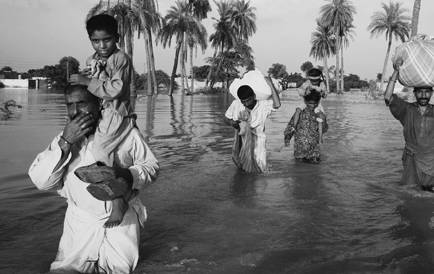
Anthropologists are following in media’s and politicians footsteps: They care less about the floods i Pakistan than for the Tsunami in Southeast Asia, the Katrina floods in the USA and the earthquake in Haiti.

A quick search reveals nearly complete silence. While several anthropologists mention the desaster or call for help, they don’t contribute with any analyses.

The only piece by an anthropologist that deals specifically with the floods consists of rather dubious culturalisations: Cultural wisdom in crisis by Kashmali Khan from Oxford University, published in the Pakistani Tribune.

But while I am writing these lines, suddenly an interview about the flood pops up at the great blog Anthropologyworks. Pakistan expert Maggie Ronkin (who’s recently taught on Justice and Peace in Pakistan and Social Development in South Asia at Georgetown University) interviews Fayyaz Baqir, Director of the Akhter Hameed Khan Resource Center in Islamabad.

Fayyaz Baqir describes the floods as “the worst in the entire world during the past hundred years”. But he is eager to add – and this is the interesting part in my view – that we “are underestimating the resilience, resourcefulness, and capacity of the people to cope with the disaster due to the presence of hundreds of formal and informal institutions and mechanisms that help people on a day-to-day basis.”

This capacity and the will to help is echoed in several stories in Pakistani media.

“In the last 10 days”, Zeresh John writes, in the Pakistani newspaper Dawn, “I’ve seen Pakistan come together in ways never seen before.” “It is an overwhelming feeling”, Zeresh John adds, “when people unite for a cause. When in an instant, strangers no longer remain strangers”:

The Pakistani youth has risen and literally stepped out on the streets to help their countrymen affected by the flood. (…) Each day brings a relentless and constant chain of support. Where the monetary contributors stop, there is a group of people ready to take over by running to crowded bazaars everyday to buy food supplies, clean drinking water and medicines. From there yet another massive portion of the population is stepping in to pack those supplies and load them into trucks to deliver them to the affected areas.
(…)
As Pakistani authorities failed to provide the necessary leadership needed and with no proper coordination in the relief efforts, the civilian population of Pakistan has taken it upon themselves to do what they can in the face of this crisis; in the process, developing a conscientious society that we’re all proud to belong to.

But these stories are not told by the media, a reader comments:

“I live overseas and this post was quite educational for me. How is it that none of our TV channels are highlighting this spirit ? All I’ve seen so far are stories about corruption, fake camps and immoral feudals diverting the flow of flood waters to their benefit. Our free media seems to be failing miserably by promoting only the demoralizing but sensational stories.”

My favorite story is written by Shabnam Riaz in The News: The Real Heroes (see also cached version). She is also writing about “a spirit-lifting experience in this whole nightmare”: Pakistan’s youth, young men and poor laborers who help other people:

Small, scattered groups of young boys and men had formed where the rain was the harshest and was threatening to sweep away cars along with their occupants. (…) They worked in unison, all of them had a single purpose and that was to rescue other human beings. (…) They waved at us, hurriedly preparing to help the next hapless driver who was blindly careening into their path. We waved back with euphoric ‘thank you’ but they had already become busy in helping others.
 
I was touched beyond words. These young men were poor labourers who were most probably hungry as a day full of rain would not have given them a chance to earn their daily wage. I am sure that none of them were owners of a vehicle either. But their dedication to help the other members of society who definitely had more material possessions than they had, without any contempt at all, told me something. It told me that deep inside they were people of substance. Those individuals who had their moral compasses pointing in the right direction.
 
It also told me something else; that in fact, these were our heroes. Also, these people who slog from sun-up till sun-down for a meagre amount that could hardly put a decent meal on anyone’s table, are our actual role models.

 
Here another story about how people help themselves (video by Al Jazeera)

Pakistan flood victims build makeshift transport

Save Pakistan from the catastrophe is the title of an earlier article where anthropologist Fazal Amin Baig calls for action. Fazal Amin Baig wrote it earlier this year in the aftermath of a heavy landslide that took the lives of 19 people and displaced more than 1,500 people. “The year 2010 witnessed a natural disaster, which did not indicate a good omen to the people of Pakistan.” Unfortunately, the anthropologist was right.

Check also Dawn’s excellent special section about the flood and the updates at Global Voices and al-Jazeera and don’t forget to help.

For an excellent example of how to contribute as social scientists, see my earlier post on anthropologists on Katrina.

(update: Pakistan: Netizens In Action Helping Flood Victims. (Global Voices 24.8.2010))

SEE ALSO:

Why we need more disaster anthropology

When applied anthropology becomes aid – A disaster anthropologist’s thoughts

“Disasters do not just happen” – The Anthropology of Disaster (2)

After the Tsunami: Maybe we’re not all just walking replicas of Homo Economicus

Haiti Earthquake: Worldwide solidarity, a common humanity?

Photo: Giro555 / Samenwerkende Hulporganisaties, flickr

Anthropologists are following in media's and politicians footsteps: They care less about the floods i Pakistan than for the Tsunami in Southeast Asia, the Katrina floods in the USA and the earthquake in Haiti.

A…

Read more

Flere ateister, men bibelbeltet består

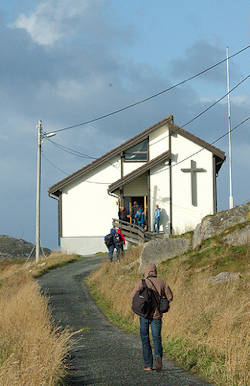
Sula bedehus. Foto: Sigurd Gartmann, flickr

Så kom muslimene og plutselig ble religion et viktig tema igjen i Norge. Dette er en populær fortelling. Men man glemmer at kristendommen spiller en stor rolle i livet til mange nordmenn.

Til tross for at flere blir ateister, står pietistisk kristendom fortsatt sterkt i Agderfylkene og Rogaland. Bibelbeltet består, konkluderer Klassekampen som omtaler den nye undersøkelsen “Religion i dagens Norge”, som ble lansert av Stiftelsen Kirkeforsking (Kifo) forrige fredag.

Det er store regionale forskjeller i religiøsitet, og disse forskjellene er “forbausende stabile”, leser vi:

Bibelbeltet på Sørlandet holder stand, hedmarkingene bryr seg fortsatt lite om religion, og i det urbane Oslo-området står sekularismen og pluralismen sterkt.
(…)
Folk fra Rogaland og Agderfylkene oppgir oftere å ha en personlig tro, og de har et mer aktivt religiøst liv. Fraværet av personlig troende dominerer på Østlandet og i Trøndelag, mens i Nord-Norge er det like sammensatt som det alltid har vært: Her finnes dypt troende læstadianere og sterkt antireligiøse, samtidig som nordlendingene utmerker seg med å slutte opp om den alternative religiøsiteten.

>> les hele saken i Klassekampen

Noe annet som er interessant: Unge er mer åpne for religiøsitet enn eldre. Det er nå flere i aldersgruppen 18-34 år som tror på et liv etter døden, enn det er i aldersgruppen 55-79 år, og det er en økning av søknader til bibelskoler ifølge Vårt Land.

Jeg synes Klassekampens vinkling er mer interessant enn den vi finner i Vårt Land (“Eldre svikter kirken” og Fri Tanke (Andelen ”sterkt ikke-religiøse” nær doblet på ti år). Det ser nemlig ut at vi er vitne til en økende polarisering i religiøse spørsmål.

For noen uker siden hadde Morgenbladet en interessant reportasje om unge som strømmer til kristne skoler og festivaler.

SE OGSÅ:

Kristendommen øker mer enn islam

Masteroppgave om bedehuskultur i endring

Slik preger kristne ideer våre bilder av verden

Intervju: På feltarbeid i bedehuset

Der religionen skiller bygda

Maurice Bloch: Religion is a Figment of Human Imagination

Sula bedehus. Foto: Sigurd Gartmann, flickr

Så kom muslimene og plutselig ble religion et viktig tema igjen i Norge. Dette er en populær fortelling. Men man glemmer at kristendommen spiller en stor rolle i livet til mange nordmenn.

Til tross for…

Read more