Berner Ethnologen haben in fünf Schweizer Städten den Alltag Suchtkranker studiert, meldet Pressetext Schweiz. Sie fanden heraus, dass Informationsstand über diese Menschen gering ist und von Vorurteilen geprägt ist.
“Oftmals hören diese Menschen den Zuruf, sie sollten doch eine Arbeit suchen. Die meisten glauben, sie seien arbeitsunwillig, faul und jung”, sagt Ethnologin Corina Salis Gross, die die Studie leitete.
Kaum im Bewusstsein sei allerdings die Tatsache, dass kaum jemand freiwillig auf der Straße lebt:
“Nur sehr wenige wie etwa manche Punks wählen diese Lebensform bewusst, zufrieden ist damit niemand. In der Regel rutscht man hinein durch eine Verkettung biografischer Umstände”, so die Ethnologin. Jeder dritte wurde bereits sexuell missbraucht, bei Frauen waren es sogar zwei von drei. Ebenso viele gaben an, wegen Krankheit oder Gewalt bereits einmal “fast gestorben” zu sein. Allgegenwärtig sind psychische und physische Leiden wie Gelenk- und Knochenschmerz, Gefühle der Hoffnungslosigkeit und Einsamkeit bis hin zu Suizidversuchen.
Die Situation der “Randständigen” hat sich laut der Studie in den letzten Jahren verschärft, schreibt die Basler Zeitung. Die verstärkte Imagepflege der Städte und der Ökonomisierung des öffentlichen Raums verdränge die Suchtkranken.
Die fünf untersuchten Städte gehen verschieden mit den Randgruppen um:
Bern etwa hege mit Repression und dem Anbieten von Alternativen ihr Bild als saubere Stadt, in der Sicherheit und Ordnung herrschten, so die Autoren. Chur ignoriere die Randständigen und überlasse sie sich selbst und Zürich halte mit einem liberalen Ansatz die Szenen auf eine stadtverträgliche Weise unter Kontrolle.
Berner Ethnologen haben in fünf Schweizer Städten den Alltag Suchtkranker studiert, meldet Pressetext Schweiz. Sie fanden heraus, dass Informationsstand über diese Menschen gering ist und von Vorurteilen geprägt ist.
"Oftmals hören diese Menschen den Zuruf, sie sollten doch eine Arbeit…
Es sei wichtig, über die Situation der Lehrbeauftragten zu reden, betont Treiber:
Der Lehrauftrag ist ein Strohhalm, der es einem erlaubt, die Anbindung an eine Universität zu zeigen, der einem Zugang zu anderen Wissenschaftlern erlaubt. Währenddessen bewirbt man sich, publiziert man, schreibt Forschungsanträge und so fort, und das wird nie als eine Zeit wahrgenommen, in der man stecken bleiben darf und stehen bleiben sollte. Nichtsdestotrotz geht ja nicht jede Bewerbung auf, und man ist oft länger in dieser Schleife, als man das vorher plant.
Und deshalb ist es einfach auch wichtig, diese Phase zu thematisieren und den Menschen auch klarzumachen, es geht anderen ähnlich wie euch, und das ist eine Phase, in der wir trotzdem gute Arbeit leisten und gute Arbeitsbedingungen und ein gutes Entgelt einfordern dürfen.
Hungerlöhne an den Unis: Ethnologe fühlt sich ausgebeutet, meldeten die Medien vor drei Jahren. Viel hat sich offenbar seitdem nicht geändert. Um Lohndumping an Hochschulen abzuschaffen, sollte ein Wissenschaftstarifvertrag geschlossen werden, fordert nun Ethnologe Magnus Treiber, der einen Streik…
Om den globale samtalen sier han at den må føres “på modernitetens premisser”:
Jürgen Habermas snakker om noe han kaller ”den herredømmefrie dialog”, som er et ideal for kommunikasjon mellom likestilte individer. Forskjeller og ulikheter i makt, kjønn og kultur ikke skal komme i veien for en fri meningsutveksling.
(…)
Når vi kommuniserer, prøver vi av og til å overbevise hverandre, å korrigere hverandre. Det betyr at jeg må være villig til å høre på andres argumenter, anse dem som likeverdige samtalepartnere og å innta en kritisk holdning til egne forutsetninger. Da kan jeg ikke henvise til min maktposisjon, eller si at religiøse og kulturelle forskjeller forbyr meg å ta dine argumenter opp til vurdering. Hvis jeg gjør det, stenger jeg meg inne i min kultur, så å si, og den isolasjonen er det motsatte av samtale. Da har vi fratatt den andre retten til å kritisere oss, og muligheten for gjensidig kritikk er betingelsen for ekte kommunikasjon.
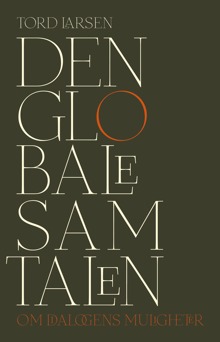
Mer enn noen gang i verdenshistorien er det mulig å føre en global samtale, mener antropolog Tord Larsen som er aktuell med en ny bok Den globale samtalen. Om dialogens muligheter
They attended a panel where papers were not read but presented via 20 images that were displayed for 20 seconds each. After 6 minutes and 40 seconds the show is over and the discussion can begin.
This way of presenting is getting more and more popular around the world and is called Pecha Kucha.
Pecha Kucha presentations might take more preparation time, but presentations are more focused, there is more discussion as when people want to hear more after 6 min 40 sec, “they will just open their mouth and ask”. According to Aleksandra Bartoszko Pecha Kucha style presentations might also be a great way to present anthropology to the non-anthropological public.
“It was the first time ever I was totally focused on all the presentations during the whole session”, Aleksandra Bartoszko writes enthusiastically:
It was the first time ever I was totally focused on all the presentations during the whole session:
1) because of the REAL time limit,
2) because of the power point presentations NOT being a text,
3) because of the lack of WRITTEN style of the presentation, the oral style is almost required in this format and in a way natural,
4) because of the lack of word overflow – presentations really to the point,
5) because of the time left for the discussion (real or potential, but still, there is time for that).
I did enjoy this format because:
1) because of the lack of fluency in English I’m not too good in oral presentations, and because of the 20 seconds per slide (in my understanding of the idea, 20 sec per point) it was easier to present something in more “digestible” way to the audience. And because of the pictures, there was a lot of things/descriptions I could just skip.
2) because of the time limit, I really had to think what was the main point I wanted to address to the audience – NOT everything that I had discovered and would like to share with (this is just not working). This time limit is also a good lesson of modesty and self-criticism. I think that this is also a good way to MAKE PEOPLE DISCUSS – I think that usually when “unfortunately we have time for just one short question or comment” most of the people do not want to be the one who talk or “steal” this question, they pull out, especially young scholars. While during an 1 hour discussion more and more people get involved.
Anyway, when I’m done in 6,40 mins and people want to hear more, they will just open their mouth and ask. I think that academia does lack the culture of speaking, talking and discussing. Yes, I do think so :) So, I am for more active meetings.. people are getting so lazy sometimes, both the presenters and the audience.
3) Also, and paradoxically, because of the language issue I prefer the discussion part to the paper. I am just not able to speak so naturally having a paper, and I don’t like the way I usually present (in spite of the fact that this is a tradition etc. It’s just not fun at all, and I guess that most of the participants of the conferences agree, they are just too lazy not to read the excerpts of their books etc). So, that is why I do appreciate every single minute left for a discussion. I believe that any other session I attended could work in this way and the discussion would be great and more fruitful than usually.
4) after fieldwork we have so many photos that never will be used. And I think it is so valuable to see other “fields”, other people in work, their “photographical” perspectives, we can learn so much. And I do feel sorry for all those picures stored in our offices, apartments, old albums which will never be used, maybe one of them for a cover to some book, or a nostalgic wallpaper on our laptops.. I don’t know, I just think that the places and people deserve to be seen once they are “captured”.
5) this is a great way to present anthropology to the non-anthropological public, to present our results in an understandable but still scientifical manner. Most of the anthropologists (like many other disciplines) just do not know how to speak about anthropology and our work, so it is a good way to start. As one of the participants said “this is the way I can explain my parents what I am doing”.
Marcy Hessling organized the Pecha Kucha session. I asked her a few questions:
How was the session? Did you like it? What did the others say?
– I think that the Pecha Kucha format was quite a success at the meeting. I enjoyed presenting, and I am fairly certain the other participants did too. It does take a lot of preparation in advance, which is surprising to some because of the shorter presentation time. But when you just have 6 minutes and 40 seconds to utilize, it is important to be succinct and focus fairly narrowly on a specific issue or topic. And it is also quite a challenge to choose the 20 more relevant, and yet at the same time visually compelling, images.
Why did you decide to organize a Pecha Kucha session?
– I first heard about the Pecha Kucha format a few years ago (probably in 2007, I think or in early 2008) when I saw a Call For Papers for a student conference that was going to be held somewhere overseas. Possibly in Japan. It sounded like a great way for students to present their work. First, because students are generally quite technologically savvy, and second, because students are typically working through aspects of being in the field or creating a project. This format is very audience-interactive (at the end) so it is a way to get some feedback too.
Pecha Kucha means 20 slides a 20 sec. How important is it to follow the rules? Is it ok to use 10 slides a 30 seconds?
– The way I understood the format is that it is important to stay within the 6 min 40 second time limit, and that generally most people do 20 slides for 20 seconds per slide. However, I have heard of some people doing a 6 min 40 second movie too. So I think it depends on the organizers.
Was it easy to motivate people to take part in this Pecha Kucha session?
– There were quite a few people who were initially interested in this format, but it does take a commitment to do the preparation in advance. We had a visual anthropologist act as our discussant, and I really wanted to get the presentations to her in advance of the meeting so that she could speak to them in her comments. She was very impressed with the format, and with the quality of work that the participants brought in.
Will there be another Pecha Kucha session at the next AAA meeting?
– I am not sure if there will be another Pecha Kucha presentation at the 2010 AAA meeting, it depends on the current program chair, and the individual section program editors. I hope that it does continue.
How do these presentations look like? Here are two presentations you can download:
Are you interested in creating a session or special event in an innovative format for the 2010 AAA meeting? Do you want to organize a service activity, walking tour, or an unconference to complement the meeting? Email your ideas to aaaprogramchair [at] gmail.com or aaameetings [at] aaanet.org.
(UPDATE: See Beware: No Pecha Kucha allowed without consent from Tokyo) Why reading your paper when there are lot more exciting ways of presenting your research? I have asked Aleksandra Bartoszko and Marcy Hessling to tell us about their…
Frode Storaas fra Bergen Museum jobber med et YouTube lignende nettsted med antropologiske filmer, melder På Høyden.
Siden 2007 har Storaas samlet antropologiske filmer fra hele verden. Nettstedet som han jobber med skal supplere informasjonen man får i mainstream-media. Filmene skal lenke videre til rapporter og vitenskapelig materiale.
Storaas sier:
– Henning Mankell sa at vi får bare vite hvordan folk i Afrika dør, ikke hvordan de lever. Mange forskere her i Bergen har jobbet i Afrika, og de sitter på alt fra antropologiske historier fra dagliglivet, til kunnskap om politiske strømninger. Denne typen materiale burde være lettere tilgjengelig.
– Det er tanken om et museum uten vegger. En av oppgavene for meg som jobber på museum er nettopp å gjøre slik informasjon tilgjengelig: Ikke bare hvordan man levde for hundre år siden, men hvordan man lever i dag.
I siste utgave av Norsk antropologisk tidsskrift presenterte Storaas ideene sine (artikkelen er også kun tilgjengelig via betaling). Jeg oppsummerte saken i innlegget Derfor trenger vi multimedia-antropologi på nett.
Frode Storaas’ prosjekt høres veldig bra ut, men på grunn av problemer knyttet til opphavsrett ser det ut til å gå mot en belalingsløsning ifølge På Høyden. Forsvinner nettstedet bak en pay-wall er vitsen med denne siden egentlig borte. Vi vil vel da heller fortsette å bruke YouTube eller Vimeo og håper flest mulig antropologer kommer til å bruke det. På disse nettstedene finnes det allerede masse antropologi-relaterte videoer og forelesninger. YouTube har blant annet opprettet en egen kanal for forelesninger. Et søk etter “anthropology” gir 216 treff (et vanlig anthropology søk gir 12700 treff)
Utvalget på Vimeo er mindre, men videoene er ofte av høy kvalitet. Jeg fant bl.a. en film om Sudan – Time/Money = Change by Jason Brooks som han lagde i forbindelse med sin master i visuell antropologi ved Goldsmith College London.
Frode Storaas fra Bergen Museum jobber med et YouTube lignende nettsted med antropologiske filmer, melder På Høyden.
Siden 2007 har Storaas samlet antropologiske filmer fra hele verden. Nettstedet som han jobber med skal supplere informasjonen man får i mainstream-media.…