
search expand

Thesis: How does EU influence the life of farmers in Finland?

farmers

Why see uncertainty as a hindering aspect of human experience, instead of an enabling one? In her thesis Good Lives, Hidden Miseries: An Ethnography of Uncertainty in a Finnish Village, anthropologist Susanne Ådahl from the University of Helsinki argues that there can be something called “good suffering”, a suffering which creates positive meaning and creative action:

There is a reason why people continue doing things, working, producing on the land, maintaining sociality and community although a lot of it goes against all economic logic. For farmers it is not only a matter of being engaged in practical action, but that the action has a quality of “meaningfulness” to it.

Her thesis is an ethnographic study, in the field of medical anthropology, of village life among farmers in south west Finland, based on 12 months of field work conducted 2002-2003 in a coastal village.

Ådahl asked people about their life histories, the meaning of the home, work, social solidarity and social interaction, notions of illness and well-being. She was primarily interested in finding out how people experience social change and what they do to deal with it. And by working with farmers she “came to understand the central symbols of farming life and the impetus that keeps these people going although outside forces are reducing their living space, both symbolically and literally”.

When she started her fieldwork Finland had been a member of the European Union for seven years, and farmers felt the EU had substantially impacted on their working conditions, she writes:

Perhaps one of the greatest losses they are experiencing is that of their autonomy, the freedom to decide over life which seems to be equivalent to a loss of honour, and an honourable way of dealing with the dependence on structures beyond their control. It is also a potential loss of the home. There was complaint of other pressures in life such as work related stress, the fast pace of life and strained inter-personal relationships. Informants expressed worry over the ingestion of artificial foods and other harmful substances in the environment.

Felt uncertainty in their lives is brought about by increasing social isolation, feelings of depression, anxiety, guilt and distress. A concrete sign of the structural changes that are taking place in society is the emptying of villages.

(…)

The introduction of on-farm inspections and with it the issue of doubt and distrust that is inherent in this practice is perhaps one of the hardest blows to farmers’ pride. They feel that a bureaucratic entity has penetrated into the sanctity of the home, transgressing boundaries of intimacy. Many also equate the present subsidy system with social welfare, living off a system, losing your independence. This has resulted in a loss of motivation to produce, because the reward for being a good farmer, one that strives to maximise his or her yields, is gone.

(…)

They feel that decision makers and representatives of the EU cannot understand, nor recognise the significance of local level knowledge, based in the reality of farming in Finland as well as the geographically specific areas of the country that “good farming practice” is based on.

In the midst of constraints and the demands to mould oneself to the social order there are also minimal forms of resistance, like writing “No EU” in bricks of contrasting colours on the roof of one’s barn. Or being active in a producers’ organisation, in municipal or party politics so as to influence the outcome of political decisions that impact on one’s life:

One of the most obvious forms of resistance is related to the “cancer talk” that people engage in. It is used as a political commentary of the state of affairs, of people’s fear of something foreign controlling their lives. It is a form of blaming society for making their living environment dangerous to dwell in and their food contaminated, and yet they keep on living in this environment.

So why can suffering be good and meaningful? The anthropologist explains:

For farmers it is natural to think that the importance of producing food makes their suffering meaningful, valuable and honourable. This positive, meaningful suffering produces wholesome food that feeds the nation and maintains our independence in terms of food security.
(…)
It is through working and being active in associations and other social activities that farmers can fulfil the central values of the farming life, those of continuity regardless of how economically unprofitable it has become to engage in farming especially for small holders. Farmers make the ambiguity of their lived realities understandable by referring to these core values that spring from the local context.
(…)
I believe that the central role of agency in the lived experience of human subjects emerges precisely because it is set against the backdrop of suffering, of the idea that those things which are at stake in one’s life are threatened.

>> download the thesis

Her reserach was part of the research project Ethnographies of Illness Experience in Contemporary Finnish Contexts that has published three medical anthropology papers online.

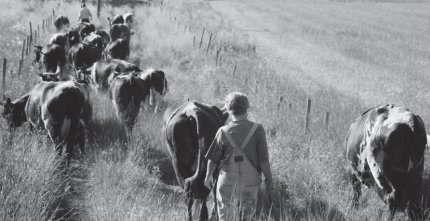
The picture was taken from her thesis.

SEE ALSO:

Local Foods – New issue of Open Access journal “Anthropology of Food”

Crop Diversity Continues Thanks to Modern, Traditional Practices

Thailand: Local wisdom protects hometown from the onslaught of globalisation

farmers

Why see uncertainty as a hindering aspect of human experience, instead of an enabling one? In her thesis Good Lives, Hidden Miseries: An Ethnography of Uncertainty in a Finnish Village, anthropologist Susanne Ådahl from the University of Helsinki argues that…

Read more

International Polar Year opened – Anthropologists involved

More than 50,000 scientists from 63 nations turned their attention to the world’s poles when the International Polar Year officially opened on Monday: It unifies 228 research projects about the impact of global warming in the Arctic the Washington Post reports.

Anthropologists are also part of it. “Anthropologists are also planning to study the culture and politics of some the Arctic’s 4 million inhabitants” according to the newspaper.

More information can be found on the website of the Polar Year where the participants already have started blogging. The website provides lots of RSS feeds.

One of the projects about people in the Arctic is:

NOMAD: Reindeer herding from a reindeer perspective:

The central idea of NOMAD is the establishment of a mobile observation platform. This is facilitated by a nomadic tent camp that houses an interdisciplinary group of researchers. They follow the annual migration of semi-domesticated reindeer in Kola Peninsula, Northwest Russia. This is a novel effort, putting social and other scientists on the reindeer trek on a long-term basis. By positioning themselves in close contact with migrating reindeer herds the researchers observe the delicate ecology and conditions of renewable resource use in the subarctic.
(…)
The NOMAD Blog and Forum will start as soon as the first photographs and entries of the fieldwork diary will be sent over from the camp to the Max Planck Institute for Social Anthropology (Halle, Germany). We reckon this will happen in late April 2007.

On the website of the Indigenous People International Polar Year, we can see presentations from a workshop and videos. Among others, you can watch the whole Opening of the Indigenous Peoples International Polar Year, in Guovdageaidnu, Norway online – a three-day’s conference! Unfortunately there are no subtitles (presentations in both Norwegian, English, Saami).

Recent news coverage about the Polar Year

Greenland meltdown could change the world: If ice covering the island melts, rising sea levels could displace millions from Florida to Bangladesh (The Vancouver Sun, 28.2.07)

SEE ALSO:

A new word For June – or: When is the Arctic no longer the Arctic?

More than 50,000 scientists from 63 nations turned their attention to the world's poles when the International Polar Year officially opened on Monday: It unifies 228 research projects about the impact of global warming in the Arctic the Washington Post…

Read more

A link between food resources and social hierarchies?

In a portrait on the website of The National University of Australia, anthropologist Ian Keen, tells about his research among Aboriginees in Australia. Among other things, he wanted to find out why pre-colonial Aboriginal societies tended to be more egalitarian than some of their counterparts elsewhere in the world:

In a paper published in the journal Current Anthropology, Keen argues that for any society to develop lasting social hierarchies, it must have access to plentiful, localised resources that could be defended. In this event, some people can assume authority over others. On the northwest coast of North America, for example, recent hunter-gatherers enjoyed a stable climate and concentrated, defendable resources, especially plentiful salmon. As a consequence, these societies developed such enduring inequalities as inherited chiefly office and marked social classes, while some even kept slaves.

In contrast, Aboriginal societies did not develop such enduring inequalities. (…) Keen argues this relative egalitarianism was the result of constraints arising from variable food resources and an unstable climate, meaning there was limited scope for people to assume dominion over others by asserting exclusive access to territory and resources.

Keen explains:

“It’s not exactly an environmental determinist argument, but it is suggesting that those conditions imposed restraints. I make the assumption that wherever they can, some humans will take the opportunities given to them to establish some kind of dominion over others. So my paper argues that even if people knew how to dominate one another, and wanted to do so, the opportunities were not there.

>> read the whole article

Brian Hayden, an archaeologist at Simon Fraser University in British Columbia, is not convinced and criiticizes that Keen does not put enough weight on the ecological and economic aspects of complexity that develop among some hunter-gatherers in Australia.

Keen is the author of the book Aboriginal Economy and Society. The website of the book is quite informative. If you click on Supplementary Materials you’ll find several cases studies and several pages about aboriginal technologies. In the paper Variation in Indigenous Economy and Society at the Threshold of Colonisation, Keen tells about more about his book:

Just how similar and how distinct were Aboriginal societies in different parts of the continent at the time of British colonisation of Australia? The book I am currently writing attempts to answer this and related questions by comparing the economy and society of seven very varied regions of the continent as they were at the threshold of colonisation.

(…)

Such a comparative study is long overdue. There have been no recent systematic comparisons of Aboriginal ways of life in different parts of Australia, comparable to, for example, Marshall Sahlins on Polynesia or Rubel and Rosman on New Guinea.

>> download the paper (pdf)

In a portrait on the website of The National University of Australia, anthropologist Ian Keen, tells about his research among Aboriginees in Australia. Among other things, he wanted to find out why pre-colonial Aboriginal societies tended to be more egalitarian…

Read more

Primatologists go cultural – New issue of Ecological and Environmental Anthropology

The second issue of the peer reviewed Open Access journal Ecological and Environmental Anthropology is quite unusual. The papers have titles like

“The Importance of Integrative Anthropology: A Preliminary Investigation Employing Primatological and Cultural Anthropological Data Collection Methods in Assessing Human-Monkey Co-existence in Bali, Indonesia”

or

“A Preliminary Review of Neotropical Primates in the Subsistence and Symbolism of Indigenous Lowland South American Peoples”.

The new issue even includes two videos!

Concerning their interdisciplinary approach, the editors explain:

In this issue, we highlight interdisciplinary work from primatologists who combine cultural anthropology and primatology approaches to gain unique perspectives about the species that they study. From the discovery of a new species in Tanzania, to cultural primate symbolism and subsistence in Amazonia, and to the interactions of rural communities with local populations of monkeys in Bali and Sulawesi, Indonesia, ethnoprimatologists in our second issue demonstrate the value of interdisciplinary methods for primate conservation on three continents.

>> Frontpage of the journal “Ecological and Environmental Anthropology”

The second issue of the peer reviewed Open Access journal Ecological and Environmental Anthropology is quite unusual. The papers have titles like

"The Importance of Integrative Anthropology: A Preliminary Investigation Employing Primatological and Cultural Anthropological Data Collection Methods in…

Read more

How to survive in a desert? On Aboriginals’ knowledge of the groundwater system

Indigenous Australians dug underground water reservoirs that helped them live on one of the world’s driest continents for tens of thousands of years, new research by hydrogeologist Brad Moggridge shows, according to ABC News. The study indicates Aboriginal people had extensive knowledge of the groundwater system. European settlers owed their subsequent knowledge of groundwater to the indigenous Australians, and even much of Australia’s modern road system is based on water sources identified by the original inhabitants.

Moggridge based his work on oral histories, Dreamtime stories, rock art, artefacts and ceremonial body painting as well as written accounts by white missionaries, surveyors, settlers, anthropologists and explorers.

>> read the whole story at ABC: Aboriginal people built water tunnels

In the article, there’s an interestring link to the research network Desert Knowledge that is “linking Indigenous and local knowledge with science and education to improve desert livelihoods”. (Link updated 3.9.2022)

SEE ALSO:

“Aboriginal knowledge is science”

Approaches to Indigenous Knowledge – conference papers in fulltext

Indigenous Australians dug underground water reservoirs that helped them live on one of the world's driest continents for tens of thousands of years, new research by hydrogeologist Brad Moggridge shows, according to ABC News. The study indicates Aboriginal people…

Read more