search expand

Anthropological research: Online dating as disappointing as the real-life dating scene

Sounds familiar: People on online dating sites are experiencing frustration because it does seem that the internet in many ways is just the same old bar scene. This is one of the findings of research by anthropologist Susan E. Frohlick. She is conducting an ethnographic study of online dating among women age thirty and above.

She says the women on the one hand gained a sense of empowerment from their online dating experiences. But they still wanted the man to make the first move and expected him pick up the tab:

Women are finding it as a useful tool to enter into the dating world, they find that it’s safe, they find that they can be a little more bold than they would in face-to-face relationships. But, at the same time, they are experiencing frustration because it does seem that the internet in many ways is just the same old bar scene.

Complaints include a preponderance of men who are looking for much younger women, as well as men who misrepresent their looks, interests or marital status, or who show little interest in moving the relationship offline, she said.

>> read the whole story on News.com.au LINK UPDATED 30.6.18

Furthermore, women are hesitant to admit that they meet men through the Internet.

Frohlick says:

One of the most striking findings so far is that there’s a huge contradiction between what women say about the popularity of online dating sites on the one hand and, on the other hand, their own sense of almost shame, and certainly secrecy about it. They talk about how it’s for losers.

Frohlick says she hopes the study will shed more light on how the online dating world might be changing women’s sexuality. She would like to find more study participants from across Canada, including women who are looking for same-sex partners.

>> read more in Canoe.ca LINK NO LONGER AVAILABLE

She is part of the project “Surfing for Love” at the University of Manitoba. The study will be completed in May, 2008, and a summary of the results will be posted online, she writes on her homepage.

SEE ALSO:

Sexual anthropologist explains how technology changes dating, love and relationships

Denise Carter: The Birth of a Cyberethnographer

Ethnographic research on Friendster’s online communities

Cyberanthropology: “Second Life is their only chance to participate in religious rituals”

Sounds familiar: People on online dating sites are experiencing frustration because it does seem that the internet in many ways is just the same old bar scene. This is one of the findings of research by anthropologist Susan E. Frohlick.…

Read more

“The insecure American needs help by anthropologists” – AAA-meeting part II

gated community
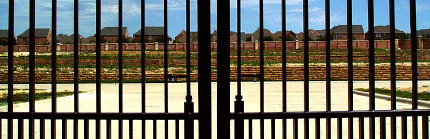
(Photo: Dean Terry, flickr, from the film Subdivided, see below)

The annual meeting of the American Anthropological Association received more media attention than usual. One important topic was the relationship between anthropology and the military as noted earlier (see also Culture Matters), new media, and circumcision. Another topic: Gated Communities and “insecure Americans”.

Washington Post writer Eugene Robinson has attended a panel discussion titled “The Insecure American.” He writes:

We Americans like to think of ourselves as strong, rugged and supremely confident — a nation of Marlboro Men and Marlboro Women, minus the cigarettes and the lung cancer. So why do we increasingly find ourselves hunkered behind walls, popping pills by the handful to stave off diseases we might never contract and eyeing the rest of the world with an us-or-them suspicion that borders on the pathological?

Last week, I heard some of the nation’s leading cultural anthropologists try to explain these and other phenomena. I came away convinced that we, as a nation, definitely should seek professional help.

Professional help? Yes, by anthropologists!

“The Insecure American” turned out to be a revelation — by turns alarming, depressing and laugh-out-loud amusing — as scholar after scholar presented research showing just how unnerved this society is.
(…)
We’re afraid of one another, we’re afraid of the rest of the world, we’re afraid of getting sick, we’re afraid of dying. Maybe if we study our insecurities and confront them, we’ll learn to keep them in check. Before we turn the whole nation into one big, paranoid gated community, maybe we’ll learn that life isn’t really any better behind the walls.

>> read the whole comment in the Washington Post

Writer Barbara Ehrenreich was there as well and writes in her blog (also published as comment in several newspapers) about Setha Low‘s research on Gated communities:

At the annual meeting of the American Anthropological Association in Washington last week, incoming association president Setha Lowe painted a picture so dispiriting that the audience guffawed in schadenfreude. The gated community residents Lowe interviewed had fled from ethnically challenging cities, but they have not managed to escape from their fear.
(…)
Before we turn all of America into a gated community, with a 700 mile steel fence running along the southern border, we should consider the mixed history of exclusionary walls. Ancient and medieval European towns huddled behind massive walls, only to face ever-more effective catapults, battering rams and other siege engines. More recently, the Berlin Wall, which the East German government described fondly as a protective “anti-fascism wall,” fell to a rebellious citizenry. Israel, increasingly sealed behind its anti-Palestinian checkpoints and wall, faced an outbreak of neo-Nazi crime in September – coming, strangely enough, from within.

>> continue reading on her blog

PS: Setha Low is interviewed by Dean Terry in the film Subdividedclips of the filmfilm blog.

SEE ALSO:

Ethnographic Research: Gated Communities Don’t Lead to Security

‘Overemphasis on security creates insecurity’

gated community

(Photo: Dean Terry, flickr, from the film Subdivided, see below)

The annual meeting of the American Anthropological Association received more media attention than usual. One important topic was the relationship between anthropology and the military as noted earlier (see also Culture…

Read more

Study: Anti-immigration steps are doing the opposite of what they intend to do

Restrictions to keep immigrants from entering the United States are having the effect of encouraging those who are already here to stay by any means necessary, a study by anthropologist Maxine L. Margolis finds.

“The restrictions are doing exactly the opposite of what they intend to do by locking these people in place”, she says according a press release by the University of Florida. Tightened post 9-ll security has prompted immigrants to skip visits to their homelands because of the risk of not being allowed back into the U.S., the anthropologist explains.

Even with valid passports and visas, they can be denied re-entry, she said.:

One Brazilian immigrant, who owned a floor tile company in New York and had lived in the state for several years with his wife and American-born daughter, flew to Brazil when he learned his elderly father was seriously ill. On his return, he was stopped at JFK International Airport and was deported to Brazil for having previously overstayed his tourist visa.

The research is based on interviews with Brazilian immigrants and applies to other nationalities as well, Margolis said. Her findings wil be published in the January issue of the journal Human Organization.

>> read the press release

SEE ALSO:

Why borders don’t help – An engaged anthropology of the US-Mexican border

For free migration: Open the borders!

“Anthropologists Should Participate in the Current Immigration Debate”

Restrictions to keep immigrants from entering the United States are having the effect of encouraging those who are already here to stay by any means necessary, a study by anthropologist Maxine L. Margolis finds.

“The restrictions are doing exactly the…

Read more

“Arabs and Muslims should be wary of anthropologists”

News of anthropologists in the US. military starts circulating on one of the largest Muslim websites, Culture Matters reports. Anthropologist Donald Abdallah Cole says to IslamOnline.net that “Arabs and Muslims should be wary of western anthropologists”:

‘We should be wary of everything that is written about us, whether by local people or by foreigners. To be wary does not mean to reject. We need to read what anthropologists say about people in the developing world and what they say about Islam and Muslims,’ he explained.

‘We can expect to trust the reliability of professional academic anthropologists who are subject to peer review and evaluation. But for others who are not fully professional, we need to be more careful.’”

>> read the whole story on Culture Matters

This reaction is no surprise, especially when we remember that Britian has recruited anthropologists for spying on muslims.

A few weeks ago anthropologist Maximilan Forte wrote that if anthropology’s role as an instrument of empire can come back into sharper focus it is no wonder that anthropology is banished from universities in the ‘decolonized’ world”.

Over at Savage Minds, a dscussion is going on if all this focus on anthropology in the Iraq war is primarily a PR game to bolster the image that the military is doing something novel to correct the errors of the Iraq occupation.

News of anthropologists in the US. military starts circulating on one of the largest Muslim websites, Culture Matters reports. Anthropologist Donald Abdallah Cole says to IslamOnline.net that "Arabs and Muslims should be wary of western anthropologists":

‘We should be wary…

Read more

“No wonder that anthropology is banished from universities in the ‘decolonized’ world” (updated)

The debates about the militarisation of anthropology have recently made the front page of the New York Times and several other newspapers (f.ex. The Boston Globe) and blogs discussed the story.

Are more and more (American) anthropologists willing to collaborate with the military? If so, anthropology’s role as an instrument of empire can come back into sharper focus as an inherent problem of a Western way of knowing the world”, writes Maximilian Forte:

Yet, we have to admit that imperialism is a significant feature of a “discipline” that was made possible by colonial expansion and where once again anthropologists can find profit from imperialist missions in places such as Afghanistan and Iraq.

When this is added to the chorus of voices in anthropology that would like to diminish indigeneity, that disputes the very concept “indigenous,” that refers to the struggles of the colonized for rights in terms of “seeking special rights,” and that lords over indigenous physical remains as if other people’s bodies (specifically colonized bodies) were the natural property of anthropology – then it is no wonder that this “discipline” (the martial severity of this terminology is indicative and fortuituous in this case) continues to be banished from most universities in the “decolonized” world.

>> read the whole blog post: Anthropology’s Dirty Little Colonial Streak?:

Roger N. Lancaster writes about his experiences during his anthropological research in Mexico:

Invariably, one of the first questions I was asked when I tried to begin an interview was, “Are you here to spy on us?”

Even after full disclosure of my university employment, publications and current research design, I found myself blocked out of some potentially useful interviews. Headlines like “Army Enlists Anthropology in War Zones” (front page, Oct. 5) will make future research all the more difficult.

The identification of anthropology with military operations, intelligence gathering and “armed social work” augurs ill for the future of a discipline that studies populations distrustful of power — many of which have had unhappy past experiences with American invasion, occupation or support for corrupt dictatorships.

>> read the whole “Letter to the editor” in the New York Times

Daniel Martin Varisco does not want to take sides. Nevertheless he stresses that anthropologists’ primary task is not to teach anthropology or cultural awareness. The military interest in ethnography is invariably about gathering “intelligence”, he writes. “This is not about knocking on doors, but finding suspects.” “And the issue here”, he continuies, “is not about serving in the army, or judging those who do, but whether or not anthropologists can conduct research that could be used to the detriment of the people being studied.”

In his opinion, these questions are worth discussing further:

• Would an anthropologist want to be in a position where there might be a major conflict between his or her own conscience as a researcher and the military chain of command?
• Would it be possible to establish trust and rapport, so essential for ethnographic research, when clothed in fatigues and followed by a military escort?
• How much time would a researcher have in order to collect information and who would actually own the rights to that data?
• How many anthropologists have the required language and dialect skills to work in Afghanistan or Iraq?
• If asked by the military, would an anthropologist go under cover to get information?
• And, for the long term, how long will it be in the future before anyone trusts anthropologists in either “war on terror” theater?

>> read the whole article: Anthropo covertus: A Disputed Species

Of course, many anthropologists may refuse to collaborate with the military / CIA for political reasons (for some critics the CIA is a terror organisation and opposition to the US-led war is legitimate), but even these ethical and technical research questions might be a good enough reason to simply not to do any military related work.

UPDATE 2: Eric Michael Johnson who runs the blog The Primate Diaries criticises anthropologists who state that “anthropology can help the war effort”. In his opinion, this is “uncritical enthusiasm”. It shouldn’t be forgotten, he writes, that anthropology has long had a connection with militaristic expansion. >> read his article Anthropology Goes to War. Anthropologists in the war effort from “savages” to “terrorists”

His article consists of three parts. Especially interesting part 3: Anthropology and counterinsurgency in Thailand. The USA misused anthropology to undermine communist influence. Most anthropologists, he writes joined this counterinsurgency project out of both professional interest and a desire to help the Thai villagers.

In a detailed account of one counterinsurgency effort, migrating Hmong villagers were viewed to be “potential” insurgents and were forced to resettle to less fertile farmlands. The Hmong “were forced to steal food rather than starve,” which then developed into a “full-scale rebellion” once the Thai Border Patrol Police “responded.” The Thai government “deployed troops and helicopters and finally resorted to heavy bombing and napalm” to battle these “communists.”

>> read the whole article

>> Joseph G. Jorgensen and Eric R. Wolf: Anthropology on the Warpath in Thailand

UPDATE 1: On NPR: Montgomery McFate and Roberto Gonzales discuss the controversial idea of “academic embeds” at war >> listen to the radio program

SEE EARLIER POSTS:

Anthropology and CIA: “We need more awareness of the political nature and uses of our work”

Oppose participation in counter-insurgency! Network of Concerned Anthropologists launched

The dangerous militarisation of anthropology

Protests against British research council: “Recruits anthropologists for spying on muslims”

More and more anthropologists are recruited to service military operations

San Jose: American Anthropologists Stand Up Against Torture and the Occupation of Iraq and AAA Press Release: Anthropologists weigh in on Iraq, torture at annual meeting
The debates about the militarisation of anthropology have recently made the front page of the New York Times and several other newspapers (f.ex. The Boston Globe) and blogs discussed the story.

Are more and more (American) anthropologists willing to…

Read more