search expand

George Marcus: "Journals? Who cares?"

(LINKS UPDATED 20.5.2022) When George Marcus, one of the most influential anthropologists, was in Oslo recently, I asked him what he thinks about Open access. His answer surprised me. “Journals? Who cares?”, he replied. There is in his opinion little original thinking in journals, there are no longer exciting debates. “Maybe it’s because I’m getting older”, he said. “I don’t care.” He explained that “journals are meant to establish people”, to advance careers.

George Marcus offered similar pessimistic views in an interview in the journal Cultural Anthropology (subscription needed) in spring. Among other things, he said, that there are “no new ideas in anthropology”.

Maximilian Forte at Open Anthropology does not agree with Marcus and summarizes parts of the interview in his post George Marcus: “No New Ideas” (2.0) & the After-Life of Anthropology (1.1)

I mentioned Forte’s critique. Marcus replied “Of course Forte does not agree. Younger anthropologists are interested in progress and new ideas.”

Additionally, Marcus explained me his vision of the anthropologist as collaborator. Anthropologists should not study other people, but work together with them, and treat them as co-researcher. Nowadays, our informants may be interested in the same questions as the anthropologst, and they might even have studied anthropology as well. Marcus wrote an experimental book about the nobility in Portugal called Ocasião: The Marquis and the Anthropologist, A Collaboration.

George Marcus talkes about these issues in another interview in the Open Access journal After Culture, see Elise McCarthy, Valerie A. Olson: After Writing Culture: an interview with George Marcus.

See also the website of the Center of Ethnography that he has established and the website of the Anthropology of the Contemporary Research Collaboratory where there are lots of papers, among others Marcus’ Notes on the Contemporary Imperative to Collaborate, the Traditional Aesthetics of Fieldwork That Will Not Be Denied, and the Need for Pedagogical Experiment in the Transformation of Anthropology’s Signature Method – check also the 2020 update

George Marcus is best known for the books Writing Culture (edited together with James Clifford) and “Anthropology as a cultural critique” (written together with Michael Fischer)

For those of you who can read Norwegian, there’s an article by me on George Marcus here.

UPDATE: Peter Suber (Open access news) comments:

Did this transcript miss something or did George Marcus miss something? Even if we concede for the sake of argument that there are no new ideas in the field of anthropology, and that journals are more about advancing careers than advancing research, Marcus’ answer was not responsive. Apparently he thinks OA is all about journals, which it isn’t. It’s all about access, which may be through journals or repositories or many other vehicles (like wikis, ebooks, multimedia webcasts, P2P networks, RSS feeds…). It’s as if someone had asked, “What do you think about freedom of speech?” and he answered, “Public speaking? Who cares? It’s all grandstanding and vanity.”

Good point! I have to admit that Marcus was very busy and did not have much time for this interview – and I had lots of questions! We talked just a few minutes on Open Access while we we took the subway from the city up to the university campus at Blindern. He said he admires Chris Kelty’s work on open source and open access, but he does not seem to be up to date in regard to blogging, web2.0 etc (few anthropologists actually are, and most anthropologists have never heard of the Open Access movement)

ANOTHER UPDATE Dorothea Salo does not agree with Peter Suber. Yes, its about journals, she writes.

What is it we’re asking faculty to self-archive? Theses and dissertations, yes; (…) If we weren’t talking about the journal literature, why would repository-rats get so much flak (…) when we take in other things?

So follow Dr. Marcus’s train of thought here: if the journal literature isn’t all it’s cracked up to be, why would he waste time fighting for open access to it? There’s a lot to fight for in the world!

Interesting comment by Chris Kelty on journals:

I think George is right that journals are not where the action is—- and this is related to why I and others are so passionate about open access. Journals are increasingly getting slower, more clogged with submissions, finding it difficult to get reviewers, cash strapped and so on. And at the same time, getting published in a “good” journal (i.e. one with “prestige”) is getting more and more important for people who want permanent jobs in the academy.

the result is that the interesting debates and discussions have moved elsewhere… in some fields (though not anthropology, I fear) they have moved online and into the blogosphere. In others (anthropology I fear) they have retreated into departments and enclaves of other sorts, or have produced and increased sense of alienation from things.

(LINKS UPDATED 20.5.2022) When George Marcus, one of the most influential anthropologists, was in Oslo recently, I asked him what he thinks about Open access. His answer surprised me. "Journals? Who cares?", he replied. There is in his opinion…
Read more

A short summary of recent open access news

AAA Creates “Open Access” to Anthropological Research announced the American Anthropological Association two weeks ago. But in reality, open access is only granted to two journals (American Anthropologist and Anthropology News) and to articles that are at least 35 years old!

AAAs move has received mixed reactions as Peter Suber’s Open Access News and Inside Higher Ed summarize.

Is it a first step as Alex Golub suggests or is it rather a way to avoid discussions about actual Open Access as Alexandre Enkerli argues?

Will AAAs recent move lead to greater divisions between the AAA and anthropologists who want to engage with the wider world by making their research more accessible online?

Additionally, the AAA has announced that they are going to conduct preliminary research on the economic issues faced by scholarly society publishers in the humanities and social sciences as consequence of the demand for open access to their peer reviewed journals, Culture Matters informs.

Until now, the AAA has opposed Open Access to journal articles.

More than 80% of all anthropology open access journals are published outside of the U.S, as Maximilian Forte has found out.

As last year, the Savage Minds bloggers are going to promote the Open Access issue at the annual meeting of the AAA. Chris Kelty writes:

Ergo, I am hereby inaugurating an independent awards show to be performed at the AAA. I’m willing to organize it this year, if others are willing to help out (please!?). Nothing too extravagant or long, I’m thinking a guerrilla ceremony in the lobby. I’ll need people to hold the signs, act as paparazzi, maybe a little musical act before and after… and especially: NOMINATIONS. Post them here, or email me (ckelty at ucla etc ). I’m not sure what the prizes will be yet, but they will be good, I promise.

These are the categories I’ve come up with so far:

1. most excellent (and second most excellent) open access article in anthropology or associated disciplines, 2007-8. open access = green, gold, self-archived or institutional repository.

2. most excellent open access teaching materials 2007-8. Syllabus, teaching materials, assessment ideas, technologies or tools, ideas for teaching.

3. most excellent idea for making anthropology public.

4. most (or least?) excellent new theoretical fad.

5. most excellent anthropology blog (SM recuses itself, naturally).

6. most excellent business plan idea for the AAA.

7. most excellent award category not listed here.

>> more at Savage Minds

As the Open Acess Anthropology blog, I forgot that the 14th of october was the Open Access Day

AAA Creates "Open Access" to Anthropological Research announced the American Anthropological Association two weeks ago. But in reality, open access is only granted to two journals (American Anthropologist and Anthropology News) and to articles that are at least 35 years…

Read more

Open Access: New alliances threaten the American Anthropological Association

screenshot

(via media anthropology) What is the purpose of organisations like the American Anthropological Association? What is the point of publishing articles? The free software movement forces anthropologists to rethink these questions, Christopher Kelty says in a conversation about anthopology and open access to scholarship.

The discussion between seven anthropologists was published in the journal Cultural Anthropology. The article Anthropology of/in Circulation: The Future of Open Access and Scholarly Societies is of course available online.

They talk among other things about new divisions between scholary organisations like the AAA and anthropologists who want to engage with the wider world by making their research more accessible online. Now, the largest part of anthropological research is locked behind login forms that only members of subscribed institutions can pass through. The AAA has not taken side with the open access movement but with the commercial publishing industry.

“All anthropologists who want to be part of the revolution in scholarly communication must do so outside of the AAA”, Alex Golub says. The AAA has “made exactly the wrong allies”.

One common argument against free access to scholarship has to do with economics: Journal subscriptions are an important part of the budget of organisations like the AAA.

But Jason Baird Jackson explains:

(I)f we want to think seriously about “sustainability” we must realize that sustaining anthropology means more than sustaining the AAA budget—it means sustaining the viability of research libraries and of our not-for- profit university press partners as well.

More and more research libraries today are responding by partnering directly with scholars to “publish” (…) research, and thus they are expanding the library’s role in new ways. They are trying to make scholarship more open and more sustainable by cutting out the middleman, the publishing companies. In doing so, they might make commercial publishing less profitable and scholarly societies built around toll access publication profits less sustainable.

So whose interests do you align with?

I’d like my efforts to help sustain the AAA, but the association’s interests are now more congruent with those of the publishing industry, not my library or the university presses. As a result the interests of my ethnographic consultants, my university library, my students, and my colleagues are increasingly in conflict with those of my professional society.

Alex Golub adds:

One of the key things about Free Software and Open Access (…) is that it allows things to get done extremely cheaply if you have the people who know how to work the technology. The AAA has failed to develop low-cost solutions using these methods, it has alienated much of a generation of younger scholars willing to devote their time to developing these solutions, and as a result it has thrown up its hands and outsourced this work to institutions like WB (Wiley-Blackwell).

WB then doubles the price of American Anthropologist, and makes money off of the AAA’s inability to manage its own publications program. We are all literally paying the price of the AAA’s inability to keep our house in order.

The AAA has developped AnthroSource where AAA members can browse through hundreds of journals. Jason Baird Jackson says we do not need AnthroSource anymore because of all the blogs, open access and other online initiatives that he calls the “Shadow AnthroSource”:

(I)n a way what is happening now outside of the AAA is a “shadow AnthroSource” that fulfills the ambitions of the original AnthroSource. In its visionary phase, AnthroSource was going to have a subject repository in which we could have put our field notes, white papers, unpublished book manuscripts, etc. I saw this vision die during my first year as an editor.
(…)
However, we do not actually need AnthroSource anymore because we have already built it up out of various bits and pieces outside the AAA framework. We have a subject repository (Mana’o), we have a constellation of weblogs and key metablogs (such as antropologi.info), we have people like Mike Wesch and Chris showing us how to mix and match readily/freely available tools to build powerful research collaboratories (like Digital Ethnography and Anthropology of the Contemporary Research Collaboratory / ARC
(…)
We have organizations like the EVIADA project (Ethnomusicological Video for Instruction and Analysis Digital Archive; ) and individual researchers like Kim building powerful, innovative database tools for use in our research and our collaborations with students and communities, there are people (like Rob Leopold at the National Anthropology Archives) in many archives and museums building great projects to make the archival database more accessible, we have folks like the team organized by the American Folklife Center and the American Folklore Society building metadata tools like the new ethnographic thesaurus, and as Chris noted recently in a SavageMinds blog post, we have more and more OA journals spanning the topical and international diversity of world anthropology.

Will all this stuff somehow function better if it is centralized and put under the control of the home office?

Chris Kelty has recently published a book that is also available online. He compares the internet with a bookstore:

The Open Access argument is simply that making the book available on line was in my interest, because it will mean that it will be easy to find, easy to cite, and easy to use in classes.

But it might also be in Duke’s interest; I made the argument that people are more likely to buy the paper book if they can get a look at the book in its entirety digitally (Harper Collins buys this argument, and has just begun a similar experiment)

I told Duke to think of the website as a bookstore with a huge number of potential visitors, and the on-line version as the browseable version of the book. If a million people download my book, but only 1 percent of them then go on to buy a copy, Duke will still be selling far more copies then they ever dreamed. And what if I sell 5 percent? I’ll be a superstar!

>> read the whole article

>> blog of this publication

UPDATE See also Owen Wiltshire’s comments

SEE ALSO:

AAA: “Open access no realistic option”

American Anthropological Association opposes Open Access to Journal Articles

Open Access: “The American Anthropological Association reminds me of the recording industry”

For Open Access: “The pay-for-content model has never been successful”

Danah Boyd on Open Access: “Boycott locked-down journals”

Is it time to boycott SAGE?

The unacknowledged convergence of open source, open access, and open science

Why were they doing this work just to give it away for free? Thesis on Ubuntu Linux hackers

Plans to study anthropological online communities and Open Access movement

2006 – The Year of Open Access Anthropology?

screenshot

(via media anthropology) What is the purpose of organisations like the American Anthropological Association? What is the point of publishing articles? The free software movement forces anthropologists to rethink these questions, Christopher Kelty says in a conversation about…

Read more

Is it time to boycott SAGE?

sage-instructions

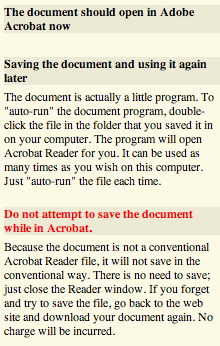
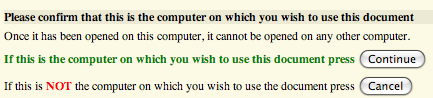
It sounds like a satire on capitalism but reality is often even worse. If you have written an article for SAGE you cannot send your own article to colleagues, you cannot copy nor save it. You can read it on one computer only according to anthropologist and Culture Matters blogger Lisa Wynn.

sage-instructions2

Wynn had published an article in the Journal of Social Archaeology. Instead of getting a PDF of the published article, which is what she gets from all the other journals, she received this e-mail:

Dear Contributor, Thank you for submitting your article titled “Shape Shifting Lizard People, Israelite Slaves, and Other Theories of Pyramid Building: Notes on Labor, Nationalism, and Archaeology in Egypt” to Journal of Social Archaeology, which was recently published in volume 8 issue 2 of the journal.

We invite you to visit http://articleworks.cadmus.com/doc/872534 to download an electronic version of your article (we are no longer sending out paper offprints/tearsheets). You can download this file as an .exe file, which will allow you to view and print the PDF an unlimited number of times on your own computer, and you can forward it as a link up to 25 times to your co-authors and other colleagues. Please note that it is a protected file and you will not be able to forward the file itself or upload it to a website.If you have difficulty please check our FAQs section http://articleworks.cadmus.com/open/sagehelp.html

“I will NEVER again consider publishing with them as long as Sage is running things this way”, she comments.

I have followed the download-link and made these two screenshots.

PS: Strangely enough, as a SAGE-subscriber via my university account, I could download a conventional pdf-file of her article.

Christopher Kelty wrote about similar difficulties to get a free copy of his own article, published in the journal Cultural Anthropology in his Savage Minds-post Recursive public irony.

UPDATE

The above procedure applies only if the author is no subscriber of the journal, as Lisa Wynn writes in reply to my question:

Yes, according to what Sage sent me, if your university subscribes, you can download a conventional PDF (and then spread it around as much as you like). But if you don’t belong to a subscribing university, then you can only get this executable file (and only 25 people, too). The irony is that even if an AUTHOR doesn’t have a subscription, then the author doesn’t get the normal PDF, just the executable protected PDF. Maddening!

“A boycott would be swell (but don’t see that happening). digital disobedience is even better”, somebody commented on the blog laguayabita.blogspot.com

Greg Downey has similar thoughts and comments on Culture Matters:

Yeah, I got one of these, too, recently from another journal, but I cheated on the whole thing: I printed off a copy and then scanned it as a .pdf on our departmental copier. It’s a bit bigger than a normal .pdf, so it’s harder to circulate, but it does give me a way to send the article to overseas colleagues.

SEE ALSO:

Danah Boyd on Open Access: “Boycott locked-down journals”

Open Access: “The American Anthropological Association reminds me of the recording industry”

For Open Access: “The pay-for-content model has never been successful”

Why Open Access?

sage-instructions

It sounds like a satire on capitalism but reality is often even worse. If you have written an article for SAGE you cannot send your own article to colleagues, you cannot copy nor save it. You can read it on…

Read more

New open access journal: (con)textos. revista d’antropologia i investigació social

cover

PhD students at the Social and Cultural Anthropology Department of Barcelona University have started a new journal called (con)textos. Their aim is to make known the research that is carried out during the doctoral period and to set up a space for debate and training.

The texts in the first issue are in Spanish only, but in future issues, texts in English will appear as well (“Texts may be written in Catalan, Spanish, English, French, Italian and Portuguese”). All texts ate published with a Creative Commons licence. It is even possible to comment articles.

>> visit (con)textos

cover

PhD students at the Social and Cultural Anthropology Department of Barcelona University have started a new journal called (con)textos. Their aim is to make known the research that is carried out during the doctoral period and to set…

Read more