search expand

Ironies regarding “Establishing Dialogue among International Anthropological Communities”

Not much dialogue here: When trying to read the Anthropology News Article “Establishing Dialogue among International Anthropological Communities”, logged in with my University account, I get following message by AnthroSource:

Universitet i Oslo
Sorry, you do not have access to this article

.

SEE ALSO

Open Access Anthropology – Debate on Savage Minds

antropologi.info Special on Open Access Anthropology

Not much dialogue here: When trying to read the Anthropology News Article "Establishing Dialogue among International Anthropological Communities", logged in with my University account, I get following message by AnthroSource:

Universitet i Oslo
Sorry, you do not have access to this…

Read more

How can we create a more plural anthropological community?

Interesting article in Anthropology News October by Brasilian antropologist Gustavo Lins Ribeiro on the lacking globalisation of anthropology:

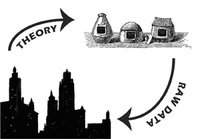
Globalisation in anthropology has mirrored unequal relations existing within larger structural processes. Theory, for instance, has flown from metropolitan centers to non-metropolitan centers while the flow of “raw data” makes the opposite movement.

The consequence is that a large part of anthropological knowledge remains unnoticed:

English has become the global language to the detriment of a more diversified linguistic and stylistic scenario. Think, for instance, of the size of anthropology in Japan or Brazil. But few read Japanese or Portuguese outside of their original language communities. Furthermore, only a small internationalized elite interacts on a global level. Nation-states remain the primary place where the reproduction of the profession is defined in particular ways.

So what can be done? How can foster the visibility of non-metropolitan works of quality and enhance our modes of exchanging information? How can we create and consolidate a more plural anthropological community?

He suggests among others:

Translation of different anthropological materials into English. But to to avoid linguistic monotony, German anthropologists should be translated into Japanese, Mexicans into German, Australians into Portuguese, Brazilians into Russian, and so on.

Online communication: An electronic collection of classics from different countries and a global anthropology e-journal are real possibilities.

– Increased presence of international participants at national anthropology congresses and creating connections and fostering exchange is to capitalize on already existing national and international anthropological associations. The creation in 2004 of the World Council of Anthropological Associations was an important step in this direction.

>> read the whole article

UPDATE (10.2.07)

World Anthropologies – Book and papers online: Working towards a global community of anthropologists

SEE ALSO

On Ribeiros new book “World Anthropologies. Disciplinary Transformations within Systems of Power

Gustavo Lins Ribeiro: Global Navigations

Gustavo Lins Ribeiro: The Condition of Transnationality. Exploring Implications for Culture, Power and Language

Open Source Anthropology : Are anthropologists serious about sharing knowledge?

Interesting article in Anthropology News October by Brasilian antropologist Gustavo Lins Ribeiro on the lacking globalisation of anthropology:

Globalisation in anthropology has mirrored unequal relations existing within larger structural processes. Theory, for instance, has flown from metropolitan centers to…

Read more

Journal of Ethnobiology and Ethnomedicine – New Open Acces Journal with RSS feed

With so many debates going on about the future of anthropological publishing, it is good to know that things are happening. At least in neighboring fields. A few month ago, a new journal was launched: Journal of Ethnobiology and Ethnomedicine with papers on the relationships between human cultures and nature, Traditional Environmental/Ecological Knowledge (TEK), folk and traditional medical knowledge. Topics include also medical and visual anthropology. All articles are freely accesible, articles are distributed under the Creative Commons License.

The journal’s website has many useful features: RSS-feed for the most recent articles, Email article to a fried, you may even post comments

>> read the Editorial by Andrea Pieroni, Lisa Leimar Price and Ina Vandebroek

>> visit the Journal of Ethnobiology and Ethnomedicine

SEE ALSO:
Alex Golub: Anthrosource — actually useful? AnthroSource could be a place people will want to come if it allows them to connect both to digital content and each other

With so many debates going on about the future of anthropological publishing, it is good to know that things are happening. At least in neighboring fields. A few month ago, a new journal was launched: Journal of Ethnobiology and Ethnomedicine…

Read more

Why blogging matters: Handbook for global bloggers is out

A quick note: Much praise for the Reporters Without Borders “Handbook for bloggers” on the GlobalVoices-website. Maybe it will be useful for academics as well?

“It is the first truly useful book I’ve seen aimed at the kinds of bloggers featured here at Global Voices every day: People who have views and information that they want to share with the world beyond their own national borders. They are often people whose perspectives are not well represented in their own country’s media, and certainly not well reported by the international media.

(…)

The Handbook for Bloggers is for people who want to be serious participants in the emergent online global conversation: How to set up a quality, credible blog. How to get it noticed. And.. if you’re in a country where there government might not like what you’re saying, how to avoid getting in trouble when you by-pass the information gatekeepers and talk directly to the world.

(…)

The most inspiring section is the “Personal Accounts,” short essays from bloggers around the world about why they blog and why blogging matters.”

>> read the whole review by Rebecca MacKinnon

>> download the Handbook (1,7MB, pdf)

A quick note: Much praise for the Reporters Without Borders "Handbook for bloggers" on the GlobalVoices-website. Maybe it will be useful for academics as well?

"It is the first truly useful book I’ve seen aimed at the kinds of bloggers featured…

Read more

“Minimal willingness to post one’s own work online”, survey by the American Anthropological Association reveals

Here are some interesting findings of a survey by the American Anthropological Association about members’ current practices for communicating electronically about the association and their research. In the anthropological blogosphere, we often wonder about why anthropologists lag behind other scientists in publishing papers online:

“Although there is a wide recognition of the usefulness of posting conference papers and supplementary materials online, there is minimal willingness to post one’s own work, and there is even less willingness to submit online comments on annual meeting papers. This is true regardless of age or employment status of the respondent.

(..)

There is marked interest in annual meeting papers and abstracts being electronically accessible indefinitely, coupled with little interest in the preservation of online bulletin boards and interactive discussion forums for more than four months.

(…)

In terms of who should be permitted access to material related to AAA annual meetings, most believe that session information and abstracts should be made available in searchable format online to the general public. Yet, papers, works-in-progress and comments should be limited to session participants, and perhaps AAA members.

(…)

Results suggest that respondents value the idea of Creative Commons and the Open Access model (such as AnthroCommons); yet, only a third of the respondents who completed this survey, or roughly the number who accessed AnthroCommons, completed this question.”

>> read the whole article in Anthropology News

UPDATE: See Judd Antin’s comments:

“Is there something fundamental about anthropology that makes the discipline averse to an open model? Anthropology is, after all, based on fieldnotes, which are deeply personal, and often private. Maybe these value extend to other forms of writing as well, such as notes, conference papers, and even online comments. Many anthropologists were (and in some cases still are) also indoctrinated with the idea that anthropology is about the lone ethnographer, trudging off into the jungle to find his or her ‘people.’ If anthropologists believe that doing anthropology is a lone enterprise, and further that the product of their work is too deeply personal and individual to share, does that erect an insurmountable barrier to Open Source Anthropology, at least for the foreseeable future?”

>> read the whole post

UPDATE 2: Very interesting inside-information by Alex Golub on Savage Minds. We hear “the native’s point of view” on publishing papers online:

“People like to use email to send papers to each other. Why? Because it’s private, they already know how to use it, they use email as a file system to store, index, and retrieve attachments, they’re not actively interested in adopting new technology for its own sake (if it’s not broken, don’t fix it), and new genres are not obviously sufficiently better than existing onces to induce a switch. In other words, we use email because it is a good tool for the job we want to do.

Why would people be averse to publishing their papers online before the AAA meetings? Two things occur to me here. Come on, folks: we write our papers the night before we give them. (…) Second (and more importantly), conference papers are some of the worst work we produce—they are poorly edited, the citations are often incomplete or wrong, and the arguments we make in them may change over time. (…) Why in the world would we as scholars want these hesitant, initial steps of our thoughts to appear at the top of a Google search for our name?”

>> read Alex Golub’s post on Savage Minds

SEE ALSO

antropologi.info survey: Six anthropologists on Anthropology and Internet

Open Source Anthropology : Are anthropologists serious about sharing knowledge?

antrpopologi.info Special: Open Access Anthropology

Here are some interesting findings of a survey by the American Anthropological Association about members’ current practices for communicating electronically about the association and their research. In the anthropological blogosphere, we often wonder about why anthropologists lag behind other…

Read more