

search expand

Happy New Year with lists!

Happy New Year to everybody with a firework from Sydney (photo by Rajwinder Singh, flickr) and thanks for reading antropologi.info, commenting and contributing to this blog and other blogs!

In 2009, when antropologi.info turned five years old, I was especially happy about contributions from you, from readers. In March, Tereza Kuldova has started writing book reviews – the first one about Hindu Divorce: A Legal Anthropology by Livia Holden. The most recent one went online just a few days ago: Photography, anthropology and history by Christopher Morton and Elizabeth Edwards.

Karstein Noremark wrote an report about the Open Access Week in Wellington, and Siham Ouazzif sent me her thesis “Veiled Muslim Women in Australian Public Space: How do Veiled Women Express their Presence and Interact in the Workplace?”. I also received a text by Lykke V. Bjørnøy: Are homosexuals impure according to Sunni Islam?. I was also glad over that I could interview Dai Cooper about her Anthropology Song

On the 1st of May, we celebrated the first Open Access Anthropology Day. Sara at Sara Anthro Blog has taken the initiative to this event. For this occasion, I’ve made a new overview over open access anthropology journals.

Personally, my most important blog post was about The Anthropology of Suicide. It was also the most personal blog post I’ve ever written.

Some lists

2009 was a very interesting blogging year, and anthroblogging hasn’t stopped during the holidays and new year. Several bloggers ended 2009 or started 2010 with lists. Here are some of them:

Greg Downey has compiled an impressive list of suggestions for how to organize better conferences. His list should be compulsory reading for all conference organizers. He is as he writes “a big fan of the good conference, but I’ve also been traumatized at academic conferences”.

Maximilian Forte is “almost ready to resume winding down” his blog Zero Anthropology (started as Open Anthropology) and sums up with Zero/Open Anthropology Top Posts 2009.

Barbara Miller from AnthropologyWorks has written several lists, one of them is Anthropologyworks 10 best of 2009.

“One useful thing about blogs is that they also serve as a kind of ‘digital memory'”, writes Julian Hopkins in his post My 2009.

Anthro Turbo-blogger Erkan Saka collected some interesting happy new year images. I really like his introduction:”Special days like New Year’s Eve make me so tense. Social pressure. Such alienation, such loneliness. It all comes back to Durkheim’s arguments in Suicide. I hope it passes very quickly.”

While Language Log discusses the question How to pronounce the year 2010 (67 comments so far!), Gabriele Marranci turns to the anthrosphere with a New Year wish.

In his post Selling lives: Rohingyas face deportation from Bangladesh, he invites his colleagues to focus more on the Rohingya, “highlighting their inhuman condition in Burma (Myanmar) and Bangladesh,  as well as their status of  the “gypsies” of Asia”:

Bangladesh has signed a deal with Burma to import gas and electricity and export back Rohingya:

Today is the first day of 2010. Many of us have celebrated the new year while 9000 Rohingya, the first of many more to come, are not able to oppose the Bangladeshi decision of deportation without any safeguard to their original home, which, like Nazi Germany for the German Jews, has decided that they are aliens who are as ‘ugly as ogres’. This time, however, it is not the shape of the nose to be singled out, but rather the Hindi features, particularly the skin colour.

Tragically, convoys starting from the Bangladeshi border will soon deport the Rohingya, men, women, young, old, healthy, and unhealthy to a uncertain destiny. No external body, agency or Red Cross will be there to witness the deportation. There only exists the indifference of a world increasingly ready to sell souls for more profitable commodities.

UPDATE: Of course Savage Minds has made a great list, published just a few seconds ago: Savage Minds Rewind: The Best of 2009

Happy New Year to everybody with a firework from Sydney (photo by Rajwinder Singh, flickr) and thanks for reading antropologi.info, commenting and contributing to this blog and other blogs!

In 2009, when antropologi.info turned five years old, I was especially…
Read more

Colonialism, racism and visual anthropology in Japan: Photography, Anthropology and History part II

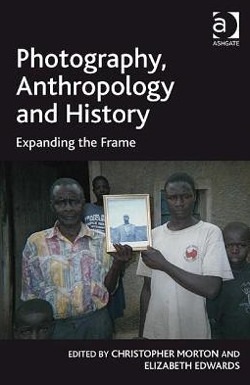
Here is the second part of the review of the book Photography, Anthropology and History, edited by Christopher Morton and Elizabeth Edwards.

This time, Tereza Kuldova reviews Ka F. Wong’s article about one of the first Japanese anthropologists, who became popular in Japan because of his use of photography: Torii Ryūzō.

Wong shows in his article how Ryuzo’s photographs illustrate the colonial relationships at that time. Ryuzo went on fieldwork two decades before Malinowski in order to document the indigenous Taiwan population.

Tereza Kuldova questions some of Wong’s conclusions:

Review (Part II): Photography, Anthropology and History: Expanding the Frame (eds. Morton, Ch. & Edwards, E.), Ashgate. 2009. ISBN 978-0-7546-7909-7.

Tereza Kuldova, PhD fellow, Museum of Cultural History, Oslo

The article Visual Methods in Early Japanese Anthropology: Torii Ryuzo in Taiwan by Ka F. Wong discusses the beginnings of the Japanese anthropology and the personality of one of the first Japanese anthropologists, who became popular in Japan because of his use of photography, as a ‘scientific’ method of investigation and documentation of the Other, during his fieldwork.

We are talking here about Torii Ryuzo, a truly self-made anthropologist, born in 1870 in Tokushima in Shikoku, he received only second-grade education, but that did not prevent him from reading and educating himself on his own.

Torii was hired as a specimen classifier in the Anthropology Research Institute at the Tokyo Imperial University by the professor in physical anthropology Tsuboi Shogoro. “Under his mentor’s patronage and encouragement, Torii began his anthropological career, first as a fieldworker, and eventually as one of the most prominent Japanese anthropologists of the twentieth century” (Wong 2009:173). Eventually, “in 1922, he became associate professor at the Tokyo Imperial University and succeeded Tsuboi as the second chair of the Anthropological Institute” (Wong 2009:185).

As Wong notes, he was a rather special occurrence in the Japanese anthropology, because he was “a Japanese anthropologist working in the manner of a European ethnographer within a colonial context” (Wong 2009:180).
His popularity and rise as an anthropologist can be related firstly to his use of photography, in the manner of the Western anthropologists, as a tool of scientific understanding and documenting of the Other and secondly it can be related to the emergence of Japan as a colonial power.

Wong focuses on the analysis of the photographic legacy of Torii Ryuzo in the context of the modernization of Japan and the era of Japanese colonization.

Wong tries to view the photographs in the light of their own ‘agency’ and thereby to understand the nature of the contact between Ryuzo and the indigenous Taiwanese. When Japan became colonial power it could “count itself a member of the once exclusive Western club of colonial empires, and the native population of Taiwan provided fresh material for Japanese anthropologists to exhibit their intellectual virtuosity” (Wong 2009:175). Ryuzo thus set out for a fieldwork in Taiwan, two decades before Bronislaw Malinowski, and began documenting the indigenous Taiwan population, mostly within the Western style framework, using the methods of natural sciences, such as anthropometric and statistical techniques. “The camera was Torii’s tool for disseminating a vision of indigenous life of this newly colonized island to wider Japanese public” (Wong 2009:177).

Drawing on the western scholarship Torii divided the indigenous people of Taiwan “along perceived racial lines – such as by physical type, language, costume, body, decoration, architecture and material culture – into nine major groups: the Ami, Bunun, Yami, Paiwan, Tayal, Tsou, Siuo, and Salisan” (Wong 2009:177). Most of the photographs that he took were of anthropometric imagery, but he took pictures of people in various social contexts, pictures of landscape and houses, of material culture and the Japanese presence, as well.

Wong shows in his article how the photographs illustrate the colonial relationships. He points out the anthropologist in Western clothes standing and posing with the natives mostly sitting or squatting dressed in indigenous clothing. He argues, in rather classical manner, that “Torii’s anthropometric images mirrored a legitimized racial superiority in the name of scientific representation, and the subjects thereby became ‘dehumanized’ as ‘passive objects of the study’” (Wong 2009:179-80). He observes that the natives “seem to be purposely lined up in formation or staged for display, implying a power relation at play for the camera. Even those pictures that were meant to capture the natives in their natural milieu seem to project rigidity and theatricality” (Wong 2009:180).

Wong shows how photographs can be perceived as ‘social artefacts’ that convey political and personal agendas of their creator. In case of Torii the visualization of himself on the photographs with the natives certainly helped to establish him as a professional anthropologist.

This being said, I believe that there is one dimension of the analysis of photography that Wong presented, which is missing. That is the consideration of the technical and practical dimension of taking photography at that point of time. Imagine a heavy machine which for a photography to be taken needs immovable objects. If we think about the ‘theatricality and rigidity’, which Wong describes and attributes it to the demonstration of colonial power over the subjects, is it not also a natural consequence of the nature of the technology used in capturing of the natives?

Further, Wong focuses for example on the clothes worn by the anthropologist as compared to the clothes worn by the natives and interprets this in terms of power relations. At this point, the images from my own fieldwork in the 21st century India came to my mind. When looking at them, you can see me definitely dressed differently that the most of the women in India did. On photographs with them, I definitely look as a foreigner. In the end my photographs are not that different from those of Torii, though maybe his are more ‘rigid’ because of the technology he used, while mine may seem more spontaneous, taken in between conversations.
When turning the attention to the ‘postures’, which Wong notes, when I look at my photographs in that way, I must say that I tend to sit with my leg over the other, while some of the women I was working with tended to sit on the bed or floor with their legs crossed under themselves. However, I cannot claim that any of that, can from my viewpoint be interpreted in terms of power relations (at least in the sense of oppressive type of colonial power relations), though someone may frame it within west vs. rest dichotomy and draw some conclusions from that. At the same time, I believe that these would have little to do with my own relations to the people on the photographs.

Now, using the medium of photography, which at that time needed immovable persons, and objects in front of the objective, and thus necessarily appeared more rigid that nowadays, how could Torii possibly otherwise represent what he encountered? Whatever picture he would have taken would be by Wong and possibly by others necessarily interpreted in the context of the era of Japanese colonial power.

Now I do not want to say that this critique or line of thought is unproductive. What I want to point out is that, instead of looking at the photographs of the anthropologist and the natives and judging from his and their clothes or postures, when trying to understand the messages of the photographs which Torii took, we have to look firstly at what he did not take photographs of as compared to what he wanted us to see, as it is there, where the agenda and context lies. This line of thought is somehow present in Wong’s text, but in my view it should have come out stronger, as it is this what gives us the insight into the practices of representation.

>> Part I of Tereza Kuldova’s review about “Anthropology and the Cinematic Imagination”

>> more information about the book

>> read the introduction by Elizabeth Edwards and Christopher Morton

SEE ALSO:

Anthropology, photography and racism

Kerim Friedman’s dissertation: Learning “Local” Languages: Passive Revolution, Language Markets, and Aborigine Education in Taiwan

Photography as research tool: More engaged Kurdish anthropology

Karen Nakamura’s Photoethnography blog

Visual Anthropology of Japan blog

Here is the second part of the review of the book Photography, Anthropology and History, edited by Christopher Morton and Elizabeth Edwards.

This time, Tereza Kuldova reviews Ka F. Wong's article about one of the first Japanese anthropologists, who…

Read more

AAA meeting round-up: What did all those anthropologists talk about?

Three weeks ago, anthropologists from all over the world met in Philadelphia at the annual meerting of the American Anthropological Association (AAA). What did all those anthropologists talk about during the largest anthropology meeting in the world?

This is no easy thing to find out. I haven’t found many newspaper articles about the conference. Conferences aren’t media-friendly. For the first time, the AAA encouraged to blog and tweet about the conference. But you won’t find many references to the conference on leading anthropology blogs. Savage Minds for example has only one (semi-ironocal) post: “Overheard at the AAA“.

The most informative post about the conference can be found on a totally new blog called Life at the Interface. In her first blog post AAA Round-up part I, Erica gives us an impressive summary of lots of panels she’s attended: “Creativity and Labor: Artists, Anthropology, and Knowledge-Making”, “Intellectual Activisms and the Making of the New Europe” and “Reflections on Subjectivity, Psychoanalysis, the Virtual, and the Imaginary” and “Are the Sacred Tropes of Anthropology Worth Keeping? Lessons from Information Technology Studies”.

One issue that received some mainstream media attention (New York Times, Time etc) is the AAA-report on the collaboration with the military in the Human Terrain System program. The AAA’s Commission on the Engagement of Anthropology with the US Security and Intelligence Communities (CEAUSSIC) concludes that engagement between anthropology and the military is incompatibie with disciplinary ethics:

When ethnographic investigation is determined by military missions, not subject to external review, where data collection occurs in the context of war, integrated into the goals of counterinsurgency, and in a potentially coercive environment – all characteristic factors of the HTS concept and its application – it can no longer be considered a legitimate professional exercise of anthropology.

More controversial political issues: Members at the AAA Business Meeting passed a resolution that condemns the coup d’etat by the military in Honduras. The reolution urges President Barack Obama and members of the US Congress to among other things to “condemn the human rights violations that have been committed by the de facto government in Honduras” and “join most Latin American countries in withholding recognition of individuals selected in the election held on 29 November 2009.”

Can also research about forest management be controversial? It seems so. The day after Eric John Cunningham had returned to Japan from Philadelphia, he received a phone call from the Forestry agency. “We’re interested in hearing about your paper presentation”, officials said. Cunningham argues for more local involvement in forest governance in Japan. Am I being monitored, he wonders:

I’ve used the word “monitor” in the title of this post and I intend the full range of meaning that the word embodies–from innocent watching to menacing surveillance. It seems to me this is the nature of monitoring; one never knows how closely they are being watched, or to what ends. In this instance monitoring came to mind for two reasons: 1) the swiftness with which the Forestry Agency suddenly expressed interest in my research, and 2) the sense I gained of the Forestry Agency’s desire to closely control information about National Forests.

Eugene Raikhel at somatosphere has written an inspiring post about the Society for Medical Anthropology’s awards for 2009 that were announced at the conference. You’ll find lots of sugggestions for books to read or papers to check out. Most of the research isn’t available online, though. Exceptions: Sera Lewise Young who won the MASA Dissertation Award, has put several papers online. One of the best articles that were published in the preceding volume of the Medical Anthropology Quarterly is also freely available: “The Coproduction of Moral Discourse in U.S. Community Psychiatry” by Paul Brodwin (“honorable mention”, Polgar Prize)

Another award: Anthropology Professor Maria Vesperi received the 2009 Oxford Award for Excellence in Undergraduate Teaching. Vesperi is a cultural anthropologist who specializes in the analysis of contemporary social issues and the communication of anthropological ideas to the public.

“Anthropology of institutions” was one of this year’s “in” topics, writes Pál Nyiri in his post “Back from the AAA” Both of his new books –  Cultural Mobility and Seeing Culture Everywhere – made their debut at this AAA – the latter even sold out, he writes.

“Seeing culture everywhere” seems to be the English version of a book that was previously published in German: Maxikulti (together with Joana Breidenbach). The book is a response to Samuel Huntington’s Clash of Civilizations:

“Seeing Culture Everywhere” challenges the misguided and dangerous global obsession with cultural difference and directly critiques the popular notion that world affairs are determined by essential civilizations with immutable and conflicting cultures. The book offers an alternative view of a world in which cultural mixing, not isolation, is the norm, but where several historical trends have come together at the beginning of the twenty-first century to produce the current wave of “culture think.”

More books: Obama’s mother’s dissertation was launched. As most of you know, Stanley Ann Dunham was an (economic) anthropologist. She died in 1995. “Surviving against the Odds: Village Industry in Indonesia” is a revised and edited version of her 1992 University of Hawaii dissertation on metalworking industries in Java, Indonesia. You can watch a video of the book launch.

Finally, Dai Cooper performed her anthropology song live at the AAA meeting (my interview with her):

[video:vimeo:8035515]

SEE ALSO:

What’s the point of anthropology conferences?

First reports from Europe’s largest anthropology conference (EASA)

What happened at the AAA-conference in San Jose – a round up

Chinese media propaganda at IUAES anthropology conference in Kunming

Conference Podcasting: Anthropologists thrilled to have their speeches recorded

Military spies invade anthropology conferences?

Three weeks ago, anthropologists from all over the world met in Philadelphia at the annual meerting of the American Anthropological Association (AAA). What did all those anthropologists talk about during the largest anthropology meeting in the world?

This is no easy…

Read more

Book review: Photography, Anthropology and History (Part I)

When filming people became possible, anthropologists began to drift away from it. Though better off than at the beginning of the 20th century, the visual anthropology today is still perceived as a marginal discipline, Tereza Kuldova writes in the first part of her review of Photography, Anthropology and History: Expanding the Frame.

The topics of the eleven articles range from the discussion of mappaemundi and panoramas as first ethnographic images, to the discussions of the beginnings of the cinematic representations in anthropology, of Evans-Pritchard’s photographs of an initiation ritual, all the way to the discussion of photographs taken by Kathleen Haddon in Papua New Guinea and the tricky relationship between colonialism, photography and anthropology.

Tereza Kuldova is going to write about selected articles, the first one is Anthropology and the Cinematic imagination by David MacDougall. (Update: Here is part II: Colonialism, racism and visual anthropology in Japan)


Review (Part I): Photography, Anthropology and History: Expanding the Frame (eds. Morton, Ch. & Edwards, E.), Ashgate. 2009. ISBN 978-0-7546-7909-7.

Tereza Kuldova, PhD fellow, Museum of Cultural History, Oslo

David MacDougall presents in his article Anthropology and the Cinematic Imagination a rather brief discussion of the relations between anthropology and the cinematic. He relates the beginnings of the cinematic imagination to the use of stereograph and after that pinpoints the interest and enthusiasm of the 19th century anthropologists with the new media of photography and motion pictures, which was followed by the ‘dark age’ of visual anthropology in the first half of the 20th century.

At that point of time anthropologists began to be reluctant to publish photographs in their monographs and ethnographic filmmaking has become a “sideline of anthropology, practiced more by amateurs, adventurers, missionaries, journalists and travel lecturers than anthropologists” (ibid:57). As a reasons for this he identifies the ‘contamination’ of the photographic media by popular entertainment; photographic media “were considered vulgar and exuded aura of the musical hall” (MacDougall 2009:57).

He further argues that also the practices of anthropologists and their methodologies have become more logocentric. The anthropological knowledge itself was changing, it was “shifting away from the visible worlds of human beings and their material possessions towards the invisible world of abstract relations such as kinship, political organization and social values”. However, “if observation was so important, you would think that filming people in their daily interactions would have become increasingly useful.

Yet, it was just at this time, when filming people became possible, that anthropologists began to drift away from it. The human body, which had excited so much interest in the 19th century, when it was constantly being measured and photographed, had ceased to be a site of meaning” (ibid:57). Film images and photographs were rather objects you would put in a museum; they were placed at the margins of anthropology.

However, the first glimmer of hope came after the second world war in the 1930s with Gregory Bateson and Margaret Mead and their Balinese project and later on with Jean Rouch, who was using light-weight camera as a kind of personal writing instrument. Here you can view a sequence from Jean Rouch’s Chronique d’un été, 1960

My Favorite Scene from "Chronique d'un été"

Together with John Marshall – all of them reinvented the ethnographic film and revived the interest in the possibilities of visual anthropology.
“Beginning in the 1950s they began to demonstrate that cinema had more to offer anthropology than a technology of note-taking or a means of popularization. Their films tried to enter into the thoughts and feelings of their subjects and the physical spaces in which they lived” (MacDougall 2009:58), exploring interpersonal relationships with the camera.

MacDougall thus concludes that “anthropologists and filmmakers invented, more or less separately, a way of looking at the world that involved repositioning themselves and their audiences imaginatively in relation to their subjects; and second, that as far as visual anthropology was concerned, these two inventions remained almost completely isolated from one another for a very long period, until they began to converge after the Second World War” (MacDougall 2009:61). “Rouch and Marshall believed that visual anthropology could and should do more than simply record what was in front of the camera. They were after the invisible content of the scenes they filmed, both in terms of the sense of space they conveyed and the experience of individuals” (MacDougall 2009:62).

There are two points in MacDougall’s argument which might have been elaborated further and which I find interesting. The first one is that of ‘contamination’ of the photographic media by popular entertainment, which was possibly one of the reasons why anthropologists tended not use this media at the beginning of the century. For me this line of thinking resembles the discussion about the concept of ‘culture’, which is not only criticized for being essentializing and bounding, but is also portrayed as being misused, meaning anything and everything and thus turning into a ‘lay’ concept.

This is, I believe, one of the core problems. As anthropology struggles continually with the problem of its own authority, it necessarily creates boundaries between the ‘commonsense’ and the ‘scientific’. Once ‘culture’, ‘photography’ or ‘motion picture’ is connected with the masses or ‘laymen’, the ‘science’ tries to distance itself from it, implicitly claiming a superior ‘scientific’ version of reality.

However, I believe that this attitude can turn out to be counterproductive. What is rather the issue in the case of anthropological or ethnographic photography and film is how to transmit the ethnographic knowledge pictorially and how to rethink the modes of representation, while not merely reproducing the archetype of the ‘documentary film’.

The visual anthropology today, though better off than at the beginning of the 20th century, is still perceived as a marginal discipline. Nevertheless, I believe that anthropology has a lot to gain from the visual field of experience and from rethinking of the visual modes of its representation.

The second point which MacDougall makes and which I find important is that of the turn towards the focus on the abstract structures and relations of social systems, which have dissociated them from the obvious relationships with the material, which led to the surpassing of the material in anthropological writings. Though the focus on the social dimension is no doubt the core of anthropology, I believe that we can get more of it by acknowledging the material and visual dimension of our social lives and by trying to use the methods of visualization innovatively when writing our monographs.

At the same time, I believe that we have to be cautious when dealing with the visual, so that it does not become overwhelming, and in turn reducing the focus on the social. What we need to focus on is rather the dialectics of the social and the material, depicting it in terms of both writing and visualizing.


This was the first part of the review of Photography, Anthropology and History. To be continued during this week! (Update: Here is part II: Colonialism, racism and visual anthropology in Japan)

>> more information about the book

>> read the introduction by Elizabeth Edwards and Christopher Morton

More videos:

Interview with Jean Rouch

In memory of John Marshall

John Marshall, In Memory

Film by David MacDougall

SEE ALSO:

Anthropological activism in Pakistan with video lullabies

What anthropologists and artists have in common

AfricaWrites – Videos from rural Africa

Anthropology, photography and racism

When filming people became possible, anthropologists began to drift away from it. Though better off than at the beginning of the 20th century, the visual anthropology today is still perceived as a marginal discipline, Tereza Kuldova writes in the first…

Read more

Exploring the honor culture of social media

How can businesses profit from social media? How does social media challenge what is regarded as “value” in the business world? Anthropologist Lene Pettersen discusses these and other questions in her paper “The impact of social media for business“.

Lene Pettersen, one of the few web2.0-anthropologists in Scandinavia, sent me this article that she previously has published on Slideshare

She writes:

‘Value’ in a strong economic sense is challenged by social media as a door opener for influence that the organizations should take seriously. (…) The market is a part of individual and collective projects where emotions and identities are expressed, and can therefore not be defined by monetary values alone (Olsen 2003). (…)
The virtual market isn’t a huge collection of passive consumers; it is represented by networks of people having meaningful dialogues and interaction with both each other and the businesses as such, and represents new ways of market power. (…) By mapping different social media applications that are used for interaction we will receive great insight of benefits from different social media tools, technology as such and give important knowledge of how social media can be used by companies and organizations for innovation.

For businesses to be successfull they have to establish a good reputation. She quotes anthropologist Tian Sørhaug who states that “we no longer can divide production from consumption, because it is difficult to separate the person and the product. In these online times we all are dependent on our reputation.”

Pettersen draws our attention to a kind of “honor culture” among bloggers and compares it to the Kula exchange:

In social media we can recognize how highly respected bloggers receive respect from others. In parallel to honor cultures, where public reputation is more important than one’s self esteem, bloggers achieve huge respect within their community (Pettersen 2009). Anette Weiner showed in her studies of the Trobriand people how transaction of the kula (a type of shell) with people’s kula network didn’t have a solely economic value, but that knowledge, high status, and even sorcery help kula players claim success and circulate their fame (Weiner 1988:156).

>> download the paper (pdf)

SEE ALSO:

The Internet Gift Culture

Mobile phone company Vodafone gets inspired by traditional Kula exchange system

Dissertation: Why kids embrace Facebook and MySpace

Ethnographic study: Social network sites are “virtual campfires”

Interview with Michael Wesch: How collaborative technologies change scholarship

How can businesses profit from social media? How does social media challenge what is regarded as "value" in the business world? Anthropologist Lene Pettersen discusses these and other questions in her paper "The impact of social media for business".

Lene Pettersen,…

Read more