search expand

Marianne Gullestad and How to be a public intellectual

Today I’ve been at symposium in memory of one of Norway’s greatest anthropologists, Marianne Gullestad who died last year.

She was a public intellectual. She often took part in public debates and sometimes after she had published an article in a scientific journal, she sent a short version of her paper to a local or national newspaper. It must be because of her (and a few others later) that most people in Norway know what anthropology is or have a better understanding of it than in many other countries.

One of the speakers was Richard Jenkins (University of Sheffield). Later in the discusson, he made interesting points about being a public intellectual. He actually questioned the term “public intellectual”. For is there something like a “private intellectual”?

You can also be a public intellectual in the classroom – it might even be a more lasting contribution to the society than writing articles in newspapers, he said:

The term public intellectual presumes that during the rest of the academic work we’re doing something else, that we are private intellectuals. The point is that we are communicating to the public. We are teaching or we are writing. Sometimes we forget how many people who are reading our papers and books around the world, including students.

Being in the public sphere is not just writing for newspapers and being on television. Being a public intellectual is actually a core part of our practice.

We systematically neglect that responsibility, partly by virtue of the way many of us write. We write as if we are writing to a very small circle of people who can understand sentences that are 26 lines long. We have the responsibility to write in a different way when we are doing our academic work. We should not make this distinction between writing for the public and writing academically.

We have a responsibility for intellectual democracy. It does not mean that we have to simplify what we say. One of the many nice things about Marianne Gullestad is that she did not make this distinction. She wrote always in a very clear and straight format, and she did it in both Norwegian and English. This is a responsibility that many of us not take seriously. We should take Marianne Gullestad as an example.

The role of the intellectual doesn’t stop when you walk into the lecture room. It starts there. And it is probably a more lasting contribution to the society out there than writing articles in newspapers.

(edited quote, based on my low quality recording)

For more information on Marianne Gullestad including links to her papers online, see my earlier posts: Marianne Gullestad has passed away and Marianne Gullestad: The Five Major Challenges for Anthropology.

SEE ALSO:

“Discuss politics!” – How anthropologists in Indonesia engage with the public

More and more anthropologists, but they’re absent from public debates – “Engaging Anthropology” (1)

Why anthropology fails to arouse interest among the public – Engaging Anthropology (2)

The Secret of Good Ethnographies – Engaging Anthropology Part III

Why is anthropological writing so boring? New issue of Anthropology Matters

Six reasons for bad academic writing

The most compelling ethnographies

Nigel Barley: “Fiction gives better answers than anthropology”

Open Source Anthropology : Are anthropologists serious about sharing knowledge?

Today I've been at symposium in memory of one of Norway's greatest anthropologists, Marianne Gullestad who died last year.

She was a public intellectual. She often took part in public debates and sometimes after she had published an article…

Read more

(updated) Server upgrade issues about to be solved

My hosting provider has moved antropologi.info to a new, faster and much better server (with php 5) last night, but this also means that some parts of the website no longer work as they should.

Links from some rss feed readers are broken (visit the front page instead) and the popular overview of anthropology blogs at http://www.antropologi.info/blog/ no longer works either (visit the overview at http://www.antropologi.info/feeds/anthropology instead).

I’ll try to fix this during the weekend.

I might upgrade the whole blog application which means that the layout might change a little bit as well (due to compatibility issues).

UPDATE:: In case you have problems with the rss-feed use the atom-feed http://www.antropologi.info/blog/anthropology/anthropology.php?tempskin=_atom

UPDATE 26.5.09 The new anthropology newspaper blogroll is online http://www.antropologi.info/blog/ I hope everything works now, otherwise I’ve found some alternatives. The “recent news” are back as well, the rss-links seem to work again, and within the next week, I’ll upgrade the whole blog application to the newest version

My hosting provider has moved antropologi.info to a new, faster and much better server (with php 5) last night, but this also means that some parts of the website no longer work as they should.

Links from some rss feed…

Read more

Anthropology, islam and homosexuality

Anthropology student Lykke Bjørnøy sent me an article on homosexuality and islam that she wrote as part of her studies at the University of Cairo. She tries to understand why homosexuality often is demonized. Not only in Islam, but also in Christianity (and other religions I suppose), homosexuality is a touchy subject.

It is (as always) work in progress and Lykke Bjørnøy is interested in getting feedback and comments:

Are homosexuals impure according to Sunni Islam?

Written by Lykke V. Bjørnøy

Last year I lived in the noisy metropolitan city of Cairo. Living there as a western, blond girl, my thoughts about discrimination and womens’ rights was flourishing in my head. I have never been so visible in my life and I wondered: Are there other groups that are invisible, but feel even more visible than I did? I looked different than all the others. However, I didn’t feel different.

Almost every religion has an opinion about homosexuals, or at least a view on sodomy. In Christianity sodomy is considered as “a sin against nature” and it’s the same in Judaism where it’s written in Leviticus: “[A man] shall not lie with another man as with a woman” Leviticus 18:22), both Christians and Jews are referring to this particular verse when the issue about homosexuality is questioned.

Islam doesn’t have the same clear restrictions on this subject, like other religions, but there are several hadiths and views on the topic. Islam contains much more written and boundary filled sexuality than Christianity. The Qur’an for instance is filled with restrictions according to sex, how it’s done, who it’s ought to perform and what time it should be done. One of the reasons for this can be the prophet Muhammad behavior, he was a sexual man in a contrast to Jesus. For the Prophet to cope with all the difficulties that could appear concerning sexual actions and the interaction with all his wives, he made restrictions and rules that would help the participants to deal with the conflicts that could emerge.

However, rules that are related to the control and restrictions against sodomy and sex in general is not just special for Islam, but all the religions, there is a set of laws in most holy texts, especially about the outsiders and the un-traditional actions that can take place in a society. The religion creates boundaries for the participants hence; it’s a way to deal with elements that need restriction or are considered unusual. Homosexuals have a different position and status than the mainstream in a society, and sometimes they are not even acknowledged. The president of Iran, Ahmadinejad, said on Fox News that they didn’t have a problem with homosexuals because they didn’t exist. Even though Ahmadinejad is seen as a Shi’a, his point still stands, his impression of homosexuality is just another act of sodomy which is not prohibited.

In order to understand the reasons why homosexuals often are considered as heathens, and why they are frequently demonized, it is therefore necessary to examine the basis of the condemnation. Demonization is often related to sickness and disturbances and these themes will be discussed further as we go along.

Homosexuality as a sickness
If you ask any religious scholar about homosexuals you get many different answers. One of the issues that are frequently discussed is the linkage between homosexuality as a disease. And if it is a sickness is it curable? There are scientists who do research on this matter right now; the internet is loaded with organizations and pages that discuss this issue (www.narth.com). So why do some people have the cravings to solve the “un-normalities” in the society and why is it so frowned upon?

What is it about the homosexuals that are so obviously wrong that needs to be solved? One argument that has been questioned is the fact that homosexuals have no function in the society and in the world in general, hence there has to be something wrong with them. The lion eats the zebra, the zebra eats grass; the circle of life. With homosexuals the circle of life is not being fulfilled.

Mary Douglas argues in her book “Purity and danger” that every human has a certain feeling of order. That objects or people are seen as impure if they don’t fit in a specific system. If homosexuals don’t fit in circle of life, they cannot reproduce, for this reason they are seen as impure according to Douglas. Several imams states that “if everyone was a homosexual, the world would go under”, which is true in the long term, because there would be no reproduction. Or as I see it a perfect solution to solve the global problem of constant increasing world population.

Levi-Strauss’ argument about impurity builds around the imam’s statement. For him, impurity is often linked to progress and logic. He proves this by looking at why incest is prohibited in most societies. He claims that one of the reasons that incest is prohibited is because it only reproduces defected human beings, which in the long term would lead to the extinction of human kind. If homosexuality is seen as impure because of their lack of reproducing skills, then why would God created them?

Most religious scholars reject the fact that it’s biological, by that I mean that homosexuality is something one is born with or can inherit. This is often stated because God doesn’t differentiate between people, we are all children of Adam according to the Sunni tradition. The hollowness in our stomachs, the lack of control, these are all factors that make us all similar (Katz, 2002:177.) In spite the fact that we all are made from the same foundation, Adam lost his purity in the Garden of Eden because apparently – no man is perfect. Since humans are not faultless there are stories in the Qur’an and in the Bible about what happens to people that don’t behave themselves, commit sins or disobey God.

The most famous one is the story about “The People of Lot” that exist both in the Quran and in the Bible. “The people of Lot” commits sins, like sodomy. The word homosexuality is of course not mentioned in the Qur’an or the Bible because it’s a modern expression. We can’t find an expression that is even comparable with the English term that was first used in the early 19th century, but the closest we get to homosexuality in is the act of sodomy (Qur’an:302).

The People of Lot got punished by God for their behavior and their towns were “turned upside down, and rained on them stones of backed clay, in a well arranged manner one after another” (Quran: 82) Apparently, these cities were in Palestine which today is the Dead Sea. This is the only punishment mentioned towards sodomy, however it’s pretty brutal. There are discussions about how sodomy ought to be punished today in some countries especially the Arab world, some scholars say that they should be stoned to death and get the same treatment as those who commit adultery, on the other hand this interpretation of the Qur’an has been created after the time of the Prophet Mohammed and has its origins from the hadiths and not the Holy script itself.

In the legal sources there has been differentiated between a grand and a petty sodomy. The grand sodomy is the action that takes place between two men and requires death of both participants (Wright & Rawson 1997:116) according to legal sources. A petty sodomy is anal sex between a man and a woman, although sexual intercourse with the opposite sex is” legal” this action is also forbidden by the Sunni tradition (Ibid). Since the Qur’an doesn’t differentiate between peoples’ feelings for the same sex and the actions of sodomy, means that the acts of sexual intercourse is the factor that makes sodomy impure and forbidden, not the homosexuals themselves.

As I mentioned in the introduction, sexuality has been an important part of literature and has played a much bigger part in Islam rather than it has in Christian societies. The grand example of this sort of literature is “One Thousand and One Nights” that were written in the early 1900’s and is filled with stories which all have elements of sexual actions, including sodomy. The simplicity of the sexual actions that were taken place in these stories say that sexual actions were not frowned upon, but rather appreciated. Why sodomy has the status of being “The Sin” contains an arsenal of meanings. The sexual act of sodomy is seen as animalistic, and naturally the sexual image of dog sex may have it’s similarities to sodomy, since the modern term of anal sex is called “doggy-style” is not taken out of the blue.

Islam has its restrictions and guidelines toward sexual actions and distinguishes between minor and major ahdaths. One example of a major ahdath can be regular sexual intercourse. Reinhart argues in is article “Impurity no Danger” that there is no danger in being in an impure state as an answer to Douglas’ article. He argues that there is a lack of control that makes something impure, not that an object is out of place. Reinhart says that Douglas’s argument don’t stand because semen, tears and mothers milk is not seen as impure objects in Islam. So it’s the action of ejaculation that is seen as a lack of control and therefore gains the same status a laughter break-out during prayer.

On the other hand another anthropologist named Julie Marcus agrees with Douglas and says that the fluid of sexual liquid across the body boundaries is seen as crucial (Marcus 1992:78). In other words the only solution to prevent oneself from getting in a position of impurity, is control. Therefore, if one compares adultery with sodomy as comparable sizes the only way the actor cannot become impure, is restriction. And in fact if you resist your desires you get paid in heaven according to the Qur’an (Qur’an:200).

The social sexual hierarchy in Islam
One of the foundations in Islam are that women and men are ought to be treated equally since they are both made from the same soul (Qur’an:7.189). Men and women are different biologically and Islam has rules on how the sexes cooperate with their biologically differences towards Islam. There are restrictions on menstruation, childbirth, sexual actions etc. and these are all considered major ahdath so they require major ablution before entering a mosque or pray.

Marcus argues in is article “Islam, Gender and hierarchy” that there do exist a basic social hierarchy in Islam. She says that women are naturally under men in the social hierarchy. She claims that since women menstruate and give birth they are considered below men in the social hierarchy. The lack of control concerning menstruation places women in an impure position regularly, without the possibility to change her status. She continues in her article “hierarchy is achieved at the point at which women are constructed as uncontrolled (…)”(Marcus 1992: 88.). By this statement she says implicit that men have a way to control their impurity, hence achieve then the higher rank in the hierarchy.

I will take Marcus’ theory a little bit further and make the comparison with homosexuals. Where do they fit in Marcus’s theory? If we state Marcus theory as a fact, man to man sex doesn’t fit into the system. If the regular dichotomy doesn’t hold its normal position, the factor is then according to Douglas’s theory impure, because it’s a matter out of place, in other words it’s un-placeable. If the natural order in the sexual hierarchy is not maintained and when the inferior is changed with the superior we end up with two sizes that are exactly the same.

This theory still stands if one just discusses sodomy which could happen between the same sex and the opposite sex. It is honorable to be the penetrator and it’s a disgrace to be the one’s being penetrated (Wright & Rowson 1997:199). The ones who is the penetrator has the power and the ones receiving are the inferior and when the action is between two men the action itself creates a hierarchy not the actors themselves.

Conclusion
The concept of same-sex sexual interactions has a tendency to disgust religious scholars and an attempt of legalizing homosexuals’ rights is seen as another “Western influence”. One of the reasons why religious scholars don’t acknowledge homosexuals is that it is not written implicit in the Qur’an how to handle them, just the actions of sodomy. Homosexuality is “The Sin” in Islam; the causes are that the well-known and “normal” social hierarchy that is presented in the holy scripts and in nature as we know it, is being tampered with.

A meddled system always creates chaos, and at the same time destructs the natural order as well as creating impurity. Since the impurity is characterized by actions that are located in social hierarchies, the status of a homosexual is not seen as impure.

The fact that there are two masculine human beings having sexual intercourse Marcus’ hierarchy is not being fulfilled, where there ought to be one superior and one being the inferior. When the sexual hierarchy is in chaos, who is then there to help us get the system back on track, when religion is the one factor, according to Durkheim that creates a system in chaos. Since the sexual actions between two men create an unbalance, will there ever be a system that accepts the interactions between homosexuals?

Bibliography
Douglas, Mary “Purity and Danger” 1966
Marcus, Julie, “A world of difference. Islam and gender hierarchy in Turkey”, Sydney 1992
Katz, Marion Holmes, “Body of Text: The Emergence of the Sunni Law of Ritual Purity”
Ithaca, New York, U.S.A.: State Univ of New York Pr 2002,
Reinhart, Kevin “Impurity / No Danger” University of Chicago;1990
Wright, W Jr. & Everett K. Rowsen “Homoeroticism in Classical Arabic Litterature” Colombia University Press: 1997
Dr. Muhammad Taqi-ud-Din Al-Hilali & Dr. Muhammad Muhsin Khan “Al-Quran” Islamic University, al-Medinah al-Munawwarah

SEE ALSO:

Native American Tribe Allows Gay Marriage

A subculture of hefty, hirsute gay men is attracting the attention of academics

An anthropologist on sex, love and AIDS in a university campus in South Africa

Researched the sexual revolution in Iran

Anthropology student Lykke Bjørnøy sent me an article on homosexuality and islam that she wrote as part of her studies at the University of Cairo. She tries to understand why homosexuality often is demonized. Not only in Islam, but also…

Read more

Book review: How neoliberalism reshapes motherhood in Calcutta

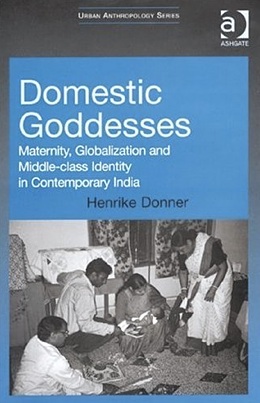
How do middle-class women in Calcutta understand and experience economic change? What impact is globalization having on the new middle-classes in Asia? Our reviewer Tereza Kuldova has again been lucky with her choice of books. For antropologi.info, she reviewes Domestic Goddesses: Maternity, Globalization and Middle-Class Identity in Contemporary India by Henrike Donner:

cover

Donner, Henrike. (2008). Domestic Goddesses: Maternity, Globalization and Middle-Class Identity in Contemporary India. Ashgate. 230 pages. Price: £55.00.

Review by Tereza Kuldova

This anthropologically rich study based on an extensive ethnographic fieldwork brings us to the contemporary Calcutta and the homes of its middle-classes. It draws us convincingly right into the everyday domestic lifeworlds of the Bengali middle-class women, with all their concerns, ideas and ideals, sorrows, anxieties and joys.

This fresh study in urban anthropology undoubtedly fills a gap in the discussions on the Indian middle-class and modernity. Through identifying and establishing the domestic sphere as the key site of the remaking of the Indian middle-class in the contexts of globalization, post-liberalization and neo-liberal ideologies this book provides a novel rethinking of the wider transformations within the Indian society.

Analyzing the middle-class women’s narratives, Henrike Donner explores the shifts in the meanings and lived experiences of marriage, motherhood, conjugal relationships and family values. Focusing on the roles the women play as wives, mothers and homemakers, she examines the various ways in which the Indian urban middle-class is produced and reproduced – be it through seemingly unsubstantial lunch boxes of the middle-class children or the preference of caesarean section among the middle-class women. She analyses the ways in which the discourses on class, family and marriage, which commonly favour the role of the housewife and stay-at-home mother in order to produce a perfect family, shape the lives of these women; and how these women in turn shape the contemporary Indian society through their daily practices and ideas.

In her own words this “study is a reminder that the conflicts over the meaning of economic reform are not played out on the public stage of electoral politics alone, but also within families, between generations and in the embodied experiences of citizens. If neo-liberalism is not seen purely as an ideology but as a set of institutions, ideologies and technologies that bring about specific discourses, my research shows how it reshapes the Indian middle-class family, and with it motherhood” (180).

The Introduction gives us an idea about the background of the study, its location and reflections on fieldwork method. The part discussing the positioning of the anthropologist – a white woman from the “West” – and the power relationships between the fieldworker and her subjects evolving on the basis of this categorization are particularly interesting and give us closer insight in how relations are negotiated and how they evolve through time.

The first chapter on Middle-Class Domesticities and Maternities presents absorbing theoretical discussion of motherhood, kinship and reproduction. In her theoretical discussion on and analysis of how motherhood is constructed and discussed by women and the ways in which it dominates and orders their lives, Henrike Donner continually reflects on how these discourses and practices surrounding motherhood relate to power relations in the society, how they reflect the hegemonic processes of change, the ideas about modernity, the Hindu nationalist thought and the socio-economic relations. Motherhood is thus turned into the institution par excellence through which the historical change is studied. This continual linking between the wider transformations in the society and the rich ethnographic detail through a modified lens is, I believe, the greatest contribution of the study.

The second chapter Of Love, Marriage and Intimacy brings us at the core of the middle-class obsession with the discussions of love and marriages, which centre on the topics of, arranged and love marriages, suitable spouses, arranging matches and weddings and much more. Again these discussions and rich ethnographic material is set within the context and framework of the wider discursive formations and collective histories, contextualizing for example metropolitan ideas of what makes a good match through wider analysis of changing relationships between women and men, daughters and parents, in-laws and their son`s wives. The empirical data and cases are used actively in a combination with theory in a balanced manner, and the presence of the anthropologist throughout the whole book makes the text more readable and interesting. Viewing marriage in terms of process, which changes its meanings and the ways it is perceived over the lifecycle and across gender is also one of the strengths of Donner’s approach.

The third chapter concerned with The Place of Birth, i.e. basically the medicalization of childbirth, the availability of health services and changing birthing practices, opens up in front of us the world of parenthood as understood by the urban Bengali middle-class women. It discusses parenthood as a public prove of sexual prowess, fertility and reproduction being crucial in making and expanding the social significance of marriage as well as in making and reproduction of the middle-class. Infertility on the other hand carries a great social stigma, the infertile couple not only symbolizes “sexuality without a purpose, ‘coupledom’ without a future, and personal loss” but also challenges “generally held ideas about marriage and the Indian middle-class family” (92).

Discussing several cases Donner analyses the changing birthing practices, the interesting popularity of the self-elected caesarean sections, and the domestic relations at the time of the women’s pregnancy and much more. Particularly the analysis of the popularity of the caesarean deliveries is very enlightening, bringing in the notions of class, pollution, social status and middleclassness. The caesarean deliveries distinguish the middle class from the low class woman, they are markers of class and affluence, they are “clean” and the convalescence takes a considerable amount of time, which the low class woman in opposition to the middle class one does not have. Caesarean sections thus manage status as well as pain, pollution and embarrassment during the birth.

The fourth chapter on Education and the Making of Middle-Class Mothers is concerned with schooling during the early years of childhood and “the way parenting is implied in institutional practices and the way intimate relationships between mothers and their children are informed by wider socio-economic transformations” (123). This chapter thus discusses a rarely investigated topic of contemporary parenting in India and the role of mothers. The analysis shows how the mothers reproduce the middle-class ideals and tastes through active parenting strategies and how the children actually become subjects of multiple practices resulting from the liberalization policies and processes.

The fifth chapter with the title Motherhood, Food and the Body explores the middle-class woman’s agency as a consumer and relates the analysis of consumption to that of gendered bodies and (re)production of middle-class through consumption patterns. She particularly focuses on the wave of “new” vegetarianism and the various meanings it has, from control of the woman’s sexuality to idioms of purity.

This study shows clearly that even thought there is an increasing number of nuclear families, love marriages and divorces in urban India, which are commonly seen as indications of the post-liberalization changes, “the patrilocal residence, arranged marriages and lifelong unions still constitute normative discourses, and are often reinvigorated” (181). But at the same time “the increased significance of privacy, conjugality and individualism among urbanites supports new socialities and gendered identities” (182).

It also shows the ambiguous and surprising outcomes of the processes leading to the new middle-class lifestyles, which oscillate somewhere in between ideologies of individualism and media representations of family ideologies, which depict the Indian middle-class as consumption- and family oriented, as well as thoroughly nationalist.

One of the shortcuts of the study, I believe, is that it is thoroughly restricted to the domestic sphere and the middle-class household and does not take into account how the production and reproduction of the middle-class through the work of women is staged in the public sphere; how it is played out in the daily interactions outside the home and how these interactions actually shape and bring into being the lived social hierarchies. The discussion of relationships with men and the men’s views is certainly a missing link in the broader connections, too, though maybe intentionally omitted; such a discussion and focus would give the analysis more depth.

This book is without any doubt a great contribution to current anthropological discussions on how globalization and consumer oriented economies change and influence the kinship and marriage systems, as well as on how the class hierarchies are produced and reproduced in the urban setting. It is a must read for any anthropologist or a student of anthropology concerned with the modernity in developing countries, globalization and kinship. But the clarity of the language, interesting issues raised and richness of the ethnographic detail will surely draw the attention of a much broader specter of readers.

I haven’t found much material about or by Henrike Donner online. But on this page you’ll find links to papers she has put online: Committed mothers and well-adjusted children: privatisation, early-years education and motherhood in Calcutta and The significance of Naxalbari: accounts of personal involvement and politics in West Bengal

SEE ALSO:

Book Review: How Indissoluble is Hindu Marriage?

Chronicles Women’s Social Movements in India

cover

How do middle-class women in Calcutta understand and experience economic change? What impact is globalization having on the new middle-classes in Asia? Our reviewer Tereza Kuldova has again been lucky with her choice of books. For antropologi.info, she reviewes Domestic…

Read more

New overview over open access anthropology journals

Today we celebrate the first Open Access Anthropology Day. For this occasion, I’ve made a new overview over open access journals in our field (anthropology, area studies and related stuff).

The overview is not complete, still under construction and needs some more system. But anyway, I was surprised over how many open access journals there are. I made many new discoveries. I’ll write more about them in later posts when I’ll have more time. Enjoy the new overview here: http://www.antropologi.info/links/Main/Journals

The overview is based on the Directory of Open Access Journals, the overview by EVIFA and earlier discoveries.

If you want me to add more journals, please leave a comment!

Also, take a look at Sara’s post Happy Open Access Anthropology Day where she sums up all the contributions to this day.

Today we celebrate the first Open Access Anthropology Day. For this occasion, I've made a new overview over open access journals in our field (anthropology, area studies and related stuff).

The overview is not complete, still under construction and needs…

Read more