
search expand

Phd-Thesis: That’s why they embrace Islam

cover

Our fellow anthro-blogger Martijn de Koning was awarded his doctorate at the Free University of Amsterdam last week.

In his Ph.D. thesis he shows how Islam has become the most important frame of reference for Moroccan-Dutch youth to reflect upon who they are and what they want to be.

In the late 1990s, the general perception was that young muslims were turning away from their religion. But things went differently, he says in an interview with Radio Netherlands. Young Dutch Moroccans are increasingly turning to their religion.

According to Martijn de Koning this is a direct result of the current polarisation of the debate on Islam:

Even before 9/11 there was already an increase in interest for religion among young Moroccans. But once the debate on Islam flared up, their interest increased enormously. They were continually asked about their Muslim identity; not just by the media, but also by school mates and teachers and by people at their sports club. They started looking into Islam so that they could answer these questions.

These group of young Muslims searched for an identity with which they could distinguish themselves from Dutch society as well as from their parents:

They wanted a pure Islam, without compromise. Not an Islam that had been watered down because they happened to live in the Netherlands. Nor did they want an Islam peppered with Moroccan traditions.

The Islam they found was not the traditional type from Morocco. They found their answers on the Internet in the conservative, Saudi-Arabian version called Salafism, the anthropologist says:

It is a form of Islam with clear rules, which makes a clear distinction between good and evil. An Islam which is stricter and more orthodox than that of the older generation, but nevertheless seemed to provide better answers to their complicated lives in modern Dutch society.

>> read the whole story in Radio Netherlands

>> visit his blog (in both Dutch and English)

Interestingly, researchers in Norway came to similar conclusions, for example anthropologist Christine M. Jacobsen – see Doctoral thesis: Towards a transnational Islam and the culture historian Liv Bjørnhaug Johansen – see Moving toward a Cultureless Islam

cover

Our fellow anthro-blogger Martijn de Koning was awarded his doctorate at the Free University of Amsterdam last week.

In his Ph.D. thesis he shows how Islam has become the most important frame of reference for Moroccan-Dutch youth to reflect…
Read more

Obituary: Anthropologist Germaine Tillion dies at the age of 100

tillion

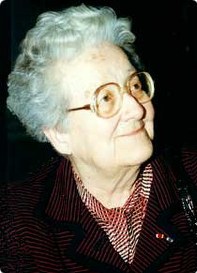
“Few students of anthropology probably can tell you who Germaine is despite the fact that she has been one of the anthropologists who have contributed not only to the understanding of the Mediterranean region, particularly North Africa, but also to the freedom of Europe from the nightmare of fascism and Nazism”, anthropologist Gabriele Marranci writes in his post In memory of the anthropologist Germaine Tillion.

Germaine Tillion died on Saturday at the age of 100. Her resistance against injustice and inhuman treatment, Marranci writes, never ceased despite her age. Recently, starting from her experience in Algeria under the French occupation, she had condemned the use of torture in Iraq and the ‘CIA secret prisons’ as part of the Bush administration’s so-called ‘war against terror’.

>> read the whole obituary

See also the Reuters article French resistance hero Germaine Tillion dies at 100 and Tillion’s website (in French) where also the picture is taken from.

tillion

"Few students of anthropology probably can tell you who Germaine is despite the fact that she has been one of the anthropologists who have contributed not only to the understanding of the Mediterranean region, particularly North Africa, but also to…

Read more

Cooperation between the Pentagon and anthropologists a fiasco?

newsweek

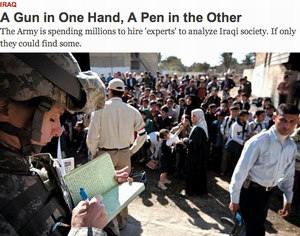
The collaboration between the U.S. military and anthropologists has been criticized for both political and ethical reasons. According to a recent article in Newsweek, the whole project could end as a fiasco: The implementation of the $40 million project has fallen short, according to more than a dozen people involved in the program that were interviewed by Newsweek.

Recruitment appears to have been mishandled from the start, with administrators offering positions to even marginally qualified applicants:

Several team members say they were accepted after brief phone interviews and that their language skills were never tested. As a result, instead of top regional experts, the anthropologists sent to Iraq include a Latin America specialist and an authority on Native Americans. One is writing his Ph.D. dissertation on America’s goth, punk and rave subcultures.
(…)
Of 19 Human Terrain members operating in five teams in Iraq, fewer than a handful can be described loosely as Middle East experts, and only three speak Arabic. The rest are social scientists or former GIs who (…) are transposing research skills from their unrelated fields at home.
(…)
Most team members admit they are hampered by an inability to conduct real fieldwork in a war zone. Some complain that the four-month training they underwent in the States was often a waste of time.

Matt Tompkins, who returned home in January after five months in Iraq, said he thought his team provided helpful input to its brigade, but the contribution was more superficial than planners of the program had conceived. “Without the ability to truly immerse yourself in the population, existing knowledge of the culture … is critical,” he said in an e-mail. “Lacking that, we were basically an open-source research cell.”

Actually, language skills and the fact that you have been to Iran to attend academic conferences can make you suspicious – as it was the case with Zenia Helbig, a 31-year-old doctoral student at the University of Virginia with a concentration in Islamic studies and proficiency in both Farsi and Arabic. She had according to Newsweek one of the more impressive résumés of all the recruits.

She says:

“The running joke was that I was clearly a spy and the only question was which country I worked for.”

The articles continues:

The banter turned ugly when, over beers one night, team members began speculating whether the U.S. military would eventually be called on to invade Iran. In the jocular spirit of the moment, Helbig made what she now describes as a careless remark: “I said, ‘OK, if we invade Iran, that’s where I draw the line, hop the border and switch sides’.” In an academic setting, the comment might not have been particularly shocking. Her supervisors settled for a rebuke. But an officer in the program complained to security officials at Fort Leavenworth whose investigation led to her dismissal.

>> read the whole story in Newsweek

According to Wire, “Human Terrain Teams are hopping mad about the Newsweek article” and anthropologist Montgomery McFate, one of the main architects of the human terrain teams, wrote a lengthy response >> read the letter

UPDATE: The American Anthropological Association (AAA) has also responded to the Newsweek article. >> read the letter to the editor on AAAs website

Furthermore, Maximilian Forte has written several related posts recently, see Reviewing the AAA’s Report on Anthropology and the Military and American Anthropologists against Counterinsurgency: Part Two.

SEE ALSO:

The dangerous militarisation of anthropology

Anthropology and CIA: “We need more awareness of the political nature and uses of our work”

Protests against British research council: “Recruits anthropologists for spying on muslims”

Oppose participation in counter-insurgency! Network of Concerned Anthropologists launched

Savage Minds: The Fate of McFate – Anthropology’s Relationship with the Military Revisited

“Tribal Iraq Society” – Anthropologists engaged for US war in Iraq

Military spies invade anthropology conferences?

“Arabs and Muslims should be wary of anthropologists”

San Jose: American Anthropologists Stand Up Against Torture and the Occupation of Iraq and AAA Press Release: Anthropologists weigh in on Iraq, torture at annual meeting

“War on terror”: CIA sponsers anthropologists to gather sensitive information / see also debate on this on Savage Minds

Two Books Explore the Sins of Anthropologists Past and Present

newsweek

The collaboration between the U.S. military and anthropologists has been criticized for both political and ethical reasons. According to a recent article in Newsweek, the whole project could end as a fiasco: The implementation of the $40 million project has…

Read more

First podcast of the 2008 Society of Applied Anthropology Meeting is online

logo

"The Art and Science of Applied Anthropology in the 21st Century" is the topic of the first podcast from the annual meeting of the Society of Applied Anthropology.

More podcasts will be published during the following two months. Last…

Read more

Manga instead of scientific paper: How art enriches anthropology

“Anthropologist creates oceanic manga fantasy” is the headline of a story in The Daily Yomiuri Shimbun (Japanese newspaper). “I want to portray in manga what I gained from field investigation, but cannot fully express in scientific papers,” anthropologist Daisaku Tsuru says.

Tsuru is assistant cultural anthropology professor at Toyama University and the author of Nacun, a manga focusing on the mystery of (sea) life:

Nacun is based on Tsuru’s own experience of having researched fishing culture on an isolated island in Okinawa Prefecture for a total of six months while at graduate school.

Nacun, set in the future, revolves around graduate student Terunari Ishii. In the manga’s world, humans have expanded their range of marine activities thanks to the development of a convenient underwater breathing device in 2051. Ishii, who has received a prophecy in the form of a video left by an academic genius, begins living on an isolated island in the prefecture to find clues for the development of artificial intelligence.

The depiction of Ishii, who blends into local life through encounters with a lonely, middle-aged fisherman or a mysterious, beautiful girl who plays with dolphins, reflects parts of Tsuru’s fieldwork. At the same time, it can be read as a coming-of-age tale of an impressionable young man.

“Such a depiction of Ishii, that he idly spends his time drinking with fishermen, at least on days when he cannot go out fishing, is surely based on my own experience,” Tsuru said with a smile.

But the most fascinating aspect of Nacun is likely its clever combination of oceanic science fiction and romanticism with the inner psychological world of traditional Okinawans, typified by the worship of utaki, or sacred grounds.

>> read the whole story in the Daily Yomiuri (link updated)

A few days ago I mentioned an interview I’ve conducted with Lavleen Kaur, a criminologist who studies the relationship between Norwegian-Pakistanis and Norwegian-Indians. For her, theater and research go hand-in-hand. She has studied classic Indian dance in Lonon and also has experience as a choreographer and instructor.

She said:

– Yes, the artistic and academic aspects are for me something that go hand-in-hand and they are something I actively link together. For example, I came in contact with many of my informants for my Master’s degree by staging a play in cooperation with the Indian Welfare Society of Norway. (…) The piece was based on a book that was written in the 1600s, Heer by Waris Shah. The story of “Heer and Ranjha”, the Romeo and Juliette from Punjab, is something both Indians and Pakistanis have a very special relationship to.

(…)

– We set up the play in a traditional original version, and more recent version that focused on a mixed couple. This generated quite a response! There were people who started leaving and paternal heads of family who did not want to attend the second version, which they considered to be a “youthful notion”. The play helped start a debate within the community about topics that today we are compelled to relate to. There was a lot of participant-observation – it was “going native” in a very real sense.

>> read the whole interview

UPDATE: Entertaining Research writes about an archaelogist who has danced his thesis

SEE ALSO:

Connecting Art and Anthropology

"Anthropologist creates oceanic manga fantasy" is the headline of a story in The Daily Yomiuri Shimbun (Japanese newspaper). "I want to portray in manga what I gained from field investigation, but cannot fully express in scientific papers," anthropologist Daisaku Tsuru…

Read more