
search expand

Anthropologist calls for a greater appreciation of child labor

(LINKS UPDATED 7.3.2023) There are many campaigns against child labour. But anthropologist Thomas Offit also views child labour as a chance for children to improve and take control of their lives. In an interview with The Lariat Online (Baylor University) he criticizes ethnocentric views of childhood.

“When we in the West view child labor, we view them as victims of exploitation instead of having some control over their lives,” Offit said. Many children are victims of child labor. But these children are also active agents in making their own and family’s lives better by working.

Offit has researched on child street labor, including in Guatemala City working with Mayan Indians in the textile trade. Child street labor is also the basis for his new book coming out within the year.

Guatemala doesn’t have a social welfare system and the economic opportunity is limited. In his view, a greater appreciation of child labor and the “greater economic forces that bring children to work on the streets in the first place”, is important. Our lives and theirs are closely related.

>> read the whole story in The Lariat Online

Similar views on child labor can be found in an article by Olga Nieuwenhuys in the Annual Review of Anthropology 1996 called The Paradox of Child Labor and Anthropology. In her view, one should rather focus on the economic conditions that create child labor. In her review, she is also criticizing notions of childhood that may make sense in rich countries, but not in poor ones:

Illuminating the complexity of the work patterns of children in developing countries, recent anthropological research has begun to demonstrate the need to critically examine the relation between the condemnation of child labor on the one hand and children’s everyday work practice on the other.

The emerging paradox is that the moral condemnation of child labor assumes that children’s place in modern society must perforce be one of dependency and passivity. This denial of their capacity to legitimately act upon their environment by undertaking valuable work makes children altogether dependent upon entitlements guaranteed by the state. Yet we must question the state’s role—as the evidence on growing child poverty caused by cuts in social spending has illuminated—in carrying out its mission.

(…)

As a global solution to eliminate child labor, development experts are now proposing a standard based on the sanctity of the nuclear family on the one hand and the school on the other as the only legitimate spaces for growing up. If this becomes a universal standard, there is a danger of negating the worth of often precious mechanisms for survival, and penalizing or even criminalizing the ways the poor bring up their children. This criminalization is made more malevolent as modern economies increasingly display their unwillingness to protect poor children from the adverse effects of neoliberal trade policies.

(…)

The price of maintaining this order (of childhood institutions like school) is high, because it requires, among other commitments, money to support the institutions at the basis of the childhood ideal, such as free education, cheap housing, free health care, sport and recreation facilities, family welfare and support services, etc. Developing economies will unlikely be able to generate in the near future the social surplus that the maintenance of these institutions requires. As the neoliberal critique of the welfare state gains popularity, wealthy economies also become reluctant to continue shouldering childhood institutions.

Rethinking the paradoxical relation between neoliberal and global childhood ideology is one of the most promising areas for research, she writes:

Research should especially seek to uncover how the need of poor children to realize self-esteem through paid work impinges upon the moral condemnation of child labor as one of the fundamental principles of modernity. (…) The ways children devise to create and negotiate the value of their work and how they invade structures of constraint based on seniority are other promising areas of future anthropological research.

This type of research is even more relevant in that it may not only enrich our knowledge of children’s agency but may prove seminal in understanding the process by which work acquires its meaning and is transformed into value.

Current child labor policies reinforce acccording to Olga Nieuwenhuys paradoxically children’s vulnerability to exploitation:

Irrespective of what children do and what they think of what they do, modern society sets children apart ideologically as a category of people excluded from the production of value. The dissociation of childhood from the performance of valued work is considered a yardstick of modernity, and a high incidence of child labor is considered a sign of underdevelopment. The problem with defining children’s roles in this way, however, is that it denies their agency in the creation and negotiation of value.

The whole paper is not accessible for people outside the academe (university account needed).

Available for everybody: The report by Norwegian anthropologist Tone Sommerfelt: Domestic Child Labour in Morocco. An analysis of the parties involved in relationships to “Petites Bonnes” (pdf). “Petites bonnes” (small maids) are young girls (here defined as under the age of 15 years) who perform various household tasks, and who live with their employers.

SEE ALSO:

“We want children to be their own ethnographers”

Ethnographic study: Why the education system fails white working-class children

(LINKS UPDATED 7.3.2023) There are many campaigns against child labour. But anthropologist Thomas Offit also views child labour as a chance for children to improve and take control of their lives. In an interview with The Lariat Online (Baylor University)…

Read more

Anthropologist examines influence of robots in Japan

At home, robots are about to replace the role of the grandmother and in the industrial sector, robots are more popular than foreign laborers according to anthropologist Jennifer Robertson. Robertson is researching on the effects of robots on Japanese society.

At a seminar, Robertson spoke on the decreasing human birthrate and increasing humanoid robot population in Japan, the university newspaper The Daily Texan informs.

In the industrial sector, Japan prefers robots over foreign laborers “because machines do not enhance racial tensions by evoking wartime memories, as foreigners do”, Robertson said (!)

But the country is according to the anthropologist more concerned with utilizing robots to help increase native births:

Because children require care at home, they can keep women from holding jobs. But in today’s society, many women need or want to hold professional positions. As mothers join the workforce, robots take over their household duties, thus increasing the workforce and the birthrate. (…) Robertson showed photos of cartoon-like machines with exaggerated features and colorful bodies. These were the robots such as Wakamaru, PaPeRo and Ri-man that babysit, tutor children and care for the elderly.
(…)
These robots transmit images to cell phones, thus allowing mothers to keep an eye on their children while away from the home. (…) Japanese children are obedient to their robotic caretakers, and the machines have replaced the role of the mother or grandmother in the home.

>> read the whole story in The Daily Texan

“Robots are expected to be in the 21st century what automobiles were in the 20th century,” Jenny Robertson said in an earlier article in The Michigan Daily. For more information on robots in Japan, see also two BBC-stories Japan’s rise of the robots and Japanese scientists have unveiled the most human-looking robot yet – a “female” android

SEE ALSO:

Why cellular life in Japan is so different – Interview with anthropologist Mizuko Ito

Pop goes Japanese culture: Japan’s most visible export isn’t economic, but cultural

The cultural nationalism of citizenship in Japan and other places

At home, robots are about to replace the role of the grandmother and in the industrial sector, robots are more popular than foreign laborers according to anthropologist Jennifer Robertson. Robertson is researching on the effects of robots on Japanese society.…

Read more

12 new interviews about cosmopolitanism, islam, modernity, street culture…

In case you’re wondering why this blog sometimes has not been updated for several days: One reason might be my job as a webjournalist for the research program Cultural Complexity in the New Norway (CULCOM).

Now, several of my interviews and summaries have been translated into English:

– Modernity means acceleration
Why do we all have so little time, even though we can actually work more effectively than we could previously? The reason is that acceleration- the continuous increase in speed- is the basic principle of our time. “Modernity’s entire history can be written as a history of acceleration,” says Hartmut Rosa. At the CULCOM seminar “Time and Modernity” the sociologist presented a new theory of modernity.

– This is the basis for a global ethic
They do not know one another and cannot speak to each other. Nevertheless, the old woman in the Moroccan village offers to help the dying woman from the United States. “In order to find common human values, we must go to the basic conditions for our existence – love and mortality”, said the philosopher Odin Lysaker, at the seminar “Shared values in a community with a multiplicity of values”.

Learning from People’s Struggle for Recognition
“The youth attack because society has violated them, and therefore they fight for ‘recognition’,” wrote the philosopher Odin Lysaker in a feature article on the youth protests in Copenhagen. Is it possible for us to understand conflicts better by reflecting over the fact that all people seek recognition?

Invisible Norwegianness
What representations of “Norwegianess” and “normality” are imparted when teachers teach about gender and sexuality in a multicultural classroom? While most studies about “the New Norway” focuses on minorities, Åse Røthing directs her focus at both the majority and the minority, the “Norwegian” and the “non-Norwegian.”

Exclusion Instead of Help
German politicians claim that they want to “save immigrant women.” But for researcher Urmila Goel, the bills proposing to combat arranged marriage are racist and exclusionary. In a new research project, Goel is going to look at how racist and heteronormative discourses work together and reinforce each other in the German debate on arranged marriage.

Moving toward a Cultureless Islam
An extravagant Pakistani wedding or a moderate Muslim celebration? What is Muslim and what is Pakistani? – It wasn’t long before I began to understand that that which permeates all of their discussions about identity is the search for an Islamic identity. They are very concerned with separating culture and religion, says Liv Bjørnhaug Johansen, who recently submitted her Master’s thesis on identity-work on a Norwegian-Pakistani webpage”)

Getting under the surface of the Koran school movement
Both researchers and Turkish authorities view them as fundamentalists. But actually they engage in totally normal religious activities. “It is important to render innocuous that which is harmless”, says the anthropologist Johannes Elgvin, who in his Master’s thesis takes issue with previous research on the Koran school movement.

Religion – an anchoring point for the nation?
Why are there so many debates on religion these days? – Religion is presented as making up part of an alleged core of both the self and the nation, says Lars Laird Eriksen. The sociologist is researching the role of religion in the construction of national identity in the Norwegian school.

Is Networking More Important than Education?
Immigrant women do not leave the workforce at a higher rate than Norwegian women when they have children. The younger generation is doing better than their parents” generation. But education is not as important for obtaining a permanent job as is commonly believed. In her Master”s thesis, sociologist Ida Drange gives us new insight into immigrant women on the job market.

We are all multicultural
Why do intelligent people have prejudices against lesbians and people from distant regions? Where does tolerance end for other ways of living?- I am interested in the boundaries of multiculturalism, said anthropologist Aleksandar Boskovic at one of CULCOM’s Monday seminars.

– More of a Street Culture than an Honor-based Culture
The African male youth along the Aker river in Oslo who sell hashish to researchers, designers and students are passing on an old tradition in the area. “To speak of an honor and feudal culture in connection with the violence along the river is misguided,” says sociologist Sveinung Sandberg. Together with sociology professor Willy Pedersen, this research fellow has studied Norway’s largest outdoor hash market.

From an ethnic to a civic identity?
In 1990, Lithuania was the first Baltic State to declare its independence from the Soviet Union. The Lithuanian anthropologist Vytis Ciubrinskas spoke at CULCOM’s Monday Seminar of a country where national identity has become less ethnic.

In case you're wondering why this blog sometimes has not been updated for several days: One reason might be my job as a webjournalist for the research program Cultural Complexity in the New Norway (CULCOM).

Now, several of my interviews and…

Read more

Doctoral Thesis: Is Islam Compatible with Secularism?

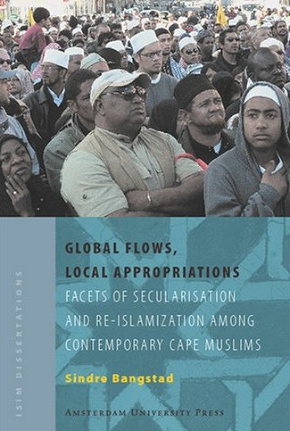
cover

Secularisation is often seen as a process that is associated with the “West” and modernisation, as a process that is opposed to islamisation. In his doctoral dissertation, anthropologist Sindre Bangstad shows that processes of secularisation also emerge from within Muslim communities.

Bangstads dissertation ‘Global Flows, Local Appropriations: Facets of Secularisation and re-Islamization Among Contemporary Cape Muslims’, is based on 15 months of fieldwork in Cape Town, South Africa between 2003 and 2005.

Bangstad stresses that processes of secularisation and re-Islamization are not opposed to each other. They must be seen as implicated in, and interlinked with, one another:

For instance, I demonstrate that prison ‘ulama’ in Cape Town have been able to draw on human rights notions and precepts enshrined in the Constitution in arguing for an expansion of religious rights for Muslim inmates. They have done so, in spite of the fact that the mainstream Cape ‘ulama’ are for all practical purposes opposed to many of the secular and liberal principles of the same Constitution, and many of the legislative and societal changes that they have resulted in.

(…)

It is difficult to understand the discrepancies between the normative models of the predominantly middle-class mainstream Cape ‘ulama’, and the actual practices of Cape Muslims in underprivileged townships and informal settlements, without reference to prior processes of secularisation understood as a decrease in the regulatory capacities of religious authorities.

In his dissertation, Bangstad present findings from his ethnographic research on black African conversion to Islam in the black African townships and informal settlements, on Muslim women in polygynous marriages in underprivileged communities, on Muslims living with HIV/AIDS, on the status of religious rights for Muslim inmates in a prison, as well as on public deliberations between reformists and Sufis on the appropriateness of certain Sufi rituals.

Muslims in South Africa represent a small minority, with a mere 1,46 percent of the total population in 2001. However, Muslims in Cape Town, the historical heartland of Islam in South Africa, represent approximately 10 percent of the population.

>> download the dissertation

SEE ALSO:

Doctoral thesis: Towards a transnational Islam

Extremism: “Authorities -and not Imams – can make the situation worse”

Akbar Ahmed’s anthropological excursion into Islam

New blog: Islam, Muslims, and an Anthropologist

Muslims in Calcutta: Towards a middle-class & moderation

What does it mean to be Muslim in a secular society? Anthropologist thinks ahead

Book review: Mahmood Mamdani: “Good Muslim, Bad Muslim”

Islam in Europe: Mainstream society as the provider of conditions

Islam Is Gaining a Foothold in Chiapas

How Islamic cassette sermons challenge the moral and political landscape of the Middle East

cover

Secularisation is often seen as a process that is associated with the "West" and modernisation, as a process that is opposed to islamisation. In his doctoral dissertation, anthropologist Sindre Bangstad shows that processes of secularisation also emerge from within…

Read more

Why is anthropological writing so boring? New issue of Anthropology Matters

Writing Up and Feeling Down is the topic of the new issue of the Anthropology Matters Journal. The articles outline the challenges involved when moving from fieldwork to writing, when trying to draw an argument out of unwieldy case studies, when you are told that your writing is not academic enough – or when you suddenly face the dangers of writing for a non-academic audience.

Ingie Hovland writes in her introduction:

The first thing that strikes many PhD students when they sit down to start writing up is that there is a strong tension between the very ‘lively’ experiences of fieldwork and the ‘deadening’ process of writing them down afterwards. In the words of one apocryphal PhD student, captured by Jean-Paul Dumont (1978:6): ‘How is the writing going?’ – ‘Oh it should move along quite well, once I get through beating the life out of my material…’

(…)

Anthropology departments try to prepare their PhD students for the intensity of fieldwork, but they come nowhere close to preparing the students for the intense emotions that writing triggers – such as anxiety, loss of self-confidence, and anger, to name but a few – or how to deal with these.

Given the way things are set up, it is perhaps not surprising that the result is, as Mary Louise Pratt (1986:33) notes, that,

For the lay person, such as myself, the main evidence of a problem is the simple fact that ethnographic writing tends to be surprisingly boring. How, one asks constantly, could such interesting people doing such interesting things produce such dull books? What did they have to do to themselves?

>> read the whole introduction

In Anthropology Matters, Melania Calestani, Ioannis Kyriakakis and Nico Tassi recount a part of their own process of being disciplined into what and how to write and not to write in order for their work to be deemed ‘anthropological’.

>> read “Three narratives of anthropological engagement”

Harriet Matsaert, Zahir Ahmed, Faruqe Hussain and Noushin Islam explore expectations and pressures that suddenly and without warning make themselves known if you are one of those anthropologists trying to write for a non-academic (or even just non-anthropological) audience.

>> read “The dangers of writing up: a cautionary tale from Bangladesh”

Paul O’Hare reflects upon his doctoral thesis write-up, and in particular, the writing up of his empirical work. Writing up is not simply a matter of reporting how we “did” the research.

>> read “Getting down to writing up: navigating from the field to the desk and the (re)presentation of fieldwork”

The final contribution to this issue presents new research from Meher Varma about transnational call centres in India’. Her article examines the increasing presence of North American call centres in Bangalore and Delhi and analyses the ways in which these products of transnationalism have impacted notions of Indian national identity.

>> read “India wiring out: ethnographic reflections from two transnational call centres in India”

SEE ALSO:

Six reasons for bad academic writing

The Secret of Good Ethnographies – Engaging Anthropology Part III

Thomas Hylland Eriksen (Savage Minds): What is good anthropological writing?

How To Present A Paper – or Can Anthropologists Talk? A wishlist

Writing Up and Feeling Down is the topic of the new issue of the Anthropology Matters Journal. The articles outline the challenges involved when moving from fieldwork to writing, when trying to draw an argument out of unwieldy case studies,…

Read more