search expand

The Anthropology of Wrestling

How do you study wrestling as an anthropologist? By becoming a wrestler yourself! Heather Levi’s book The World of Lucha Libre: Secrets, Revelations, and Mexican National Identity is featured in the new issue of American Ethnography on Lucha libre – Mexican wrestling.

A long excerpt from the second chapter can be read there – an example of good anthropological writing and according to Martin Høyem, editor of American Ethnography, the best ethnography of 2008.

I found some reviews of the book. According to the Los Angeles Times the book is actually “entertaining”. And it places wrestling in a political context:

“The success of figures like Superbarrio lay in the capacity of lucha libre to invoke a series of connections between sometimes contradictory domains: rural and urban, tradition and modernity, ritual and parody, machismo and feminism, politics and spectacle,” she writes. And in that tight sentence, Levi nails the appeal lucha libre has had among working-class Mexicans for decades. The various intersections she describes — class, sexuality, gender, xenophobia — are frequently lost on American audiences but make the sport so enjoyable.

“The World of Lucha Libre is one of the most interesting cultural studies of a key pastime in Mexico for many years” according to the Latin American Review of Books, while the Seattle newspaper The Stranger insists that “the first few chapters are pretty dry”. But this is to be expected: “Most anthropological writing simply isn’t for general audiences”.

But the academic nature of the text is something to be overcome:

Levi lays the entire world of lucha libre at the reader’s feet, from the adulation of the crowd to the metallic smell of blood in the ring, and the act of creativity, installing the personal narrative, is the reader’s job. This is excellent reportage on an endlessly fascinating subject, and Levi should be commended for standing back and letting the luchadores take center stage.

As in previous issues, American Ethnography is really interdisciplinary: It includes images from the Bolivian Lucha Libre scene, a review of a book by photographer Lourdes Grobet on the Mexican wrestling scene and a glimpse into American wrestling magazines from the 1970’s on “apartment wrestling”, where women – according to the magazine Sports Review Wrestling in 1978 “clash with the fury of primitive savages fighting for their gods!”

SEE ALSO:

New e-zine: American Ethnography

How do you study wrestling as an anthropologist? By becoming a wrestler yourself! Heather Levi's book The World of Lucha Libre: Secrets, Revelations, and Mexican National Identity is featured in the new issue of American Ethnography on Lucha libre -…

Read more

Book review: How the Ganges boatmen resist upper-caste and state domination

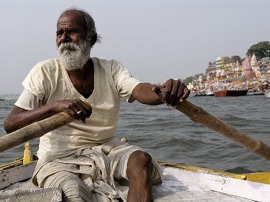
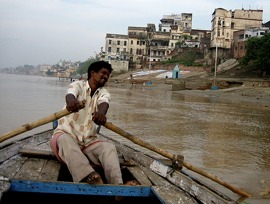
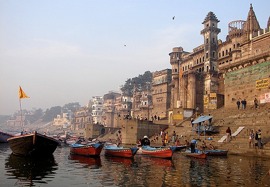
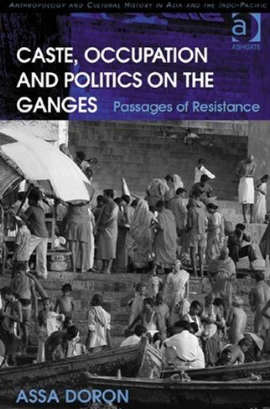
Caste, Occupation and Politics on the Ganges is the title of a new book by anthropologist Assa Doron that Tereza Kuldova reviews here for antropologi.info. It is a book about the life of a marginalized group of people in India – the boatmen at the river Ganges in Banaras (also called Varanasi).

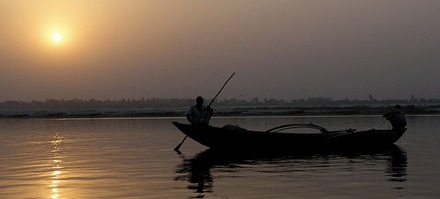
The pictures are taken by juicyrai (1,2), flickmor, omblod and Alex Craig.

Doron, Assa. (2008). Caste, Occupation and Politics on the Ganges: Passages of Resistance. Ashgate 198 pages. ISBN 978-0-7546-7550-1. Price £55.00.

Review by Tereza Kuldova

This anthropological study takes us straight into the everyday world of the boatmen at the river Ganges, in Banaras. It pictures their lives, narratives and practices and it contextualizes these within a wider historical perspective and social forces which have impact on their daily lives.

It is a study of a group of people disadvantaged and marginalized in both traditional and modern terms. It is a study of power and resistance in its everyday forms. It provides both a historical account of the evolution of the caste of boatmen during the colonial and post-colonial times and a discussion of the current position of this community, which faces the social and economic changes in the modern India as well as the impact of globalization. It shows how the boatmen, even though a low-status and under-privileged group, manage to challenge and contest the upper-caste and state domination. The book is first and foremost a thorough discussion of the processes of domination, subordination and resistance.
This book is intended primarily for anthropologists, historians and other social scientists or any student interested in the contemporary India, the topics of religion, everyday politics and globalization. Because of its historical and analytical rather than literary approach to the subject it is particularly interesting for the professionals, but I believe, less so for occasional readers of ethnographic accounts.

The first chapter, The Criminal Type: Domesticating the Ganges Boatmen, deals with the encounter between the boatmen and the colonial state and the classification of the Mallah (boatmen) caste by the British. It provides us with a historical account of how this occupational caste became classified and relegated into a criminal caste category and thus gained a reputation of thieves and gangsters and how the colonial rule imposed restrictions on the occupation and movement of the boatmen in Benares, which resemble to a great degree the limitations imposed by the modern Indian state.

But Assa Doron does not present the boatmen as incapable victims of this imposed classification in which “one was recognized by the bureaucratic administration of the state only as a number and part of an aggregate caste group” and where “individual capabilities were measured through one`s extended ‘body’: caste” (p. 36). On the contrary, he explores also the ways in which boatmen tried to manipulate these classifications and thus resist the domination. One of such ways was for example the idea to improve their status by claiming a different name, the name Nishada. “This name had positive connotations for the group as it placed the caste among an honorable people who, according to the epic Ramayana, devotedly served and protected the godking Rama during his tribulations in exile” (p. 37).

This is just one among the many strategies boatmen employed to resist the dominant classification. But, “nevertheless, claims for higher status were not always effective. The Mallah`s criminal reputation with its exotic, unlawful and immoral behavior (…) formed the basis of colonial census classification” and “being categorized as low caste often meant exclusion from recruitment to military service, the police force or administrative jobs” (p.37).

The second chapter, ‘Step-sons of the State’: Marginalization and the Struggle for Recognition, is devoted to the discussion of the influence of the state policies and particularly the development scheme known as Ganga Action Plan on the Mallah community. This development scheme imposed restrictions on the on sand mining, fishing and cultivation of the land on the riverbeds, which were all traditional occupations and part of the traditional rights of the Mallah caste. “The result is that the occupational diversity of boatmen working on the riverscape has been reduced to that of ferrying passengers” (p. 72). This led not only to the further development of the ‘marginalized boatmen identity’ identified with poverty, oppression and exclusion, but also to the establishment of caste community associations, which try at the same time to resist the state domination and collaborate with the state.

Using the dominant rhetoric and the politics of positive discrimination, the caste organizations actually try to subvert and resist the state domination by engaging in open political action and articulating their objections to the governmental policies.

The boatmen claim that “Ganga has been exploited by corrupt politicians, local officials and powerful Brahmins who siphon (‘eat’) money on the pretext of cleaning the river. In the process, it is the poor, ordinary citizens who suffer, through loss of customary rights, police harassment and caste prejudice” (p.77).

The relationship between boatmen and the state is thus ambivalent and filled with tension. On one side there is a need to cooperate and to negotiate; on the other there is a need to resist.

But what we clearly see from Assa Doron`s account is that “the way in which boatmen express their plight and act to fend off state domination, demonstrated that they understand and are well aware of the inner workings of liberal democracy, including ideas of citizenship, public accountability, rational legal authority and democratic rule” (p. 79).

The third chapter, The Moral Economy of Boating: Territorial Clashes and Internal Struggle, takes into spotlight the sophisticated socio-economic system which organizes the everyday work of the boatmen and can be said to work as a ‘moral economy’, in that it regulates the space, mitigates the conflict and provides “an economic safety net for the boatmen” and prevents “the modern state, local actors and commercial entrepreneurs from infringing on their livelihood” (p. 18).

The work system stands for rules the differentiately positioned boatmen must respect, these rules direct their work, divide the space on the riverfront within which the particular boatmen can operate and direct the mutual relations between the boatmen. Though numerous tensions exist within the boatmen community, the work system still provides measures to ensure subsistence for all the members of the community.

In this respect the notion of haq (right/property) is particularly interesting; “there is a moral expectation that they /the ghatwars – the wealthier members of the boatmen community/ let other members of the community have their share of the earnings derived from the river economy” (p. 111). At the same time the wealthier members are dependent on the support of the poorer members of the community in the matters of political action. But though this system of mutual obligations and reciprocity, this ‘moral economy’ is still important in the daily lives of the boatmen, it is at the same time challenged by the social and economic changes – be it for example the changing nature of the tourist industry, or the introduction of motorboats – which are all transforming the nature of the relationships between the boatmen and even lead to the fact that the boatmen tend to take up different types of unskilled jobs elsewhere, reducing thus the dependency on the river economy. But as already pointed out, “the work system remains an important ideological and economic institution for ensuring stability and security of the community” (p. 114).

The fourth chapter, River Crossings: Boatmen, Priests and the Ritual Economy of Banaras, focuses on the role of boatmen as ritual specialists within the ritual economy of Banaras and on their relationship with the river Ganga. Assa Doron concentrates here on how the boatmen invoke their caste identity, myth and other cultural symbols to contest the Brahmanical authority and to assert their rights to conduct rituals and maintain a certain control over ritual spaces around the Ganga.

The ritual serves here for the boatmen as a way of gaining respect and recognition for their role and work on the riverscape. They argue that they are granted the role as ritual specialists by the virtue of their caste and occupation. “By firmly establishing their position as ritual specialists on the riverscape, the boatmen register their claim over physical space that is valuable beyond the ritual context” (p. 124).

These claims and the identity of the boatmen are related to the story of the boatman Khevat from Ramayana, in which Khevat ferries lord Rama, Sita and Lakshmana across the river, at the end of trip Sita wants to pay the boatman a fee, with the only thing she has, her ring, but the Khevat rejects it saying to Rama: “we are of the same profession, you carry people across the river of life (samsara) to the far shore of liberation (moksha) and I carry people from this bank of the river to the other side. (…) Rama you are also a boatman (tum bhi Khevat), how can I charge you?” (p. 127). This encounter of Khevat with the lord Rama is perceived as a transformative event for the boatmen collective identity; this encounter is an evidence of the dignified roots and esteemed position of all boatmen within the Hindu social order.

The “boatmen creatively appropriate the myth to denote their dignified existence and elevate themselves in the caste hierarchy, inflecting it with their own aspirations, which eulogize the community and its morality” (p. 130). The myth thus serves as a justification to conduct particular rituals in the riverscape, which at the same time interrupt the priestly authority. “They may contest Brahmanical order and authority, yet at the same time imitate it and draw their strategic positioning from it” (p. 137). But “it is important to emphasize (…) that while such actions clearly subvert priestly authority, Banaras` ritual economy is still very much organized around the governing principles and values associated with orthodox religion” (p. 138).

The fifth chapter, The Romance of Banaras: Boatmen, Pilgrims and Tourists, discusses the asymmetrical powers relation between the boatmen and the pilgrims and tourists. Assa Doron focuses here particularly on how the boatmen deploy strategies to control and influence the pilgrims and tourists at the riverfront and on how the boatmen appropriate, manipulate and take advantage of the tourist discourse emerging in the First World and how they thus further their social and economic interests.

To illustrate this let us have a look at an example of such practice in relation between boatmen and pilgrims, “a practice where the subordinate (in the extreme case, beggars) bless and praise ‘their (potential) benefactors’ trapping them in ‘the cultural implication of their roles as superiors, that is, in the obligation to be generous’. It is important to note, however, that for the boatmen a position of subordination is assumed strategically. In their capacity as culture brokers boatmen also assume a position of authority when guiding pilgrims, selectively informing them about the city” (p. 147).

But not only do the boatmen get use of the traditional language, they also use the modern tourist discourse in their daily activities. Banaras as a tourist place is subject to commoditization whereby the tourists consume the local culture, which is – among others – mediated by the boatmen, who deploy this dominant tourist discourse. This discourse “emanating from Western countries, serves to produce a series of Orientalist tropes, largely produced and disseminated by the travel industry and media as well as travel talk” (p. 141). The boatmen thus help to reproduce the Orientalist India, which the foreign tourists search for, giving them what they want.

Though the book is in all convincing in its description of the everyday life of the boatmen community and its relations with the state and the dominant Brahmins, it has according to my opinion also several weaknesses.

Firstly, the discussion of the actual methodology of the research is almost completely missing. We get no clear idea about how the author went actually about gathering the data and what do the data consist of. And also throughout the book, we get almost no access to first-hand data – concrete cases are almost missing (with the exception of several cases in chapter 3 and 5). The book thus provides us with very descriptive and abstracted statements about what ‘boatmen think, do, feel’, but we rarely hear the actual voice of the boatmen, concrete illustration of their conduct or are presented with actual cases which would support the descriptive and analytical language of the author.

Secondly, the author is not really present in the book in any reflexive sense. The reflection on one`s own positioning is not elaborated in any detail. We for example get to know that the author had a Brahmin research assistant, but this fact is not commented upon any further. We thus do not get to know how this crucial relationship could have influenced or affected the data gathered, or for what kind of work the research assistant was used; what was the nature of his relationship with the boatmen, and how his being Brahmin could have affected the data, etc. But this is a general problem which I experienced reading this book – the lack of the discussion of the concrete interactional data.

Thirdly, the author is obviously influenced by the subaltern studies and at the same tries to get beyond their explanations, but he only suggests the direction of his approach. Therefore I believe that the theoretical discussion presented in the Introduction could have been more exhaustive. Towards the end of the study one tends to get an idea that the boatmen, constantly labeled as subaltern, marginalized and oppressed, are continually trying to resist the oppression of either the state, represented most often by the local police and administration or of the traditional authorities, represented by the Brahmins. And that is what they basically do in their everyday lives, that their lives basically consist of resistance itself or are resistance. Every single action of theirs tends to be viewed in the perspective of resistance. So for example fishing in the night (which is actually prohibited, so it cannot be done during the day), is perceived as a convert form of resistance against the state authorities. It may be – too, but not only.

And fourthly, though the author notes that he did not have any contact with the police or the local Brahmins, because of his close relationship with the boatmen, which may be understandable, the fact that we thus never get to know the same story as told from the perspective of those labeled as “dominant”, is certainly disappointing, particularly when the author tends to discuss the ‘inter-relationships’ and ‘mutual relationships’ between the boatmen and Brahmins and local representatives of the state.

This being said, there is still no doubt that the book is extremely valuable in its account of the lifeworld of the boatmen community in Banaras, which is first of its kind. I definitely recommend it to all interested.

For more information about the book, see the presentation by Ashgate, where also the introduction can be downloaded (pdf)

Caste, Occupation and Politics on the Ganges is the title of a new book by anthropologist Assa Doron that Tereza Kuldova reviews here for antropologi.info. It is a book about the life of a marginalized group of people in India…

Read more

Fieldwork among homeless heroin and crack users – new book by Philippe Bourgois

cover

In Search of Respect. Selling Crack in El Barrio” is one of my favorite ethnographies. Now, Philippe Bourgois, is out with a new book. In “Righteous Dopefiend“, he looks at the clients of the dealers, the University paper Penn Current reports.

The paper published a interesting interview with him that also touches the popular topic “anthropology at home”. Bourgois conducted his fieldwork among homeless heroin and crack users a mere six blocks away from his San Francisco home. He spent lots of time with them, and even slept outside in homeless encampments to gain a true sense of what life is like for the addicts.

What happened? People in the neighborhood began to think that the anthropologist must be one of the addicts as well:

During the intense years, when I’d be hanging out on the corner, people in the neighborhood just took for granted that I was either a drug addict or someone about to fall into drug addiction.

I remember being embarrassed in front of my son’s friends, because my son at this time was about seven years old when I started the project, and so all of his friends lived in the neighborhood and would say, ‘I saw your father hanging out on the corner where all the drug addicts are.’ I was worried about my son’s friends’ parents, because they were seeing me.

But although the addicts lived so close to the neighborhood, they were invisible. It was “mind-boggling”, he says, that he literally had to walk not more than six meters through a little thicket in order to enter a totally separate universe:

You can hear all these people, I mean, literally, hundreds of people at rush hour, walking to the bus stop, and you’re in this separate universe, and the two don’t touch. You can spend several hours in this separate universe listening to people go by and they don’t look through the bushes and notice these people. You almost feel falsely protected in this cocoon. 
People don’t want to see it, either, and the point of my book is to make it visible.

Bourgois connects the daily life in the thicket with larger structures in the society:

(W)hat is terrifying is seeing – and this is in a sense what the book is about – how structural forces beyond our control, historical forces, shifts in the economy, shifts in the political organization of public policy, come crashing down on vulnerable sectors of the population and basically shove them around in very unpleasant ways.

These are the people who weren’t able to recover from the downsizing of the industrial sector in the United States. A bunch of other types of industries arose in place of that, but those people who aren’t able to make that adjustment, those people who don’t have the education to shift from being a factory worker to being an information technology processor, are people who fall into indigent poverty.

The guys that we studied – their parents were the people who lost their jobs working on the docks of San Francisco, working in the steel mills, working in the warehouses that were serving the active factory sector of San Francisco as a port industrial city. 
These are forces that are much larger than the will of any individual or the moral ability of any individual to act in a way that’s going to make them a productive member of society. The book is trying to show those dynamics and when you dig deeper you then see these other patterns, that whites are affected by this very differently than African Americans.

Over half of his informants have passed away during the study and in the two years since the end of the actual field work.

>> read the interview in the Penn Current

>> download the first chapter of the book

On his website, he has published lots of papers!

UPDATE Long article about the book in The Chronicle Review: An Anthropologist Bridges Two Worlds. See also the comment by Eugene Raikhel at Somatosphere

SEE ALSO:

The most compelling ethnographies

Is the anthropologist a spy? New Anthropology Matters about fieldwork identities

Study: Drug smuggling as vehicle for female empowerment?

cover

"In Search of Respect. Selling Crack in El Barrio" is one of my favorite ethnographies. Now, Philippe Bourgois, is out with a new book. In “Righteous Dopefiend", he looks at the clients of the dealers, the University paper Penn Current…

Read more

Book review: How neoliberalism reshapes motherhood in Calcutta

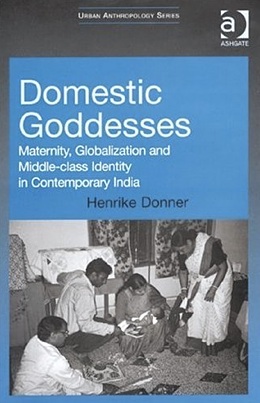
How do middle-class women in Calcutta understand and experience economic change? What impact is globalization having on the new middle-classes in Asia? Our reviewer Tereza Kuldova has again been lucky with her choice of books. For antropologi.info, she reviewes Domestic Goddesses: Maternity, Globalization and Middle-Class Identity in Contemporary India by Henrike Donner:

cover

Donner, Henrike. (2008). Domestic Goddesses: Maternity, Globalization and Middle-Class Identity in Contemporary India. Ashgate. 230 pages. Price: £55.00.

Review by Tereza Kuldova

This anthropologically rich study based on an extensive ethnographic fieldwork brings us to the contemporary Calcutta and the homes of its middle-classes. It draws us convincingly right into the everyday domestic lifeworlds of the Bengali middle-class women, with all their concerns, ideas and ideals, sorrows, anxieties and joys.

This fresh study in urban anthropology undoubtedly fills a gap in the discussions on the Indian middle-class and modernity. Through identifying and establishing the domestic sphere as the key site of the remaking of the Indian middle-class in the contexts of globalization, post-liberalization and neo-liberal ideologies this book provides a novel rethinking of the wider transformations within the Indian society.

Analyzing the middle-class women’s narratives, Henrike Donner explores the shifts in the meanings and lived experiences of marriage, motherhood, conjugal relationships and family values. Focusing on the roles the women play as wives, mothers and homemakers, she examines the various ways in which the Indian urban middle-class is produced and reproduced – be it through seemingly unsubstantial lunch boxes of the middle-class children or the preference of caesarean section among the middle-class women. She analyses the ways in which the discourses on class, family and marriage, which commonly favour the role of the housewife and stay-at-home mother in order to produce a perfect family, shape the lives of these women; and how these women in turn shape the contemporary Indian society through their daily practices and ideas.

In her own words this “study is a reminder that the conflicts over the meaning of economic reform are not played out on the public stage of electoral politics alone, but also within families, between generations and in the embodied experiences of citizens. If neo-liberalism is not seen purely as an ideology but as a set of institutions, ideologies and technologies that bring about specific discourses, my research shows how it reshapes the Indian middle-class family, and with it motherhood” (180).

The Introduction gives us an idea about the background of the study, its location and reflections on fieldwork method. The part discussing the positioning of the anthropologist – a white woman from the “West” – and the power relationships between the fieldworker and her subjects evolving on the basis of this categorization are particularly interesting and give us closer insight in how relations are negotiated and how they evolve through time.

The first chapter on Middle-Class Domesticities and Maternities presents absorbing theoretical discussion of motherhood, kinship and reproduction. In her theoretical discussion on and analysis of how motherhood is constructed and discussed by women and the ways in which it dominates and orders their lives, Henrike Donner continually reflects on how these discourses and practices surrounding motherhood relate to power relations in the society, how they reflect the hegemonic processes of change, the ideas about modernity, the Hindu nationalist thought and the socio-economic relations. Motherhood is thus turned into the institution par excellence through which the historical change is studied. This continual linking between the wider transformations in the society and the rich ethnographic detail through a modified lens is, I believe, the greatest contribution of the study.

The second chapter Of Love, Marriage and Intimacy brings us at the core of the middle-class obsession with the discussions of love and marriages, which centre on the topics of, arranged and love marriages, suitable spouses, arranging matches and weddings and much more. Again these discussions and rich ethnographic material is set within the context and framework of the wider discursive formations and collective histories, contextualizing for example metropolitan ideas of what makes a good match through wider analysis of changing relationships between women and men, daughters and parents, in-laws and their son`s wives. The empirical data and cases are used actively in a combination with theory in a balanced manner, and the presence of the anthropologist throughout the whole book makes the text more readable and interesting. Viewing marriage in terms of process, which changes its meanings and the ways it is perceived over the lifecycle and across gender is also one of the strengths of Donner’s approach.

The third chapter concerned with The Place of Birth, i.e. basically the medicalization of childbirth, the availability of health services and changing birthing practices, opens up in front of us the world of parenthood as understood by the urban Bengali middle-class women. It discusses parenthood as a public prove of sexual prowess, fertility and reproduction being crucial in making and expanding the social significance of marriage as well as in making and reproduction of the middle-class. Infertility on the other hand carries a great social stigma, the infertile couple not only symbolizes “sexuality without a purpose, ‘coupledom’ without a future, and personal loss” but also challenges “generally held ideas about marriage and the Indian middle-class family” (92).

Discussing several cases Donner analyses the changing birthing practices, the interesting popularity of the self-elected caesarean sections, and the domestic relations at the time of the women’s pregnancy and much more. Particularly the analysis of the popularity of the caesarean deliveries is very enlightening, bringing in the notions of class, pollution, social status and middleclassness. The caesarean deliveries distinguish the middle class from the low class woman, they are markers of class and affluence, they are “clean” and the convalescence takes a considerable amount of time, which the low class woman in opposition to the middle class one does not have. Caesarean sections thus manage status as well as pain, pollution and embarrassment during the birth.

The fourth chapter on Education and the Making of Middle-Class Mothers is concerned with schooling during the early years of childhood and “the way parenting is implied in institutional practices and the way intimate relationships between mothers and their children are informed by wider socio-economic transformations” (123). This chapter thus discusses a rarely investigated topic of contemporary parenting in India and the role of mothers. The analysis shows how the mothers reproduce the middle-class ideals and tastes through active parenting strategies and how the children actually become subjects of multiple practices resulting from the liberalization policies and processes.

The fifth chapter with the title Motherhood, Food and the Body explores the middle-class woman’s agency as a consumer and relates the analysis of consumption to that of gendered bodies and (re)production of middle-class through consumption patterns. She particularly focuses on the wave of “new” vegetarianism and the various meanings it has, from control of the woman’s sexuality to idioms of purity.

This study shows clearly that even thought there is an increasing number of nuclear families, love marriages and divorces in urban India, which are commonly seen as indications of the post-liberalization changes, “the patrilocal residence, arranged marriages and lifelong unions still constitute normative discourses, and are often reinvigorated” (181). But at the same time “the increased significance of privacy, conjugality and individualism among urbanites supports new socialities and gendered identities” (182).

It also shows the ambiguous and surprising outcomes of the processes leading to the new middle-class lifestyles, which oscillate somewhere in between ideologies of individualism and media representations of family ideologies, which depict the Indian middle-class as consumption- and family oriented, as well as thoroughly nationalist.

One of the shortcuts of the study, I believe, is that it is thoroughly restricted to the domestic sphere and the middle-class household and does not take into account how the production and reproduction of the middle-class through the work of women is staged in the public sphere; how it is played out in the daily interactions outside the home and how these interactions actually shape and bring into being the lived social hierarchies. The discussion of relationships with men and the men’s views is certainly a missing link in the broader connections, too, though maybe intentionally omitted; such a discussion and focus would give the analysis more depth.

This book is without any doubt a great contribution to current anthropological discussions on how globalization and consumer oriented economies change and influence the kinship and marriage systems, as well as on how the class hierarchies are produced and reproduced in the urban setting. It is a must read for any anthropologist or a student of anthropology concerned with the modernity in developing countries, globalization and kinship. But the clarity of the language, interesting issues raised and richness of the ethnographic detail will surely draw the attention of a much broader specter of readers.

I haven’t found much material about or by Henrike Donner online. But on this page you’ll find links to papers she has put online: Committed mothers and well-adjusted children: privatisation, early-years education and motherhood in Calcutta and The significance of Naxalbari: accounts of personal involvement and politics in West Bengal

SEE ALSO:

Book Review: How Indissoluble is Hindu Marriage?

Chronicles Women’s Social Movements in India

cover

How do middle-class women in Calcutta understand and experience economic change? What impact is globalization having on the new middle-classes in Asia? Our reviewer Tereza Kuldova has again been lucky with her choice of books. For antropologi.info, she reviewes Domestic…

Read more

Mahmood Mamdani: “Western concern for Darfur = Neocolonialism”

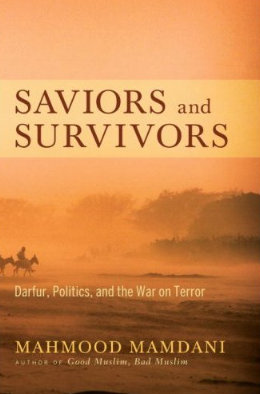
300 000 people have been killed and 2.5 million been made refugees in the war in Darfur. In his new book, anthropologist Mahmood Mamdani describes the Save Darfur campaign as representing a refracted version of the moral logic of the “War on Terror” with the Arabs in both cases branded as evil, Alex de Waal writes in The Monthly Review.

Mamdani writes:

The Save Darfur lobby demands, above all else, justice, the right of the international community — really the big powers in the Security Council — to punish “failed” or “rogue” states, even if it be at the cost of more bloodshed and a diminished possibility of reconciliation. More than anything else, “the responsibility to protect” is a right to punish without being held accountable — a clarion call for the recolonization of “failed” states in Africa. In its present form, the call for justice is really a slogan that masks a big power agenda to recolonize Africa.

Mamdani criticizes Save Darfur as mobilizing “child soldiers,” by which he means naive American students, in a campaign that diminishes Africans as part of an argument to “save” them, G. Pascal Zachary notes in his review.

Zachary is one of several scholars who discuss Mamdanis book Saviors and Survivors. Darfur, Politics, and the War on Terror on their group blog Making Sense of Darfur.

Zachary is a huge fan of Mamdani but feels that “like almost everyone else who speaks on Darfur, Mamdani too has another agenda”:

Like all those he complains about who use Darfur to score points on matters of greater importance to them – repressive Islamic regimes, Christian tolerance, the value of military intervention, etc – Mamdani too subordinates Darfur to a broader set of stories he wants to tell about dysfunctional American power in the world, about misunderstood Muslims, about an Africa violated by Westerners from every point of the political spectrum. Mamdani may be right about all of these larger stories, but just he is wrong to exploit Darfur – as wrong as those he finds guilty of doing the same.

>> read the whole text “Mamdani and the Uses of Darfur”

>> Saviors and Survivors (Monthly Review 13.4.09)

>> What Does Darfur Have To Do With The “War On Terror”? Kevin Funk, Making Sense of Darfur, 19.4.09)

>> The Darfur the West Isn’t Recognizing as It Moralizes About the Region (New York Times, 30.3.09)

>> Mahmood Mamdani: You (and I) got Darfur Wrong (Radio Open Source 3.4.09)

In an interview with the Boston Globe, the anthropologist explains his interest for the Darfur case:

In a context where African tragedies seem never to be noticed, I wondered why Darfur was an obsession with the global media. The reason, I realized, was that Darfur had become a domestic issue here, thanks to the Save Darfur movement. So I thought it important to examine the movement’s history, organization, and message.

(…)

I’m struck by the contrast between the mobilization around Darfur and the lack of mobilization around Iraq. The explanation, I believe, lies in the fact that Save Darfur presented the conflict as a tragedy, stripped of politics and context. There were simply “African” victims and “Arab” perpetrators motivated by race-intoxicated hatred. Unlike Iraq, about which Americans felt guilty or impotent, Darfur presented an opportunity to feel good.

(…)

The language of human rights was once used primarily by the victims of repression. Now it has become the language of power and of interventionists who turn victims not into agents but into proxies. It has been subverted from a language that empowers victims to a language that serves the designs of an interventionist power on an international scale.

>> read the whole interview

I wrote about Mamdani and Darfur earlier, see Mahmood Mamdani: “Peace cannot be built on humanitarian intervention” and about earlier books Book review: Mahmood Mamdani: “Good Muslim, Bad Muslim”

300 000 people have been killed and 2.5 million been made refugees in the war in Darfur. In his new book, anthropologist Mahmood Mamdani describes the Save Darfur campaign as representing a refracted version of the moral logic of the…

Read more