search expand

Book Review: How Indissoluble is Hindu Marriage?

Divorce does not belong to Hindu tradition, anthropologist Livia Holden was told when she started her research in India 14 years ago. But is this true? Tereza Kuldova reviews for antropologi.info Holden’s new book Hindu Divorce. A Legal Anthropology.

Anthropologist Livia Holden has been on 16 months of fieldwork over the course of 12 years in a village in Madhya Pradesh, India. With the help of the case studies of several women she challenges popular belief and earlier anthropological studies.

Here is the review:

cover

Review: Holden, Livia. 2008. Hindu Divorce: A Legal Anthropology. Ashgate.

Tereza Kuldova

Livia Holden’s book Hindu Divorce presents an invaluable and to a certain degree also provocative re-examination of the praxis and legal status of Hindu divorce and remarriage, both in its past and present manifestations. Being an anthropologist, Livia Holden has the necessary first-hand experience with the actual practices of Hindu divorce and remarriage, at the same time as she connects these with the greater framework of the official law at the national level and even traces the implications of her findings transnationally.

Her examination of the divorce practices and remarriage is based on 16 months of fieldwork over the course of 12 years in a village in Madhya Pradesh, India. Over these years she had the opportunity to follow her informants, their stories and to develop deep relationships.

With the help of the case studies of several women (p. 69-124), which she has gathered over this period, she proves that contrary to the popular discourse in which Hindu marriage is considered indissoluble, and even contrary to the most legal and even anthropological studies, it is possible to find textual, historical and even contemporary evidence of customary provisions for divorce and remarriage.

The mainstream view of the Brahmans and other upper-caste Hindus, as it is codified in the Laws of Manu and other classical texts, which claims that marriage – solemnized according to the sacred rites prescribed by the ancient religious texts – is indissoluble, is contested on the basis of the customary law and practice.

It is also this view which served the British when developing the Anglo-Hindu personal law, as they gave priority to the religious texts and naturally also to the upper-caste views on law (p. 14). This codification led to even greater general consolidation of this idea, which is again what is reflected in most of the anthropological and law treatises.

In 1955 the Hindu Marriage Act was passed. This act guaranteed divorce for all Hindus and has saved customary practices of divorce. The emphasis on customary law and practices is important here, because, as Livia Holden points out, it would be a misconception to believe that most Hindu divorces take place through the juridical process in the civil courts, it is rather the customary law which prevails.

In addition “the inclusion of custom in the realm of the legal has the unique advantage of overcoming the fictional opposition between normative and non-normative behaviors, or between official and alternative normative orders that fix society within the limits of a privileged and totalizing cultural system” (p. 11). And it thus corresponds more to what her empirical data clearly show, i.e. that these customary provisions for divorce and remarriage function even among Brahmans and other high-caste Hindus, even though they are commonly perceived as practices of the lower castes.

She claims firmly that “dissolution of marriage did not only exist from ancient times; it was available to women and it was also widespread among the Hindu upper caste” (p. 5).

Being inspired by the feminist anthropology she also provides throughout her book an account of “how the mainstream Hindu discourse of gender imbalance shapes the legal discourse of law and how, in turn, the official legal discourse shapes Hindu society” (p. 19). Relating her empirical observations to the law discourse and theories on gender, she shows that customary law may actually provide more scope than the statutory personal law for the woman to negotiate successfully the conditions of her existence. She provides an analysis of the problem whether and if so how does the Hindu divorce and remarriage constitute a certain way out for women in the situations of matrimonial crisis.

In this context she presents several of her cases in which she also discusses such topics as arranged and child marriage, dowry, bigamy, domestic violence and interestingly also manipulations of custom and of official law. She further discusses the treatment of the Hindu divorce in the framework of national official law and its various relationships to the customary law and discusses the effects of the official law for the women.

She concludes that:

“in specific circumstances Hindu women can successfully negotiate the end of an unsuitable matrimonial tie and remarry to secure better lives for themselves and their children; but for an understanding of peculiar techniques, which are part of the women’s legal awareness, it is necessary to see beyond positive law, to where the non-state law can inform or even substitute for state-law a perspective of legal pluralism that is something more than plurality of law” (p.218).

This book is no doubt a great contribution both for anthropology and for the study of law in India. Connecting the different levels of analysis it provides a coherent picture of the state of affairs. The possible direction of future research in this area might lie in the focus on the Hindu divorce and remarriage in the urban areas, especially among middle classes.

As my own fieldwork experience suggests, divorce and remarriage among Hindus in villages, even among higher-caste Hindus was generally possible, precisely on the basis of the customary law as pointed out above. But in the urban areas on the other hand the higher-castes acted more conservatively and generally restricted women who left their husbands to remarry, and even women themselves felt that it would be inappropriate. Investigating these processes which go hand in hand with modernity and which to a certain degree can be considered as the products of modernity, might thus be a fruitful scenario fur further research.

But except for the undoubtedly remarkable contribution of rethinking of the Hindu divorce and remarriage in various areas, the book is also striking in its degree of self-reflexivity. The chapter 2 (p. 27-68) is devoted to the discussion of the theoretical and methodological insights and reflection over these. It is very instructive in its open discussion of the changing role of the anthropologist and her positioning in the field.

Livia Holden goes on to discuss such topics as what challenges doing research together with a husband brings and what possibilities it on the other hand also opens, or how she was perceived in the first period when she was childless and how the relationships changed and evolved when she came next time with a baby and how this changed situation opened up different arenas for her research. She reflects also on doing research in a village which was already previously studied by her professor J. L. Chambard and the negotiation of the relationships with the villagers on this subject. She reflects on her status as a woman who is concerned generally with mens matters, as she becomes a kind of honorary male, which allows her cross-gender behavior. She also discusses her ideas on authorship and the collaborative nature of her research.

Methodologically this book is also interesting as it combines different resources, even integrating the method of filming. The resulting ethnographic film from 2001 is called Runaway Wives and it was done in co-production with her husband Marius Holden who also wrote a chapter in this book (p. 60-8) that discusses and reflects the process of filming and the theoretical problems of visual anthropology.

This extensive self-reflection incorporated throughout the whole book makes it instructive and an interesting reading for every anthropology student and anthropologist. In addition the multidisciplinary approach to the research which draws from feminist and legal studies and social sciences will be of interest to any student or scholar of law, sociology and anthropology.

>> Information on the book by the publisher (Ashgate)

>> information on Tereza Kuldova (both anthropologist and artist)

SEE ALSO:

Thesis: How Indian women fight the stigma of divorce

Unmarried Women in Arab Countries: Status No Longer Dependent upon the Husband

China: Where women rule the world and don’t marry

On African Island: Only women are allowed to propose marriage

cover

Divorce does not belong to Hindu tradition, anthropologist Livia Holden was told when she started her research in India 14 years ago. But is this true? Tereza Kuldova reviews for antropologi.info Holden’s new book Hindu Divorce. A Legal Anthropology.

Anthropologist…

Read more

Anthropologist Explores Wall Street Culture

40,000 AT&T workers lost their job. This sounds like terrible news. But the stock market applauded it, sending AT&T shares up. Why? Anthropologist Karen Ho was fascinated and confused by the different reactions and wrote her dissertation about it. In July, her book Liquidated: An Ethnography of Wall Street will come out.

Ho went on fieldwork as a business analyst to “learn the language of finance.” She interviewed hundreds of people, shadowed investment bankers at work and hang out with them at bars and industry conferences. “Today, amid Wall Street’s biggest crisis since the 1930s, her insights are fascinating for investors and regulators alike”, Kara McGuire writes in the Star Tribune.

McGuire interviews the anthropologist and asks questions like “How are investment bankers different from the rest of us?” That’s the way, I think, the members of finance or wall street culture should be treated. They seem to live in a totally different world than most of us, a world with their own logic. They seem to represent a totally different culture.

Karen Ho answers:

Investment bankers are structured toward the next bonus. They’re compensated on how many deals they can push through, not on the quality of the deals or long-term strategy. Investment bankers have tons of job insecurity; they are a total revolving door. But what’s interesting is that because of their fairly elite biographies and kind of privileged networks they move in, as well as their lavish compensation, the way they experience downsizing is very different from that of the average worker.

One of the things I argue in the book is that they cultivate a culture of liquidity, of continual restructuring and downsizing that they understand from their particular cultural point of view and privileged location as a productive challenge, as a building of character, precisely because their cushion is so thick. They can say, “Hey look, I have a really risky job, but that’s why I just got paid $1 million last year.” They’ll actually recommend this kind of churning for other workers who have a very different experience. This actually affects corporate America, how other industries are operating.

In her forthcoming book, she focuses on a cultural shift in finance. One of the main ideas of the book is to figure out how short-term shareholder value became the undisputed mission of most corporations from the 1980s onward:

Throughout the mid-20th century, Business Roundtable leaders would say: “Our mission is to negotiate the long-term interests of multiple stakeholders — consumers, employees, distributors, as well as the shareholder.” After 1980, it’s: “We don’t have to negotiate all these other interests; we just have to be concerned about the shareholder.”

The corporate takeover movement Wall Street led in the 1980s helped to culturally make that shift so CEOs now imbibe that Wall Street mantra. (…) Corporations get rewarded and investment bankers get rewarded for financial dealmaking that actually does not increase productive capability.

>> read the interview in Star Tribune

PS: Ah, saw too late that this story (of course!) already was mentioned in Savage Minds’ “Around The Web”

SEE ALSO:

Used anthropology to predict the financial crisis

Anthropologist: Investors need to understand the tribal nature of banking culture

How anthropologists should react to the financial crisis

40,000 AT&T workers lost their job. This sounds like terrible news. But the stock market applauded it, sending AT&T shares up. Why? Anthropologist Karen Ho was fascinated and confused by the different reactions and wrote her dissertation about it. In…

Read more

How electricity changes daily life in Zanzibar – Interview with anthropologist Tanja Winther

tanja winther

(Links updated 1.6.2021) How does everyday life change when electricity becomes available to people in a village in Zanzibar, East Africa, for the first time? Anthropologist Tanja Winther answers this question in her new book The Impact of Electricity. Development, Desires and Dilemmas.

The book is based on her doctoral dissertation and was also published in Swahili. “I think it would be a good thing if phd-budgets in general included the important step of making results accessible to the people under study”, she says in an email-interview with me.

“Electricity is a social phenomenon, and I hope that many anthropologists will join this fascinating field”, she adds.

Here is the interview:

So what has changed after the introduction of electricity?

What was most striking to me was the tremendous effect electricity has had on people’s time management. With electric light the day in theory has 24 hours instead of 12. People must make new choices as to what to do when. In consequence, time is speeding up and practices change: Women cook only two meals each day and not three as they used to (they now serve leftovers for the third meal). This is also linked to their wish to watch television in the evening and their opportunity to earn money during daytime.

Relations change in the process; the man has ‘entered the home’ in a new way. In the evenings, men and women now sit together in the same room, together with neighbours and the extended family. The electric light provide transparency and purity and the television programme is in focus. The paradox, although a phenomenon also observed in many other places, is that the spouses new opportunity to spend more time together actually provides less time for marital (?) intimacy. Sexual patterns change due to electricity. Because of this and also electricity’s high cost and rapid normalisation, there are signs that the birth rate is on the decrease. This was exemplified when men complained to me that due to the need for electricity, it is becoming too expensive to have more than one wife, or even get married at all.

People’s relationship to spirits also change; electric light is said to make space safer. Elderly, Swahili-speaking people would therefore refer to the new technology as ‘security light’.

book cover

Health wise, electrified water pumps and improvements in the health services (ex light at night time at the local clinic when a woman is in labour) has had a direct positive effect in development terms.

The arrival of water taps in the village implies that girls do not have to spend long hours fetching water from wells. Instead they are sent to school to the same extent as boys. Children, also girls, attend night classes before important exams and sleep in the school building. This surprised me, because parents in this Muslim context pay considerable attention to controlling girls’ whereabouts. I guess they have faith in the teachers looking properly after their children. But this also speaks of the tremendous importance people put on education in rural Zanzibar these days.

What are your thoughts about these changes?

When I started this study I was determined not to expect that electricity would bring ‘development’ to the countryside in Zanzibar. Overall, however, I am convinced that people’s new access to electricity has been a change to the better. Electricity is so fundamental when it comes to people’s access to information, to public services and to making the hard life in this region less physically demanding.

The notion of development in Swahili (maendeleo) is all about getting new ideas and new things that make you move forward. Following a grounded, entitlement-based approach to development one may even conclude that it should be a human right to have access to electricity. What they use electricity for must of course be left to the people in question to decide.

There are also problems, however, one challenge in Zanzibar being linked to the unequal structures that were also at work before electricity was introduced. In particular, I would highlight women’s lack of rights to inheritance and the fact that the divorce rate is high and easily obtained by men. Most women in rural Zanzibar do not own houses. They do not become electricity customers nor owners of appliances. Yet, they contribute substantially to financing the family’s high cost of electricity. This constitutes a problem the day their husbands want a divorce, when they are left with extremely little material wealth. Electricity may in this way have made women even more dependent on men than before.

In everyday life, there is also a concern among some people that electricity’s high costs may negatively affect the family’s food security. Perhaps the reduction in cooked meals implies that people eat less than before? (this has not been investigated from a detailed, nutritional point of view). At the same time, the alternative, to buy expensive kerosene for lighting and batteries for the radio, is also a financially risky business. In 1991, it would take a family 9 years to pay back their investment in electricity for light and radio as compared to the use of kerosene and batteries. (Thus after 9 years it would become cheaper to use electricity than the alternative fuels). In 2005, due to a rise in the kerosene price, the pay back time had been reduced to 4 years.

infoproject

Information Project: People from Uroa (working for the Information Project) explaining the use and dangers of electricity during a public meeting in Uzi Village, 2005.

It seems that people sleep less than before. Those without electricity at home sometimes complain that their neighbours are tired after having watched television until midnight and therefore quarrel more than before. Many parents are concerned that children, especially boys who are freer to stay out late at night, are too tired to learn properly at school.

But in the larger picture, such effects are considered as details. The coming of tourists, however, is seen as a greater challenge. The foreigners are often considered to have an improper conduct that could affect new generations in unfortunate ways (alcohol, drugs, clothing etc). If tourism provided people with jobs, this would have balanced the picture, but so far, rural Zanzibaris mostly experience the negative side of this growing business. Still, people are strikingly warm and welcoming towards foreigners. Knowing the social and moral cost of the tourists’ presence in the neighbourhood, this attitude surprised me again and again.

What are the implications of your findings?

I hope to have demonstrated that asking and realising the question of “how” is just as important as “what” (e.g., electricity). My main case, electrification in Uroa village, was atypical in the sense that they were not included in project plans but ended up with the highest number of electricity customers and the only village in Zanzibar with street lights.

I try to show that the success of Uroa was not random, but a direct result of their own initiative and contribution in the process, including the use of magic remedies. People in the village are very proud of what they achieved. They demonstrated in practice what participation is about. Such involvement is possible despite the “heavy” and apparently predetermined nature of infrastructure projects.

On another level, the study revealed that ordinary customers have not been properly informed about how the accounting system works. As a result, the think they are being cheated by the utility and their own morality regarding illegal use becomes affected.

In response to these findings, Norad (The Norwegian Agency for Development Cooperation) agreed to finance an information project in Zanzibar where we put emphasis on electricity’s possibilities but also difficulties. Two teams (both genders, people from town and people from villages experienced with electricity) travelled around the islands for two months and held fabulous speeches:

– Do you think the ocean is dangerous? (Yes)
– We still go out fishing, don’t we? (Yes)
– It is the same with electricity. You just have to know how to deal with the danger…

I have received feedback from management in the World Bank’s evaluation group that the study is interesting also from their point of view. If the experiences from Uroa can be useful to people working and living elsewhere, nothing would be better.

In anthropology, I think there is a need for more studies on electricity and energy. Economists and engineers have had a claim to this field for a long time and there is renewed focus on energy these days.

This was exciting to study, I suppose? You’ve been there during the first years with electricity?

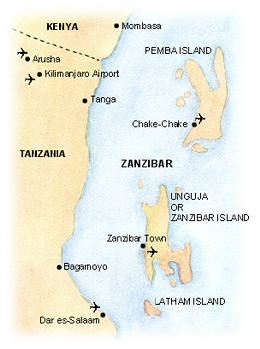
Yes, I arrived in Uroa village in 1991, one year after village electrification. When I came back for the main fieldwork in 2000, they had 10 years of experience with the new technology; more appliances, more households connected. I had expected to find many women cooking food with electricity (what people in 1991 said they expected would be the case). But very few did.

map

I thus learned the old lesson that people do not necessarily do what they say they want to do. There are many reasons why, but it is interesting to try to understand such discrepancies. I have also returned to Zanzibar in later years as a consultant. People’s use of electricity, as any practices, change in a fascinatingly rapid manner.

What was it like turning the doctoral dissertation into a book? A long process?

It took about one year to get the process started and then 1 1/2 years in production, so yes, it was a long process. Berghahn’s external reader had some very useful comments on an overall level that I have tried to respond to. Otherwise, I felt quite on my own in the process – the luxury of having a splendid supervisor (Aud Talle in my case), was gone. But when writing the thesis I had kept in mind Unni Wikan’s advice to think about the thesis as a book. To a great extent, I could keep to the same structure.

Why did you translate the book into Swahili?

The idea was initiated by one of my friends in Uroa during fieldwork. He does not speak or read English. He told me enthusiastically that he was thrilled about the thought of knowing that other people in East Africa would read the story from Uroa – and learn about electrification. Thus he was concerned about sharing the material with other groups.

I was just as concerned about making this man (and his co-villagers) have access to their own story. The Norwegian Embassy later kindly agreed to finance the translation of a shorter version of the material and have a book produced in 500 copies. This would perhaps not have been the case had I chosen another, less ‘relevant’ topic in their eyes.

But I think it would be a good thing if phd-budgets in general included the important step of making results accessible to the people under study. The book was recently distributed to 35 households in Uroa and schools across Zanzibar.

By the way, I remember Pat Caplan, the main opponent during the defence of the thesis, asking me what reactions I would expect from people in Uroa if they had access to the written material. I said that they would be likely to be proud and agree with most parts, but also surprised and perhaps even disturbed regarding other parts. In particular, the critical analysis of women’s position and the social exclusion of people in opposition to the government, could produce some reactions. I did not leave these aspects out in the published book, which is entitled Umeme: Faida na Athari Zake. Uzoefu Kutoka Kijiji cha Uroa. (Electricity: Its benefits and challenges. Experiences from Uroa Village). So far, I have not heard any reactions from the village, but of course, I am quite exited.

What are doing right now?

I am with the Centre for Development and the Environment (SUM) at the University of Oslo, who have hosted me since I first came in 1999 as an engineer wanting to learn and do anthropology. As member and secretary for a reference group of a trust fund in the World Bank (TFESSD), I discover that the Bank has come quite far in analytical work that integrate work on social development, gender and infrastructure.

The link between gender equality and energy continue to be one of my main interests, and I also currently work on a little piece called Why do poor people steal electricity?

Electricity is a social phenomenon, and I hope that many anthropologists will join this fascinating field. I think we are both needed and appreciated.

Thanks for the interview!

>> information about the book by the publisher (Berghahn Books)

>> more information about Tanja Winther

Related texts online by Tanja Winther:

Tanja Winther: Empowering women through electrification: Experiences from rural Zanzibar (pdf)

Tanja Winther: Social Impact Evaluation Study of the Rural Electrification Project in Zanzibar, Phase IV (2003-2006) (pdf)

Tanja Winther: Information Project. Zanzibar Rural Electrification Project, Phase IV. Project Report (pdf)

For readers in Norway: Her book will be presented in Klubben, University Library, Blindern, University of Oslo, Tuesday 9.12. from 16-17 o’clock.

Links updated 1.6.2021

tanja winther

(Links updated 1.6.2021) How does everyday life change when electricity becomes available to people in a village in Zanzibar, East Africa, for the first time? Anthropologist Tanja Winther answers this question in her new book The Impact of Electricity. Development,…

Read more

Reggae, Punk and Death Metal: An Ethnography from the unknown Bali

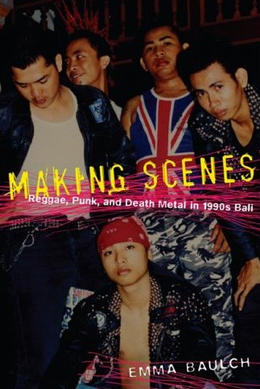
cover

“This is a break from the norm of writing about Bali”, writes Laura Noszlopy enthusiastically about a new book by anthropologist Emma Baulch called “Making scenes: reggae, punk, and death metal in 1990s Bali”.

In 1996, Emma Baulch went to live in Bali to do research on youth culture. She hang out in the death metal scene among unemployed university graduates clad in black T-shirts and ragged jeans; in the punk scene among young men sporting mohawks, leather jackets, and hefty jackboots; and among the remnants of the local reggae scene in Kuta Beach, the island’s most renowned tourist area.

The scene that Baulch has accessed is a deliberately closed and marginalized one, though it is situated largely in Bali’s most ‘open’ places: Kuta and Denpasar. And it is a scene that anthropologists had overlooked or not have not been interested before according to Baulch.

Laura Noszlopy quotes the author who writes that sidewalks of Kuta she entered in 1996 were

… a gaping frontier land of which anthropology rarely spoke … they raged with charged encounters between tourists and street-side watch sellers, drug dealers, drivers, pimps, and whores … punk jams chafed against the pop soundscape emanating from the Hard Rock Café across the road. Mohawks, feigned brawls, Bad Religion, metal spikes, hefty jackboots, and leather jackets thrived (p. 1).

Noszlopy comments:

This is an image that may possibly be familiar to travellers who have stayed in Kuta, Bali’s largest resort. But is not one that is found in brochures or highlighted by Balinese cultural commentators, and neither is it one that anthropologists tend to write about

The book also explains the machinations of the various contesting groups within the scene(s):

This is fascinating stuff; I doubt that many observers of Balinese society, or Balinese themselves, will have any idea of the detailed differences and ‘othering’ that took place not from the perspective of counterculture juxtaposed against mainstream, but between the multiple shifting identities created amongst the various groups. And these, of course, ‘othered’ themselves against the reggae groups that played in tourist bars.

All, Baulch argues, are somehow part of a peripheral Balinese Other in a love-hate relationship with Jakarta’s Indonesian centre, rather than the predictable West. This rather radical and, to some traditionalists, surprising point that Balinese punk is somehow principally about Balineseness and regionalism recurs throughout the book.

“This is the kind of work about Bali that I would like to see more of”, Laura Noszlopy writes:

It is truly contemporary. It deals with the complexities of a set of subcultural groups juxtaposed against and yet parallel to the local and national hegemonies. It recognizes the particularities of these groups and many of the individuals who people them, rather than lumping them together as ‘youth culture’.

Baulch does not simplify the issues, avoid people’s chaotic agency, or seek neat conclusions. Her work seems to embrace the complexity of the process of making scenes in Bali. And it does all this while recognizing the global music scene and late capitalist cultural economy – what Appadurai called the ‘global modern’– of which it is also a small, but noisy, part. This is a refreshing change.

But the reviewer writes less enthusiastically about the language of the book (a well known problem in many ethnographies):

The main difficulty I found with the text, however, was the marrying of the sometimes opaque style of theoretical analysis with the much looser conversational mode of the ethnography. While consistently vibrant and entertaining, it was not always complementary. The mixed tone was also apparent across chapters.

The review appeared in the recent issue of Journal of the Royal Anthropological Institute (subscription required)

But I found this text by Emma Baulch: Punks, rastas and headbangers: Bali’s Generation X (Inside Indonesia 48: Oct-Dec 1996)

Together with several other researchers, she has written Poverty and Digital Inclusion: Preliminary Findings of Finding a Voice Project

SEE ALSO:

Ainu musicians in Japan: Cool to be indigenous

Anthropologist explores heavy metal in Asia, South America and the Middle East

Socially conscious hip-hop is worldwide phenomenon

cover

"This is a break from the norm of writing about Bali", writes Laura Noszlopy enthusiastically about a new book by anthropologist Emma Baulch called "Making scenes: reggae, punk, and death metal in 1990s Bali".

In 1996, Emma Baulch went to…

Read more

Researched the sexual revolution in Iran

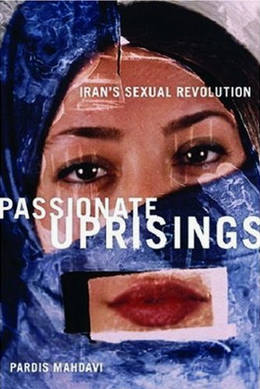
cover

Girls wear makeup, go with their hair uncovered, drink, have boyfriends and premarital sex: For seven years, anthropologist Pardis Mahdavi has studied the sexual revolution in Iran, the Ventura Country Star reports.

Those actions could have brought harsh punishment and even jail time in the past. But now the sheer numbers of young people overwhelm the morality police, who must often turn a blind eye on offenders, she said during a lecture.

Many parents are onboard with the changes:

Before 2002, women could not wear open-toe shoes, and then suddenly women began to openly defy the law, and you saw many, many women wearing sandals and flip-flops without any recrimination. I think they wear red lipstick just to irritate authority.

Ian Chesley has reviewed her book “Passionate Uprisings: Iran’s Sexual Revolution”:

Several of Mahdavi’s research subjects reported that by the summer of 2007, their parents considered premarital dating normal and acceptable. And while a parent in the US might be mortified by having to bail out their child from jail after an arrest at a rowdy party, some of Mahdavi’s adults happily come to their children’s rescue and forego any punishment of their own.

Mahdavi also writes of several parties put on by parents for their children and friends, and the parents come out looking more unrestrained than the younger generation. This observation is probably the most startling in the entire book: the fact that the older generation has begun to consider social behaviors as a form of protest against governmental restrictions is a clear piece of evidence that behavioral fashions are spreading to new segments of the population, beyond the young, wealthy and secular.

He writes that “the most startling and groundbreaking aspect of Mahdavi’s book is her description of the activities of young Iranians behind their bedroom doors. Not only are the book’s subjects frank and honest about their own liberal attitudes to sex, they have even provided Mahdavi with direct access to a group-sex party.

>> read the review i Gozaar

Mahdavi, who is a trained medical anthropologist and Del Jones Award Winner, adds that the sexual revolution has its problematic aspects:

I started this project looking at things from a public health standpoint — what about sex education, HIV, sexually transmitted diseases? The public health aspect is alarming. There is much premarital sex, but no sex education in schools, and almost all sex is unprotected. A condom can’t be purchased without proof of marriage. The young are largely uninformed about the risks of sex.

>> read the whole story in the Ventura County Star

>> Daily Sundial: Iranian youth continue sexual revolution against government

UPDATES:

Laura Secor has written a long review in The Nation (15.12.08)

The book was reviewed in The Australian (22.11.08)

Violet Blue sees similarities to white American evangelical teens (31.10.08)

SEE ALSO:

Weblogs are sweeping the political and social landscape of Iran

Anthropologist explores heavy metal in Asia, South America and the Middle East

Lila Abu-Lughod: It’s time to give up the Western obsession with veiled Muslim women

Chronicles Women’s Social Movements in India

cover

Girls wear makeup, go with their hair uncovered, drink, have boyfriends and premarital sex: For seven years, anthropologist Pardis Mahdavi has studied the sexual revolution in Iran, the Ventura Country Star reports.

Those actions could have brought harsh punishment and even…

Read more