search expand

How to get more young readers? Associated Press turns to anthropologists

The number of young newspaper readers is declining. In order to better understand the behaviors of young readers, Associated Press commissioned a team of anthropologists to follow 18 young individuals around the world and examine their media habits, the Editors Weblog reports.

The Anthropologists found few major cultural differences. “The young digital consumers in Hyderabad were very similar to the ones in Silicon Valley in the United States”, said Jim Kennedy from AP.

The researchers uncovered the social aspects of reading news: Almost all of their informants shared news with each other, through text messages, emails and social networks. “These young consumers are looking up to news as a form of social currency”, Kennedy said.

Strangely enough, 16 of the 18 individuals consumed news through email, “a popular and powerful platform that often tends to be discounted by traditional media”, according to the Editors Weblog.

The full results of the study will be presented at the 2008 World Editors Forum in Gothenburg, Sweden, to be held June 1-4.

>> read the whole story on the Editors Weblog

SEE ALSO:

Ethnographic Study on “Digital Kids”

Why the head of IT should be an anthropologist: The true value of IT will come not from information or technology per se but from the social side

Introduction to “Media Worlds”: Media an important field for anthropology

Online: EASA-conference papers on media anthropology

The number of young newspaper readers is declining. In order to better understand the behaviors of young readers, Associated Press commissioned a team of anthropologists to follow 18 young individuals around the world and examine their media habits, the Editors…

Read more

Ethnographic study: Social network sites are “virtual campfires”

cover

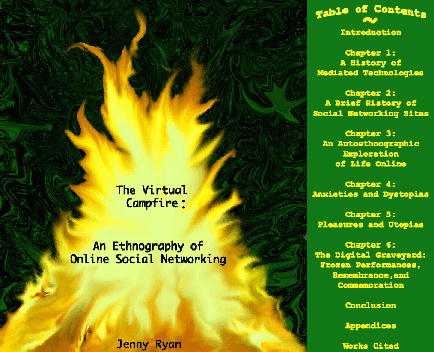
After five years participant observation, anthropologist Jenny Ryan has published her masters’ thesis about the social network sites Facebook, My Space and Tribe.net. She created a beautiful web version of her thesis at http://www.thevirtualcampfire.org/

In her thesis, she proposes that everyday involvement with these sites can be metaphorically represented as a “virtual campfire” that “bridges the gap between the place of the hearth and the space of the cosmos, potentially reversing what has been called “the disintegration of the public sphere” (Habermas 1962: 175).

She explains in her introduction:

Thousands of years ago, our early human ancestors gathered around campfires, creating communal hearths of warmth and light. There they might tell stories, converse about the day’s events, perhaps engage in shamanistic rituals involving plants, music and dance, or simply gaze silently at the flames in collective meditation.

Today, the fireplace in my family’s living room shares its centralizing power with the television, around which we gather with our laptops and cellphones by our sides. Our time spent together is increasingly mediated by new technologies, enabling new forms of storytelling, altering our processes of individual and collective identity formation, and extending the possibilities for creating and maintaining social relationships.

(…)

My central argument in this thesis is that online social networks can potentially serve as both places of the hearth and avenues to the cosmos. Over time, these sites function as personal records of one’s experiences and relationships. These archives are made up of a variety of forms akin to older modes of record keeping, such as address books, journals, diaries, photo albums, personal correspondences, and yearbooks.

Additionally, they serve as gateways to the greater milieu, enabling the circulation of information about the world and granting members the capacity to participate in various ways. For teenagers and marginalized groups, in particular, these sites can be safe spaces for exploring and experimenting with identity, as well as for connecting to new people and ideas.

Ryan plans to add interactive features to the website version of her thesis, maybe she’ll turn it into a wiki, she writes in her blog.

>> visit The Virtual Campfire

>> Jenny Ryan’s bog

SEE ALSO:

Cyberanthropology: “Second Life is their only chance to participate in religious rituals”

The Birth of a Cyberethnographer: The MU5 is to Blame

Interview with Michael Wesch: How collaborative technologies change scholarship

Why anthropologists blog: Blogs more interesting than journals?

Another way of doing fieldwork: Developing websites with your informants!

Ethnographic research on Friendster’s online communities

How internet changes the life among the First Nations in Canada

Ethnographic Study About Life Without Internet: Feelings of Loss and Frustration

The Internet Gift Culture
cover

After five years participant observation, anthropologist Jenny Ryan has published her masters' thesis about the social network sites Facebook, My Space and Tribe.net. She created a beautiful web version of her thesis at http://www.thevirtualcampfire.org/

In her thesis, she proposes that everyday…

Read more

Lila Abu Lughod: “In Israel and Palestine we have an amazing opportunity”

cover

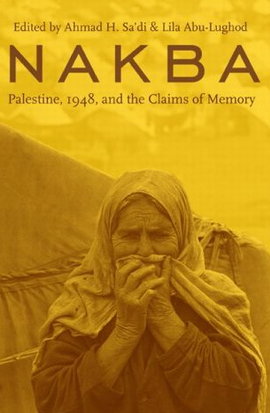
(via CultureMatters) While Israelis celebrate the 60th anniversary of their state’s founding, Palestinians around the world are mourning the “Nakba” – or “catastrophe” – that drove so many into exile. SPIEGEL ONLINE interviewed anthropologist Lila Abu-Lughod on the Nakba and today’s Palestine.

Together with Ahmad Sa’di, she published the book “Nakba: Palestine, 1948, and the Claims of Memory”. Abu-Lughod’s father was Palestinian.

“I don’t see the anniversary as a time of mourning but as an occasion for trying to get the world to listen to what really happened and to think about how this should shape our vision of a solution”, she says:

Palestinians and Israelis are tightly entangled. Any resolution must involve a recognition of the fact that Israel was founded on the expulsion of Palestinians. Then we can think and talk together about restitution, redress, compensation, or whatever it takes for a more just way forward. In Israel and Palestine we have an amazing opportunity — to think about changing history by considering a democratic state with a living future for everyone.

The number of those who actually lived through the Nakba decreases every year. The Nakba commemoration has spurred storytelling, the anthropologist says:

Dr. Rosemary Sayigh, who has been interviewing Palestinians about their experiences for decades, describes her work as a race against time. But Diana Allan, an anthropologist from Harvard who has been videotaping old men and women in the refugee camps all over Lebanon to create a Nakba Archive, would be the first to insist that though it is important to get these stories, it should not distract us from the contemporary problems Palestinians face, in Lebanon and elsewhere.

I have been following with interest, though, the way this particular Nakba commemoration has galvanized people and spurred storytelling: a good example is the series of “untold stories” on the Web site of the Institute for Middle East Understanding.

>> read the whole interview in SPIEGEL ONLINE

For information on her book on Nakba, see the Columbia University Press blog, The Institute for Middle East Understanding, This Week in Palestine and the review on H-Net.

SEE ALSO:

Lila Abu-Lughod: It’s time to give up the Western obsession with veiled Muslim women

New book by Lila Abu-Lughod: The Politics of Television in Egypt

Interview with Lila Abu-Lughod on women and Islam in the wake of the American war in Afghanistan (Asiasource)

Anthropologists on the Israel-Lebanon conflict

“Voices”: Anthropologist publishes e-book about Palestinian women

cover

(via CultureMatters) While Israelis celebrate the 60th anniversary of their state's founding, Palestinians around the world are mourning the "Nakba" - or "catastrophe" - that drove so many into exile. SPIEGEL ONLINE interviewed anthropologist Lila Abu-Lughod on the Nakba and…

Read more

“Racist” Buddhist monks hope for “ethnically clean” Tibet?

In his post Not only freedom: the dark ethnic side of the Tibetan Buddhist revolt, anthropologist Gabriele Marranci challenges mainstream images of Tibetans as peaceful and writes about Tibetan racism, ethno-nationalistic dreams, and attacks against muslims in Tibet.

Both the mass media, academics, and even anthropologists specialised in Tibetan Buddhism, have hidden what Marranci calls the ‘dark ethnic side’ of the revolt.

The Muslims in Tibet have been the target of Buddhist Tibetan violence for some time now, especially since 9/11. During the recent protests in Tibet there were anti-muslim attacks:

The mosque in Lhasa was burnt and destroyed, shops and the possessions of Muslim Tibetans smashed, a family burned alive in their own shop, terror and terrorism have affected this community because of a pernicious form of ethnic (Buddhist) nationalism

Marranci points to the paper Close Encounters of an Inner Asian Kind: Tibetan-Muslim co-existence and conflict in Tibet past and present by Andrew Fischer. According to Fischer, the tensions are primarily the cause of ‘economic’ differences and opportunities:

During the 1990s Ethnic Tibetan Buddhist started to fear that the economic success of Muslim Tibetans (particularly their restaurants and shops), would have undermined the economic, and so social, status of the Buddhist Tibetans. The Buddhist monks began a campaign against the economic activities of Tibetan Muslims, which epitomised in the 2003 boycott of Muslims’ businesses and saw also violent actions against innocent Muslim Hui families

Marranci writes:

Since the beginning of the revolt in March, demonstrations against China are held in all those countries through which the Olympic torch is passing. From the politicians, to the public, from Hollywood to Bollywood, from the scholars (with few exceptions) to the students, from the Trade Unions to the Industrial associations: all show indignation against the ‘oppression of the Chinese government’. Yet they ignore the dark side of this ‘revolt’ which is not so different from that in 2003.
(…)
Meanwhile monks and lamas are just stoking the fire in the hope of not just a free Tibet but also an ethnically clean one!

>> read the whole post on Marranci’s blog

SEE ALSO:

The special thing about the Tibet protests

In his post Not only freedom: the dark ethnic side of the Tibetan Buddhist revolt, anthropologist Gabriele Marranci challenges mainstream images of Tibetans as peaceful and writes about Tibetan racism, ethno-nationalistic dreams, and attacks against muslims in Tibet.

Both the mass…

Read more

Phd-Thesis: That’s why they embrace Islam

cover

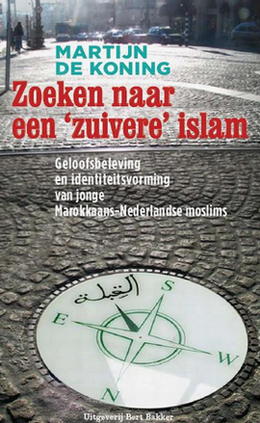
Our fellow anthro-blogger Martijn de Koning was awarded his doctorate at the Free University of Amsterdam last week.

In his Ph.D. thesis he shows how Islam has become the most important frame of reference for Moroccan-Dutch youth to reflect upon who they are and what they want to be.

In the late 1990s, the general perception was that young muslims were turning away from their religion. But things went differently, he says in an interview with Radio Netherlands. Young Dutch Moroccans are increasingly turning to their religion.

According to Martijn de Koning this is a direct result of the current polarisation of the debate on Islam:

Even before 9/11 there was already an increase in interest for religion among young Moroccans. But once the debate on Islam flared up, their interest increased enormously. They were continually asked about their Muslim identity; not just by the media, but also by school mates and teachers and by people at their sports club. They started looking into Islam so that they could answer these questions.

These group of young Muslims searched for an identity with which they could distinguish themselves from Dutch society as well as from their parents:

They wanted a pure Islam, without compromise. Not an Islam that had been watered down because they happened to live in the Netherlands. Nor did they want an Islam peppered with Moroccan traditions.

The Islam they found was not the traditional type from Morocco. They found their answers on the Internet in the conservative, Saudi-Arabian version called Salafism, the anthropologist says:

It is a form of Islam with clear rules, which makes a clear distinction between good and evil. An Islam which is stricter and more orthodox than that of the older generation, but nevertheless seemed to provide better answers to their complicated lives in modern Dutch society.

>> read the whole story in Radio Netherlands

>> visit his blog (in both Dutch and English)

Interestingly, researchers in Norway came to similar conclusions, for example anthropologist Christine M. Jacobsen – see Doctoral thesis: Towards a transnational Islam and the culture historian Liv Bjørnhaug Johansen – see Moving toward a Cultureless Islam

cover

Our fellow anthro-blogger Martijn de Koning was awarded his doctorate at the Free University of Amsterdam last week.

In his Ph.D. thesis he shows how Islam has become the most important frame of reference for Moroccan-Dutch youth to reflect…

Read more