search expand

The best of anthropology blogging 2008

What has happened on anthropology blogs during the last year? The group blog Neuroanthropology has posted Round Up of the Best of Anthro 2008 and The “Best of Anthro 2008″ Prizes.

Most anthropology blogs have participated, so these two posts provide a great opportunity to explore the growing community of anthropology blogs. A good start into 2009!

At the same time, Savage Minds has published Savage Minds Rewinds…The Best of 2008

What has happened on anthropology blogs during the last year? The group blog Neuroanthropology has posted Round Up of the Best of Anthro 2008 and The “Best of Anthro 2008″ Prizes.

Most anthropology blogs have participated, so these two posts…

Read more

Do we need to define anthropology?

toBEintheWORLD is the name of a new anthropology blog. In his first posts, anthropology student Pawel Tomasz Chyc (University of Poznań, Poland) asks anthro-bloggers to explain what they understand as “anthropology”.

For, in his opinion, good anthropologists have to define the terms they use precisely – this includes also the term culture. He perceives “a lack of precision” both in anthropological articles, books and blogs. “Lack of precision”, he writes, is “one of the fundamental problems of anthropological theory”.

>> read “Anthropology and culture – call for precision!”

>> read “to define ‘anthropology’ (indications)”

I’m not sure if I agree. I think anthropology might rather profit from being defined in many different and vague or experimental ways.

There are huge differences between American anthropology and German or Norwegian anthropology. I am no big fan of the American four-field approach and their focus on culture. I would rather define anthropology as the science of the diverse ways people live on this planet (= core definition). Its main method of gathering data is fieldwork (which also can be defined in many ways). It also relies on knowledge in other disciplines like history, linguistics, psychology, biology, archaeology etc

Pawel Tomasz Chyc’ posts remind me of a short discussion we had nearly three years ago after I had written the post The Five Major Challenges for Anthropology. Kambiz Kamrani from anthropology.net wrote that “Anthropology will never succeed until it clearly defines culture.”, while Erkan Saka disagreed: “This emphasis on definition is against all I know about social sciences”, he wrote.

See also the definition of anthropology on Anthrobase, the definition by the American Anthropological Association, the text “What is anthropology” by Thomas Hylland Eriksen and my post “Take care of the different national traditions of anthropology”

toBEintheWORLD is the name of a new anthropology blog. In his first posts, anthropology student Pawel Tomasz Chyc (University of Poznań, Poland) asks anthro-bloggers to explain what they understand as "anthropology".

For, in his opinion, good anthropologists have to define…

Read more

The Cognition and Culture Blog

screenshot

While browsing the web for Claude Levi Strauss posts, I stumbled upon a great site: Cognition and Culture.

It is run by International Cognition & Culture Institute, an initiative of the Department of Anthropology of the London School of Economics and Political Science.

From their self-description:

* Scholars in the emerging cross-disciplinary field of cognition and culture studies are scattered around the world and few (if any) institutions has a sufficient number and variety of them for optimal research and teaching.

* It is in the very nature of this field to call for international and interdisciplinary collaborations.

The site features both a news and a blog section. There are news stories like “Religion, anthropology, and cognitive science” at the 107th AAA meeting or Maurice Bloch on BBC Radio 3.

Lots of bloggers are involved in the project and there are blog posts like Is culture what makes us cooperate? (by Jean-Baptiste André), Neuroanthropology or ethnographical neurosciences? (by Nicolas Baumard), Your brain needs a British headmistress – the unexpected impact of pop-cognitive science on British schoolgirls (by Michael Stewart), Maori Memories (by Olivier Morin), “You work in WHAT field?” (by Nicola Knight) and the most recent Claude Lévi-Strauss: the first 100 years (by Dan Sperber) and many more!

The site was made possible by an initial grant from the LSE and support from the Institut Jean Nicod (ENS, EHESS, CNRS) in Paris.

>> visit cognitionandculture.net

See also earlier comments on this site over at Neuroanthropology and Somatosphere

screenshot

While browsing the web for Claude Levi Strauss posts, I stumbled upon a great site: Cognition and Culture.

It is run by International Cognition & Culture Institute, an initiative of the Department of Anthropology of the London School of Economics…

Read more

New anthropology group blog, forum

Somatosphere – Science medicine and anthropology is the title of a new medical anthropology blog by researchers at McGill University in Montreal, Canada.

It will be an interdisciplinary blog as Eugene Raikhel writes in his first post:

The core of this blog is medical anthropology – the majority of the authors are anthropologists who work on medical topics; however, we’re particularly interested in the borders between anthropology and a number of neighboring disciplines: namely, science and technology studies (STS), cultural psychiatry and bioethics.

In his second post, he reviews some medical anthropology related journals (special issues).

Raikhel is currently a postdoc at the Division of Social and Transcultural Psychiatry and the Department of Social Studies of Medicine – “fairly unique interdisciplinary units in which foster some very interesting research and discussions between anthropologists and psychiatrists, neuroscientists, sociologists and historians of science.”

His dissertation is an ethnographic study of addiction and the therapeutic market in contemporary Russia. He’s been on extensive fieldwork in addiction and psychiatric hospitals, clinics and rehabilitation centers in St. Petersburg (source).

>> visit Somatosphere – Science medicine and anthropology

I was also asked to announce a new social science forum www.socialtalks.net. It is run by Espen Malling, student of anthropology at the University of Aarhus, Denmark.

At the same I want to remind of recent activity (not much, though) in the antropologi.info forum. It is also a pin board that you can use to post announcements
http://www.antropologi.info/anthropology/forum/

Somatosphere - Science medicine and anthropology is the title of a new medical anthropology blog by researchers at McGill University in Montreal, Canada.

It will be an interdisciplinary blog as Eugene Raikhel writes in his first post:

The core…

Read more

Online: New book on the cultural significance of Free Software

cover

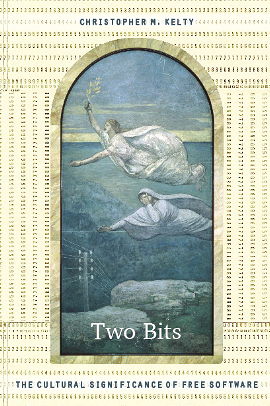
How has Free Software transformed not only software, but also music, film, science, and education? Anthropologist and Savage Minds blogger Christopher M. Kelty explores this question in his new book “Two bits” that now is “available for purchase, for download and for derivation and remixingas he writes.

A really web 2.0 book in other words. It is both available on paper (published by Duke University Press) and online – freely accessible. Both book, blog and wiki!

From the book description:

Drawing on ethnographic research that took him from an Internet healthcare start-up company in Boston to media labs in Berlin to young entrepreneurs in Bangalore, Kelty describes the technologies and the moral vision that binds together hackers, geeks, lawyers, and other Free Software advocates.
(…)
Kelty shows how these specific practices have reoriented the relations of power around the creation, dissemination, and authorization of all kinds of knowledge after the arrival of the Internet.

>> more information about the book

>> website of the book

SEE ALSO:

Why were they doing this work just to give it away for free? Thesis on Ubuntu Linux hackers

2006 – The Year of Open Access Anthropology?

The Internet Gift Culture

Ethnomusicologist uses website as an extension of the book

cover

How has Free Software transformed not only software, but also music, film, science, and education? Anthropologist and Savage Minds blogger Christopher M. Kelty explores this question in his new book "Two bits" that now is "available for purchase, for…

Read more