search expand

New website helps save Kenai Peoples language (Alaska)

Their language is nearly dead. Maybe a new website can revitalize Kahtnuht’ana Qenaga: The Kenai Peoples Language in Alaska? For more than two years, the two anthropologists Alan Boraas and Michael Christian have taken pictures, navigated through HTML and digitized old audio recordings of Native writer Peter Kalifornsky in order to present vocabulary, grammar, stories and place names in an interactive Web site that went live last month, the Peninsula Clarion reports.

“I hope people of all ages go to it and gain insights into both the language and the culture,” Boraas says. This project is the latest in the Kenaitze Indian Tribe‘s endeavor to revitalize their Native language. Finding people who actively speak the Dena’ina language is one of the most difficult parts of revitalizing it. The credit for much of the Dena’ina revitalization goes to James Kari, who spent 30 years working on a dictionary.

>> read the whole story in the Peninsula Clarion

>> visit the website Kahtnuht’ana Qenaga: The Kenai Peoples Language

SEE ALSO:

How to save Tibetan folk songs? Put them online!

Knowledge Fades As Africa Languages Die

Modern technology revives traditional languages

Saving native languages

Inuit language thrives in Greenland

Book review: Empires of the Word: A Language History of the World

Their language is nearly dead. Maybe a new website can revitalize Kahtnuht'ana Qenaga: The Kenai Peoples Language in Alaska? For more than two years, the two anthropologists Alan Boraas and Michael Christian have taken pictures, navigated through HTML and digitized…
Read more

New website: Anthropologynet.org – “the worldwide community of anthropologists”

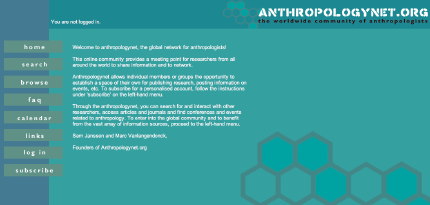
anthropologynet.org front page

A group of anthropologists from Leuwen University, Belgium, has just launched anthropologynet.org, a new website that aims to be a “worldwide community of anthropologists”: Anthropologists can register and look for other members sharing the same (or different) topic of research and publish papers. There is also a calendar.

It does not look very web2.0 but the site has just been launched so we can look forward to the further development of anthropologynetorg.

The website is edited partly by Marc Vanlangendonck who has recently launched Omertaa – Open access journal for Applied Anthropology

>> visit www.anthropologynetorg.net

Two years ago, European students have created MASN – Moving Anthropology Network

SEE ALSO:

World Anthropologies Network: Book and papers online – Working towards a global community of anthropologists

anthropologynet.org front page

A group of anthropologists from Leuwen University, Belgium, has just launched anthropologynet.org, a new website that aims to be a "worldwide community of anthropologists": Anthropologists can register and look for other members sharing the same (or different) topic of…

Read more

"Voices": Anthropologist publishes e-book about Palestinian women

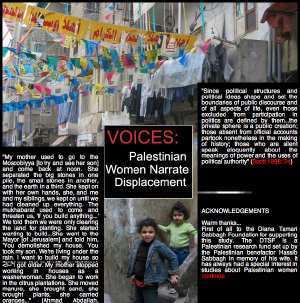
voices-cover

Voices: Palestinian Women Narrate Displacement is a collection of oral histories recorded by Beirut-based anthropologist and oral historian Rosemary Sayigh. It was published as e-book, devoted to men and women living in Gaza, the West Bank, Jerusalem and Israel. It allows readers to not only read the texts and see the pictures but also to hear the stories in the speakers’ own voices, The Daily Star Lebanon reports.

“Because “Voices” seizes on the advantages of technology, the book transcends precisely those borders so troublesome to the Palestinian condition”, Louisa Ajami writes in her review:

Sayigh became one of the few women to enter the Palestinian camps in Lebanon and she devoted her anthropological expertise to writing about the Palestinian diaspora. Much of her field work has centered on women and children, and she writes of the lives of rural peasant women and their more educated urban sisters with equal attention and flair.

Sayigh writes in the unobtrusive, objective style of an anthropologist, but she also interjects her personal impressions. She gives readers a sense of location, ambience and familiarity. (…) With her detached yet intense approach to recording their stories, Rosemary Sayigh renders her Palestinian subjects’ struggles less abstract and more human.

But there is one drawback for those who don’t speak Arabic:

Each narration is preceded by a short introduction in English. The opening lines of each interview are also transcribed in English, but the full interviews have been left in the original Arabic, as has the audio footage. For non-Arabic speakers, this leaves the bulk of the stories out of reach.

The review in The Daily Star Lebanon is no longer online.

>> read the e-book “Voices: Palestinian Women Narrate Displacement” (Link updated 24.7.2024)

More about / by Rosemary Sayigh

Interview with Rosemary Sayigh (The Jerusalem Times / palestine-family.net)

Rosemary Sayigh: No Work, No Space, No Future: Palestinian Refugees in Lebanon (Middle East International, 10 August 2001)

Rosemary Sayigh: Dis/Solving the “Refugee Problem” (Middle East Report 207 – Summer 1998)

SEE ALSO:

Anthropologists on the Israel-Lebanon conflict

The Future of Anthropology: “We ought to build our own mass media”

Open Source Anthropology : Are anthropologists serious about sharing knowledge?

2006 – The Year of Open Access Anthropology? 2005 was the year anthropology finally became visible on the internet. 2006 was the year of a more public, political and open access anthropology?

voices-cover

Voices: Palestinian Women Narrate Displacement is a collection of oral histories recorded by Beirut-based anthropologist and oral historian Rosemary Sayigh. It was published as e-book, devoted to men and women living in Gaza, the West Bank, Jerusalem and Israel. It…

Read more

Military anthropologist starts blogging about his experiences

One of the anthropologists who is working for the military has started blogging about his experiences with the U.S. Army. His name is Marcus Griffin, professor at Christopher Newport University, Virginia (USA). He now works at Ft. Hood, Texas, for the time being participating in a simulation of activities that prepares Army personnel “to work effectively in Iraq” as he calls it.

In the beginning, Griffin wasn’t sure if he was allowed to blog, but now he knows that he is “free to blog” about his experiences “trying to apply anthropology to a very thorny problem facing the world and the United States in Iraq and Afghanistan in particular”. But as a quick look at his blog reveals, it seems that his job is doing some advertising for the US Army. as m Most anthropologists oppose this kind ofa collaboration with the military.

>> visit Marcus Griffin’s blog

SEE ALSO:

The dangerous militarisation of anthropology

“Tribal Iraq Society” – Anthropologists engaged for US war in Iraq

Military – social science roundtable: Anthropologists help mold counterinsurgency policy

San Jose: American Anthropologists Stand Up Against Torture and the Occupation of Iraq and AAA Press Release: Anthropologists weigh in on Iraq, torture at annual meeting

“War on terror”: CIA sponsers anthropologists to gather sensitive information / see also debate on this on Savage Minds

One of the anthropologists who is working for the military has started blogging about his experiences with the U.S. Army. His name is Marcus Griffin, professor at Christopher Newport University, Virginia (USA). He now works at Ft. Hood, Texas,…

Read more

Keith Hart is blogging

banner memory bank

Economic anthropologist Keith Hart has upgraded his website The Memory Bank. Now it looks more like a blog and produces a RSS-feed so it’s easier to follow. Apart from his blog posts, his book on the anthropology of money is online and many papers.

banner memory bank

Economic anthropologist Keith Hart has upgraded his website The Memory Bank. Now it looks more like a blog and produces a RSS-feed so it's easier to follow. Apart from his blog posts, his book on the anthropology of money is…

Read more