search expand

Marianne Gullestad – majoritetsforsker og annerledesantropolog

Mens andre antropologer dro til Papua New Guinea for å forske, tok hun bussen til Bergens forsteder. Mens andre studerte innvandrernes integrering, studerte hun majoritetsbefolkningens holdninger. Og mens andre skrev lange kompliserte setninger, så la hun vekt på å skrive enkelt og presist uavhengig om hun skrev for folk innenfor eller utenfor akademia.

Ifjor mars døde hun – Marianne Gullestad. Hun var pioner og enestående på mange måter. Det er med glede å se hvor mange seminarer det er blitt avholdt til minne for henne i det siste.

Jeg har skrevet en oppsummering av en av disse seminarene med innledere fra USA, Frankrike, England, Danmark og Norge som ble avholdt i Oslo. Samtidig har jeg prøvd å lage en oversikt over Marianne Gullestad på nett. Det er nemlig ganske mye om og av Marianne Gullestad online.

>> les “Annerledesantropologen” (LINK OPPDATERT 6.4.2020)

SE OGSÅ:

Marianne Gullestad er død

Marianne Gullestad: The Five Major Challenges for Anthropology

Mens andre antropologer dro til Papua New Guinea for å forske, tok hun bussen til Bergens forsteder. Mens andre studerte innvandrernes integrering, studerte hun majoritetsbefolkningens holdninger. Og mens andre skrev lange kompliserte setninger, så la hun vekt på å skrive…

Read more

Antropologer studerer danske bilister

Hvordan kan man få bilister til å bruke el-biler? Antropologer har fulgt 50 bilister for å få vite alt om deres bilvaner og holdning til biler, melder den danske kanalen TV Syd.

Antropologene fant ut at bilistene tenker mer på økonomien enn miljøet. Dessuten tenker kvinner i dette spørsmålet heller rasjonelt og mennene heller emosjonelt.

Hele TV-innslaget er på nett.

>> mer hos TV Syd

SE OGSÅ:

Kan antropologi brukes til å minske energiforbruket?

Hovedoppgave i fulltekst: Hvorfor sliter salget av økologiske produkter i Norge?

– Antropologi er den nye frelsen innen forbrukerforståelse

Hvordan kan man få bilister til å bruke el-biler? Antropologer har fulgt 50 bilister for å få vite alt om deres bilvaner og holdning til biler, melder den danske kanalen TV Syd.

Antropologene fant ut at bilistene tenker…

Read more

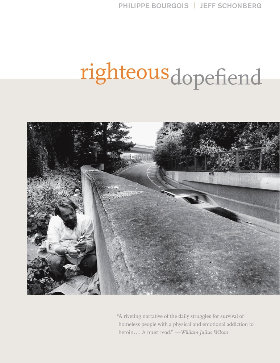
Fieldwork among homeless heroin and crack users – new book by Philippe Bourgois

cover

In Search of Respect. Selling Crack in El Barrio” is one of my favorite ethnographies. Now, Philippe Bourgois, is out with a new book. In “Righteous Dopefiend“, he looks at the clients of the dealers, the University paper Penn Current reports.

The paper published a interesting interview with him that also touches the popular topic “anthropology at home”. Bourgois conducted his fieldwork among homeless heroin and crack users a mere six blocks away from his San Francisco home. He spent lots of time with them, and even slept outside in homeless encampments to gain a true sense of what life is like for the addicts.

What happened? People in the neighborhood began to think that the anthropologist must be one of the addicts as well:

During the intense years, when I’d be hanging out on the corner, people in the neighborhood just took for granted that I was either a drug addict or someone about to fall into drug addiction.

I remember being embarrassed in front of my son’s friends, because my son at this time was about seven years old when I started the project, and so all of his friends lived in the neighborhood and would say, ‘I saw your father hanging out on the corner where all the drug addicts are.’ I was worried about my son’s friends’ parents, because they were seeing me.

But although the addicts lived so close to the neighborhood, they were invisible. It was “mind-boggling”, he says, that he literally had to walk not more than six meters through a little thicket in order to enter a totally separate universe:

You can hear all these people, I mean, literally, hundreds of people at rush hour, walking to the bus stop, and you’re in this separate universe, and the two don’t touch. You can spend several hours in this separate universe listening to people go by and they don’t look through the bushes and notice these people. You almost feel falsely protected in this cocoon. 
People don’t want to see it, either, and the point of my book is to make it visible.

Bourgois connects the daily life in the thicket with larger structures in the society:

(W)hat is terrifying is seeing – and this is in a sense what the book is about – how structural forces beyond our control, historical forces, shifts in the economy, shifts in the political organization of public policy, come crashing down on vulnerable sectors of the population and basically shove them around in very unpleasant ways.

These are the people who weren’t able to recover from the downsizing of the industrial sector in the United States. A bunch of other types of industries arose in place of that, but those people who aren’t able to make that adjustment, those people who don’t have the education to shift from being a factory worker to being an information technology processor, are people who fall into indigent poverty.

The guys that we studied – their parents were the people who lost their jobs working on the docks of San Francisco, working in the steel mills, working in the warehouses that were serving the active factory sector of San Francisco as a port industrial city. 
These are forces that are much larger than the will of any individual or the moral ability of any individual to act in a way that’s going to make them a productive member of society. The book is trying to show those dynamics and when you dig deeper you then see these other patterns, that whites are affected by this very differently than African Americans.

Over half of his informants have passed away during the study and in the two years since the end of the actual field work.

>> read the interview in the Penn Current

>> download the first chapter of the book

On his website, he has published lots of papers!

UPDATE Long article about the book in The Chronicle Review: An Anthropologist Bridges Two Worlds. See also the comment by Eugene Raikhel at Somatosphere

SEE ALSO:

The most compelling ethnographies

Is the anthropologist a spy? New Anthropology Matters about fieldwork identities

Study: Drug smuggling as vehicle for female empowerment?

cover

"In Search of Respect. Selling Crack in El Barrio" is one of my favorite ethnographies. Now, Philippe Bourgois, is out with a new book. In “Righteous Dopefiend", he looks at the clients of the dealers, the University paper Penn Current…

Read more

Is the anthropologist a spy? New Anthropology Matters is out

When anthropologist Michael Madison Walker did research in rural Mozambique, he – as a white man – was variously assumed to be a priest, a development worker, a U.S. Peace Corps volunteer, and even a spy. Fieldwork identities is the topic of the new issue of Anthropology Matters.

11 authors reflect on perceived inequalities, differences or power relations, e.g. related to race or wealth, gender or age. As Ingie Hovland writes in her introduction, “the identities that are attributed to us and the roles we are placed in during fieldwork matter – to the people we study, to us, and to the research process.”

But as Nigerian anthropologist and blogger Olumide Abimbola shows, “being similar” is not necessarily less challenging. On his fieldwork among mostly Nigerian traders in Benin, some thought his questions, his glasses and backpack made him a suspicious character or a spy. As he is based at an academic institution in Germany, others thought he must be a German citizen (who could aid others in acquiring German visas). It was precisely the shared similarities (Nigerian background) between himself and the traders, that brought out the differences between them all the more sharply, Olumide Abimbola argues.

>> visit Anthropology Matters 1/2009

SEE ALSO:

Panic, joy and tears during fieldwork: Anthropology Matters 1/2007 about emotions

When anthropologist Michael Madison Walker did research in rural Mozambique, he - as a white man - was variously assumed to be a priest, a development worker, a U.S. Peace Corps volunteer, and even a spy. Fieldwork identities is the…

Read more

– Ikke stakkarsliggjør foreldreløse barn!

Millioner av afrikanske unger har mista foreldrene sine i aids. Bør vi synes synd på dem? Nei, mener Tatek Abebe. Forskerens observasjoner stemmer dårlig med bildet av forsvarsløse barn som ikke ville klare seg uten vestlige hjelpeorganisasjoners nåde, skriver NTNUs forskningsmagasin Gemini.

Tatek Abebe har tatt doktorgrad på oppvekstvilkår for etiopiske barn som har mista en eller begge foreldre på grunn av aids, og for tiggerbarn i Addis Abeba. I flere langvarige feltopphold fulgte han barna.

Han fant ut at de aller fleste barn blir tatt hand om av storfamilien. Barna er selv aktive og bruker sine ressursser for å bedre sin livssituasjon. Han kritiserer både FN og vestlige hjelpeorganisasjoner som er for opptatt av barnas individuelle rettigheter:

– (Barna) lever i gjensidig binding med ein familie, stor eller liten. Deira liv og røyndom henger tett saman med vilkåra for resten av familien. Og dei ser også at dei sjølve har eit klart ansvar for å bidra til hushaldet.

– Desse forholda er betre spegla i det afrikanske charteret om barns rettar, som også legg vekt på barns ansvar og pliktar overfor familien. Men vestlige hjelpeorganisasjonar ser ut til å vere opphengt i barns individuelle rettar og krav. Dermed står dei i fare for å misse det komplekse samspelet og den gjensidige bindinga mellom barn og den nære eller utvida familien deira.

Han kritiserer også stemplingen av barnearbeid som forkastelig og i strid med barnas interesser. Tvertimot kan arbeidet bidra til å styrke barnas posisjon, selvfølelse og sosialiseringen inn i voksenverdenen samtidig som arbeidet gir verdifulle bidrag til husholdet.

Barna, sier han, er ingen hjelpeløse ofre. Vi må ikke se bort fra ressursene de selv har.

>> les hele saken i Gemini

>> last ned hele doktoravhandlingen: Ethiopian childhoods: a case study of the lives of orphans and working children

>> Intervju med Tatek Abebe og podcast

SE OGSÅ:

Somaliske klaner – verdens beste forsikringssystem

Anthropologist calls for a greater appreciation of child labor

Antropolog for mindre lek med barna

To grasp the childrens’ point of view – Første notater om Childhoods-konferansen

The anthropology of children, war and violence

Millioner av afrikanske unger har mista foreldrene sine i aids. Bør vi synes synd på dem? Nei, mener Tatek Abebe. Forskerens observasjoner stemmer dårlig med bildet av forsvarsløse barn som ikke ville klare seg uten vestlige hjelpeorganisasjoners nåde, skriver NTNUs…

Read more