search expand

Barn blir ikke hørt

cover

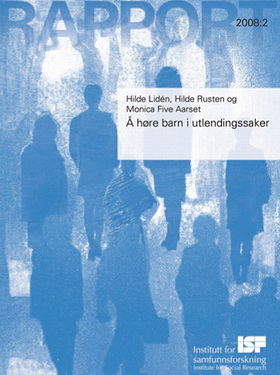
Utlendingsforvaltningen tar ikke barnas interesser på alvor ifølge en ny studie fra Institutt for samfunnsforskning (ISF). Barn som søker asyl, visum eller familiegjenforening skal bli hørt og deres meninger skal bli tillagt vekt. Men slik er det ikke, forklarer forskningsleder og antropolog Hilde Lidén:

– Ikke alle i utlendingsforvaltningen ser hensikten med å snakke med mindreårige barn i følge med foreldre eller foresatte, sier forskningsleder . Mange, inkludert barnas foreldre, synes at barn bør skånes for påkjenningen med å uttale seg. Vi mener imidlertid at barn ikke bør beskyttes for inkludering og innsikt, snarere bør barna ses som viktige bidragsytere for å få sin sak belyst.

Forskerne Hilde Lidén, Hilde Rusten og Monica Five Aarset har gjennomgått gjeldende regelverk og praksis hos utlendingsdirektoratet, politiet og utvalgte utenriksstasjoner.

Studien viser at informasjonsinnhenting fra og om barn ofte fører til at saken tilføres nye og viktige opplysninger.

Forskerne foreslår at barns uttalerett nedfelles i den nye utlendingsloven, i likhet med prinsippet om barnets beste.

>> les hele saken på ISFs hjemmeside

>> last ned rapporten

SE OGSÅ:

UDI splitter familier

cover

Utlendingsforvaltningen tar ikke barnas interesser på alvor ifølge en ny studie fra Institutt for samfunnsforskning (ISF). Barn som søker asyl, visum eller familiegjenforening skal bli hørt og deres meninger skal bli tillagt vekt. Men slik er det ikke, forklarer…

Read more

DDR-Ritual wird immer beliebter

“Was zu DDR-Zeiten Jugendweihe hieß und aus Jugendlichen der DDR „sozialistische Persönlichkeiten“ machen sollte, hat in den vergangenen Jahren einen enormen Zulauf bekommen”, meldet die Berliner Zeitung

Die Organisatoren von Jugendfeiern sehen sich allerdings nicht mehr in der Tradition des Sozialismus. Sie beziehen sich auf eine über 150 Jahre alte Tradition der Jugendweihe und nennen das Fest heute Jugendfeier, lesen wir.

Das Blatt zitiert Ute Mohrmann, emeritierte Professorin für Ethnologie und Volkskunde der Berliner Humboldt-Universität, die sich mit dem Brauch der Jugendweihe nach der Wende beschäftigt hat. „Es gibt den Wunsch nach einem ritualisierten Abschied von der Kindheit“, sagt sie. Jugendfeiern seien heutzutage vor allem Geschenk- und Familienfeste.

>> weiter in der Berliner Zeitung

Auch vor 11 Jahren, in Focus Nr. 14 (1997) konnten wir ueber die Popularitaet der Jugendweihe lesen. Und auf YouTube gibt es jede Menge Jugendweihe-Videos

Solche Uebergangsriten sind ueberall auf der Welt verbreitet

"Was zu DDR-Zeiten Jugendweihe hieß und aus Jugendlichen der DDR „sozialistische Persönlichkeiten“ machen sollte, hat in den vergangenen Jahren einen enormen Zulauf bekommen", meldet die Berliner Zeitung

Die Organisatoren von Jugendfeiern sehen sich allerdings nicht mehr in der Tradition des Sozialismus.…

Read more

“Racist” Buddhist monks hope for “ethnically clean” Tibet?

In his post Not only freedom: the dark ethnic side of the Tibetan Buddhist revolt, anthropologist Gabriele Marranci challenges mainstream images of Tibetans as peaceful and writes about Tibetan racism, ethno-nationalistic dreams, and attacks against muslims in Tibet.

Both the mass media, academics, and even anthropologists specialised in Tibetan Buddhism, have hidden what Marranci calls the ‘dark ethnic side’ of the revolt.

The Muslims in Tibet have been the target of Buddhist Tibetan violence for some time now, especially since 9/11. During the recent protests in Tibet there were anti-muslim attacks:

The mosque in Lhasa was burnt and destroyed, shops and the possessions of Muslim Tibetans smashed, a family burned alive in their own shop, terror and terrorism have affected this community because of a pernicious form of ethnic (Buddhist) nationalism

Marranci points to the paper Close Encounters of an Inner Asian Kind: Tibetan-Muslim co-existence and conflict in Tibet past and present by Andrew Fischer. According to Fischer, the tensions are primarily the cause of ‘economic’ differences and opportunities:

During the 1990s Ethnic Tibetan Buddhist started to fear that the economic success of Muslim Tibetans (particularly their restaurants and shops), would have undermined the economic, and so social, status of the Buddhist Tibetans. The Buddhist monks began a campaign against the economic activities of Tibetan Muslims, which epitomised in the 2003 boycott of Muslims’ businesses and saw also violent actions against innocent Muslim Hui families

Marranci writes:

Since the beginning of the revolt in March, demonstrations against China are held in all those countries through which the Olympic torch is passing. From the politicians, to the public, from Hollywood to Bollywood, from the scholars (with few exceptions) to the students, from the Trade Unions to the Industrial associations: all show indignation against the ‘oppression of the Chinese government’. Yet they ignore the dark side of this ‘revolt’ which is not so different from that in 2003.
(…)
Meanwhile monks and lamas are just stoking the fire in the hope of not just a free Tibet but also an ethnically clean one!

>> read the whole post on Marranci’s blog

SEE ALSO:

The special thing about the Tibet protests

In his post Not only freedom: the dark ethnic side of the Tibetan Buddhist revolt, anthropologist Gabriele Marranci challenges mainstream images of Tibetans as peaceful and writes about Tibetan racism, ethno-nationalistic dreams, and attacks against muslims in Tibet.

Both the mass…

Read more

16 articles on Migration and Transnationality in Anthropology News May

Articles on Biometrics, US Refugee policy, children’s migration, transnational students, challenges of multi-sited ethnography and more can be found in the most recent issue of Anthropology News May, a publication by the American Anthropological Association (AAA).

16 articles can be downloaded!

Additionally, we find a photo essay and a photo gallery (Anthropology News is on flickr!)

>> visit Anthropology News

UPDATE: See also Maximilian Forte’s comments on the article about multisited ethnography

Articles on Biometrics, US Refugee policy, children's migration, transnational students, challenges of multi-sited ethnography and more can be found in the most recent issue of Anthropology News May, a publication by the American Anthropological Association (AAA).

16 articles can be…

Read more

Maurice Bloch: Religion is a Figment of Human Imagination

Why did religions evolve? According to anthropologist Maurice Bloch, there is nothing special with religion. It’s just a product of human imagination – in the same way as nations are, Bloch writes in an article to be published in June, the New Scientist informs.

The development of religion is dependent on the development of imagination. We had to evolve the necessary brain architecture to imagine things and beings that don’t physically exist, and the possibility that people somehow live on after they’ve died, Bloch argues according to New Scientist:

Once we’d done that, we had access to a form of social interaction unavailable to any other creatures on the planet. Uniquely, humans could use what Bloch calls the “transcendental social” to unify with groups, such as nations and clans, or even with imaginary groups such as the dead. The transcendental social also allows humans to follow the idealised codes of conduct associated with religion.

“What the transcendental social requires is the ability to live very largely in the imagination,” Bloch writes.

“One can be a member of a transcendental group, or a nation, even though one never comes in contact with the other members of it,” says Bloch. Moreover, the composition of such groups, “whether they are clans or nations, may equally include the living and the dead.”

(…)

“Once we realise this omnipresence of the imaginary in the everyday, nothing special is left to explain concerning religion,” he says.

>> read the whole story in the New Scientist

Bloch has recently been interviewed in Vikerkaar / Eurozine and was presented as an anti-anthropologist: “It may well be that anthropology departments disappear, and that wouldn’t bother me very much”, he said.

UPDATE Maximilian Forte has written a summary of the interview with Bloch, see Maurice Bloch: “Reluctant Anthropologist” or “Anti-Anthropologist”?

See also the tutorial Anthropology and Religion

Why did religions evolve? According to anthropologist Maurice Bloch, there is nothing special with religion. It's just a product of human imagination - in the same way as nations are, Bloch writes in an article to be published in June,…

Read more