search expand

"Ethnographic perspectives needed in discussion on public health care system"

In the current discussion on reforming the American public health care system, ethnographic perspectives are especially needed — and sadly lacking, Sarah Horton and Louise Lamphere write in Anthropology News January 2006. They call for an “Anthropology of Health Policy”:

Anthropologists’ relative neglect of health policy issues may lie, in part, in our tendency to view the realm of policy as outside our disciplinary scope. Yet in doing so, we have ceded the field of health policy to health economists, who have long held hegemonic sway over the terms in which we discuss and understand the current American health care system. Terms such as the “law of demand” and “cost-efficiencies” are commonly used to explain the logic of imposing cost-sharing through premiums and deductibles. Patients are instead portrayed as “consumers of health care,” naturalizing the idea of health care as a commodity whose use must be restricted.

As medical anthropologists were once instrumental in challenging the terms of the rationality debate three decades ago, it is time we dust off our boxing gloves. There are multiple levels of analysis at which anthropologists can make a contribution to debates over health policy—at the levels of individual behavior, institutional policy and public discourse.

(…)

Finally, as ethnographers, we should continue to document how such reforms play out in our tattered health care safety net. Perhaps nowhere else are the effects of such reforms more visible to the ethnographic eye.

>> continue (LINK UPDATED 3.4.2020)

SEE ALSO:

What is medical anthropology?

earlier news on medical anthropology

In the current discussion on reforming the American public health care system, ethnographic perspectives are especially needed — and sadly lacking, Sarah Horton and Louise Lamphere write in Anthropology News January 2006. They call for an "Anthropology of Health Policy":…
Read more

Who Are the Rioters in France? Anthropology News January (I)

In Anthropology News January 2006, Susan J Terrio criticizes main stream medias coverage of the youth protests in the suburbs in Paris. The protests can’t be explained by religion, culture or by pointing to that the rioters are immigrants:

Yet, the “immigrants” are second and, in some cases, third generation French children of non-European immigrants of Antillean, North and Sub-Saharan African and Turkish ancestry who are French citizens. They are not, for the most part, observant Muslims. The riots are not a response to perceived attacks on Islam or a reflection of their cultural distance from mainstream French society.

To assert that the rioters are culturally alienated and difficult to integrate is to isolate cultural difference as a cause for social unrest and to downplay the more significant factors of economic marginalization, spatial segregation and anti-immigrant racism.

(…)

Rioters feel alienated from French police, judges, prosecutors, defense attorneys and social workers in part because minorities are still underrepresented in all these fields.

>> continue

Anthropologist Cicilie Fagerlid has posted several related entries in her blog: Among others she comments that “I haven’t seen any empirical basis for blaming the riots on neither religion nor ethnicity”. In the same post she mentions a seminar, arranged by the French Association of Anthropologists on the actuality of anthropology and the crisis in the banlieues. She also lists some links.

Thomas Hylland Eriksen sums up:

Some commentators have tried to link the riots to religious revitalisation and militant Islamism in the Arab-speaking world. Yet, others – including the anthropologist André Iteanu, who has done research in these areas for years – point out that the riots have social causes, not cultural ones: The people living in these parts of Paris have no metro, few buses, hardly any libraries – and the majority have no work. Deprived and poor people have rioted in Paris several times before. It has nothing to do with their being Muslim and everything to do with their being socially excluded. Conclusion: Leave culture out of this matter.

(part of an interesting debate on the culture concept!)

Check also Erkan Saka’s coverage on this and the extensive round-up by Perlentaucher: Voices on the French riots

In Anthropology News January 2006, Susan J Terrio criticizes main stream medias coverage of the youth protests in the suburbs in Paris. The protests can't be explained by religion, culture or by pointing to that the rioters are immigrants:

Yet, the…

Read more

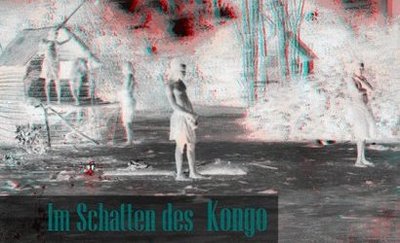
Frobenius-Ausstellung: Historische 3D-Bilder aus dem Kongo

Das Museum der Weltkulturen schickt mir Infos ueber ihre aktuelle Ausstellung, die sehr spannend zu sein scheint: Im Schatten des Kongo – Leo Frobenius. Stereofotografien von 1904-1906.
Stereofotografien sind dasselbe wie 3D-Fotografien. Deswegen schaut man sich die Ausstellung mit einer 3D-Brille an:

Von 1904 bis 1906 veranstaltete der Afrikaforscher Leo Frobenius seine erste Expedition, die ihn zum Kongo und seinem Nebenfluss Kassai führte. Von dieser Reise brachte Frobenius nicht nur umfangreiches ethnographisches Material, sondern auch mehr als 100 stereoskopische Glasplatten mit. Die Glasnegative blieben lange unbeachtet im Archiv. Eine Auswahl ist nun nach aufwendiger Bearbeitung und 100 Jahre nach ihrer Entstehung zum ersten Mal in Stereo und als Großformat zu betrachten. Sie Zeigen Ansichten des Kongo und seiner Bewohner und bieten neben einer faszinierenden räumlichen Illusion auch den Nachvollzug des kolonialen Blickes jener Zeit.

Die von Mitarbeitern des Frobenius-Instituts an der Johann Wolfgang Goethe-Universität gestaltete Ausstellung wird von einem aufwendig gemachten Katalog begleitet, der erstmals alle 146 von Frobenius im Kongo aufgenommenen Stereofotografien zeigt. Aufsätze der Herausgeber beschäftigen sich mit Fragen der Technik, geben einen Überblick über die Kongo-Kassai-Expedition und analysieren die Repräsentationsstrategien in Frobenius’ Bildern.

“Es lohnt sich, den verblüffenden dreidimensionalen Effekt mit Hilfe der bereitgelegten Brillen zu erleben”, schreibt die faz. Die ZEIT jedoch meint: “Der koloniale Blickwinkel bleibt”.

Das Museum der Weltkulturen schickt mir Infos ueber ihre aktuelle Ausstellung, die sehr spannend zu sein scheint: Im Schatten des Kongo - Leo Frobenius. Stereofotografien von 1904-1906.
Stereofotografien sind dasselbe wie 3D-Fotografien. Deswegen schaut man sich die Ausstellung mit einer…

Read more

“Der Ethnologie der Arktis kommt eine Vorreiterrolle zu”

Der orf berichtet von Ergebnissen einer ethnologischen Fachtagung in Wien. Auf Einladung der “Arbeitsgemeinschaft Arktis und Subarktis” kamen Ethnologen aus Russland, Japan, Nordamerika und Europa zusammen. “Mit der im Wissenschaftsbetrieb nicht ganz ungewohnten Verzögerung von fünf Jahren”, so der orf, liegen nun die Konferenzbeiträge als Buch vor.

Interessant:

Der Ethnologie des arktischen und, subarktischen Raumes kommt in vieler Hinsicht auch eine Vorreiterrolle hinsichtlich einiger momentaner Paradigmenwechsel in der Forschung zu. Darüber ist sich der Ethnologe Stefan Donecker sicher. Die alte Tradition, das alte hierarchische Verhältnis, der Ethnologe forscht und die Indigenen sitzen da und werden erforscht, dieses vollkommen einseitige Machtverhältnis, so Donecker, habe inzwischen ausgedient.

Gerade aus dem arktischen Raum gibt es in jüngster Vergangenheit einige sehr aufschlussreiche und sehr viel versprechende Pilotprojekte, wo Indigene und europäische Wissenschaftlerinnen und Wissenschaftler gemeinsam forschen und gemeinsam publizieren.

>> weiter beim orf

Auf der Homepage der Arbeitsgruppe gibt es mehrere Artikel in Volltext!

SIEHE AUCH:

“Expanding willingness among anthropologists to listen to Native peoples”

“Aboriginal knowledge is science”

Inuit play makes fun of anthropologists

Der orf berichtet von Ergebnissen einer ethnologischen Fachtagung in Wien. Auf Einladung der "Arbeitsgemeinschaft Arktis und Subarktis" kamen Ethnologen aus Russland, Japan, Nordamerika und Europa zusammen. "Mit der im Wissenschaftsbetrieb nicht ganz ungewohnten Verzögerung von fünf Jahren", so…

Read more

Die uebliche Exotisierung: SPIEGEL ueber Garma-Festival der Aboriginees

Einmal im Jahr findet das Garma-Kulturfestival statt: eine einzigartige Gelegenheit für nur wenige geladene Reisende, die Rituale einer der ältesten Kulturen der Welt zu erleben. Ethnologen können hier in wenigen Tagen mehr Material sammeln als bei wochenlangen Reisen durch den Busch.

So startet der Spiegel-Bericht ueber das Garma-Festival der Aboriginees, der kuerzlich erschien. Das Festival findet jedoch jeweils im August statt. Als Ethnologe rauft man sich ja regelmasessig die Haare bei Texten ueber Urbevoelkerungen. Vielleicht sammelt man unter Kollegen Punkte, wenn man als Reisejournalist moeglichst exotisch ueber Ziele auf der anderen Seite der Erde schreibt?

>> zum Bericht im Spiegel: Garma-Festival. Die Erde ist ihr Himmel

Auf der Homepage des Festivals erfahren wir, dass mehr als Exotik geboten wird.

SIEHE AUCH:

“Leben wie in der Steinzeit” – So verbreiten Ethnologen Vorurteile

Die SZ und die Ureinwohner: Gestrandet im vorsintflutlichen Evolutionismus

Einmal im Jahr findet das Garma-Kulturfestival statt: eine einzigartige Gelegenheit für nur wenige geladene Reisende, die Rituale einer der ältesten Kulturen der Welt zu erleben. Ethnologen können hier in wenigen Tagen mehr Material sammeln als bei wochenlangen Reisen durch den…

Read more