search expand

Kirsten Hastrup 60 år

Igår fylte Kirsten Blinkenberg Hastrup, en av Danmarks mest kjente antropologer, 60 år, minner oss Fyens Stiftstidende på. Hun har blant annet vært opptatt av historisk antropologi, Island, kultur og menneskerettigheter:

>> mer i Fyens Stiftstidende

>> Biografi i Dansk…

Read more

Abolition of the Trans-Atlantic Slave Trade: Telling the Story (Nassau, Bahamas)

The College of The Bahamas, February 21-23, 2008 at the Oakes Field Campus, Nassau

Topics:

* Language and Oppression
* Religion in Slavery: Agent Provocateur or Opiate?
* Slavery and Human Sensibility
* Power and Enslavement
* Kinship across the Diaspora
* Identity: Culture, Race and Gender
* Enslavement and Liberation: Pedagogy
* Liberation: Ideologies, Contexts and Dynamics
* Liberation: Simple Past or Present Continuous?

More information http://www.cob.edu.bs/News/AbolitionConference/

The College of The Bahamas, February 21-23, 2008 at the Oakes Field Campus, Nassau

Topics:

* Language and Oppression
* Religion in Slavery: Agent Provocateur or Opiate?
* Slavery and Human…

Read more

Museum Anthropology Review goes open access

screenshot

This morning, the journal Museum Anthropology Review was launched as an open access journal. The content that was published during 2007 (the journal’s first year) is now available in both HTML and PDF format – free for all readers all over the world.

Editor Jason Baird Jackson said that making scholarly work more easily and affordably accessible is especially important in fields like folklore and anthropology that are rooted in the study of local cultures worldwide:

“If, for instance, a scholar spends months documenting the work of an elderly woodcarver living in a small American town and then writes about what she learned in a peer-reviewed research article, I have an obligation as her editor to make it as easy as possible for the schoolchildren of that town — or the artist’s grandchildren — to gain access to her writing. Open access repositories and journals, in their varied forms, help make this possible.”

>> read the press release

>> more information on the Museum Anthropology Blog

>> website of the Museum Anthropology Review

UPDATE: Inside Higher Ed reports:

There are hundreds of scholarly journals published online, plenty of them free. But what makes Museum Anthropology Review’s launch notable is that it is being led by the same editor as the traditional journal, Museum Anthropology, using the exact same peer review system.

For years, the criticism of the free, online model has been that it would be impossible for it to replicate the quality control offered by traditional publishing. When online journal publishers have boasted of their quality control, print loyalists have said, in effect, “well maybe it’s good, but it can’t be as good as what we’re doing.”

To this subjective criticism, open access advocates can now point to someone who knows exactly what the standards are at both journals, as he’s leading them both.

>> read the whole article in Inside Higher Education

SEE ALSO:

Danah Boyd on Open Access: “Boycott locked-down journals”

Anthropology News February about Open Access Anthropology

2006 – The Year of Open Access Anthropology?

Why should anthropologists care about open access?

Open Access News

screenshot

This morning, the journal Museum Anthropology Review was launched as an open access journal. The content that was published during 2007 (the journal's first year) is now available in both HTML and PDF format - free for all readers all…

Read more

Yes, my research blog is really supposed to continue…


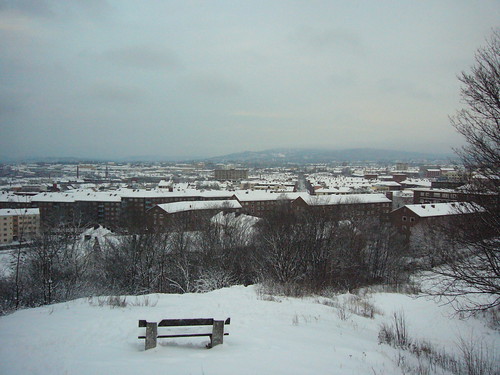
Oslo one month ago

Three recent events have inspired me to get this blog going again. The last drop must have been a post by the incredibly prolific research blogger Mary Stevens. In her last post, she tells about her PhD viva and her examiners’ interest in her research blog:

One of the things they were particularly interested in – and of which I didn’t make that much in my write-up – was this blog and the specific contribution it had made to the research experience. I talked about the inspiration, in particular C. Wright Mills‘ idea of the research file, and how it helped extend my presence in the ‘field’ into the virtual arena. Overall, they seemed to think that in an ideal world all researchers would be blogging, as a way of communicating their research to their peers and to the general public, and as a means to keep a kind of intellectual diary. Their enthusiasm has inspired me to find some way to carry on, although I suspect in a new form, as I think this blog has outlived its usefulness (as my failure to post over the last few months has amply illustrated). (Read the whole post on Mary Steven’s blog here.)

As I’ve been chronicling my experiencing continuously, I feel I shouldn’t stop now: The strange things happening after leaving the field, when experiences are turned into data and written documentation, are of course as part and parcel of the research process as is the hanging around in Paris-life I was writing about until last summer. But until now I haven’t

The second event spurring me on to continue blogging, was a brief remark from one of my colleagues who recently got back from his fieldwork: “It’s funny how your friends slowly turn into your informants when you get back to academia and start writing up,” he said. How right! That uncomfortable fact is exactly what’s been churning around in my mind for months now, and I feel it’s urgent to voice this phenomenon/experience in a research blog at this stage.

The third event is the sheer joy and inspiration it gives me to read the research blogs from some of the Master students I was teaching in the spring who now are out in the field all over the world: Rakel blogs (with photos!) from Malta, Nina from Cuba and Inger from India (I think she’s a photographer, ‘cos her photos are really incredible)…

Ah finally, there it’s done, my first post for more than three months…

Oslo one month ago

Three recent events have inspired me to get this blog going again. The last drop must have been a post by the incredibly prolific research blogger Mary Stevens. In her last post, she tells about her…

Read more

What anthropologists can do about the decline in world food supply

The UN Food and Agriculture Organisation (FAO) warns ominously of an ‘unforeseen and unprecedented’ decline in world food supply. Anthropologists should contribute their expertise and knowledge to this emerging problem, Solomon H. Katz writes in the current issue of Anthropology Today (accessible for subscribers only).

First, anthropologists are often on the ground in remote places in societies which should, but often do not, figure in the mainstream of news stories about food problems. By the nature of our work, anthropologists are often close to the centre of the most desperate problems. We need to report these problems, especially through blogs, wikis and other instant communications within our means.

Second, anthropologists need to communicate beyond our own field about these food problems – with other scientific disciplines, the media, public policy advocates and elected officials who can help implement corrective change. The economic community has begun to focus on the micro level, which is consonant with the anthropologist’s study of problems at the local level.

In the case of food problems, for example, we can share our knowledge of how households, villages and communities are being affected and are coping with the rapidly increasing price of food throughout the world, and we can do so without delay.

Third, anthropologists need to be fully involved in building increased lines of communication that represent their collective perspectives more effectively, and can provide new insights for the media and policy-makers and help change the way societies think and act on problems of global concern.
(…)
Finally, we need to help develop a systematic way for government policy affecting the human food chain to be tested before it is adopted, in order to avoid unintended consequences.

The anthropologist is mentioning an online wiki web page and database of reports from the field as part of a new ‘world food problems’ wiki that he launched in December 2007 at http://wfmo.pbwiki.com Unfortunately, it seems he has taken it down already as it is password protected.

Katz has organized a panel entitled ‘Food to Fuel’ that I organized for the annual meeting of the American Anthropological Association in Washington in December 2007.

He writes that the food crisis is the result of the sharp rise in competition between food and fuel, together with the higher costs of energy to produce and transport foods, the increased use of maize as animal feed in China and elsewhere, and the rapid changes in climate and rainfall patterns:

Last winter, within a month of Felipe Calderón taking office as the new president of Mexico, there were so many protests over the rise in corn prices induced by the US corn-to-ethanol policy that Calderón had to reverse his free trade philosophy and immediately fix corn prices or risk further street violence during the opening days of his presidency.

Similarly, the wheat price crisis has sparked street protests in Italy and Russia. In Africa there have been major protests, and the real spectre of food shortages this year resulting from prohibitively high prices looms in at least 37 countries.

UPDATE: The Guardian (26.2.08) reports Feed the world? We are fighting a losing battle, UN admits

SEE ALSO:

Malaysia: Penan people threatened by demand for “green” bio-fuels

Dissertation: Survival in the Rainforest

Global Migrants For Climate Action – Migrants organize to fight climate change

Thesis: How does EU influence the life of farmers in Finland?

Anthropology of Food – one more Open Access Journal!

The UN Food and Agriculture Organisation (FAO) warns ominously of an ‘unforeseen and unprecedented’ decline in world food supply. Anthropologists should contribute their expertise and knowledge to this emerging problem, Solomon H. Katz writes in the current issue of Anthropology…

Read more