search expand

Now what?

Two weeks ago, at the time I finished my French lessons, I had planned to quietly sit down and rethink my research project. The goals of the project still seemed justified, but I was not sure about the approach; I felt I was about to suffer from a severe information overload.

[teaserbreak]

The evening 16 days ago, the 28th of October, I watch the news as usual. In addition to a reportage about an amateur theatre group for youth in a banlieue, two episodes catch my attention. The Interior Minister’s seems unreserved in his backing of the police version of events when two young boys were accidentally electrocuted in a transformer station the previous evening. I note down my surprise. No investigation is yet concluded, and both the two TV channels I watch take care to mention that two versions of the event still exist. (Since then, we’ve learnt that Sarkozy’s version was not the true one. The police had been physically pursuing the boys, whereas they had not been involved in any break-in but were running from an identity control.)

The second brief note I make from the news concerns the attacks on police and fire fighters in Clichy-sous-bois the night before. It calms down almost immediately in Clichy-sous-bois, but the apparently self-destructive rioting spreads to “sensitive areas” (“quartiers sensibles”) all over France. The unrest has been on the wane for several days now. But we are only starting to see the political repercussions. As I read on a chat forum on Beur FM (=French Arab radio): “In the presidential election in 2007, who will you vote for; Sarkozy or Le Pen?” And political populism and the Front National are only some of the possible political consequences I have in mind.

So, if I thought the research approach needed a rethink two weeks ago, the Clichy-sous-bois event has not made me change my mind. The research question is more justified than ever, in my opinion: what influences senses of belonging and community making in a cosmopolitan city like Paris? But how can I best study it? So far, I’ve considered, and rejected, three possible approaches: 1) Hanging around in a (multi ethnic) music or artist collective, preferably with political objectives. 2) A neighbourhood study in the cosmopolitan area Belleville. 3) Participating in two (multi ethnic) political groups working towards recognition of the colonial era in France. Yesterday, when I asked to local (Maghrebi) baker if he would help me with my research, I messed it up a bit and confused my three approaches. It was easier when I just asked the greengrocer what he thought about the present situation… Anyway, now it seems to me that I just have to live with the information overload some more time, to see what will happen.
To be continued…
[teaserbreak]

Two weeks ago, at the time I finished my French lessons, I had planned to quietly sit down and rethink my research project. The goals of the project still seemed justified, but I was not sure about the approach; I…
Read more

– Kulturelle forestillinger bremser den kvinnelige Einstein

“Det er trist, hvis det er bevidstløse kulturelle forestillinger, der bremser den kvindelige Einstein, eller den mandlige nye superpædagog i at komme på banen,” mener Cathrine Hasse. Hun er antropolog ved Danmarks Pædagogiske Universitet og har nettopp fått forskningsmidler til å forklare kjønnsforskjellene innen akademia. Hun skal med hjelp fra kolleger fra Polen, Estland, Italia og Finland finde ut, hvorfor det f.eks. er langt mer akseptert for kvinner å studere fysikk i Sør- og Østeuropa enn i Danmark (eller Norge kan vi tilføye).

Hun sier:

Forestillingen om særlige mande- og kvindefag stammer udelukkende fra vores kultur. Kultur er ikke bare flæskesteg og det danske flag, kultur kan også være, at danske kvinder ikke bliver fysikere.

Kanskje hun finner også ut hvorfor det er stort sett jenter som studerer antropologi?

>> les hele saken i Jyllands-Posten

SE OGSÅ:
Carol Mukhopadhyay: The Scientific Gender Gap Should Be Understood Comparatively

"Det er trist, hvis det er bevidstløse kulturelle forestillinger, der bremser den kvindelige Einstein, eller den mandlige nye superpædagog i at komme på banen," mener Cathrine Hasse. Hun er antropolog ved Danmarks Pædagogiske Universitet og har nettopp fått forskningsmidler til…

Read more

Fredrik Barth: ‘Vestlig arroganse koster dyrt’

Vårt Land snakker med antropologen Fredrik Barth. Han er ute med en ny bok. Han uttaler seg blant annet om følgende

Om ungdomsopprører i Paris:

Både historien og dagens virkelighet viser oss at mennesker som føler seg truet eller er vedvarende misfornøyde, reagerer med aggresjon. Frankrike har et regime som ikke har lyttet tilstrekkelig til deler av sin flerkulturelle befolkning. Det straffer seg nå.

Om turismen:

Vi bruker reisen til å bekrefte hvor fortreffelig vår egen livsform er, fremfor å nytte høvet til å få ny kunnskap om andres liv

Om antropologi:

Antropologi blir nesten en ekstremsport. Vi risikerer oss selv ved fullstendig å overgi oss mentalt til de samfunnene vi reiser inn i, sier han.

>> les hele saken i Vårt Land

SE OGSÅ:

“Vi mennesker. Fra en antropologs reiser” – Snart ny bok av Fredrik Barth

Fredrik Barth: Kunnskap gjør verden mindre truende

Intervju med Fredrik Barth om globalisering: – Mangler et språk for avmakt

Vårt Land snakker med antropologen Fredrik Barth. Han er ute med en ny bok. Han uttaler seg blant annet om følgende

Om ungdomsopprører i Paris:

Både historien og dagens virkelighet viser oss at mennesker som føler seg truet eller er vedvarende misfornøyde,…

Read more

Information overload 2 / internet fieldwork

A day at work…: I was about to get outside (its freezing, but sunny). Unfortunately, it was time for 12 o’clock news before I managed to escape.

[teaserbreak]

Oh, here we go again. La ligue de droits de l’homme and MRAP (Mouvement contre le Racisme et pour l’Amitié entre les Peuples) are interviewed concerning the expulsion of troublesome foreigners with or without their residence permit in order. Ok, that’s certainly very interesting, but it’s not news to me.

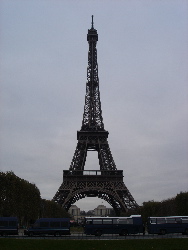
But then the journalist mentions that a gathering is to take place at Champs de Mars tomorrow. That I’ve not heard before. I’ve got to search the Internet. Nothing on the sites of MRAP or Le ligue de droits de l’homme, but on Paris.indymedia I find something interesting. It starts right on: “Putain, are you all in front of the TV-set or what?” Then he(?) goes on to recount to the indymedia radicals his voyages in cyberspace of a very different France, skyblog. (See for instance cites2france.skyblog.com . Skyblog has, for some reason still unknown to me, become the site for the banlieue bloggers.) Obviously, this guy(?) is mad at his commerades at indymedia: « banlieues, villes et campagnes tous ensemble » et personne n’y répond… But now we’ve got the chance, he says, and reveals the news he found on skyblog about the upcoming gathering. For this indymedia-blogger, the event is already inscribed in the revolutionary French history (he refers to the fight for one week paid holiday in 1936, 1968 and of course the commune…). Ok, that was sociologically interesting, but I still don’t know much about what will take place tomorrow. I try google: “rassemblement tour eiffel”.

And what do I find? Great, I’m doing a whole sociological la distinction tour d’internet here. Le Weblog du 7ème Arrondissement (a posh district indeed…) refers to another blog, the Parisist. The Parisist asks if Paris will burn on Friday, since les banlieues are planning to pay us a visit, – with reference of course to messages circulating on skyblog. On the 7th Arrondissement blog one can read this: “There are good reasons for organizing such an event for all the honest citizens who have had enough of all this violence. On the other hand, certain others seems to want to use this gathering in order to throw gunpowder on the fire.” And it cites: ON VA CRAME PANAME COUSIN ON VA VENIR ENCULER SARKO CHEZ LUI (we’ll burn Paris (cousin= cousin or police informer), we’ll go fuck Sarko at his place). The Parisist one the other hand, seems a little less sensational as it drily comments the same citation; “evidently, we prefer the second suggestion.”

It’s already two o’clock. I still don’t really know what will happen tomorrow. So what should I do now; continue searching or finally manage to get out of here?

A day at work…: I was about to get outside (its freezing, but sunny). Unfortunately, it was time for 12 o’clock news before I managed to escape.

[teaserbreak]

Oh, here we go again. La ligue de droits de l’homme and MRAP (Mouvement…

Read more

Why cellular life in Japan is so different – Interview with anthropologist Mizuko Ito

Technology Review interviews anthropologist Mizuko Ito. Ito has studied the use of mobile phones for six years and is editor of a new book “Personal, Portable, Pedestrian: Mobile Phones in Japanese Life”. Cell phones are used differently depending partly on the way the technology is rolled out, and partly on the culture of each country. She became interested in studying mobile culture partly because mobile technology use in Japan was being driven by young girls:

It’s fairly unusual that teenage girls are seen as technology innovators, so it was a really attractive case for me for a lot of reasons.

In the interview she argues for a kind of culture relativism regarding technological development. You can’t really say the United States should feel that they are “behind” Japan when it comes to cell phone technology, because their technology trajectory has been completely different.

>> read the whole interview

SEE ALSO:

Mizuku Ito’s website

Studying Keitai (or ‘Mobile Phones’ in Japanese) (SavageMinds on Ito’s book)

How Mobile Phones Conquered Japan (Wired News)

More Reviews of Mizuko Ito’s book “Personal, Portable, Pedestrian”

Technologies of the Childhood Imagination- new text by anthropologist Mizuko Ito

Technology Review interviews anthropologist Mizuko Ito. Ito has studied the use of mobile phones for six years and is editor of a new book "Personal, Portable, Pedestrian: Mobile Phones in Japanese Life". Cell phones are used differently depending partly on…

Read more