search expand

Presentation presence – and Catania!

P1070111.JPG
It’s not always easy to say why some presentations feel like they go well while others feel just bland and indifferent. [teaserbreak]In Maynooth, I wasn’t stressed by restless movements among the audience or anything, but neither did I feel that I nor the audience was present in what I was telling them. I don’t know why. This time, I’d even had others to read the paper in advance, and they all said that it was ok and well-written and all that. But then, it was something that failed. Or, I felt that it was something that failed in my attempt to put something across.

Sweden some weeks earlier, it was the other way around. I was less sure about my paper, but during the presentation I felt there was something there, some kind of spark, between my words and the audience. I felt present in what I was doing and I felt… perhaps listened to? (Even thought I noticed very well each movement people made in their chairs.) Strange. Maybe that’s what is meant by the “stage presence” in English and French? To believe in one’s words and impersonate what one wants to convey probably have a lot to say. The two texts I recited in Linköping are two of my favourite slam texts (by “7:28” by Ucoc Lai and “L’Hiver Peul” by Souleymane Diamanka), and they bore their message, despite my lousy translation.

But I’ll get the chance to test my theories of presence again soon. First on a Scandinavian library conference here in Oslo (with the paper: ”The library and suburban place-making: An escape or a source for belonging and community?”…) and then – oh my, how much I’m looking forward to seeing the Ionian sea again, this time from the foot of Mount Etna – on a conference on borders, in Sicily in January (my paper: “The borders of Frenchness: Lines of inclusion and exclusion in Paris and her suburbs”).

P1070111.JPG

It’s not always easy to say why some presentations feel like they go well while others feel just bland and indifferent. [teaserbreak]In Maynooth, I wasn’t stressed by restless movements among the audience or anything, but neither did I feel that…
Read more

“Human smugglers fight global apartheid”


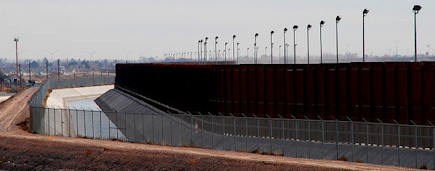
High-tech border between USA and Mexico. Photo: Paul Garland, flickr

The limitation of people’s freedom of movement based on their nationality (“global apartheid”) is maybe one of the biggest human rights issues nowadays.

One month ago I wrote about Shahram Khosravi’s auto-ethnography of illegalised border crossing.

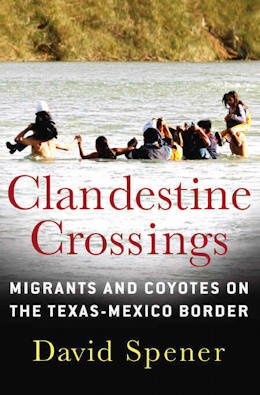
The Democracy In America blog at the Economist draws attention to a related book: Migrants and Coyotes on the Texas-Mexico Border by David Spener. The anthropologist spent eight years doing field work on both sides of the border.

Armed with latest technology, the U.S. does everything to prevent people from the South to enter its territory. Because border crossing is difficult, 90% of all illegalised migrants crossing into the United States through Mexico hired a smuggler (also called “coyote”). Human smuggling has become a $6.6-billion industry in Mexico.

The press presents human smuggling as a sinister organized-crime phenomenon. Spener argues that it is better understood “as the resistance of working-class Mexicans to an economic model and set of immigration policies in North America that increasingly resemble an apartheid system.

Publishing a book is not always the best strategy to spread knowledge. Therefore it is a good idea to set up companion websites as Spener has done. Here we find border crossing stories, articles and papers as well as images, maps and sounds.

As the Democracy in America blog reminds us: Even reaching the border is hard. Each year some 20,000 migrants are kidnapped for ransom in Mexico. Victims are made to give the phone numbers of relatives, who must pay upwards of $3,000 or more to get them released.

Migrants from Central and South America are particularly easy targets:

Illegal in Mexico, they must evade checkpoints throughout the country and risk deportation if they report a crime. Women and girls—about a fifth of the migrants making their way through Mexico—face additional dangers. Six out of ten are reckoned to suffer sexual abuse during their migration, according to Amnesty International, a human-rights watchdog.

For a global perspective, see the overview by the BBC: Walls Around The World

SEE ALSO:

The “illegal” anthropologist: Shahram Khosravi’s Auto-Ethnography of Borders

More Global Apartheid?

For free migration: Open the borders!Why borders don’t help – An engaged anthropology of the US-Mexican border

Online: On the Margins – An Ethnography from the US-Mexican Border

Interview with Sámi musician Mari Boine: Dreams about a world without borders

High-tech border between USA and Mexico. Photo: Paul Garland, flickr

The limitation of people’s freedom of movement based on their nationality (“global apartheid”) is maybe one of the biggest human rights issues nowadays.

One month ago I wrote about Shahram Khosravi’s…

Read more

Ethnologe: Zuviel Gerede um "das Fremde"!

Ist nicht Heterogenität gewöhnlicher als Homogeniät? Machen wir nicht Fremdheit in der Migrationsdebatte zu einem unnötig grossen Problem? Diese Fragen diskutiert Ethnologe Hans-Jürgen Heinrichs in einem schönen Aufsatz in der Frankfurter Rundschau mit dem Titel Die Unverzichtbarkeit des Fremden:

Kleinste Gruppen und Gemeinschaften bis zur Großform der Gesellschaft sind geprägt von extrem vielen divergierenden Verhaltensweisen, Haltungen, Positionen, Ritualen, Urteilen und Vorurteilen; viel stärker noch gilt dies für die großen Formen, die wir als Kontinente bezeichnen.

Aber auch auf der Ebene individuellen Lebens liebäugeln wir mit dem bloßen Konstrukt von Einheiten, sprechen von einem Ich und von Identität, wissend, dass jedes Ich unendlich viele Brechungen in sich birgt und Identität nur eine, wenn auch äußerst nützliche, Fiktion ist. Auch in persönlichen Beziehungen – von Freundschaften und Liebesgeschichten bis zur Ehe und Familie – mühen wir uns (oft genug widerwillig) ab an unseren Verschiedenartigkeiten.

Dann aber müssen wir feststellen: Gerade im Erkennen und Anerkennen von Differenzen entwickeln wir uns weiter. In der Homogenität langweilen wir uns schnell; von einer Differenz aber fühlen wir uns belebt, inspiriert, angestachelt zu Aktivität und Kreativität. Ist so gesehen das Erleben der Differenz im Kern nicht künstlerisch?

Er kritisiert zudem, “dass Ethnologen bei politischen Ereignissen nur in Ausnahmefällen zu Rate gezogen werden”.

> weiter in der Frankfurter Rundschau (Link ohne Tracking, aktualisiert 17.6.2025)


SIEHE AUCH:

Buchbesprechung: Unser merkwürdiger Umgang mit “Fremdem”

“Ethnopsychoanalyse kann Fremdes vertraut machen”

Mehr Fokus auf die Gemeinsamkeiten der Menschen! – Interview mit Christoph Antweiler

Kosmopolitismus statt Multikulturalismus!

Die missverstandende kulturelle Globalisierung

Vergessene Vielfalt: Ethnologin studiert 70jährige Bäuerinnen in Bayern

Ist nicht Heterogenität gewöhnlicher als Homogeniät? Machen wir nicht Fremdheit in der Migrationsdebatte zu einem unnötig grossen Problem? Diese Fragen diskutiert Ethnologe Hans-Jürgen Heinrichs in einem schönen Aufsatz in der Frankfurter Rundschau mit dem Titel Die Unverzichtbarkeit des Fremden:
Kleinste Gruppen…

Read more

Secret knowledge exchange at Europe’s largest anthropology conference

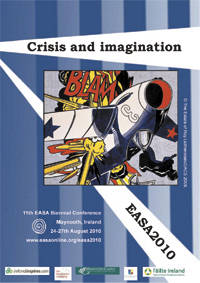
A bit more than two weeks ago, around 1300 anthropologists from all over Europe left the university village Maynooth not far away from Dublin. Europe’s largest anthropology conference, the biennial congress of The European Association of Social Anthropologists (EASA) was over.

As usual, hardly any information about the knowledge that was exchanged at the conference, found its way to the public.

Here is what I found.

Eoin O’Mahony, geographer at Maynooth, sums up the opening keynote lecture by one of the most famous anthropologists around – Talal Asad.

“As far as I can tell”, he writes, “the lecture laid out the ground for a new anthropology of terrorism and human rights”. Talal Asad “mapped out the economy of liberal human rights where the reorientation of the concept of ‘just war’ made certain peoples’ deaths necessary to safeguard the lives of others”.

Asad’s paper, which his speech is based on, is available online (pdf – download it before they remove it!). Or check also an earlier post Selected quotes from “On Suicide Bombing” by Talal Asad.

Philipp Budka 
(University of Vienna) is the only one who has written a report about the conference. It focuses on workshops that deal with media (technology). Several bloggers are among the paper givers, for example John Postill, Alexander Knorr and Gabriella Coleman (who blogged a little bit about her Ireland trip).

Stéphane Voell, blogger at Traditional Law in Georgia, is wondering if it was worth organizing a workshop after not more that seven or eight people showed up. It reminded him on the days when he as a 17 year old was playing in his school band (Text in German only).

Finally, Cicilie Fagerlid explains us why she is calling conferences for festivals:

The more anthropology (or other academic genres) I engage in during a 3-4 days period, the more engaging it gets. Listening to debates and commenting on papers during the day, and discussing, chatting and mingling during the night, with too little sleep in-between high-wire the brain in a very creative and inspiring fashion. The first time I experienced it, weeklong camping on rock festivals was still fresh in my memory, and that experience was what an anthropology conference reminded me of.

Are there some blog posts I haven’t seen? Something about EASA 2010 you want to share?

UPDATE (18.10.10): Digital Anthropology: An EASA Workshop (Heather Horst, Material World 13.10.10)

SEE ALSO:

The Secret Society of Anthropologists

What’s the point of anthropology conferences?

Conference Culture

Conference Podcasting: Anthropologists thrilled to have their speeches recorded

First reports from Europe’s largest anthropology conference (EASA 2008)

Anthropology and the World: What has happened at the EASA conference (2006)?

What happened at the AAA-conference in San Jose 2006 – a round up

A bit more than two weeks ago, around 1300 anthropologists from all over Europe left the university village Maynooth not far away from Dublin. Europe's largest anthropology conference, the biennial congress of The European Association of Social Anthropologists (EASA)…

Read more

Antropolog: FN-operasjoner er destruktive

FN-operasjonene i Afghanistan bidrar ikke til fred. De er dårlige for både lokalbefolkningen og FN-soldatene, skriver antropolog Ivana Macek i et innlegg på debattsidene til Sveriges Television.

Macek er universitetslektor i folkmordsstudier ved Uppsala Universitet og har vært på feltarbeid blant svensker i krigssoner.

Hun skriver bl.a.:

FN måste fungera på olika nivåer: diplomatiska, ekonomiska, organisatoriska, politiska, militära, moraliska, mänskliga, sociala och kulturella. Min forskning har handlat om de sistnämnda: samhälle, kultur, psykologi och hälsa.

Ur det perspektivet är FN-operationer dåliga för både lokalbefolkningen och de utländska trupperna, och främjar inte en global sämja och gemensam framtid. De är dehumaniserade för FN-soldater och dehumaniserande för lokalbefolkningen, och det bästa vore att inte alls ge sig ut på sådana uppdrag och istället påbörja en grundläggande ändring av dem.

Er det i det hele tatt menneskelig å sende soldater på slike oppdrag? Dette spørsmålet begynte hun å stille seg etter å ha snakket med svenske FN-soldater:

Här menar jag att den högst isolerade sociala och kulturella situationen också skapar mycket av de psykologiska problemen: den ofta monotona, men samtidigt utsatta, vardagen i de slutna FN-lägren med de korta, högt kontrollerade, bepansrade utflykterna i området som enda avbrott. Vi bör också tänka på de moraliska dilemman kring hur man förhåller sig till den lokala befolkningen i kris, något som också politiskt borde tas på allvar.

>> les hele saken på SVT debatt

Ivana Maček har ifjor publisert en bok som virker veldig spennende: Sarajevo Under Siege. Anthropology in Wartime. Boka handler om livet under krigen mellom 1992 og 1996. Hun argumenterer for at delingen av Bosnierne i diverse etniske grupper er konsekvensen og ikke årsaken av krigen.

Macek er langt fra den eneste antropolog som forsker på soldater i krig. Nesten samtidig publiserte videnskab.dk saken Mors bekymringer belaster danske soldater. Antropolog Jens Erik Kofod har sammen med to andre forskere skrevet rapporten ‘Hjemvendte soldater – en interviewundersøgelse’.

Ved Universitetet i Oslo skal masterstudent i sosialantropologi Vilde Straume Wiig snart gå i gang med å studere norske soldaters motivasjon til å dra i krig i Afghanistan.

Samtidig holder Sarah Salameh på med å skrive en bok om unge amerikanske soldater og deres forhold til militæret og krigen i Afghanistan og Irak. Boka bygger på masteroppgaven hennes.

SE OGSÅ:

Ny bok: Hvorfor skyter de?

Thesis: That’s why they go to war

Thesis: That’s why there is peace

Embedded anthropology? Anthropologist studies Canadian soldiers in the field

War in Iraq: Why are anthropologists so silent?

Fredrik Barth: NATO må ut av Afghanistan

Antropologer: Militærets beste våpen?

FN-operasjonene i Afghanistan bidrar ikke til fred. De er dårlige for både lokalbefolkningen og FN-soldatene, skriver antropolog Ivana Macek i et innlegg på debattsidene til Sveriges Television.

Macek er universitetslektor i folkmordsstudier ved Uppsala Universitet og har vært på feltarbeid blant…

Read more