search expand

Får ingen publiseringspoeng for å lage film

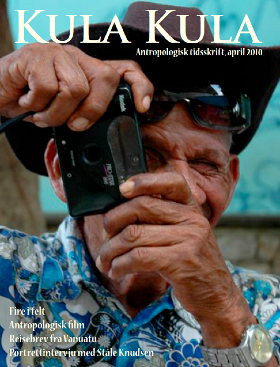
Akademia sliter ikke bare med å ta skrittet inn i internettets verden(er). Også filmer er fortsatt uglesett innen antropologien, får vi vite i den nyeste utgaven av Kula Kula, tidsskriftet til antropologistudentene i Bergen.

Det er fortsatt bokstaver på papir som gjelder, sier filmantropolog Frode Storaas:

Det er et par ting det er greit å være klar over før man velger å lage antropologisk film, særlig om man ønsker anerkjennelse på arbeidsplassen. Man får nemlig ingen publiseringspoeng for å lage film. Disse får man kun ved å publisere artikler og bøker. Om du vil bli professor, da er det dumt å kaste bort tida på å lage film.

Det er mange fordeler med film. Den kommuniserer på en annen måte, man kan uttrykke det som ikke kan sies. Dessuten har filmer et mye større nedslagsfelt enn en artikkel. Mens en artikkel ofte har et relativt lite antall lesere, kan man nå tusenvis med film, skriver Camilla Aa. Jensen, Eilin H. Torgersen og Tove Lise Inderberg.

Antropologisk film er også populær blant studentene. Fortsatt er Universitetet i Tromsø det eneste stedet i Norge hvor det tilbys et eget masterstudie i visuell antropologi. Men det er flere som spør om mulighetene for å studere visuell antropologi i Bergen, forteller Storaas. Sammen med Rolf Scott kunne han tenke seg å organisere et kurs i filmkunnskap hvis det er nok interesse. Det er “veldig små grep som skal til for å gå fra å være amatør til å bli brukbar”, mener Scott.

I intervjuet snakker Storaas også om det antropologiske youtube-prosjektet som han holder på med (som jeg skrev om tidligere)

>> les hele saken i Kula Kula “De virtuelle møtene”

Studentene i Bergen har lagt et veldig godt blad som også er relevant og forståelig for folk utenfor akademia. På nett er også en interessant sak av Maria Sørlie Berntsen: Majoritetenes verden; Om fotografi og representasjonspolitikk. Hun skriver om et fotoprosjekt som skal rette opp stereotype bilder om fattige land som bl.a. Bangladesh. Det inkluderer også webportalen www.majorityworld.com

Den nye utgaven inneholder flere intervjuer med forskere og masterstudenter på feltarbeider, bokanmeldelser etc

>> last ned hele utgaven (pdf)

Studentene i Oslo har også gitt ut et nytt nummer av Antropress. Tema er mat. Antropress virker ikke like mye utadrettet. Tekstene er mindre journalistiske og derfor etter min mening ikke alltid like fengende.

SE OGSÅ:

Book review: Photography, Anthropology and History – When filming people became possible, anthropologists began to drift away from it

Frode Storaas: Derfor trenger vi multimedia-antropologi på nett

(Betal-) “Antropologi-YouTube” er på vei

Indianernes kamp om vannet: “Film er det beste mediet”

Hvordan lage et akademisk tidsskrift som appellerer til flere?

Tilbake til steinalderen: Ingen forskningsformidling på nett

Antropress: For mer antropologi på blogger, YouTube og Twitter!

Via YouTube: Anthropology students’ work draws more than a million viewers

Akademia sliter ikke bare med å ta skrittet inn i internettets verden(er). Også filmer er fortsatt uglesett innen antropologien, får vi vite i den nyeste utgaven av Kula Kula, tidsskriftet til antropologistudentene i Bergen.

Det er…

Read more

Anfindsen mot Hylland Eriksen: Hvordan kommunisere med meningsmotstandere?

(notater, fortsatt i arbeid) Hvorfor har informatikeren Ole Jørgen Anfindsen, som mener at det finnes raser og at noen raser er mer intelligente enn andre, overraskende mange tilhengere? Hvordan kommunisere med folk som mener at grunnen til Haitis fattigdom er at øya beboes av afrikanere? Hvorfor så mye hat mot kosmopolitter og multikulturalister? Er det i det hele tatt mulig å finne en felles plattform når virkelighetsoppfatningene er så forskjellige?

Slike tanker surret rundt i hodet mitt under og etter lanseringen av boka Selvmordsparadigmet. Hvordan politisk korrekthet ødelegger samfunnet. Møtet var interessant og lærerikt. Lanseringen besto av en paneldebatt med både støttespillere og motstandere. Islamkritiker og Høyremann Hallgrim Berg deltok, dessuten Basim Ghozlan, forstander i Det islamske forbundet i Oslo og redaktør av www.islam.no, skribent Eystein Halle og Thomas Hylland Eriksen.

Det var først og fremst Anfindsens meningsfeller som var samlet i Litteraturhusets kjeller. Lanseringen ga dermed et innblikk i dette åpenbar voksende miljøet.

Vi ble vitne til et av de størst tenkelige clashes of civilisation. Mennesker med så ulikt syn på verden møttes at jeg begynte å lurer på om kommunikasjon fortsatt er mulig. Hylland Eriksen definerte selv engang kultur som det som gjør kommunikasjon mulig. Her var det ikke mye felles kultur.

Hva kan vi lære av møtet? Her noen stikkord og spørsmål

– Anfindsen-miljøet føler seg stigmatisert som minoritet. De ser seg som urbefolkning som blir undertrykt av kosmopolitter og multikulturalister, av folk som ser ned på norsk kultur, på kristendommen, USA, på de hvite. De bruker ordet urbefolkning om seg selv, som en urbefolkning som blir kolonisert av “fremmede kulturer”. På en måte er det en del likhetstrekk i argumentasjonen mellom dem og urbefolkningsgrupper som snillistiske antropologer ofte støtter. Jeg har lagt merke til at de er spesielt opprørt over noe som Thomas Hylland Eriksen sa i et intervju om forskningsprogrammet Culcom som han leder. “Målet var å omdefinere Norge”, sa han. Og: “Den viktigste hvite flekken består nå i å dekonstruere majoriteten og gjøre det grundig slik at den aldri kan kalles majoritet lenger”.

Opplevd marginalisering og undertrykkelse av “tradisjonell kultur” er poenger som ble berørt i masteroppgaver i Culcom om høyrepopulismeog karikaturstriden.

Her kan jeg faktisk følge dem et stykke med på veien. Ofte gir tilhengere av mangfold inntrykk av at Norge kun kan betraktes som “fargerikt” og “spennende” når eksotiske innvandrere er involvert (noe jeg har kritisert selv, bl.a. i et intervju i Klassekampen). Jeg må tenke på antropolog Yara El-Ghadban som stiller spørsmålet om antropologene i sin dekonstruksjonsiver har gått for langt?

Kosmopolitisme og humanistiske verdier betrakter de som elitesaker. Det som Anfindsen kaller “politisk korrekt” kaller jeg humanistiske verdier, sa Hylland Eriksen. Ja, men humanistiske er noe som “eliten” som bor på Ullevål Hageby kan pynte seg med, de som “ikke vet noe om dagliglivets problemer”, svarte publikum. Samtidig er det interessant at Anfindsen-miljøet ikke akkurat består av “folk flest”. Her var det advokater, fysikere, ingeniører og også en sosialantropolog tok ordet (fra eks-Jugoslavia, et “mislykket multikulturelt prosjekt”)

– De ser seg ikke som rasister og det å bli kalt rasist opplever de som nedverdigende og ydmykende. For Anfindsen “hater ikke andre raser”. Først når du kopler rasetenkning med hat og forakt for andres menneskeverd, kan det være snakk om rasisme etter Anfindsens mening. Han konstaterer bare at “afrikanerne er mindre intelligente enn europeere” og at det er “deres egens skyld” at de er fattige (!). Han er – i motsetning til den “politisk korrekte eliten” sannhetssøkende.

– Thomas Hylland Eriksen betegner de som sjefsideolog for det de anser som elitens multikulturelle prosjekt. Han og forskningsprogrammet Culcom er deres hovedmotstander. Nyheten om at Culcom legges ned til sommeren vakte stor begeistring.

– Hvor utbredt er slike ideologier i anti-innvandringsmiljøet og “folk flest”? Jeg synes at Siv Jensen og Hege Storhaug er snillister i forhold til Anfindsen. Men det ser ut til å være snakk om en overlapping her. Anfindsen blir hyllet på nettet, blant annet av miljøet rundt Document.no. Hallgrim Berg som forfattet den sterkt islamofobe boka “Amerikabrevet” roste boka “Selvmordsparadigmet” høyt opp i skyene, mens Hege Storhaug, som satt i publikum, forble taus under hele møtet. En av de mest leste og i miljøet høyt respekterte anti-islam-bloggerne, “Fjordman“, har faktisk bidratt til boka, han skrev en hel kapittel.

– Hvilken rolle spiller religion, spesielt kristendommen? Flere troende kristne var tilstede på møtet. Anfindsen forteller i boka om oppveksten sin i det han kaller “bibelfundamentalistisk kristendomsforståelse”, leser jeg i en anmeldelse i Klassekampen 8.5. (ikke på nett). Ifølge Tom Egil Hvervens anmeldelse mistet Anfindsen fotfestet på midten av 1990-tallet. Han begynte å forstå at troen ikke lot seg forene med naturvitenskapelig erkjennelse. Terrorangrepene 11.september 2001 ga Anfindsen en ny sak. “Rasebiologien virker som en åpenbaring, et fundament for nye, ekstreme oppfatninger.” Så: Hvilke personlige historier finner vi blant tilhengere av raseteorier?

– Hvor mye interesse er det for dialog på begge sider? Er det i det hele tatt mulig å finne en felles plattform når virkelighetsoppfatningene er så forskjellige? Er det ikke bedre å la være å diskutere med “rasister”?

Kort om innlederne:

Ole Jørgen Anfindsen: Han snakker rolig og gir inntrykk av å være saklig og “sannhetssøkende”. Helt ok å høre på selv om innholdet etter min mening er skremmende.

Hallgrim Berg: Et menneske med mye hat inni seg. Bruker et aggressivt språk. Han virker enda mer ekstrem enn Anfindsen selv om han kanskje ikke er det.

Basim Ghozlan: Snill og vennlig, dialogorientert. Han roste Anfindsen for å ha endret syn på islam: Anfindsen generaliserer mindre og ser nyanser. De har møtt hverandre flere ganger og er blitt venner. Så gikk han gjennom kapittelet om islam og forteller at Anfindsen peker på en del viktige ting, men at bekymringene er overdrevet.

Thomas Hylland Eriksen: Tydelig irritert og opprørt over Anfindsens raseteorier og slaktet boka fullstendig. Viste likhetene med raseideologier fra 1930-tallet, apartheid i Sør-Afrika og sørstatene i USA. Dette likte publikum dårlig, de følte seg stigmatisert og bekreftet i sitt syn på akademia.

Eystein Halle: Latterliggjorte det norske godhetsregimet. Inntok etterhvert – spesielt etter Hylland Eriksen forlot panelet etter to timers debatt – en mellomposisjon og kritiserte Anfindsens dommedagsscenarier.

Ingen avis har omtalt lanseringen, men det finnes en gode oppsummeringer på minerva.as og document.no:

Kristian Meisingset: Karneval. Når Ole Jørgen Anfindsen slipper bok, snus alt på hodet (minerva, 7.4.10)

Hans Rustad: “Selvmordsparadigmet” og en selsom opptreden (document.no, 6.5.10), En instruktiv seanse (document.no, 7.5.10) og Instruktiv seanse II (document.no, 8.5.10)

Diskusjonen mellom Thomas Hylland Eriksen fortsatte på verdidebatt.no i kommentarfeltet til innleggene “Hva er rasisme” av Espen Utaker og Rasisme av Ole Jørgen Anfindsen (se bare Thomas Hylland Eriksens kommentarer. På verdidebatt.no har Anfindsen sin egen spalte).

Aftenposten har ført et heller ukritisk intervju med Anfindsen idag der journalisten ikke utfordrer Anfindsens raselære. Boka ble også anmeldt i Dagbladet.

Se også intervju i Vårt Land og kommentarer av Konrads tankesmie Skallemalerne børster støvet av instrumentene og av Hjorthen Ønsker debatt om rase og IQ. Astrid Mæland har nylig skrevet en lengre sak Slik forsvant rasisme på fire minutter.

Sigve Indregard kommenterer på indregard.no:

At Ole Jørgen Anfindsen får spalteplass til sine 30-tallsteorier om raser og IQ, viser med all den nødvendige tydelighet at samfunnsforskerne har hatt en riktig magefølelse om at det er farlig å lefle med forenklede, biologiske forklaringsmodeller (á la evolusjonspsykologien). Det er ingen tilfeldighet at Anfindsen får denne spalteplassen i videreføringen av Hjernevask-debatten.

Kombinasjonen av folkelige, biologiske forklaringer, økonomisk stagnasjon og et stort rom for populismen i politikken leder oss raskt i retning av de populistisk-fascistiske skremselsbildene og den medfølgende politikken. Det har vi prøvd før. Det er selvsagt ikke biologien i seg selv som er farlig, men den alt for levende rasistiske resonnansen disse tankene får.

Mohamed fra ars rhetorica kommenterer på Kornrads tankesmie:

Det Anfindsen kommer fram med er den fremste årsaken til at den “hvite mannen” representert av den europeisk imperalisme sto bak koloniseringen av Afrika og Asia. Dette er grunnen til den vestlige slavehandelen. Det er grunnen til kristningen av Afrika. Fordi siden disse menneskene har lavere IQ og er så usivilisert så skulle det bare mangle at den hvite mannen kom og reddet dem fra deres egen undergang. Med sin høye IQ så kommer han og redder dem fra deres egen dumskap.

En oversikt over hele mediedekningen inkludert skannete versjoner av tekster som ikke er på nett, finner vi på http://selvmordsparadigmet.no/media/omtale.html

PS: Oppdaget nettopp vi hadde samme diskusjon for fire år siden. Professor Lars Kolvereid mente dengang at kinesiske innvandrere lykkes bedre som gründere fordi de har høyere “nasjonal intelligens” enn etiopiere. Han ble også framstilt som en helt som tør stå fram med sine meninger, se oppsummering av debatten: Helgeland Arbeiderblad støtter rasistisk forsker

SE OGSÅ:

Marianne Gullestad: Racism – The Five Major Challenges for Anthropology

Thomas Hylland Eriksen: Derfor må vi snakke om “rase”

Fredrik Barth: “Slutt å kalle fordommer for rasisme”

Identity politics: Have anthropologists gone too far?

“Svarte menn rammes av nykolonial rasisme”

Rasetenkning i Språkrådet?

Allierer seg med ytre høyre: Dagbladets nye kampanje mot innvandrerforskningen

(notater, fortsatt i arbeid) Hvorfor har informatikeren Ole Jørgen Anfindsen, som mener at det finnes raser og at noen raser er mer intelligente enn andre, overraskende mange tilhengere? Hvordan kommunisere med folk som mener at grunnen til Haitis fattigdom…

Read more

Protests against Human Zoo i Houston: Africans on display together with chimpanzees?

Five years ago people from all over the world protested against the “African Village” in the zoo in Augsburg, Germany. Now, a new campaign is being planned against “The African Forest“, a $50 million project in the Houston Zoo, where “African culture” is on display together with chimpanzees and giraffes.

The 6.5-acre exhibit is designed “to give patrons the illusion they are strolling through an open landscape populated with chimpanzees, giraffes and other equatorial animals”. “Through presentations and artifacts, human cultures of the equatorial forests will be included in the exhibit” , landscape architect Jim Brighton told the Houston Chronicle. “Houses fashioned from tree leaves — a form of temporary housing — will be constructed for children’s activities.”.

“This is indeed like the African village in Augsburg – except this is a project that costs tens of millions of dollars and will be permanent – and some of the same anthropologists who protested that human zoo are onboard to protest this one such as Nina Glick Schiller and Data Dea”, explains Shannon Joyce Prince, Dartmouth Lombard Fellow and citizen of Houston, in an email to me.

The Zoo is according to Prince “only showing aspects of Africa that fit Western stereotypes of cultural anachronism and primitivism. It “falls neatly into the contemptible tradition of its human zoo predecessors, replicating a non-white village, a place where non-white humans live, in a zoo among the habitats where animals live”.

“The African Forest is about exhibiting and teaching inaccurate Western conceptions of African indigenous cultures in a place designed to exhibit and teach about animals. The African Forest is also about making and keeping African indigenous peoples conservation refugees. The African Forest and the practices it promotes are neither about respecting Africans nor protecting animals. They’re about claiming authority over African land, wildlife, and human lives”, Shannon Joyce Prince writes in a paper.

In the Zoo’s view, Africans are in conflict with wildlife, she writes. Therefore, African Forest plans to promote ecotourism as a way to “help” Africans and African wildlife. But the consequences of such conservation activities are often devasting specifically for central Africans and pygmies. For in Africa it’s common for conservationists to create refuges to conserve wildlife by simply kicking Africans out. The Zoo is funded by corporations like Exxon, Chevron, Shell that have are involved in this business:

Basically, among the corporations that fund the Houston Zoo are some of the most human and wildlife rights abusing corporations in existence. These same businesses try to clean up their images by creating wildlife refuges – but they create those refuges by forcing indigenous people off their land. Then the Zoo, which receives funding from those corporations, claims that the indigenous people who are getting kicked off their land are the ones who harm wildlife and promotes conservation and conservation refuges.

>> Shannon Joyce Prince: Human Zoos, Conservation Refugees, and the Houston Zoo’s The African Forest (pdf, short versjon)

>> Human Zoos, Conservation Refugees, and the Houston Zoo’s The African Forest (long version)

Shannon Joyce Prince sent a letter to the Houston Zoo several weeks ago which has not received a response.

She asks for “opposing The African Forest, human zoos, and the creation/perpetuation of the conservation refugee crisis in one or more of the following ways”:

1. Tell the Houston Zoo you are against The African Forest human zoo and the creation of conservation refugees as well as the continuation of the conservation refugee crisis by contacting the Houston Zoo here: http://houstonzoo.com/contact/. Tell the Houston Zoo that you will boycott zoos that host human zoos and/or make/keep Africans conservation refugees. Please mention your affiliations. Be sure to send a copy of your message to nohumanzoo (AT) yahoo.com so that we have a record of your letter in case the Zoo doesn‚t respond and to prevent the Zoo from deciding to claim that no one is protesting.

2. Send your name and affiliation to nohumanzoo (AT) yahoo.com if you want to be put on a petition stating, „We, the undersigned, do not support The African Forest human zoo, the creation of conservation refugees, or the continuation of the conservation refugee crisis.”

3. Raise awareness about The African Forest through your blog and encourage others to write the Zoo and sign the petition.

Please be aware that, naturally, the letter you send or your signature on the petition may be made public.

“The racialization processes facilitated by the Augsburg zoo and other zoos are not benign because they can lay the ground work for discrimination, barriers to social mobility, persecution, and repression”, anthropologists Nina Glick Schiller, Data Dea and Markus Höhne wrote in their report African African Culture and the Zoo in the 21st Century: The “African Village” in the Augsburg Zoo and Its Wider Implications (pdf)

Such “ethnological exhibitions” or “Völkerschauen” have a long history, linked to colonialism. For more than half a century – from the beginning of the 1870s to the end of the 1930s – the exposition of so-called exotic peoples in zoological gardens** and international expositions attracted a huge public.

UPDATE: Interesting debate and round-up at ZooChat: Cultural Zoo Exhibits = Racist? » Houston Zoo

SEE ALSO:

African village in the Zoo: Protest against racist exhibition

In Detroit and London: More African Villages in the Zoo

Thesis: Conservation for Whom? Telling Good Lies in the Development of Central Kalahari

In Norwegian TV: Indian tribe paid to go naked to appear more primitive

Is this anthropology? African pygmies observe Britains in TV-show

Geldof’s Live8 and Western myths about Africa

Five years ago people from all over the world protested against the "African Village" in the zoo in Augsburg, Germany. Now, a new campaign is being planned against "The African Forest", a $50 million project in the…

Read more

Antropologiens grenser: grensenes antropologi – NAF årskonferanse 2010

7.-9. mai 2010, Trondheim

Grenser har lenge hatt en sentral plass i antropologien, både som tema for empiriske studier og som analytisk perspektiv i studiet av identitet, kulturell betydningsdannelse og sosial organisering. I tillegg til å rette oppmerksomheten mot nye grensedannelser i verden – kognitive, politiske, etniske, økonomiske – vil konferansen fokusere antropologiens egne grenser. Det vil gi oss anledning til å reflektere over hva faget er og kan være i en samtid preget av grenseoverskridende interaksjonsmønstre, stadig utvidelse av det antropologiske arbeidsområdet og større krav om at vi skal virke globalt, tverrfaglig og samfunnsnyttig. Konferansen tar sikte på å identifisere premisser, forståelsesformer og erkjennelsesinteresser som er med på å definere fagets grenser i vår tid. Ved å gjøre det kan vi utdype vår forståelse av hvordan nye omstendigheter fører til at faget endres, videreføres og fornyes.

Mer informasjon: http://portal.svt.ntnu.no/san/naf2010

7.-9. mai 2010, Trondheim

Grenser har lenge hatt en sentral plass i antropologien, både som tema for empiriske studier og som analytisk perspektiv i studiet av identitet, kulturell betydningsdannelse og sosial organisering. I tillegg til å rette oppmerksomheten mot nye grensedannelser…

Read more

Qualitative and quantitative ways of seeing (social) integration

Suddenly, at least to me, the ESF, European Science Foundation, pops up everywhere with interesting conferences and seminars. I’ve already applied for Home, Migration and the City: New Narratives, New Methodologies, a combination of themes which matches perfectly with my research. Now, I aim for an extremely interesting seminar in Paris, which appears equally made for my research perspective, but at the same time is very challenging. The perfect match is that they want to look at two differing approaches to incorporation of immigrants in Europe (one focused on social/cultural integration the other on (anti-)discrimination measures), a comparison which is very similar to my aim of comparing the two different philosophies of social integration in (“multicultural”) Britain and (republican) France. The challenge is that their research is quantitative! Quantitative methods in the Social Sciences: Immigration and Population dynamics: Measuring Integration and Discrimination. Do they want my qualitative approach? I doubt it, but I’m going to try anyway. Besides, the precision they demand from the use of concepts is a very gratifying challenge:
[teaserbreak]

It is certainly not the aim of this seminar to find a definition that satisfies many, but rather to start from the empirical end, and see how integration is being operationalised in research (ESF).

– Not so difficult. I have my three levels of analysis which, when I come to think of it, actually is an operationalisation of my conception of social integration:

1) A microstudy of the creation of an open, cosmopolitan and democratic space: the slam/performance poetry scene, where people of all ages and of very varied social and ethnic backgrounds come together and perform their own short texts. I attempt to analyse the sessions as a prism of French society, in many ways more true to the republican ideals than the republic itself.

2) An analysis of the process of inhabitation (Ingold 2000; 2007) – how people shape the environment they live in as well as being shaped by it – in Belleville, in Northeast Paris, the cradle of Parisian slam poetry.

3) An analysis of France as inherently postcolonial (i.e. shaped by her colonial past), seen form the perspective delineated by Eric Wolf’s Europe and the People without History (1982). (from my abstract)

The fundamental aim of the research is in fact to come a little closer to what social integration can mean in Europe today:

The overarching aim of the research project is to describe and make sense of the making of society – the social integration – in a former colonial metropolis, postcolonial Paris (and London). I understand the incorporation of newcomers – as well as of older residents – as a continuous process, where society – itself a process – is reproduced daily through everyday activities and encounters. Integration, understood as social cohesion or vivre ensemble, is thus a core concept in the project.(from my abstract)

What indicators are used and how are these believed to reflect integration as a process, but also as a state of affairs? (ESF).

Here the qualitative approach runs into serious trouble. Integration as a process, we’re good at of course, particularly since anthropology easily turns everything, including society itself into a an ongoing process. But indicators… Let’s try. What people say might be an indicator, no? I look at notions of belonging and perceptions of society among its members. I also look at who gets to voice their opinion and be heard. If, as my main hypothesis(!) says:

France is inherently postcolonial, i.e. fundamentally marked by her past and present global connection, but this fact has to a very limited degree been officially recognised. I claim that various forms of reappropriation – of space, time/history and notion of society – take place, on a conscious as well as unconscious level. Reappropriation becomes thus an important factor in postcolonial social integration.(from my abstract)

Why have these indicators been chosen, and to what extent do differences in theoretical viewpoints play a role in such choices? (ESF)

And, very good food for thought:

What are the major indicators of immigrant incorporation and how should these be operationalised in research that may be carried out at the interface of the two approaches [integration and (anti-) discrimination]? (ESF)

The last are not questions I could answer within the limit of 500 words, but definitely something to think about for my methodology chapter. The call for papers asked explicitly for main hypotheses, data, methodology and expected conclusions. Even though I love these kinds of puzzles where I have to match the answers to the questions perfectly, it’s not a way I as an anthropologist work very often. What exactly do I look for in the comparison between London and Paris?

In order to more clearly see the dynamic between the making of society and notions of belonging, I intend, in the final chapter of my PhD, to compare two different constructions of society with divergent categorisations of its inhabitants (e.g. hyphenated identity categories are common in the UK). Parallel postcolonial reappropriations take place in France and Britain, but since the two countries have distinctly different traditions of social philosophy accompanied by different histories as nation states, colonial powers and societies of immigration, the resulting perceptions of society and notions of belonging will be different. (from my abstract)

What questions do I want to answer when I look at this and that? Or, the other way around; what questions am I able to answer if my is gathered mainly through participant observation and informal conversations. In my opinion, there is no better way to investigate into the condition of society and its members that to actually look at what people do and listen to what they have to say about it. However, when I compare my approach to the specific language of quantitative approach can I understand why it’s more difficult to translate my own wordy descriptions into simple answers to direct questions… I’m not sure if this make sense yet, but it interests me and it seems relevant in order to investigate into the contributions of artful elements in anthropology that I’ve been writing about lately. And it will of course be relevant when I write my methods chapter in the autumn.

Suddenly, at least to me, the ESF, European Science Foundation, pops up everywhere with interesting conferences and seminars. I’ve already applied for Home, Migration and the City: New Narratives, New Methodologies, a combination of themes which matches perfectly with my…

Read more