search expand

The globalisation of the Western conception of mental illness

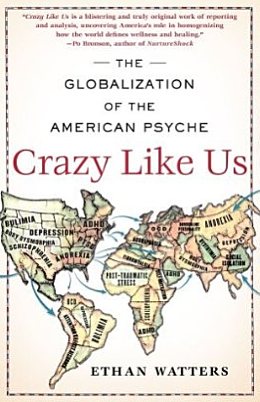
(Links updated 1.2.2021) As Greg Downey at Neuroanthropology.net, I was kept awake until late at night by an article in the New York Times Magazine – yesterday for reading, today for writing. It is a fascinating article about a kind of globalisation that isn’t talked about much outside the university, written by Ethan Watters, author of Crazy Like Us: The Globalization of the American Psyche, released two days ago. It’s about the globalisation of the Western conception of mental health and illness

“We have for many years been busily engaged in a grand project of Americanizing the world’s understanding of mental health and illness”, he writes. “We may indeed be far along in homogenizing the way the world goes mad.” And the idea that our Western conception of mental health and illness might be shaping the expression of illnesses in other cultures is rarely discussed in the professional literature.”

Western conceptions of mental health? Well, as anthropologists stress, illness is not only about biomedicine. It’s not only about parts of the body that no longer work. Our brain is not a batter of chemicals that “needs a fine chemical balance in order to perform at its best” (advertisment for the antidepressant Paxil).

Illness, maybe especially mental illness, is also about culture:

(M)ental illness is an illness of the mind and cannot be understood without understanding the ideas, habits and predispositions — the idiosyncratic cultural trappings — of the mind that is its host. (…)

What cross-cultural psychiatrists and anthropologists have to tell us is that all mental illnesses, including depression, P.T.S.D. and even schizophrenia, can be every bit as influenced by cultural beliefs and expectations today as hysterical-leg paralysis or the vapors or zar or any other mental illness ever experienced in the history of human madness. (…)

In any given era, those who minister to the mentally ill — doctors or shamans or priests — inadvertently help to select which symptoms will be recognized as legitimate. Because the troubled mind has been influenced by healers of diverse religious and scientific persuasions, the forms of madness from one place and time often look remarkably different from the forms of madness in another.

Contrary to popular belief, “Western” biomedicine is not culturally neutral either:

The ideas we export often have at their heart a particularly American brand of hyperintrospection — a penchant for “psychologizing” daily existence. These ideas remain deeply influenced by the Cartesian split between the mind and the body, the Freudian duality between the conscious and unconscious, as well as the many self-help philosophies and schools of therapy that have encouraged Americans to separate the health of the individual from the health of the group.
(…)
“Western mental-health discourse introduces core components of Western culture, including a theory of human nature, a definition of personhood, a sense of time and memory and a source of moral authority. None of this is universal,” Derek Summerfield of the Institute of Psychiatry in London observes.

Ethan Watters explains why have American categories of mental diseases become the worldwide standard:

American researchers and institutions run most of the premier scholarly journals and host top conferences in the fields of psychology and psychiatry. Western drug companies dole out large sums for research and spend billions marketing medications for mental illnesses. In addition, Western-trained traumatologists often rush in where war or natural disasters strike to deliver “psychological first aid,” bringing with them their assumptions about how the mind becomes broken by horrible events and how it is best healed.

The export of Western biomedical ideas, Watters explains, can have “frustrating and unexpected consequences”, for example marginalization of people with “mental heath problems”. People with schizophrenia in some developing countries appear to fare better over time than those living in industrialized nations.

Several studies, Watters writes, suggest that we may actually treat people more harshly when their problem is described in biomedical disease terms, when we treat mental illnesses are “brain diseases” over which the patient has little choice or responsibility, when the disease has according this model nothing to do with factors in the outside world like unemployment, racism, larger societal structures that lead to loneliness, despair, depressions:

It turns out that those who adopted biomedical/genetic beliefs about mental disorders were the same people who wanted less contact with the mentally ill and thought of them as more dangerous and unpredictable. This unfortunate relationship has popped up in numerous studies around the world. (…) “irrespective of place . . . endorsing biological factors as the cause of schizophrenia was associated with a greater desire for social distance.”

In Zanzibar, in a group of people with “Swahili spirit-possession beliefs”, the illness was seen as the work of outside forces, it was understood as an affliction for the sufferer but not as an identity according to research by anthropologist Juli McGruder:

For McGruder, the point was not that these practices or beliefs were effective in curing schizophrenia. Rather, she said she believed that they indirectly helped control the course of the illness. Besides keeping the sick individual in the social group, the religious beliefs in Zanzibar also allowed for a type of calmness and acquiescence in the face of the illness that she had rarely witnessed in the West.

>> read the whole article in the NYT Magazine

>> Ethan Watters blog

The article was published last Saturday. The same day, Greg Downey wrote Exporting American mental illness, an example for great anthropology blogging. And the day after another fascinating blog post by Eugene Raikhel at Somatosphere: The globalization of biopsychiatry with lots of links to related medical anthropology studies.

Nearly at the same time, medical anthropologist Michael Tan has written about the same topic in his column Pinoy Kasi in the Philippine Daily Inquirer. He writes about “special children”, children with what Americans call “global developmental delay” or GDD. This diagnosis does not make sense in the Philippines:

The problem here is defining a delay. (…) For example, around the area of language development, you will find books that say a child should have a vocabulary of around 200 words by the age of 2. I can imagine some of my readers beginning to panic now, as I did when I first heard that standard. Imagine me in the middle of the night doing an inventory of my son’s vocabulary and not even reaching 50 (…)
But the anthropologist in me protested that we don’t have studies in the Philippines that established the norm, and given that all our children are growing up in households with at least two, and often more, languages, there’s bound to be some “delay.” As you might have guessed, my son, who is now 4, cannot stop jabbering, and in three languages at that.

>> continue reading in the Philippine Daily Inquirer

SEE ALSO:

Medicine as power: “Creates new categories of sick people”

Where shamans understand colonialism as sickness

Why anthropologists should politicize mental illnesses

The Anthropology of Suicide

(Links updated 1.2.2021) As Greg Downey at Neuroanthropology.net, I was kept awake until late at night by an article in the New York Times Magazine - yesterday for reading, today for writing. It is a fascinating article about a kind…
Read more

Ny blogg: Sosiologiske og antropologiske kjerring(t)råd

Hvordan er det å jobbe som antropolog i et konsulentselskap? Hva er innovasjon? Hvordan kommer ny teknologi til å endre hverdagen vår? Og hva har Mary Douglas med informasjonsarkitektur å gjøre?

“To kjerringer ved navn Lene Gulbrandsen og Lene Pettersen serverer sosiologiske og sosialantropologiske kjerring(t)råd”, er undertittelen på en ny blogg som heter Kjerring(t)råd.

Bloggen ser veldig spennende ut, det er bra at flere antropologer deltar i samtalene på nett! Du finner bloggen fra nå av også på bloggoversiktene på http://www.antropologi.info/blog/index-no.php og http://antropologi.info/feeds/no/antropologi

Bloggerne jobber i Bouvet som er “et skandinavisk konsulentselskap som leverer utviklings- og rådgivningstjenester innen informasjonsteknologi”. Lene Pettersen var månedens antropolog desember 2009 og har tidligere publisert teksten “The impact of social media for business“ her på antropologi.info.

SE OGSÅ:

For mer antropologi på blogger, YouTube og Twitter!

Thomas Hylland Eriksen: – Antropologer må bli flinkere til å bruke nettet

On fieldwork: “Blogging sharpens the attention”

Webutvikling: Antropologer sørger for vekst

– Antropologi er den nye frelsen innen forbrukerforståelse

Why the head of IT should be an anthropologist

Timo Veikkola – The Anthropologist as Future Specialist

Hvordan er det å jobbe som antropolog i et konsulentselskap? Hva er innovasjon? Hvordan kommer ny teknologi til å endre hverdagen vår? Og hva har Mary Douglas med informasjonsarkitektur å gjøre?

"To kjerringer ved navn Lene Gulbrandsen og Lene…

Read more

Leiesoldater som helter? Antropologer analyserer Kongo-dekningen

Nylig intervjuet jeg medieviteren og journalisten Marianne Mikkelsen. Hun skrev en masteroppgave om “flerkulturelle journalister”. Mange av dem har opplevd at deres “habilitet” i minoritetssaker blir trukket i tvil. De ble mistenkt for å være partisk når de skriver om “sine egne”. Bortsett fra at mistanken sannsynligvis har lite for seg kunne man jo si det samme om “etnisk norske” journalister? At de er like inhabile når det gjelder “norsk kultur”? “Det ser ut som om habilitetsreglene tolkes ulikt for majoritet og minoritet”, sa Mikkelsen.

Et godt eksempel på nordmennenes partiskhet er jo utenriksjournalistikken – og Kongosaken om de norske leiesoldatene French og Moland kanskje et av de beste eksemplene. De drapsdømte leiesoldatene som beundrer kolonialismen er blitt gjort til helter av et samlet pressekorps – bare fordi de er norske.

Nå har to antropologer analysert mediedekningen, melder HiO-nytt: Sindre Bangstad og Bjørn Enge Bertelsen. Resultatet vil bli publisert i Anthropology Today i februar.

Bangstad trekker blant annet en linje fra French og Moland til Norges deltakelse i kolonial utbytting i Kongo. I sin beundring for kolonialismen i Afrika er French og Moland “mer typisk norske enn mange av oss liker å tro”, mener han. Antropologen syns også det erinteressant at norske medier har hatt et overveldende fokus på livshistoriene til French og Moland. Til sammenligning har pressen ikke på langt nær vært så opptatte av borgerkrigen og den humanitære krisen i Kongo.

>> les hele saken på forskning.no/ HiO-nytt

Det har vært en del kritiske kommentarer om dekningen av Kongo-saken. Maren Sæbø, redaktør i Verdensmagasinet X, har skrevet flere gode innlegg, blant annet Journalister i Mørkets hjerte og Jungelfeber . Og Dag Herbjörnsrud skrev i Ny Tid Usivilisert fra Kongo . Kathrine Geard oppsummerer debatten på journalisten.no Dateline Kisangani

Forresten en av de siste saken om French og Moland er også typisk. NRK melder – Bør ha nordmenn rundt seg : Sjømannsprest mener det ikke er heldig for Moland og French å være alene i fengselet. Jeg ser også at NRK meldte om at de Delte ut julegaver i fengselet, mens VG skrev Dette ønsker Moland og French seg til jul

SE OGSÅ:

– Kolonitida lever videre i utenriksredaksjonene

“Statoil siviliserer Afrika?” eller “Vi trenger en ny Afrika-journalistikk!”

Primitive indianere eller primitive journalister?

Nylig intervjuet jeg medieviteren og journalisten Marianne Mikkelsen. Hun skrev en masteroppgave om "flerkulturelle journalister". Mange av dem har opplevd at deres “habilitet” i minoritetssaker blir trukket i tvil. De ble mistenkt for å være partisk når de skriver…

Read more

Ethnologe: Muslimhetze und Finanzkrise sorgen für Boom des Islamic Banking

Milliarden fliessen zu Banken mit Scharia-Garantie titeln mehrere Schweizer Zeitungen heute und verweisen auf die Forschung des Ethnologen Stefan Leins von der Uni Zürich.

Der hat nämlich auf der Webseite der Uni einen Artikel mit dem medienfreundlichen Titel Muhammad als formidabler Risikomanager verfasst. Da erklärt der Ethnologe den Boom des Islamic Banking.

Banken, die nach islamischen Prinzipien wirtschaften, haben von der Finanzkrise und der Diffamierung des Islams nach 9/11 profitiert. Zum einen weil diese Prinzipien die Banken krisenfester machten (u.a. Handel mit Schuldpapieren ist verboten), zum andern weil man durch islamische Investitionen “die Zugehörigkeit zum Islam auf moderne Art und Weise” demonstrieren kann.

In Europa gibt es immer mehr der Banken, die nach islamischen Prinzipien wirtschaften, besonders in Grossbritannien. In der Schweiz agiert die Faisal Private Bank seit dem Jahr 2006 als einziges Finanzinstitut vollständig nach den Regeln der Scharia. Daneben verfügen auch die UBS, die Credit Suisse und die Privatbank Sarasin über “islamkonforme Angebote für ihre Kunden”, so der Ethnologe.

Leins hat seine Lizarbeit über Islamic Banking geschrieben. Für seine Feldarbeit reiste er nach Bahrain sowie zu Konferenzen in London und Istanbul. Zur Zeit bereitet er seine Doktorarbeit zum islamischen Finanzmarkt vor. Im Frühjahrssemester 2010 leitet er an der Uni Zürich das Seminar “Anthropology of Finance – Der Finanzmarkt aus ethnologischer Sicht”.

>> Stefan Leins: Muhammad als formidabler Risikomanager

In Deutschland wird in diesem Monat die erste islamische Bank eröffnet – in Mannheim. Der konservative christliche deutsche Politiker Mann Löffler hat kürzlich islamische Banken gelobt. Die “ethische Verwahrlosung” der Bankenlandschaft erfordere neue Lösungen, meint er und da seien “Halal Banken” ein möglicher “dritter Weg zwischen Kapitalismus und Sozialismus”. Denn bei denen gebe es weder Zinsen noch Spekulation, siehe Artikel in der Sueddeutschen “Erste islamische Bank. Mit dem Segen Allahs im Ländle”.

SIEHE AUCH:

Wirtschaftswissenschaften haben versagt – Ethnologen in die Volkswirtschaft!

Used anthropology to predict the financial crisis

How anthropologists should react to the financial crisis

Anthropologist Explores Wall Street Culture

Financial crisis: Anthropologists lead mass demonstration against G20 summit

Milliarden fliessen zu Banken mit Scharia-Garantie titeln mehrere Schweizer Zeitungen heute und verweisen auf die Forschung des Ethnologen Stefan Leins von der Uni Zürich.

Der hat nämlich auf der Webseite der Uni einen Artikel mit dem medienfreundlichen Titel Muhammad als…

Read more

Samisk skolehistorie er på nett

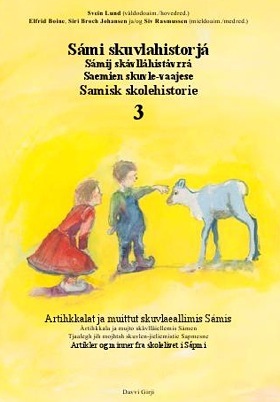
Prosjektet starta i 2003, nå er tredje blind av Samisk skolehistorie utgitt både på papir og på nett.

Ja du leste riktig. Hele boka kan leses på nett. I tillegg er det også seks “bonus tracks” på nett som ikke finnes på papir.

Jeg skulle ønsket flere valgte en slik parallelpublisering. Meningen er jo å opplyse med boka og ikke å bli rik.

Samisk skolehistorie har fått en veldig positiv anmeldelse i Klassekampens bokmagasin (tidligere publisert i Daerpies Dierie – Sørsamisk kirkeblad nr 4 – 2009). “Det er sterke historier vi her får på trykk, spesielt frå dei sjøsamiske distrikta”, skriver anmelderen Åke Jünge. Han roser også språket:

Språket, eller rettare sagt språka i bokverket, må få ein kommentar: Alle artiklane i bind 3 har parallell tekst på norsk og samisk. Den norske teksten vekslar mellom bokmål og nynorsk. Den samiske teksten vekslar mellom nordsamisk, lulesamisk og sørsamisk, alt etter kva del av Sápmi artikkelen handlar om Etter kva eg kan vurdere, er denne parallelkjøringa grundig og skikkeleg gjennomført, sjølv om eg ikkje er samisk-kyndig, og ikke kan vurdere dei delane. Det er eit storarbeid som er gjort her.

Innholdsfortegnelsen gir lyst til å bruke hele dagen til å lese. Et av de spørsmålene som tredje bind drøfter er barnehagens rolle i det samiske samfunn: Hva har barnehagen vært for det samiske samfunnet – et fremmedelement eller et middel til revitalisering av samisk språk og kultur? Eller kanskje begge deler?

Boka er redigert av Elfrid Boine, Siri Broch Johansen, Svein Lund og Siv Rasmussen.

>> les boka på norsk eller på samisk

SE OGSÅ:

Tromsø Museum har lagt ut samenes historie på nett

Hva har filmen “Kautokeino-opprøret” med innvandringsdebatten og Afghanistankrigen å gjøre?

Samer.se – nytt nettsted om samer og samisk kultur

For første gang i Norge: Holdt disputas på samisk

Ny ordbok skaper sørsamisk optimisme

Doktoravhandling: Skolen skaper skiller

Prosjektet starta i 2003, nå er tredje blind av Samisk skolehistorie utgitt både på papir og på nett.

Ja du leste riktig. Hele boka kan leses på nett. I tillegg er det også seks "bonus tracks" på nett som ikke…

Read more