search expand

Antropolog vil “knuse fundamentalistenes monopol på Koranen”

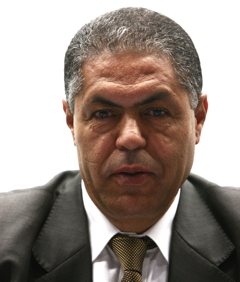
(Bilde: Wikipedia) Antropolog Malek Chebel vil med en ny (fransk) oversettelse av Koranen bidra til en mer nyansert islamdebatt, skriver Politiken. Chebel ville gjøre Koran lett tilgjengelig for folk flest:

Folk vil gerne forstå islam, men der har længe været et bizart samarbejde mellem islamofober og fundamentalister, der ikke ønsker at forklare folk, hvad islam handler om. Der er en mærkelig solidaritet imellem de to ekstremer. De har brug for hinanden. Hvis der ikke var islamistiske fundamentalister, ville der heller ikke være nogen islamofober.

Vi skal knuse fundamentalisternes monopol på Koranen. De foretrækker, at den forbliver tåget og uklar. Bliver den tilgængelig for alle, mister de deres vidensmonopol. Derfor er mit mål vel næsten undergravende. For alle, der læser min oversættelse, kan forstå den. Om de er gamle, unge, kvinder, mænd, muslimer eller ikkemuslimer.

Noe som er uklart i Koranen er spørsmål knyttet til hijab og omskjæring:

Hovedtørklædet (…) omtales som ’djilbab’ i Koranen. Men ingen aner, hvad det betyder. Selv ikke arabiske ordbøger kender ordets eksakte betydning. Men det er der jo ingen i Frankrig, ja i verden, der ved«.

For nogle år tilbage på et universitet i Kairo hørte jeg en imam sige, at »omskæring af kvinder ikke var uforeneligt med islam«. Det er jo skandaløst. Ved at omskære kvinder taber man både sin værdighed som muslim og som menneske. Og da tænkte jeg, at man ikke kan lade kriminelle imamer have monopol på ordet.

Chebel mener både pressen og akademikerne bærer en del af skylden for den polariserte islamdebatten:

Vi har ikke gjort vort arbejde godt nok. Frygt skaber store overskrifter. Men vi, der kæmper for kundskaber, viden, dialog og et oplyst islam, er blevet fejet af banen. Viden har ikke prioritet. Den sælger ikke aviser og gør sig skidt i nyhedsprogrammer.

>> les hele intervjuet i Politiken

SE OGSÅ:

Anthropological activism in Pakistan with lullabies
Thesis: Hijab empowers women

Akbar Ahmed’s anthropological excursion into Islam

Hvor vestlig er sekularismen?

(Bilde: Wikipedia) Antropolog Malek Chebel vil med en ny (fransk) oversettelse av Koranen bidra til en mer nyansert islamdebatt, skriver Politiken. Chebel ville gjøre Koran lett tilgjengelig for folk flest:

Folk vil gerne forstå islam, men der har længe været…

Read more

Gjør lav klasse etnisitet mer synlig?

Når elever gjør det dårlig i skolen og har innvandrerbakgrunn, gjør man ofte et poeng ut av deres etniske bakgrunnn. Men når det er etnisk norske som er “problembarna”, blir deres norskhet ikke trukket fram, sier antropolog Ingrid Smette i et intervju med nettstedet Kilden.

Smette er doktorgradsstipendiat og prøver å finne ut hvordan etnisitet, klasse og kjønn virker inn på utdanningsvalg og ambisjoner blant ungdommene. Hun har vært på feltarbeid blant tiendeklassinger på to skoler i Oslo. Den ene skolen hadde en hovedvekt av elever med norskfødte foreldre med middelklassebakgrunn, den andre hadde en høyere andel minoritetselever, og mange av majoritetselevene hadde foreldre med arbeiderklassebakgrunn.

Ifølge antropologen blir etnisitet mest synlig hos elever med lav klassebakgrunn. Når man diskuterer såkalte “gettoskoler” blir fenomenet “problemelever” forklart med elevenes utenlandske bakgrunn. Men på skolene der hun gjorde feltarbeid var “problemelevene” først og fremst norske gutter med arbeiderklassebakgrunn. Men ingen forklarte deres problemer på skolen med deres bakgrunn som etnisk norske.

Men det betyr vel heller at det er kun innvandrernes etnisitet som blir mer synlig? Nordmenn “har” jo også en etnisitet? Eller at norskhet generelt ikke blir tematisert?

>> les hele saken på Kilden

Smette har tidligere forsket på prostitusjon, fritidsklubber og unge storbyjenter i Dakar.

SE OGSÅ:

Utlending for alltid – Eliteinnvandrere med “nedslående historier”

Etniske minoritetspiger – Etniske uddannelsespraksisser? Ny oppgave forklarer frafall i yrkesfag

– Skolens hvite middelklassenorm har skylda

Rapport: Foreldrenes bakgrunn viktigere enn etnisitet eller nasjonalitet

Doktoravhandling: Skolen skaper skiller

Kritiserer undervurdering av klasseforskjeller i innvandringsdebatten

Når elever gjør det dårlig i skolen og har innvandrerbakgrunn, gjør man ofte et poeng ut av deres etniske bakgrunnn. Men når det er etnisk norske som er "problembarna", blir deres norskhet ikke trukket fram, sier antropolog Ingrid Smette i…

Read more

Claude Levi-Strauss is dead (updated)

A month before his 101st birthday, Claude Levi-Strauss, one of the most influential anthropologists, died at the age of 100. He died over the weekend, according to the office of the president of the School for the Advanced Studies in Social Sciences, in Paris, Bloomberg reports.

See also my collection of articles on Levi-Strauss’ 100th birthday

UPDATE – Obituaries: / Lots of posts about his death – here a selection

Greg Downey: Thinking through Claude Lévi-Strauss (Neuroanthropology.net)

Richard Price: My Teacher, Claude Lévi-Strauss (AAA Blog)

Kevin Karpiak: Claude Levi-Strauss on police (Anthropoliteia)

Scott Atran: A memory of Lévi-Strauss (Cognition and Culture)

Maurice Bloch: Claude Lévi-Strauss obituary (Guardian)

Claude Lévi-Strauss as Museum Ethnologist (Jason Baird Jackson)

Alex Golub: Remembering Claude Lévi-Strauss (Savage Minds)

Claude Lévi-Strauss, Anthropologist, Dies at 100 (New York Times)

Claude Levi-Strauss: Intellectual considered the father of modern anthropology whose work inspired structuralism (Telegraph)

Robert Mackey: The Influence of Claude Lévi-Strauss (New York Times News Blog)

Heather Horn: Remembering Claude Lévi-Strauss, Academic Giant (The Atlantic Wire)

Claude Lévi-Strauss (Telegraph)

Maximilian Forte: Claude Lévi-Strauss: à la prochaine fois (a collection of videos, Zero Anthropology)

I have also scanned the German (lots of articles) and Scandinavian media (only short notices, almost ignored).

A month before his 101st birthday, Claude Levi-Strauss, one of the most influential anthropologists, died at the age of 100. He died over the weekend, according to the office of the president of the School for the Advanced Studies in…

Read more

Two months free access to AAA journals!

From now on until the end of December, the American Anthropological Association (AAA) is offering free access to a large number of its journals.

Why not free all the time? asks Kerim Friedman. Good question. The AAA has often been criticized for its restrictive publishing policies.

But maybe things are changing. Here is a selection of journals with free access in november and december 2009. I’ve picked a sample article from the most recent issue as well. Very interesting stuff and many catchy titles! For the full list of journals, visit the AAA Blog

SEE ALSO:

Free access to the 25 most popular Anthrosource articles!

From now on until the end of December, the American Anthropological Association (AAA) is offering free access to a large number of its journals.

Why not free all the time? asks Kerim Friedman. Good question. The AAA has often been…

Read more

SSOAR – The first Social Science Open Access Repository is online

(via media/anthropology and Open Access Anthropology blog) Where can I publish my papers online? A few weeks ago, I wrote about ResearchGATE and other initiatives. Now, SSOAR – the Social Science Open Access Repository is online. It is according to Kerim Friedman from the Open Access Anthropology blog, “the first general Social Science Open Access repository we’ve found”.

The repository is multilingual with texts in English, Spanish, German, Polish and many other languages. There are already around 5000 papers available, around 84 of them are listed under Eth­nol­o­gy, Cul­tur­al An­thro­pol­o­gy, Eth­noso­ci­ol­o­gy (84), whille searching for anthropology gives 96 hits.

SSOAR’s goal is to provide free electronic access to journal article preprints and postprints. Master’s theses are not included here, it seems. You can deposit the following types of documents:

Copyright permitting, you can deposit in SSOAR all quality-assured scholarly contributions which have already been published or have been accepted for publication in journals, collective volumes or journal-like series.
Journal contributions include scholarly articles, reviews, interviews and conference proceedings. By collective volumes we mean all text compilations such as handbooks, conference readers or proceedings. Contributions such as research reports, discussion papers and working papers from, for example, institutes’ series or research networks can also be deposited in SSOAR, and are, indeed, becoming increasingly significant. Such contributions can be monographic in nature or comprise several documents. Actual monographs (books, dissertations) may also be deposited, ideally in full.

SSOAR is a German initiative, “operated jointly by the Center for Digital Systems, the Institute of Qualitative Research (both are part of the Freie Universitaet Berlin), and by GESIS – Leibniz Institute for the Social Sciences. The project is funded by the German Research Foundation (DFG).

Open Access Anthropology gives an overview over other repositories.

A few weeks ago, the Open Anthropology Cooperative (OAC) has launched the OAC Press

SEE ALSO:

Selv-archiving repositories: Is ResearchGate the solution?

essays.se: Open access to Swedish university papers

Open Access Anthropology in Africa – an introduction

Open access to all doctoral dissertations at Temple University

How can we create a more plural anthropological community?

(via media/anthropology and Open Access Anthropology blog) Where can I publish my papers online? A few weeks ago, I wrote about ResearchGATE and other initiatives. Now, SSOAR - the Social Science Open Access Repository is online. It…

Read more