search expand

More dangerous research: Anthropologist detained, beaten, forcibly disappeared in Egypt

UPDATES: He was released by presidential decree on July 30, 2022 and now has successfully defended his Master’s thesis :Following Unjust Imprisonment, Ahmed Samir Santawy Completes Master’s Studies at CEU (28.9.2023) but the Egyptian authorities have imposed an arbitrary travel ban on him (amnesty, 3.6.2023)


Not only in Iran but also in Egypt authorities feel threatend by anthropological research. Especially when the topic has something to do with human rights – in the following case – women’s rights and abortion.

When graduate student Ahmed Samir Santawy December last year arrived at Sharm el-Sheikh airport from Vienna (where he studies at the Central European University), he was taken aside by the National Security Agency and questioned about his research. One month later, his family home in Cairo was raided, and the security forces looked through the family’s phones. As Ahmed Samir was not present, the NSA officers told his family to send him to the police station as soon as he’s back.

The anthropologist went to the police station on January 30 and 1st of February. Since then, nobody has seen him anymore. He never returned.

He was – as many reserachers, journalists, and activists before him – forcibly disappeared.
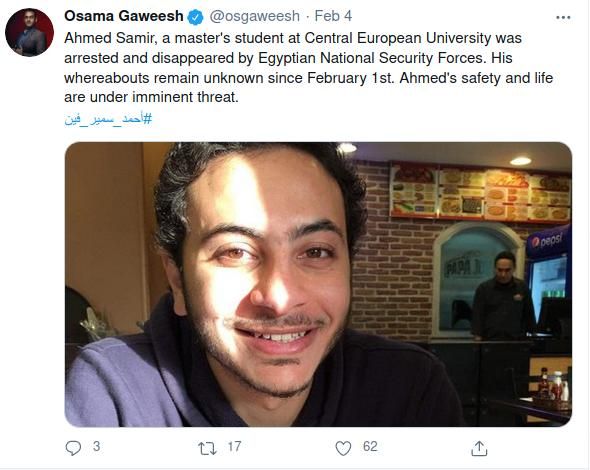
Tweet by journalist Osama Gaweesh

Forced disappearance are usually defined as cases when a state actor or collaborator secretly abducts or imprisons a person and refuses to acknowledge their fate or whereabouts. In Egypt, forced disappearances have become a common way for the regime to deal with its (perceived) opponents and critics.

In Egypt, the case of the Italian PhD student Giulio Regeni from the University of Cambridge is maybe the most famous one internationally. Regini was researching workers’ rights in Egypt. Five years ago, while on his way to meet a friend in downtown Cairo, he disappeared. More than one week later his dead body was found on the side of a highway on the outskirts of Cairo bearing marks of severe torture.

But it is only one year ago when another academic, the Egyptian Erasmus student Patrick George Zaki who was pursuing a master’s degree at the University of Bologna, was arrested from the Cairo airport and forcibly disappeared, beaten, stripped, and electrocuted on his back and his stomach, and threatened with rape. "A new Zaki case in Egypt" was therefore the headline when Italian news wrote about Ahmed Samir Santawy*s dispperance two days ago.

Ahmed Samir Santawy reappeared a few days ago, frightened and with a swollen face, he was beaten. He was not with his family, though, but behind the bars of the State Security Prosecution of Cairo. He was – as the other journalists, researchers and activists before him – charged for joining a terrorist group and dissemination of false information. He has been ordered held in remand for 15 days by the State Security Prosecution.

In the meantime both the European Association of Social Anthropologists (EASA) andthe Central European University in Vienna call for his release. University rector and president Michael Ignatieff said to Austrian public broadcaster ORF that cooperation with Egypt will be stopped until Ahmed Samir is released.
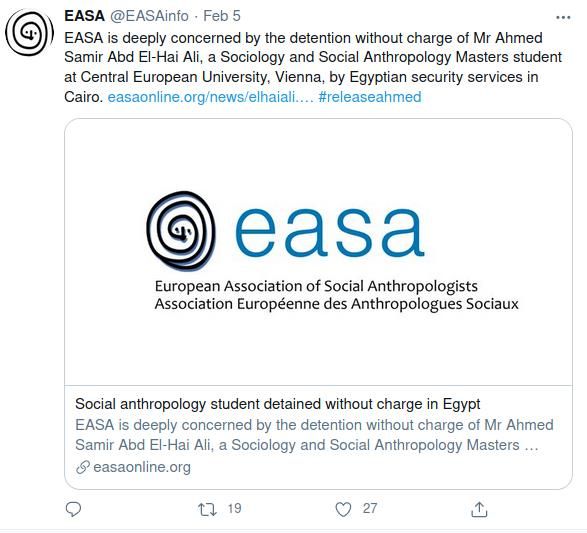
Tweet by the European Association of Social Anthropologists (EASA)

EASA writes:

The European Association of Social Anthropologists (EASA) is deeply concerned by the detention without charge of Mr Ahmed Samir Abd El-Hai Ali, a Sociology and Social Anthropology Masters student at Central European University, Vienna, by Egyptian security services in Cairo. Mr Abd El-Hai Ali is a researcher and student of good standing, working on the history of reproductive law and policy in Egypt.

EASA urges the government of Egypt to take all steps necessary to ensure Ahmed’s swift and safe release, that his legal rights are respected and that he is afforded all legal assistance necessary.

The American Anthropological Association also called for his release in an open letter to the Minister of Interior Tawfiq:

(…)
As scholarly associations with a combined membership of more than 20,000 worldwide, we are committed to the principles of academic freedom and freedom of expression in a democratic society. Our Associations stand for advancing understanding of the human condition through anthropological research, and for applying this understanding to addressing some of the world’s most pressing problems. As an Egyptian student pursuing his Master’s degree in anthropology at Central European University in Vienna, Ahmed is making significant scholarly contributions to help build these bridges of understanding.

We strongly urge the Egyptian Ministry of Interior to do what it can to effect Mr. Samir’s release and safe return to his family. Please don’t hesitate to contact us if we can provide additional information.

PS: He is both called Ahmed Samir Santawy and Ahmed Samir Abd El-Hai and Ahmed Samir Abdelhay Ali – Arab names are a complicated matter!
PPS: Embedding of Tweets did not work well on all devices, I replaced them with screenshots

UPDATES 8.2.2021

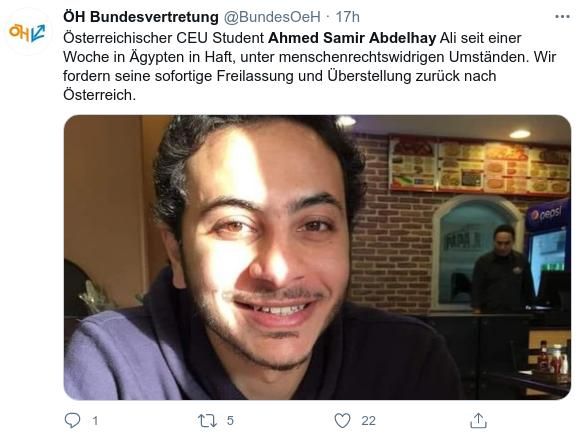
Austrian news sites have started writing about Ahmed Samir Abd El-Hai today, and the Austrian National Union of Students federal body of Representatives callis for his release (in German only):

Forsea – a NGO fighting for human rights in Southeast Asia – also calls for his release:

Ahmed has been involved in several projects with human rights organizations and NGOs in Egypt as a vocal human rights defender. Ahmed’s case is the latest in a series of cases of students being harassed and forcefully detained by Egyptian authorities.

Forced disappearance is a threat to those that oppose regimes. In Southeast Asia, forced disappearance has long been a tool for dictatorial regimes to silence critics. For example, in the Thai case, in the past 5 years, there have been 10 dissidents abducted, forcedly disappeared and killed. The disappearance of Ahmed Samir Abdehay Ali reflected this trend of state crimes across the region.


UPDATE 12.2.2021: AMNESTY CAMPAIGN

AMNESTY INTERNATIONAL STARTS CAMPAIGN: EGYPT – PRISONER OF CONSCIENCE DETAINED INCOMMUNICADO: AHMED SAMIR SANTAWY: Amnesty asks you to take action and write an appeal. They provide a model letter (pdf)


Update 16.2.2021: Support from Scotland: An Edinburgh University graduate is calling for the release of her classmate from an Egyptian jail (The Scotsman 16.2.2021)

Update 3.3.2021: PEN America today joined with free expression allies globally demanding the release of Egyptian student Ahmed Samir Santawy: Detention and Abuse of Egyptian Student is Part of Ongoing Assault on Free Expression, Academic Freedom

Read more / Sources:

Forcibly disappeared graduate student brought before prosecution, handed 15-day remand detention order (Mada Masr 6.2.2021)

Egypt, the student of the University of Vienna has reappeared: he is in prison. “Frightened and with a swollen face, he was beaten” (Italy24News, 6.2.2021)

Egyptian student and human rights advocate detained by Cairo police (TRTWorld 5.2.2021)

Italy charges Egyptian security agency officials over murder of PhD student Giulio Regeni (The Guardian 10.12.2020)

Egypt – Hundreds disappeared and tortured amid wave of brutal repression (Amnesty International 13.7.2016)

Egypt cracking down harder on human rights groups, experts say (The Guardian 23.11.2020)

SEE ALSO:

When research becomes dangerous: Anthropologist facing jail smuggles himself out over snowy mountains

Engaged anthropologists beaten by the Mexican police

Engaged research = Terrorism: Germany arrests social scientists

UPDATES: He was released by presidential decree on July 30, 2022 and now has successfully defended his Master's thesis :Following Unjust Imprisonment, Ahmed Samir Santawy Completes Master’s Studies at CEU (28.9.2023) but the Egyptian authorities have imposed an arbitrary…
Read more

When research becomes dangerous: Anthropologist facing jail smuggles himself out over snowy mountains

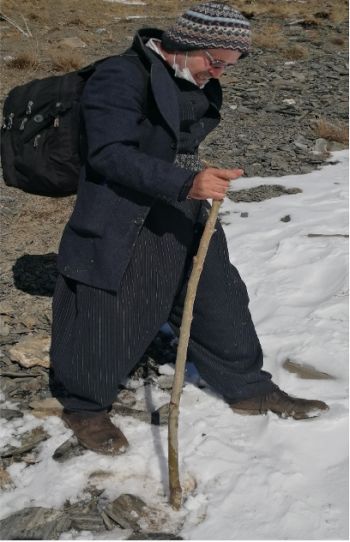
Kareem Ahmady: “I just simply left”. Photo: Ahmady’s website

One month ago I have written about anthropologist Kareem Ahmady, who has researched child marriage, female genital mutilation (FGM) and sexuality in Iran, before:

Iran jails anthropologist for "subversive research", "seeking cultural changes" and "promoting homosexuality".

Today following headline appeared on his blog:

Eventually I made the decision which I had been struggling with for a long time – the decision to escape.

He writes:

Eventually, in a bitterly cold, dark night, I embarked on a journey. Every hour of that unforgettable night, with every path that opened before me through the tough route, I wondered whether there are any roads more impassable than prejudice, ignorance, tyranny and isolation from the rest of the world.

Kurds are known to have no friends but mountains; on the night of my departure, with no lantern to light my path but the white snow, I realized again that the mountains were giving me a shelter and aiding me to start a new beginning with even stronger determination. (…)

What I have been through for the past one and a half years, is the story of a sad tragedy whose sequence, although real, is unbelievable. The Revolutionary Guard security system intended to introduce me as one of the main tools of the “infiltration scenario”. (…) They had come to the conclusion that I had been trained as a teenager for the purpose of infiltration and overthrowing the system.

Ahmady who is a British-Iranian dual national is now safe in the UK. In Iran he was sentenced to nine years prison. In the verdict that he put online (in English!), we read on the first page:

Kameel Ahmady has been acting as a senior expert in sociology and anthropology, directing the propagation of western principles and weakening Sharia/lawful rules and fundamentals in the field of family and marriage, and promoting the necessity to adopt western and humanist values. He was under observation by the Intelligence Organisation of the Islamic Revolutionary Guard Corps (IRGC)

And on page 10:

Generally, it can be said that increasing the age of marriage for children is one of the strategies of the enemy for weakening and ruining the family system; andthat Mr Kameel Ahmady is one of the leaders in the implementation of this strategy in Iran.

And finally:

Ahmady communicated with anti-revolution and problematic institutes and foundations and travelled to occupied Palestinian territories. A teaser, pepper spray, alcohol to the value of alcohol were discovered by Iranian customs (3150000 Rials), as well asother available evidences and documentation. His crime is proved.

Short time after he was everywhere in the news, among others in The New York Times. In an interview with the BBC he said he left without telling anyone but his immediate family:

"I just simply left. I packed my bag with a shaving kit, a few books of mine, and a laptop. And warm clothes, because I knew I had to smuggle myself out of that train in the mountains. It was very cold, very long, very dark and very scary.

In an interview with The Guardian he nevertheless expressed slight optimism and said he would like to have a role in helping create a dialogue.:

“The Islamic regime is run by a small minority, the so-called hardliners, but that generation of leaders are dying out.

“Most people, those not making a living from high politics, corruption, are not reformers or fundamentalists but people who want to see change. There is a hint of hope after the years of hardship and sanctions that have brought people to their knees and crippled the economy.

“If negotiations restart, it’s very important that Iranian civil society and opposition groups are heard on issues like human rights. Nothing good ever came out of conflict and fanaticism, and I say that from personal experience.”

UPDATE 12.2.2021:

The Guardian writes: British-Iranian anthropologist who fled Iran accused of sexual abuse:

Four women have separately claimed to the Guardian that he assaulted them, and others have made allegations of repeated sexual harassment. (…)
Ahmady said in a statement that the accusations were “baseless slander” organised by professional rivals and the Iranian state in an attempt to smear him and undermine his work. He also said two accusers had been in consensual relationships with him.

SEE EARLIER ON ANTROPOLOGI.INFO with more information about Kameel Ahmady’s research:

Iran jails anthropologist for "subversive research", "seeking cultural changes" and "promoting homosexuality"

Kareem Ahmady: "I just simply left". Photo: Ahmady's website
One month ago I have written about anthropologist Kareem Ahmady, who has researched child marriage, female genital mutilation (FGM) and sexuality in Iran, before:
Iran jails anthropologist for "subversive research", "seeking…

Read more

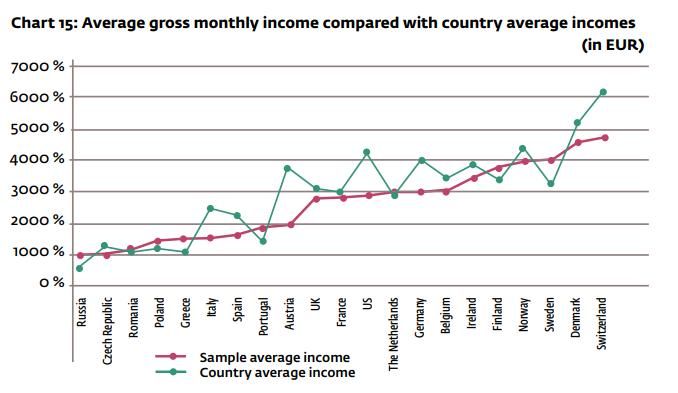
In Europe, more than two thirds of all academic anthropologists are living in precarity

(via FocaalBlog) In the general public, academics are often viewed as being part of an elite, who lives comfortable lives. In reality this is only true for a small minority of well-paid professors, while the situation for most academics rather ressembles those of other underpaid workers like cleaners or delivery or Uber-drivers – especially since universities are no longer run like public institutions but as corporations with managers and PR departments that all compete for being “world leading”.

A recently published survey among anthropologists in Europe provides us with neat but disturbing statistics. The survey was carried out online and before Corona, between 18 June 2018 and 22 July 2018.

“Anthropology in Europe is increasingly a precarious profession”, we read in the 102 page survey among members of the European Association of Social Anthropologists (EASA), an initiative by the PrecAnthro Collective, whose members mobilised since 2016 to raise awareness about the challenges of developing an academic career in anthropology.

Increasing precarious employment conditions is a major issue here:

Much corridor talk at the 2014, 2016 and 2018 EASA conferences, and many informal chats during the online-only 2020 conference were neither about the latest ground-breaking study nor even about the latest careerbreaking scandals, but rather about the lack of career prospects, which ultimately prevents highly skilled scholars from conducting groundbreaking academic work

Permanent contracts are rare, at least until you get tenure as professor in the age of 50 or so if you are lucky. Short term contracts are the norm, instead, often shorter than six months, thus leaving anthropologists in a constant state of insecurity:

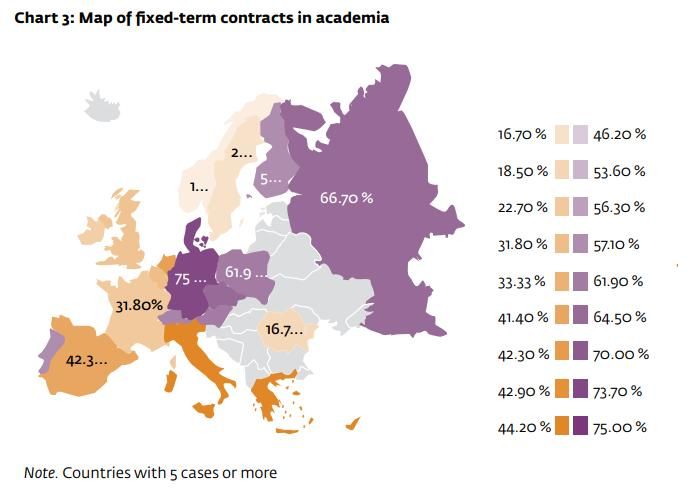
Among those who identified ‘employed in academia’ as their primary status, 44.3% had a permanent contract, and only 31.3% were on permanent and full-time contracts. This means that over two thirds of all academic anthropologists in Europe are in some form of precarious employment.

There are huge differences within Europe and – as expected from my site – Germany, one of the most inequal countries in Europe with growing poverty rates, comes out as one of the worst – or worst country to be. While 49.4% of the respoindents in the UK had permanent contracts, in Germany it was only 12.1%. The numbers for women are of course even worse than for men:

While men and women were equally represented among those on fixed-term contracts, women held a higher proportion of very short-term contracts, i.e. under six months. Women were also less likely to be in senior positions (29% of men versus 19% of women).

One consequence is that you constantly need to look for new employment opportunities. Especially early career researchers “spend an excessive amount of time at work applying for jobs”. Half of all respondents spent more than one month a year applying for jobs. Less than 10% had not applied for a job in 2018.

Changing jobs means in many cases leaving your country, being constantly on the move:

Among those aged 31–35 years, only one third had not left their countries for work or education (excluding fieldwork), while a quarter had changed countries for work three or more times over the last five years.

In most countries, the salary is generally below avarage. Especially academics in East Central and South East Europe said their incomes “did not meet their needs”, and that they were “unable to save or manage unexpected expenses”. Among all respondents, only one in four anthropologists had money left at the end of the month.

Less than half of the respondents reported an ability to cover their living expenses solely with the wages from one full-time job. Over one fifth of EASA members also rely on parents and one tenth on family members to support them in making a living.

Temporary teaching fellows or instructors (that are growing in number) were the most vulnerable:

Of these, 68.8% said their income did not cover their needs, 80.7% had no money left at the end of the month, only 6.2% were ‘completely’ in a position to deal with an unexpected expense, and 53.1% were ‘not at all’ able to do so.

Generally, universities do not seem to be a nice place to work in, as also discrimination, harassment, unfair treatment seem to be widespread.

Very worrying: The interests of precarious anthropologists are not sufficiently represented in their academic context:

Precariously employed academics did not join unions because they felt that unions did not represent their interests as the unions were dominated by senior faculty or administrative staff. Insecurity regarding staying in academia or in the country of employment was another reason for not joining.

Membership in unions differs extremly, though. While in Scandinavia most academics are members (Denmark 96% and Finland 84%), the opposite is true for Germany (23%) or Poland and France (4% both).

The situations is probably even grimmer as the report is not representative for whole Europe. Most of the 809 EASA members who completed the questionnaire resided in the West and North of Europe – only 9.7% were residents of East Central and South East Europe.

Susana Narotzky from the University of Barcelona, Spain, sees this underrepresentation as a structural problem within the EASA. In her blog post A History of Precariousness in Spain in the FocaalBlog she writes:

In Spain, many of the part-time non-tenured teaching positions have extremely low salaries and their holders juggle a plurality of jobs that make research difficult. As a result, membership in EASA –which is fundamentally tied to participation in the biennial conference—is rarely sought.
Therefore, a large contingent of (probably) the most precarious voices, many of which are not proficient in English, is not represented in the survey. This may also explain why a large majority of respondents work in Northern institutions which have more resources than those in other countries.

Exclusion by language is also a issue that Natalia Buier from the Central European University criticizes in her post What sample, whose voice, which Europe? at the FocaalBlog. “The reality of EASA is”, she writes, “that for an association that calls itself European it is a surprisingly monolingual one.”

Furthermore, middle-class respondents are overrepresented in the survey. The situation of anthropologists with working class background needs more attention.

In Spain a common experience is that of the grinding of working-class lives not only through exclusion, but also through inclusion into academic spaces.

And while the authors of the report seem to imply that working-class students are at risk of being increasingly underrepresented, there is at least one level at which we are likely to see an increase of the presence of working-class students: the doctoral level. (…). In a world of increasing exploitation, (…) the stability of a four-year PhD scholarship of roughly 1000 euros offers many of working-class background the possibility of more stability than most alternatives. (…)

Increased abilities but diminished resources do not change the fact that the professional machine will probably spit out the student of working-class background at the first opportunity: but that cut out point seems to be increasingly moving towards the post-doctoral phase, where the prolonged subsistence on no or below subsistence level income requires resources that are less likely accessible to colleagues of working-class background.

So, what to do? The recommendations in the report are written in diplomatic language and seem tame and weak.

Without touching the root of the problem, the commercialization of academia, little can be done as Don Kalb from the University of Bergen writes in his post Anthropological Lives Matter, Except They Don’t at Focaal:

Academia should not be run as McKinsey would like it. Our own discipline nowadays has really no other professional rationale than helping to produce democratic, intelligent, and progressive people and societies, not just “more stuff” – research articles, students, diplomas, scholars – against lowest cost. (…)

Outdated academic structures and hierarchies, as well as actively managed neoliberal ones (Netherlands, UK), will have to change if the continent wants to respond creatively and progressively to the massive transformations that are coming to us. Anthropologists should actively make that case and show that they must be part of the creative dynamism.

>> read the whole report

There is a growing amount of scholarship on academic precarity that I might come back to later. For now check precarity in The Anthropology Newspaper.

SEE ALSO EARLIER ON ANTROPOLOGI.INFO:

Protests at Yale: When Walmart’s management principles run an anthropology department

University reforms – a threat to anthropology?

Minority scholars treated as second class academics: Still a racial bias in anthropology

How can we create a more plural anthropological community?

(via FocaalBlog) In the general public, academics are often viewed as being part of an elite, who lives comfortable lives. In reality this is only true for a small minority of well-paid professors, while the situation for most academics rather…

Read more

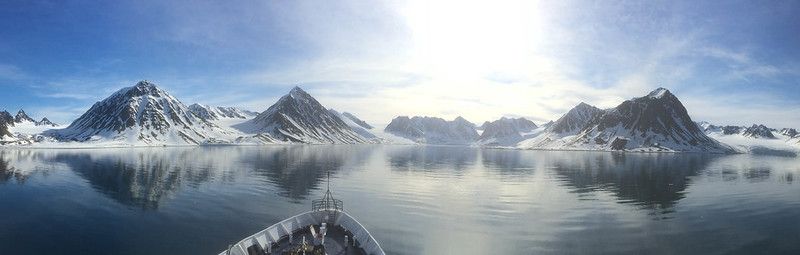
Globalisation and climate change in the High Arctic: Fieldwork in Svalbard, the fastest-heating place on earth

Magdalene Fjord, Svalbard. Photo: Ashok Boghani, flickr

Most people can hardly imagine that it is possible to enjoy life up in Northern Norway, in Tromsø for example where I once stayed and studied at the northernmost university in the world for one year: Too cold, too remote, too boring – these are conventional misconceptions.

But Northern Norway is nothing compared to the fieldsite that anthropologist Zdenka Sokolíčková has chosen: Svalbard, an island that is located two plane hours north of Tromsø in Northern Norway, halfway on the way to the North Pole. An island that consists 60% of ice, where the sun disappears for more than three months below the horizon and where you always have to be prepared to meet polar bears (and therefore carry a gun).

Nevertheless, after two years of fieldwork, anthropologist Zdenka Sokolíčková tells in an interesting interview with Radio Prague International: “It will be quite painful to leave” – and – this is about the need to de-exoticize – “It’s just an ordinary town very high up north”.

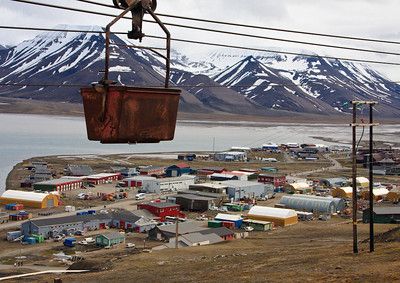
Coal mining has been the key industry at Svalbard ever since Norway won sovereignty over the archipelago in 1920 – until 2021 at least. Photo: Ashok Boghani, flickr

Svalbard and its only town Longyearbyen with 2300 inhabitants (from 50 nations!) is popular among researchers. One reason is that it is a good place to study climate change. It is the fastest-heating place on earth. Since 1971 the average temperature has risen by 4 degrees in summer, and 7 in winter.

Climate change has for a long time been a topic not only for natural sciences, but also the social sciences,including anthropology. One of the first studies “Anthropology and Climate Change: From Encounters to Actions” by Susan Crate and Mark Nuttal was published already 12 years ago.

How do people cope? What changes have they observed? How does it affect their life and and their relation to the environment? These are some of the important questions to ask. As anthropologist, she explains, she is interested in peoples’ stories about these changes, Zdenka Sokolíčková explains in the interview.

We get more details about her findings in two conference presentations she uploaded on her Youtube channel.

One of the many good things with the global pandemic is that we get videos like these ones. Instead of standing in a boring conference room the researcher is taliking utside directly in her fieldsite, the buildings and mountains of her current home town Longyearbyen nicely visible in the background. Due to the pandemic the conference was held online only. (But as she explained

she would anyway not have travelled such long distances for environmental reasons).

As outsider one might be tempted to think that climate change also might be a good thing. This is only partly true, she explains. -20 instead of -35 degrees are easier to adapt to, but the problem are the more unstable weather conditions that have become more common. Higher temperatures mean less sea ice, it becomes more difficult to move around with snow scooters. Even in winter there are sometimes periods with rain or even strong rains. “Our worst nightmare is dark season with rain, you know no sun, rain, dark soil, nothing to do becasue you can’t go outside. This does something to you. You think this is not the place to be”, one of the inhabitants, who has been living there for a long time, told her. “Also when it rains and then frost comes back, the tundra gets hard and icy and that makes grazing for reindeers difficult”, the anthropologist adds. “Seing the starving animals coming to the town is heartbreaking.”

Also interesting: While of course not all inhabitants care for climate change, there is a widely shared notion of the inappropriateness oif human settlement. Living there is unsustainable and has a high ecological footprint – even after the end of coal mining was announced that has been the key industry at Svalbard ever since Norway won sovereignty over the archipelago in 1920. Tourism has become more important instead, which also has a huge negative environmental impact. The impact of the researchers themselves, no small number either, should also not be neglected.

I was surprised to see that Zdenka Sokolíčková is part of the research project Overheating. The three crises of globalisation at the University of Oslo where I took part as journalist. I interviewed several anthropologists who researched climate change. See “We still know too little about the human dimensions of climate change”.

SEE ALSO:

For more anthropology of climate change

“Seen from an anthropological view, humanity is at risk of extinction”

Researching in “non-prestigious areas” in the Artctic North – Robert Paine 1926-2010

Why Siberian nomads cope so well with climate change

Magdalene Fjord, Svalbard. Photo: Ashok Boghani, flickr

Most people can hardly imagine that it is possible to enjoy life up in Northern Norway, in Tromsø for example where I once stayed and studied at the northernmost university in the world for…

Read more

Nobody is normal: "The line between healthy and not healthy is drawn more by culture than by nature”

Who is crazy? Who is normal? Describing somebody as “not normal” has serious implications for this person, can destroy her life. From an anthropological perspective, there is nothing called normal. What we have are endless ways to lead a more or less meaningful life. Principally, everybody is as crazy as everybody else. The distinction in normal or crazy is artifical – it has to do with culture, history and politics, and is therefore an interesting object of study.

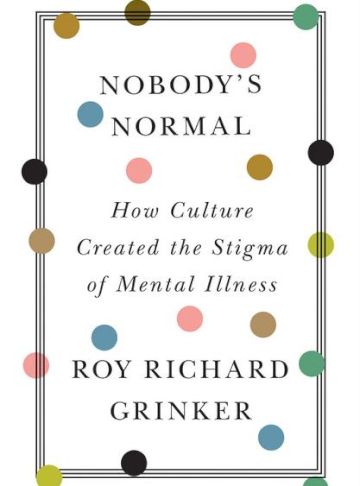
In this sense, anthropologist Roy Richard Grinker has written an important book that was just released: Nobody’s Normal: How Culture Created the Stigma of Mental Illness.

In this book he explores the roots of mental illness stigma around the world – and reveals how our prejudices and notions of mental illnesses and ‘normality’ reek of cultural biases that stop many from seeking help.

According to a very interesting review by Claudia Wallis in Spectrum News, Grinker shares Sigmund Freud’s wish that mental illnesses would be viewed “like the common cold, something everyone gets from time to time,” and that people “might eventually feel no shame in seeking psychological care for their problems.”

So why do people in the so-called West, and increasingly everywhere else as well view mental illnesses differently? And where does the stigma come from?

Grinker traces the stigma back to industrial revolution and capitalism in in late 17th-century Europe, Claudia Wallis writes:

With industrialization, people with intellectual disabilities, schizophrenia and other serious brain conditions were moved out of their homes and into asylums, along with criminals, debtors and addicts — basically anyone viewed as incapable of being a productive and self-sufficient worker.

Once institutionalized, people were sorted by their caretakers into categories: “idiotic” and “insane,” “probably curable” and “probably incurable,” and eventually more specific, medicalized terms. The words “normal” and “abnormal” were borrowed from mathematics and statistical averages.

As new categories of sickness and perceived deviance were added — mania, melancholia, dementia, masturbation (an actual diagnosis!) — the number of people consigned to asylums exploded in England and the United States. “Experts were at a loss to explain the apparent epidemic created by illnesses they themselves had invented and were now counting,” Grinker wryly observes.

In an interview with Psychology Today Grinker provides more details:

When capitalism took hold, we started to value individual autonomy and productivity for everybody. Before that, we didn’t hold a person responsible for all of their differences and all of their successes and failures

In the U.S., the hero is the individual. People with disabilities aren’t necessarily always able to be independent. By the very nature of capitalism, the person who depends on others, who lives with others, or who isn’t an efficient worker is considered to be a failure.

As a contrast he provides an example from rural Namibia:

A man I’ll call Tamzo, who lives in rural Namibia, has what we would call schizophrenia. He walks 20 kilometers to the village once a month to get antipsychotic medicine. The Western doctor there writes down his diagnosis as schizophrenia.

But at home he is thought to be the victim of a curse that somebody placed on their village that settled randomly on Tamzo. In his family and his village, as long as he is not hearing voices, he’s not considered at all to be sick. Whereas in the clinic, it’s “once labeled, always labeled.”

The anthropologist does not deny the existence of mental illnessess, Virginia Hughes writes in her review in the New York Times. But for the past few centuries, Western doctors have been fixated on distinguishing normal from abnormal. And those bright demarcations have made it easier to stigmatize people.

Grinker does not believe that a focus on the precise genes and biological mechanisms behind brain conditions such as autism and schizophrenia will reduce stigma. Neuroscientists hoped this would make mental illness more equivalent to for example heart disease:

Grinker disagrees. He notes that in some parts of the world a genetic basis becomes even more stigmatizing, as it casts doubt on bloodlines. And he believes that mental illness can never be entirely reduced to biology. As with hypertension, osteoporosis, hypercholesterolemia, obesity and many other conditions, the line between healthy and not healthy is constructed, or, as he puts it, “drawn more by culture than by nature.”

>> review in Spectrum News

>> review in New York Times

>> interview in Psychology Today

Check also his website, his texts in Psychology Today with titles as The Racist Origins of the Modern Concept of “Schizophrenia” and his Ted Talk:

Reading about his book, I remember a useful concept that the Norwegian researcher Ivar Morken introduced – in Norwegian he called it “normalitetssentrisme” – in English it might be normalcentrism. He thinks it would be fruitful to talk about nornalcentrism in a similar way as we talk about ethnocentrism.

Mental illness and normalcentrism has been topic before, therefore:

SEE ALSO:

The globalisation of the Western conception of mental illness

Ethnography about Deaf People: It is insufficient to understand deaf people as disabled. Most deaf people are proud of their culture

Medicine as power: “Creates new categories of sick people”

Why anthropologists should politicize mental illnesses

The Anthropology of Suicide

Who is crazy? Who is normal? Describing somebody as "not normal" has serious implications for this person, can destroy her life. From an anthropological perspective, there is nothing called normal. What we have are endless ways to lead a more…

Read more