search expand

Now online: Up to 100 year old anthropology papers

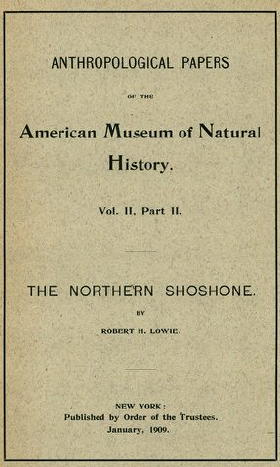
(via Museum Anthropology) More and more open access to anthropology online: The American Museum of Natural History has digitalized their up to 100 year old Anthropological Papers and put them online.

We find both more recent papers like Green revolution : agricultural and social change in a north Indian village and (that’s maybe even more interesting) historic ethnographies from the beginning of the 20th century like Some protective designs of the Dakota by Clark Wissler (published 1907), Tales of Yukaghir, Lamut, and Russanized natives of eastern Siberia by Waldemar Bogoras (published 1918) and The history of Philippine civilization as reflected in religious nomenclature by Alfred L. Kroeber (published 1918).

>> browse the whole collection

SEE ALSO:

2006 – The Year of Open Access Anthropology?

(via Museum Anthropology) More and more open access to anthropology online: The American Museum of Natural History has digitalized their up to 100 year old Anthropological Papers and put them online.

We find both more recent papers like Green…

Read more

Doctoral Thesis: Is Islam Compatible with Secularism?

cover

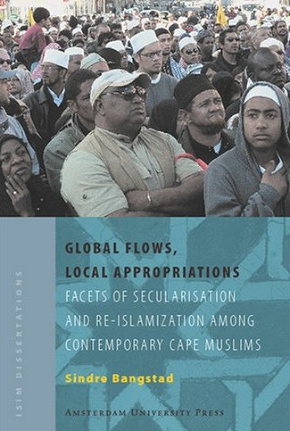
Secularisation is often seen as a process that is associated with the “West” and modernisation, as a process that is opposed to islamisation. In his doctoral dissertation, anthropologist Sindre Bangstad shows that processes of secularisation also emerge from within Muslim communities.

Bangstads dissertation ‘Global Flows, Local Appropriations: Facets of Secularisation and re-Islamization Among Contemporary Cape Muslims’, is based on 15 months of fieldwork in Cape Town, South Africa between 2003 and 2005.

Bangstad stresses that processes of secularisation and re-Islamization are not opposed to each other. They must be seen as implicated in, and interlinked with, one another:

For instance, I demonstrate that prison ‘ulama’ in Cape Town have been able to draw on human rights notions and precepts enshrined in the Constitution in arguing for an expansion of religious rights for Muslim inmates. They have done so, in spite of the fact that the mainstream Cape ‘ulama’ are for all practical purposes opposed to many of the secular and liberal principles of the same Constitution, and many of the legislative and societal changes that they have resulted in.

(…)

It is difficult to understand the discrepancies between the normative models of the predominantly middle-class mainstream Cape ‘ulama’, and the actual practices of Cape Muslims in underprivileged townships and informal settlements, without reference to prior processes of secularisation understood as a decrease in the regulatory capacities of religious authorities.

In his dissertation, Bangstad present findings from his ethnographic research on black African conversion to Islam in the black African townships and informal settlements, on Muslim women in polygynous marriages in underprivileged communities, on Muslims living with HIV/AIDS, on the status of religious rights for Muslim inmates in a prison, as well as on public deliberations between reformists and Sufis on the appropriateness of certain Sufi rituals.

Muslims in South Africa represent a small minority, with a mere 1,46 percent of the total population in 2001. However, Muslims in Cape Town, the historical heartland of Islam in South Africa, represent approximately 10 percent of the population.

>> download the dissertation

SEE ALSO:

Doctoral thesis: Towards a transnational Islam

Extremism: “Authorities -and not Imams – can make the situation worse”

Akbar Ahmed’s anthropological excursion into Islam

New blog: Islam, Muslims, and an Anthropologist

Muslims in Calcutta: Towards a middle-class & moderation

What does it mean to be Muslim in a secular society? Anthropologist thinks ahead

Book review: Mahmood Mamdani: “Good Muslim, Bad Muslim”

Islam in Europe: Mainstream society as the provider of conditions

Islam Is Gaining a Foothold in Chiapas

How Islamic cassette sermons challenge the moral and political landscape of the Middle East

cover

Secularisation is often seen as a process that is associated with the "West" and modernisation, as a process that is opposed to islamisation. In his doctoral dissertation, anthropologist Sindre Bangstad shows that processes of secularisation also emerge from within…

Read more

Why is anthropological writing so boring? New issue of Anthropology Matters

Writing Up and Feeling Down is the topic of the new issue of the Anthropology Matters Journal. The articles outline the challenges involved when moving from fieldwork to writing, when trying to draw an argument out of unwieldy case studies, when you are told that your writing is not academic enough – or when you suddenly face the dangers of writing for a non-academic audience.

Ingie Hovland writes in her introduction:

The first thing that strikes many PhD students when they sit down to start writing up is that there is a strong tension between the very ‘lively’ experiences of fieldwork and the ‘deadening’ process of writing them down afterwards. In the words of one apocryphal PhD student, captured by Jean-Paul Dumont (1978:6): ‘How is the writing going?’ – ‘Oh it should move along quite well, once I get through beating the life out of my material…’

(…)

Anthropology departments try to prepare their PhD students for the intensity of fieldwork, but they come nowhere close to preparing the students for the intense emotions that writing triggers – such as anxiety, loss of self-confidence, and anger, to name but a few – or how to deal with these.

Given the way things are set up, it is perhaps not surprising that the result is, as Mary Louise Pratt (1986:33) notes, that,

For the lay person, such as myself, the main evidence of a problem is the simple fact that ethnographic writing tends to be surprisingly boring. How, one asks constantly, could such interesting people doing such interesting things produce such dull books? What did they have to do to themselves?

>> read the whole introduction

In Anthropology Matters, Melania Calestani, Ioannis Kyriakakis and Nico Tassi recount a part of their own process of being disciplined into what and how to write and not to write in order for their work to be deemed ‘anthropological’.

>> read “Three narratives of anthropological engagement”

Harriet Matsaert, Zahir Ahmed, Faruqe Hussain and Noushin Islam explore expectations and pressures that suddenly and without warning make themselves known if you are one of those anthropologists trying to write for a non-academic (or even just non-anthropological) audience.

>> read “The dangers of writing up: a cautionary tale from Bangladesh”

Paul O’Hare reflects upon his doctoral thesis write-up, and in particular, the writing up of his empirical work. Writing up is not simply a matter of reporting how we “did” the research.

>> read “Getting down to writing up: navigating from the field to the desk and the (re)presentation of fieldwork”

The final contribution to this issue presents new research from Meher Varma about transnational call centres in India’. Her article examines the increasing presence of North American call centres in Bangalore and Delhi and analyses the ways in which these products of transnationalism have impacted notions of Indian national identity.

>> read “India wiring out: ethnographic reflections from two transnational call centres in India”

SEE ALSO:

Six reasons for bad academic writing

The Secret of Good Ethnographies – Engaging Anthropology Part III

Thomas Hylland Eriksen (Savage Minds): What is good anthropological writing?

How To Present A Paper – or Can Anthropologists Talk? A wishlist

Writing Up and Feeling Down is the topic of the new issue of the Anthropology Matters Journal. The articles outline the challenges involved when moving from fieldwork to writing, when trying to draw an argument out of unwieldy case studies,…

Read more

(No longer) Open access to Annual Review of Anthropology 2007

(via anthropology.net) The Annual Review of Anthropology 2007 is out and all articles are freely available online, for example: (UPDATE: No longer open access. You'll have to get the paper version in your library! Ridiculous pricing: 20 USD per…

Read more

When Norwegians do business in Brazil, Lowrider Culture and 9 more anthropology theses (part 1)

(LINKS UPDATED 29.10.22) Norwegian anthropologists no longer hide their master theses in distant libraries. Most theses are now available online in digital archives. Last week, more than 20 new theses (among them 11 in English) have been put online at DUO, the digital library of the University of Oslo.

On this rainy Sunday, I’ll pick out two studies:

Doing busness in Brazil. An anthropological study of the interaction between Norwegian and Brazilian business people is the title of the theses by Anita Wold. She conducted fieldwork in a Brazilian family company that recently was acquired by a Norwegian company. Furthermore, she interviewed Norwegians working in Brazil and Brazilians working in Norwegian companies.

Her point of departure: The increase in international business has created a demand for books about cultural differences in business that are easy to grasp. But books and teaching material within the field called intercultural communication is dominated by quantitative studies. “I believe anthropological theory can provide a more fruitful analytical framework for understanding communication between people with different backgrounds and knowledge”, she writes.

She shows among other things that the dominating figures within the field of intercultural communication use a problematic perspective on cultural difference. For Hofstede (2001), Trompenaars and Hampden-Turner (1997) national identity is an imprint of values and a collective “software” in peoples’ minds that produces a distinctive national behavioural pattern. Through quantitative studies these researchers have found a small set of value-based continuums of interpretation such as individuality-collectivist, masculinity-femininity, power distance etc. (see for example Hofstede’s country profiles):

I found that most of the Norwegian managers find “the Norwegian leadership style” the best way of practicing leadership. The Brazilian leadership style is considered to be more authoritarian than the Norwegian, and few of the Norwegian managers seemed to be willing to adjust their own practice.

The Norwegians, as owners and managers, are in a position where they can define the use of management techniques and practices in the companies where they are in command. However, whenever Norwegians engage with customers in Brazil, they are not in a position to define the situation and therefore have to adapt to local practices and demands in order to sell their products.

In exploring the interaction between people with different backgrounds, I have argued against the perception of culture as it is postulated by Hofstede (2001), Trompenaars and Hampden-Turner (1997). In the present study I have argued that business practices are embedded in the local context.

Thus, in order to understand the differences encountered by the Norwegian and Brazilian business people I have demonstrated the importance of placing the practices in a cultural, historic and economic context.Thus, quantitative studies and universalistic assumptions of cultural differences fail to achieve a fruitful understanding of the contextual variations.

>> download the thesis

lowrider

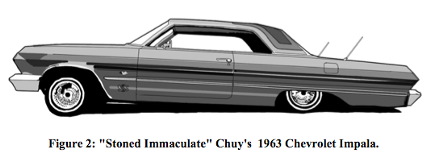
Martin Høyem has written the thesis I want my car to look like a whore. Lowriding and poetics of outlaw aesthetics. It as an extremely well written thesis and even fun to read. He captures the reader already on the first pages when he describes his first days in the field, looking for potential lowriders:

I never saw any lowrider cars in the streets, and this surprised me, since I had an impression—gathered from the material I studied before I left for the field—that the streets of LA would be packed with lowriders. I suddenly realized that my plan A of simply walking up to somebody with a lowrider asking to talk to them rested on a missing premise. I also realized I had no plan B.

At one of the first meetings with his informants, they asked him some questions:

“One thing first: Do you like Abba or Led Zeppelin?”
Chuy had presented me to everybody, in plenum, and asked that I talked a little about myself. (…) It was immediately clear to me what the right answer would be. “These guys aren’t Abba fans,” I thought to myself. And as Bourdieu points out: “Nothing more clearly affirms one’s ‘class’, nothing more infallibly classifies, than tastes in music.” (Bourdieu, 1984:18) (…) “I like Zeppelin,” I said. They all nodded and mumbled approvingly. “That was easy,” I thought.
(…)
Then one guy asked “What kind of car do you have?”
Not missing a beat—since I felt I was doing so well building credibility—I told them: “It’s a 1989 Cadillac Eldorado Biarritz. Two doors.” They didn’t like that. “Well at least it has two doors,” somebody mumbled.

For Martin Høyem it was important to contribute with new perspectives in the study of the lowrider culture:

As a result of the tendency in social studies within USA to threat themes in the light of ethnicity and gender, a major part of ethnographical studies portray the population groups they write about as exotic and describes them as physically and culturally isolated—as subcultures opposed to main-stream American culture. The same goes for descriptions of the lowrider culture, both in academic literature and in diverse types of popular culture.
(…)
The lowrider cars are traditionally described as products heavily influenced by the owner’s Mexican heritage. While there is obviously much to be said for these accounts, they often fall short of considering the class aspects in the judgment of aesthetical taste. I have pointed to data which illustrate how class background might be just as important, if not more, in an effort to analyze the cars and their owners place in the American consciousness.

Additionally, the outlaw mystique which clings to the cars and their owners is a social problem for the lowriders. (…) Perhaps the outlaw aesthetic in the lowriders play the same role as folklore did for the rise of the European romantic nationalism. Just like the scholars of that time gathered histories to demonstrate “connections with the cultural glories of supposed common ancestry” (Herzfeld 1996) the histories that are told through the outlaw aesthetic are stories seeking to establish an abstract common background.
(..)
Although the imagery tells stories of violent conflict solving, loose sexual morals, liberal use of recreational drugs and a strong focus on material values, the everyday reality for the majority of the people who parade this imagery is much more mundane; theirs is a life lived within a framework in agreement with the moral code of society.

>> download the thesis: I want my car to look like a whore. Lowriding and poetics of outlaw aesthetics

And here are the other nine new anthropology theses:

Anne Gry Venås: “School is for the lazy ones”. Local interpretations of children`s rights to education in a rural community in Guatemala

Matthew Whiting: Men & motors. Myth-making and the emulation of a past elite class

Brigt Hope: The function of the internet in the Moroccan public sphere

Marit Aune Bergstrøm: Struggling for respect and dignity. Strategies for shaping meaningful lives among persons with disability and their families in a community on the Mexican south-pacific coast

Hilde Johanne Bjugn Foss: The Hmong in the Twin Cities. Generational and gender differences in the perception of kinship, marriage and prestige

Katri Elina Matikainen: Transformative substances, knowledge and power. Affecting the course of events in a Gambian Mandinka village

Jonas Ursin-Holm Lea: Streets, skollies and coons in district six. On narratives and identity related to an area of forced removal in Cape Town, South Africa

Lene Cecilie Hellum: The face of the cowboy. Perspectives on myths and identities among Texan cowboys

Janne Waagbø: “Dancehall! – a serious thing!” Performing gender in Jamaican dancehall

UPDATE 1/10 Even more new theses in English! More in a later post.

lowrider

(LINKS UPDATED 29.10.22) Norwegian anthropologists no longer hide their master theses in distant libraries. Most theses are now available online in digital archives. Last week, more than 20 new theses (among them 11 in English) have been put online at…

Read more