search expand

Theology’s turn to Ethnography: New OA journal “Practical Matters”

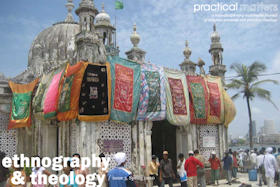
I’ve stumpled upon a rather new Open Access Journal called Practical Matters. This publication of Emory University is both interdisciplinary and “intermedia”, i.e. multimedia.

The most recent issue (nr 3) is called Ethnography & Theology.

In their introduction, Lerone Martin and Luke Whitmore write:

Many scholars of religion who did not begin their scholarly careers as anthropologists now count themselves ethnographers, or at least state that they employ ethnographic methods.

Many scholars of theology have arrived, and continue to arrive, at the view that to better understand how human subjects experience their lives, rituals, and religious/cultural practices “it is necessary to observe people in everyday life and see how cultural meanings are brought by them to bear on their actual, practical concerns.”

This issue aims to push forward the interdisciplinary conversation around the intersections of ethnography and theology.

This issue includes a 12 minutes video by Melissa D. Browning about theologists on fieldwork with a corresponding paper Listening to Experience, Looking Towards Flourishing. Ethnography as a Global Feminist Theo/Ethical Praxis.

Issue 2 focuses on youth and includes an twelve-minute documentary by Sonia Narang that examines how the practice of the visual arts can involve the religious identities of young people.

In the first issue (topic: imagination), you’ll find a lot of photography, for example Imagining Antarctica by Sandra F. Selby or Luther’s Wedding: How One Town is Rebuilding its Convivial Culture through Imagination and Tradition by Barry Stephenson.

I hope we’ll see more journals of this kind. Another innovative journal I wrote about is Anthropology Reviews: Dissent and Cultural Politics (ARDAC)

I've stumpled upon a rather new Open Access Journal called Practical Matters. This publication of Emory University is both interdisciplinary and "intermedia", i.e. multimedia.

The most recent issue (nr 3) is called Ethnography & Theology.

In their introduction, Lerone Martin and…

Read more

Thesis: That’s why they go to war

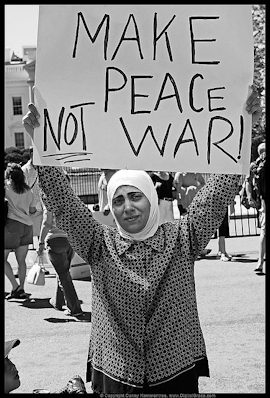
Make Peace. Photo: Danny Hammontree, flickr

What if they gave a war and nobody came?” is a popular slogan from the antiwar-movement. But nowadays, when USA with their allies go to war in Iraq and Afghanistan, people do come. Lots of people enlist in the military, even voluntarily, especially in the U.S. Why?

Anthropologist Sarah Salameh answers this question in her master’s thesis Courtesy Of The Red, White And Blue. A Midwest American Perspective on Troops, War and Nation.

She’s been on a six months’ fieldwork in a small town in the upper Midwest, a rather conservative and patriotic area that struggles with deindustrialization, low wages and unemployment. Salameh – an opponent of the U.S wars in Afghanistan and Iraq – describes the six months “as the most interesting and mind blowing time of my life.”

And it is indeed an interesting and well written thesis about “one of the most understudied groups”: white middle-class Americans.

She introduces us to a diverse group of military people:

The many settings the reader is introduced to includes an Army recruiting office, a public elementary school, Memorial Day celebrations, the motorcycle group the Patriot Guard Riders‟ missions, and the celebration of a National Guard unit returning home from Iraq. One gets to know people ranging from Army recruiters to the girls they helped enlisting at the age of 17, the concerned mother of a soldier, and a bunch of rather unconcerned 5th graders performing their patriotic duty decorating their town‟s cemetery with Star Spangled Banners.

One of her findings is the critical distance many soldiers have towards the government.

While in uniform, the anthropologist writes, soldiers are not allowed to speak negatively about the President. But in reality, as Robert, one of the soldiers, told her “The troops fight for the people, the American people, not the government. Neither the troops nor the people like the government.”

The official reason for waging a war is not always relevant for the soldiers. Looking at peoples‟ motives for joining the military, Salameh writes, “underlines the irrelevance of government and politics”.

Not one person she’s talked to (around 100) claimed to have joined the military because he or she thinks that this or that exact war is especially just or necessary as it is explained by politicians.

Robert is one of them. He did not believe the official explanation of the Iraq war (weapons of mass destructions). At times, Robert claimed the Iraq war is a quest for oil.

But he doesn’t care:

I am going for other reasons than oil. When I was in Iraq, I built schools, and handed out backpacks and paper to school children. I fixed dams so the people could have electricity. I spent two years totally committed to doing stuff like that.
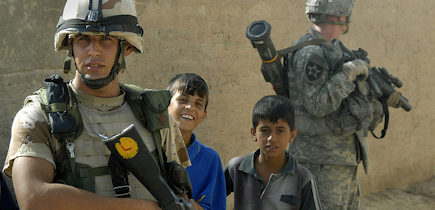

U.S. Army Soldiers in Iraq. Photo: Scott Taylor, U.S.Army, flickr

The research subjects explained and mostly legitimized the US military presence and their own participation, with a reference to themselves as Americans.

Robert places American politicians outside these “American people. He places himself, as a service member, on the side of and fighting for, the American people, not the government.

The anthropologist explains:

People and troops, the government and the people make up two societies that act according to two different value systems; the politicians according to a rather crooked one, initiating wars on unjust premises and ignoring the will of the American people; the American people according to what might perhaps be termed a more American one, expressed in Robert‟s account as focused on a wish to keep his own family and other Americans safe and free, and help Iraqis towards a better life.

Help Iraqis towards a better life? That’s in the eyes of the soldiers their responsibility as Americans. The USA is in their view a positive example for other countries, an example to follow. It seems to me they are on a kind of religious mission.

This religious dimension is interesting. Salameh discusses American nationalism as “civil religion”:

Much of the (…) USA and its military, can be understood within the context of civil religion, wherein the nation is the focus of belief, and its endeavours overseas is the spreading (missionary function) of the values inherent in the „national belief‟.

One of the dogmas of this “civil religion” is the idea that God has a special concern for America, putting Americans in the role of the chosen people, and America in the role of the promised land:

This is connected to the story of the American foundation, taking the form of myth, where today‟s American‟s ancestors came to this promised land and made a covenant with it, still binding today‟s Americans. The covenant has two aspects: to maintain the concept of promised land, basically to keep the USA free, as underlined by for example Robert, as well as to „export by example‟ the American version of freedom.

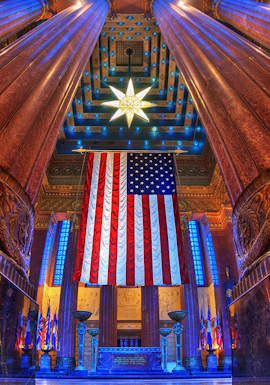
Indianapolis War Memorial Shrine Room.
Photo: Carl Van Rooy, flickr

She also describes the flag as totem, and blood sacrifice as an American group taboo.

At Memorial Day sacrifice was a central theme. “What soldiers in the Army do is to give up their life for others‟ freedom”, an army recruiter explained.

Tony‟s 5th graders stood up, faced the flag on the left side of the blackboard, put their right hand on the left side of their chest and said the Pledge simultaneously with the principal‟s voice. Everybody knew the Pledge by heart and said it out loud: I pledge allegiance to the flag of the United States of America and to the republic for which it stands: one nation under God, indivisible, with liberty and justice for all.

But do people in Iraq and Afghanistan really want their help? What about the widespread opposition towards the US wars?

This question is not very relevant for the research subjects. Even if the the people the USA tries to help reject the help, the USA‟s efforts are legitimate.

“It is as if the people on the receiving side of, what by the Americans is presented as „help‟, are not in a position to judge whether what the US presence offers is good or bad”, Salameh comments.

This remembers of what Edward Said describes as orientalism.

People in the Orient have frequently been portrayed as more passionate, more violent and barbaric, as well as culturally determined. This „savaging‟ of the Orientals has justified European and American imperialism throughout history, often presented as a civilizing project.
(…)
And in the very same act as „the West‟ thus diagnoses other countries as less developed, „the West‟ also categorizes them as passive (they are weak, ill), thus allowing for a paternal role.

For the research subjects, there are “good others” and “bad others” in Iraq and Afghanistan:

There is the „good Other‟ who takes the form of some sort of deprived, but possible, allied and member of the „free world‟; in the accounts above termed „innocents‟, „civilians‟, „the people‟ (of Afghanistan and Iraq), or simply „Afghanis‟ and „Iraqis‟. Opposed to this, exists a „bad Other‟ that cannot possibly be helped, thus only fought. This bad Other carries many different names, among them „terrorists‟, „insurgents‟, „extremists‟, „radicals‟, and to a varying degree also the Iraqi and Afghani „leaders‟ and „government‟ are included.

Although nationalism is important, she stresses that she does not claim it is the only, or the most central factor. There are many individual factors (escaping from smalltown life etc). Economic incentives are often central when people decide to join the military in the first place, and “a thesis could have been written on economy as incentive alone””.

Sarah Salameh is currently turning the thesis into a book where she will include on all those other factors as well.

The whole thesis is available online. (LINK UPDATED 4.4.2020)

SEE ALSO:

Thesis: That’s why there is peace

Secret rituals: Folklorist studied the military as an occupational folk group

Embedded anthropology? Anthropologist studies Canadian soldiers in the field

War in Iraq: Why are anthropologists so silent?

Military anthropologist starts blogging about his experiences

More and more anthropologists are recruited to service military operations

Make Peace. Photo: Danny Hammontree, flickr "What if they gave a war and nobody came?" is a popular slogan from the antiwar-movement. But nowadays, when USA with their allies go to war in Iraq and Afghanistan, people do…

Read more

The "illegal" anthropologist: Shahram Khosravi’s Auto-Ethnography of Borders

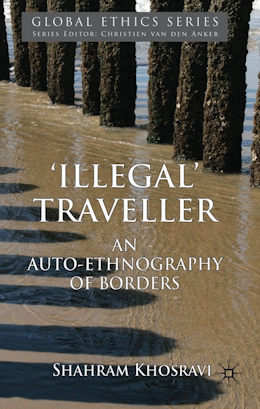
Globalisation means for most people on this planet higher fences and less movement across borders. The new book by anthropologist Shahram Khosravi is an auto-ethnography of illegalised border crossing.

‘Illegal’ Traveller is based on the anthropologists’s own journey from Iran to Sweden and his informants’ border narratives. “Studies of migrant illegality are often written by people who have never experienced it”, he writes in the introduction. “My aim has been to offer an alternative, partly first-hand, account of unauthorized border crossing that attempts to read the world through ‘illegal’ eyes:

This book is the outgrowth of my own ‘embodied experience of borders’, of ethnographic fieldwork among undocumented migrants between 2004 and 2008, and of teaching courses on irregular migration and the anthropology of borders. It also emerges from my activities outside academia: freelance journalism, helping arrange events such as film festivals about border crossing, and volunteer work for NGOs helping failed asylum seekers and undocumented migrants in Sweden.
(…)

Auto-ethnography lets migrants contextualize their accounts of the experience of migrant illegality. It helps us explore abstract concepts of policy and law and translate them into cultural terms grounded in everyday life.

(…)
In my years as an anthropologist, I have been astonished at how my informants’ experiences overlapped, confirmed, completed, and recalled my own experiences of borders. One interesting aspect of the auto-ethnographic text is that the distinction between ethnographer and ‘others’ is unclear.

I haven’t found any reviews yet, but what I have found is a fascinating paper by him, published in Social Anthropology three years ago. The title: The ‘illegal’ traveller: an auto-ethnography of borders (subscription required now open access!).

In this paper he describes his journey from Iran to Europe as “illegal” refugee and theoreticizes about the ‘world apartheid’ we live in according to him and criticizes the ways we think about borders and migration:

Based on a capitalist-oriented and racial discriminating way of thinking, borders regulate movements of people. However, borders are also the space of defiance and resistance.

It is because of this resistance he is still alive. In September 1986 he tried to leave Iran ‘illegally’ for the first time. “I had then just finished high school and I was called up to do military service during the ongoing terrible war between Iran and Iraq. To come back alive from the front was a chance I did not want to take”, he writes.

It was a long journey via Afghanistan, Pakistan and India. He ended up in Sweden via human smugglers. They saved him his life.

Human smuggling is in his opinion recurrently misrepresented by the media and politicians as an entirely mafia-controlled criminality. One of his helpers was Homayoun, a 25-year-old Afghani man, an undocumented immigrant, who had lived clandestinely in Iran since he was 15:

According to immigration law, Homayoun was a human smuggler, a law breaker and a criminal. But in fact he saved my life in one of the most dangerous places, under the rule of ruthless criminal gangs, corrupt border guards and fanatic Mujaheddin. (…) Homayoun facilitated my escape from undesired martyrdom in a long and bloody war.

Maybe one can say that the smugglers did what the UN Refugee Agency (UNHCR) was supposed to do? Khosravi tells shocking stories about the UNHCR who seems to be responsible for several deaths, including suicides, among refugees. Almost everyone in the refugee community had the same answer: “There is no point in going to the UNHCR”. You won’t get any help. Khosravi’s application was rejected as well. In the view of the UNHCR officer, his “fear of being killed in a horrible war was not ‘well-grounded’ enough.

He tells us the story of Henry’s suicide:

Henry, a young Iranian-Armenian man (…) was an activist within a communist militia, Cherikhaye Fadai, in Iran. But the UNHCR did not believe him. The reason was a wall painting in a corridor in the basement of a prison in Isfahan, where Henry had been detained for several months before his escape to Pakistan. In the interview Henry was asked by the UNHCR official to say what was painted on the wall in the corridor, to test his reliability. Henry had not seen such a painting and consequently his application was rejected. How did the UNHCR officer know about the wall painting? How could she or he be sure that there was any painting at all in that corridor?

Henry was desperate and did not know what to do. Just a few weeks before my departure from Karachi, one morning when the UNHCR officials arrived in their dark-windowed cars, he poured gasoline on himself and struck a match in front of the UNHCR.

With a false passport, Khosravi escaped to India. There he found a smuggler with good reputation, Nour:

During my five months in New Delhi I shared rooms with many persons in transit. All are now residents of Europe or North America – thanks to the smugglers.

He finally ended up in Sweden, a country that he at that time was not able to locate on a world map.

He explains:

The choice of destination was rarely as it was intended and designed. An ‘illegal’ journey is after all arbitrary. Sometimes the migrants end up in a country just coincidentally.
(…)
First of all, the destination was determined by the payment. A few hundred dollars could change the destination from one continent to another. Masoud, a roommate, was Nour’s mosafer (client) at the same time as I was. He had US$500 more than me and today he is a Canadian citizen, lives in Toronto and his children’s mother tongue is English. I am a Swedish citizen, live in Stockholm and my children’s language is Swedish: US$500 destined our lives so differently.

Border crossing is, he continues, is in anthropological sense a ritual:

The border ritual reproduces the meaning and order of the state system. The border ritual is a secular and modern sort of divine sanctity with its own rite of sacrifice. Several hundred clandestine migrants die en route to Europe each year. From January 1993 to July 2007 the deaths of more than 8800 border-crossers were documented in Europe. The Mediterranean Sea is turned into a cemetery for the transgressive travellers.

Border crossing can be experienced in terms of honour and shame:

A legal journey is regarded as an honourable act in the spirit of globalism and cosmopolitanism. The legal traveller passes the border gloriously and enhances his or her social status, whereas the border transgressor is seen as anti-aesthetic and anti-ethical (they are called ‘illegal’ and are criminalised). We live in an era of ‘world apartheid’, according to which the border differentiates between individuals. While for some the border is a ‘surplus of rights’, for others it is a ‘color bar’ (Balibar 2002: 78–84).

Khosravi ends his paper with some “final remarks” from 18 years later (2006), when he arrives at Bristol airport, along with colleagues from Stockholm University. He was convener for a workshop on ‘irregular migration in Europe’ at the biannual conference of the European Association of Social Anthropologists (EASA).

At the immigration control, he is illegalised again in the name of the “war on terror”:

After passing immigration control, I was stopped by a security official who let my blond fellow travellers pass. In the middle of a narrow corridor a mini interrogation began which lasted for half an hour.
(…)

My status as a Swedish citizen disappeared at the border because of my face. I answered questions about myself, my education, work, purpose of visit to Bristol. Then she asked about my parents, where they lived and what they did. I was not willing to disclose to her any kind of information about my elderly parents, who have been subjected to persecution by the Iranian state for decades. When I refused to answer her questions about my parents, she threatened to detain me first for nine hours and then, if necessary, for nine days according to the Anti- Terrorism Act.

I protested that she had targeted me because of my ‘Middle Eastern’ look and her selection of suspicious persons was racist. She did not even deny it and said ‘you [me and who else?] want to kill us. We have to protect ourselves’.

Khosravi has published some articles in Swedish, see my earlier post – Ikke kall dem for illegale

SEE ALSO:

More Global Apartheid?

For free migration: Open the borders!

Why borders don’t help – An engaged anthropology of the US-Mexican border

Research in refugee camps: Too political for anthropology?

Nina Glick Schiller: Who belongs where? A Global Power Perspective on Migration (ASA-blog)

Globalisation means for most people on this planet higher fences and less movement across borders. The new book by anthropologist Shahram Khosravi is an auto-ethnography of illegalised border crossing.

'Illegal' Traveller is based on the anthropologists's…

Read more

Thesis: That’s why there is peace


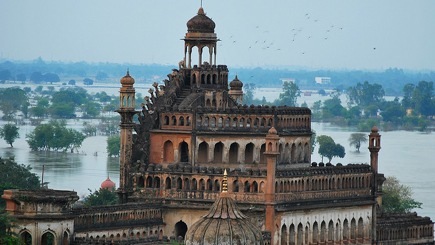
The Rumi Darwaza (“the Turkish Gate”) in Lucknow. Foto: Himalayan Trails / Rajesh, flickr

Why are some areas of this world more peaceful than others? In her master’s thesis Networks That Make A Difference, anthropologist Tereza Kuldova explains why the Indian city of Lucknow has remained peaceful throughout its history, even throughout such events as the Partition of India in 1947, and the demolition of Babri mosque in 1992 by Hindu nationalists in Ayodhya, less than 100 km from Lucknow.

“In contrast to the vast majority of studies concerned with communal violence in general and the Hindu-Muslim violence in India in particular, I opt the opposite point of departure, the one of communal peace”, Kuldova writes who is currently PhD fellow at the Museum of Cultural History in Oslo and author of several book reviews here at antropologi.info.

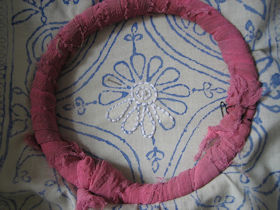
The heart of the peaceful nature of Lucknow is according to her “a particular blend of local history and networks of economic dependency which cut across the boundaries of class, caste, religion and locality. These networks are produced by the local embroidery industry, known under the name Chikan. Chikan is a traditional Muslim craft, and traded mostly by Hindu businessmen. In the last two decades there were more and more Muslims among the traders and Hindus among the embroiderers.

Chikan embroidery. Foto: Joey Berzowska, flickr

The Chikan industry gives employment to about 20 percent of the city’s population. It integrates people of different origins – rural, urban, lower class, middle class, men, women, Hindus, Muslims and creates according to her “an incredible network of mutual dependency, obligations and expectations”.

Religion is often used by political leaders to polarize people. It is rarely the main source of conflicts. These economic networks of interdependency, writes Tereza Kuldova, neutralize the polarizing strategies of the political leaders and lessen the chances of the occurrence of the communal tension. They lead to the “priority of the processes of togethering” as opposed to the “processes of othering”:

The growth of the industry and these networks, especially after 1990s, that is noticeably connected to the emergence and the ideology of the Hindu nationalism, has at the same time prevented the negative effects of this ideology, which have been violently felt in Lucknow’s neighbouring areas. This happened by expanding the cross-cutting networks and by turning a craft, which could have possibly been labelled as a “Muslim” craft, into a “traditionally Indian” craft. Chikan has been turned into embroidery which is worn by both Muslims and Hindus to express their Indianness, sense for tradition and fashion.

Additionally, Lucknow is by its inhabitants imagined as a peaceful and tolerant city, as the city of the Nawabs, rulers who bridged faiths:

Almost all accounts of the oral history that I gathered began like this: “In the times of Nawabs, the arts and architecture flourished, it was the time when a Muslim king danced as Lord Krishna…now where you can see that”. The Nawabs thus became associated with secularism; it is them who made Lucknow a “peaceful, clean and a neat city”

You don’t have to be born in Lucknow to be a Lakhnavi:

This imagination of anything or anyone as “Lakhnavi” goes in result beyond the dichotomy of Muslim vs. Hindu; it is rather about belonging to a particular place, which is populated by “Lakhnavis”, first and foremost.

The most persistent logic of the reasoning of why Lucknow is a peaceful city thus goes (tautologically enough) in the field as follows: “Lucknow is a peaceful city, because it is Lucknow, Lakhnavis do not fight, it has always been like that here and anyone who comes here just has to adopt that culture” (From a conversation with a Hindu businessman, 25.3.08.)
(…)
The discourse of the mythical past seems to work hand in hand with the economic structures and the social and economic networks in the city, creating both economic and discursive basis for the establishment of “relaxed” communal relationships.

As consequence of her findings, Tereza Kuldova encourages anthropologists to think rather and in terms of identifications than identities and in terms of networks than dichotomies:

Through the Chikan industry and through Chikan as a commodity, we can learn something about the fluidity of the social systems, about change and continuity, about the importance of the cross-cutting networks, about the discourses which govern the market and people’s choices and last but not least about the experience of modernity in India.

(…)

We have even seen that what is usually considered as unchangeable identities, particularly in the Indian context, namely the religious identities, are as mutable as any other. They are identifications, that might be at times stronger, at times weaker and at other times they might be replaced by new ones. People play with these identifications in a similar way as the popular Bollywood cinema does. (…) The concept of identification thus, being much richer, gives us more space to acknowledge the discursive shifts, which occur when the identifications are played out. At the same time as it acknowledges the situational and relational character of identity.

(…)
The network approach reminds us of the complexity of the social life and its situations, as well as of the impossibility to divide and classify the flow of social and economic interactions into clear-cut categories. (…)
Anthropology in general and I believe this study in particular, “has the authority and the ability to collapse a number of counterproductive dichotomies: the local and the global, the virtual and the real, the place-bound and the “non-place”, the universal and the particular. In real-life settings such contrasts evaporate” (Eriksen 2003: 15). “The “India”, where the past is inserted into the present and then projected into the future, questions the colonial dichotomies of “India” vs. “West”, “modernity” vs. “tradition”” (Favero 2005:24).

>> download the thesis

SEE ALSO:

Why more scholarship on war than peace?

– Highlight the connections between people!

How to challenge Us-and-Them thinking? Interview with Thomas Hylland Eriksen

Mahmood Mamdani: “Peace cannot be built on humanitarian intervention”

An Anthropological Challenge to Assumptions about War and Violence

Applied anthropology: A wedding ceremony in support of durable solutions in West Timor

Presenting 2nd generation Multi-Sited Ethnography

The Rumi Darwaza ("the Turkish Gate") in Lucknow. Foto: Himalayan Trails / Rajesh, flickr

Why are some areas of this world more peaceful than others? In her master’s thesis Networks That Make A Difference, anthropologist Tereza Kuldova explains why…

Read more

For more anthropology of climate change


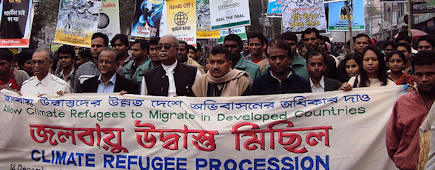
Photo: The World Wants a Real Deal, flickr

In the recent issue of Imponderabilia Heid Jerstad criticizes the lack of anthropological research on climate change. Climate change is only present on the margins of anthropological research, Jerstad claims. A similar critique was formulated by Simon Batterbury in his article Anthropology and global warming: the need for environmental engagement.

But several climate anthropologists have been in the news recently. In an interview with the Borneo Post, anthropologist Bob Pokrant addresses climate change in Borneo. To tackle the climate change issue, he proposed using the ‘adaption approach’ instead of the ‘mitigation approach’:

By mitigation, we mean reducing the sources of greenhouse effect. By adaption, we mean recognising that climate change is happening and then work out a programme to reduce the social vulnerability of those affected. We have to empower the people to take the future in their own hands. In countries affected by climate change most, their people’s capacity to adapt must be built up.

Fight global warming ‘with traditional methods’, urged Pietro Laureano. architect, town planer and anthropologist. Traditional water management methods from the Sahara and Ethiopia and Iraq’s Babylon area could be used alongside newer technologies such as solar power to prevent desertification and energy wastage. See also interview with Laureano and his paper Traditional Techniques of Water Management a New Model for a Sustainable Town and Landscape. From the First Water Harvesting Surfaces to Paleolithic Hydraulic Labyrinths.

Environmental anthropologist Kenny Broad was interviewed by Hawaii 24/7. As an anthropologist “his focus is bridging the physical and social aspects of science, specifically the human-environment relationship along coastlines and the impacts of climate change.”

For as Linda Connor says, climate change is a cultural crisis, – an aspect that in her opinion is ignored in much of the technical, economic and political talk of policies and solutions.

A few weeks ago, Susan Crate’s research on climate change in Siberia was presented. On her website lots of papers can be downloaded, for example the most recent one Bull of Winter? Grappling with the Cultural Implications of and Anthropology’s Role(s) in Global Climate Change (pdf). Together with Marc Nuttall, she edited the book Anthropology and Climate Change. From Encounters to Actions. See also interview with Nuttall on CBC News “Human face of climate change: Weather out of its mind”.

At the University of Copenhagen, anthropologist Kirsten Hastrup is the leader of the interdisciplinary climate change research project Waterworlds. In an interview, she explains the relevance of historical anthropology for today’s climate change.

See also Climate Change and Small Island Developing States: A Critical Review by Ilan Kelman and Jennifer J. West (Ecological and Environmental Anthropology, Vol 5, No 1 (2009)) and Waterworld1: the heritage dimensions of ‘climate change’ in the Pacific by Rosita Henry and William Jeffery as well as information about climate refugees and my earlier post Why Siberian nomads cope so well with climate change. For even more literature see Bibliography for the anthropology of climate change.

Photo: The World Wants a Real Deal, flickr

In the recent issue of Imponderabilia Heid Jerstad criticizes the lack of anthropological research on climate change. Climate change is only present on the margins of anthropological research, Jerstad claims. A similar critique…

Read more