search expand

Protests against Human Zoo i Houston: Africans on display together with chimpanzees?

Five years ago people from all over the world protested against the “African Village” in the zoo in Augsburg, Germany. Now, a new campaign is being planned against “The African Forest“, a $50 million project in the Houston Zoo, where “African culture” is on display together with chimpanzees and giraffes.

The 6.5-acre exhibit is designed “to give patrons the illusion they are strolling through an open landscape populated with chimpanzees, giraffes and other equatorial animals”. “Through presentations and artifacts, human cultures of the equatorial forests will be included in the exhibit” , landscape architect Jim Brighton told the Houston Chronicle. “Houses fashioned from tree leaves — a form of temporary housing — will be constructed for children’s activities.”.

“This is indeed like the African village in Augsburg – except this is a project that costs tens of millions of dollars and will be permanent – and some of the same anthropologists who protested that human zoo are onboard to protest this one such as Nina Glick Schiller and Data Dea”, explains Shannon Joyce Prince, Dartmouth Lombard Fellow and citizen of Houston, in an email to me.

The Zoo is according to Prince “only showing aspects of Africa that fit Western stereotypes of cultural anachronism and primitivism. It “falls neatly into the contemptible tradition of its human zoo predecessors, replicating a non-white village, a place where non-white humans live, in a zoo among the habitats where animals live”.

“The African Forest is about exhibiting and teaching inaccurate Western conceptions of African indigenous cultures in a place designed to exhibit and teach about animals. The African Forest is also about making and keeping African indigenous peoples conservation refugees. The African Forest and the practices it promotes are neither about respecting Africans nor protecting animals. They’re about claiming authority over African land, wildlife, and human lives”, Shannon Joyce Prince writes in a paper.

In the Zoo’s view, Africans are in conflict with wildlife, she writes. Therefore, African Forest plans to promote ecotourism as a way to “help” Africans and African wildlife. But the consequences of such conservation activities are often devasting specifically for central Africans and pygmies. For in Africa it’s common for conservationists to create refuges to conserve wildlife by simply kicking Africans out. The Zoo is funded by corporations like Exxon, Chevron, Shell that have are involved in this business:

Basically, among the corporations that fund the Houston Zoo are some of the most human and wildlife rights abusing corporations in existence. These same businesses try to clean up their images by creating wildlife refuges – but they create those refuges by forcing indigenous people off their land. Then the Zoo, which receives funding from those corporations, claims that the indigenous people who are getting kicked off their land are the ones who harm wildlife and promotes conservation and conservation refuges.

>> Shannon Joyce Prince: Human Zoos, Conservation Refugees, and the Houston Zoo’s The African Forest (pdf, short versjon)

>> Human Zoos, Conservation Refugees, and the Houston Zoo’s The African Forest (long version)

Shannon Joyce Prince sent a letter to the Houston Zoo several weeks ago which has not received a response.

She asks for “opposing The African Forest, human zoos, and the creation/perpetuation of the conservation refugee crisis in one or more of the following ways”:

1. Tell the Houston Zoo you are against The African Forest human zoo and the creation of conservation refugees as well as the continuation of the conservation refugee crisis by contacting the Houston Zoo here: http://houstonzoo.com/contact/. Tell the Houston Zoo that you will boycott zoos that host human zoos and/or make/keep Africans conservation refugees. Please mention your affiliations. Be sure to send a copy of your message to nohumanzoo (AT) yahoo.com so that we have a record of your letter in case the Zoo doesn‚t respond and to prevent the Zoo from deciding to claim that no one is protesting.

2. Send your name and affiliation to nohumanzoo (AT) yahoo.com if you want to be put on a petition stating, „We, the undersigned, do not support The African Forest human zoo, the creation of conservation refugees, or the continuation of the conservation refugee crisis.”

3. Raise awareness about The African Forest through your blog and encourage others to write the Zoo and sign the petition.

Please be aware that, naturally, the letter you send or your signature on the petition may be made public.

“The racialization processes facilitated by the Augsburg zoo and other zoos are not benign because they can lay the ground work for discrimination, barriers to social mobility, persecution, and repression”, anthropologists Nina Glick Schiller, Data Dea and Markus Höhne wrote in their report African African Culture and the Zoo in the 21st Century: The “African Village” in the Augsburg Zoo and Its Wider Implications (pdf)

Such “ethnological exhibitions” or “Völkerschauen” have a long history, linked to colonialism. For more than half a century – from the beginning of the 1870s to the end of the 1930s – the exposition of so-called exotic peoples in zoological gardens** and international expositions attracted a huge public.

UPDATE: Interesting debate and round-up at ZooChat: Cultural Zoo Exhibits = Racist? » Houston Zoo

SEE ALSO:

African village in the Zoo: Protest against racist exhibition

In Detroit and London: More African Villages in the Zoo

Thesis: Conservation for Whom? Telling Good Lies in the Development of Central Kalahari

In Norwegian TV: Indian tribe paid to go naked to appear more primitive

Is this anthropology? African pygmies observe Britains in TV-show

Geldof’s Live8 and Western myths about Africa

Five years ago people from all over the world protested against the "African Village" in the zoo in Augsburg, Germany. Now, a new campaign is being planned against "The African Forest", a $50 million project in the…
Read more

Popular Anthropology Magazine = fail

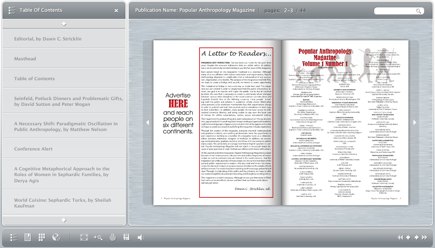
The first issue of the Popular Anthropology Magazine is out. It was meant to bridge the gap between academia and the public and between anthropologists and continents. Cool, we needed that. But the result is – in my opinion – disappointing. For it was made with outdated paper journals as ideal. The editors were thinking paper, not web. They do provide a downloadable version on their website but the flash animated paper-look-like version is a pain to navigate and read (the automatic scrolling is very irritating).

I finally tried to download the whole journal. It took ages and Firefox was about to crash. When the file finally was saved, it turned out to be 151 MB heavy. The pdf consisted of image files! Which means it is partly hard to read and you cannot copy and paste its content, and the links are not clickable. Fail! Can’t anthropologists do better? The articles deserve better. The table of contents looks promising, especially the sections on social science around the world.

>> take a look

SEE ALSO:

Anthronow – new magazine will make anthropology accessible to lay readers

New e-zine: American Ethnography

Imponderabilia – new international anthropology student journal

Open Access Anthropology Journals

The first issue of the Popular Anthropology Magazine is out. It was meant to bridge the gap between academia and the public and between anthropologists and continents. Cool, we needed that. But the result is - in my opinion…

Read more

Why anthropologists should study news media

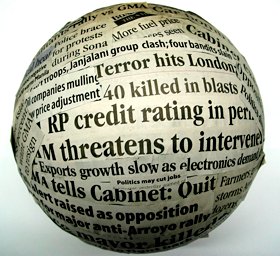
Bad News. Photo: Stitch, flickr

The time is right for more anthropologists to engage with news media – with their creation, reception and content, writes S Elizabeth Bird in the recent issue of Anthropology News that was published today.

Anthropological engagement with media was long rare and discouraged – and in some quarters still is, Bird criticizes. The main focus has in her view been on topics like the role of television in family life, or the maintenance of diaspora connections through digital media but not on news production or reception.

This neglect is according to her important because “news is the one popular genre that claims to describe reality for the public”. Most of what people know about the world is mediated in one way or another:

Throughout the world, people argue, fight and die for stories in which they believe. So it is important to dissect and interpret them: the use of language, the choice of words, the images, the entire frame of the news coverage.

She suggests following research questions:

  • Which stories are being told and which are not?
  • Whose stories are being told, whose are not, and why?
  • How do journalistic routines and values vary across cultural contexts, and how does that produce different kinds of news?
  • How does the choice of images take the story in one direction or another?
  • How does the story then become part of the common-sense reality in specific cultural contexts?

High profile issues like war, she continues, illustrate these questions dramatically:

We all know, for instance, that the story of the Iraq war is deeply contested. If we have a lot of time, we can scour the Internet, sift through multiple accounts, and reach a conclusion. Most people have neither the time nor the resources to do that; they have little choice but to attend to the stories that predominate.

If we understand better how journalism works, she concludes, not only will we better understand our mediated global cultures, but we will also become more adept at working with journalists to tell anthropology’s stories more effectively.

>> download the whole article: Anthropological Engagement with News Media: Why Now?

I have to admit I’m a bit surprised about her analysis. Is the study of news really so much neglected? But that’s maybe because I tend to read more anthropology blogs than journals? It’s in blogs this kind of media anthropology is happening?

There are six more articles on anthropology and journalism online, among others Reviewing Books in Popular Media Anthropologists as Authors and Critics by Barbara J King.

“Merging book reviewing with journalism”, she writes, “opens up a space in which we may fling our fierce book-engagement out into the wider world, and see what comes back to us:

When reviewing, the single greatest joy for me is the oppor- tunity to showcase our colleagues’ brilliance. I look for books that bring alive people’s patterns of meaning-making as they flourish and struggle in their daily lives, books that make us see with new eyes behaviors familiar and strange to our own society or at times even to our own species.

There have been many debates on the similarities of anthropology and journalism in the blogosphere, both here on antropologi.info and on Savage Minds (see Why is there no Anthropology Journalism? and Anthropology Journalism HOWTO)

In Divergent Temporalities. On the Division of Labor between Journalism and Anthropology, Dominic Boyer shares some interesting observations about the borders between anthropology and journalism that seem to overlap more and more.

The contemporary market and labor conditions pressure anthropologists to adopt faster modes of research and writing than ever before:

Even doctoral candidates report feeling enormous pressure to publish their research findings well in advance of receiving their PhDs. Not unlike the desk journalists of old, we find ourselves increasingly concerned with “getting the story” (Peterson in Anthropological Quarterly 74[4]), that is, with chasing the next publication opportunity to keep up with market expectations and the demands of institutional audit cultures.

>> overview over all articles in Anthropology News April 2010

The best source on media anthropology might be the website http://media-anthropology.net with mailing list and a long list of working papers and the blog media/anthropology by John Postill

A good example of an anthropology of news can be found in the february issue of Anthropology Today (free access!!). In Heart of darkness reinvented? A tale of ex-soldiers in the Democratic Republic of Congo, Sindre Bangstad and Bjørn Enge Bertelsen analyze Norwegian media’s representation of Congo.

SEE ALSO:

Why anthropologists should become journalists

Nancy Scheper-Hughes: Public anthropology through collaboration with journalists

The end of one-way communication – Anthropologists help news providers and advertisers

In Norwegian TV: Indian tribe paid to go naked to appear more primitive

John Postill on media anthropology and internet activism in Malaysia

Introduction to “Media Worlds”: Media an important field for anthropology

Bad News. Photo: Stitch, flickr The time is right for more anthropologists to engage with news media - with their creation, reception and content, writes S Elizabeth Bird in the recent issue of Anthropology News that was published today.

Anthropological engagement…

Read more

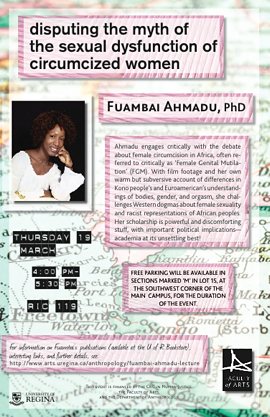
Yes to female circumcision?

(Links updated 2.2.2021) Is it a good idea to fight against female circumcision? Not neccesarily according to Sierra Leonean-American anthropologist Fuambai Ahmadu.

In an interview in Anthropology Today , she attacks Western feminists, media and anti-Female Genital Mutilation campaigns and accuses them for presenting a one-sided, ethnocentric picture of female circumcision.

A great deal of what is regarded as facts is not true, she explains. Many people think circumcision is a “barbaric tradition” and “violence against women”. But Ahmadu does not see circumcision as mutilation. Circumcision is no notable negative effects on your health and does not inhibit female sexual desire either.

The problem with the representation of various forms of female circumcision as ‘mutilation’ is that the term, among other things, presupposes some irreversible and serious harm. This is not supported by current medical research on female circumcision.

But this research (Obermeyer, Morison etc) has not received any attention in Western media:

However, neither Obermeyer’s reviews nor the Morison et al. study have been mentioned in any major Western press, despite their startling and counter-intuitive findings on female circumcision and health. This is in contrast to the highly publicized Lancet report by the WHO Study Group on FGM, released in June 2006, which received widespread, immediate and sensationalized press coverage highlighting claims about infant and maternal mortality during hospital birth.

Supporters of female circumcision justify the practice on much of the same grounds that they support male circumcision, she says:

The uncircumcised clitoris and penis are considered homologous aesthetically and hygienically: Just as the male foreskin covers the head of the penis, the female foreskin covers the clitoral glans. Both, they argue, lead to build-up of smegma and bacteria in the layers of skin between the hood and glans. This accumulation is thought of as odorous, susceptible to infection and a nuisance to keep clean on a daily basis. Further, circumcised women point to the risks of painful clitoral adhesions that occur in girls and women who do not cleanse properly, and to the requirement of excision as a treatment for these extreme cases. Supporters of female circumcision also point to the risk of clitoral hypertrophy or an enlarged clitoris that resembles a small penis.

For these reasons many circumcised women view the decision to circumcise their daughters as something as obvious as the decision to circumcise sons: why, one woman asked, would any reasonable mother want to burden her daughter with excess clitoral and labial tissue that is unhygienic, unsightly and interferes with sexual penetration, especially if the same mother would choose circumcision to ensure healthy and aesthetically appealing genitalia for her son?

It is important to remove the stigma around circumcision, Ahmadu stresses:

It is my opinion that we need to remove the stigma of mutilation and let all girls know they are beautiful and accepted, no matter what the appearance of their genitalia or their cultural background, lest the myth of sexual dysfunction in circumcised women become a true self-fulfilling prophecy, as Catania and others are increasingly witnessing in their care of circumcised African girls and women.

In an article in The Patriotic Vanguard, she describes the term Female Genital Mutilation as “offensive, divisive, demeaning, inflammatory and absolutely unnecessary”:

As black Africans most of us would never permit anyone to call us by the term “nigger” or “kaffir” in reference to our second-class racial status or in attempts to redress racial inequalities, so initiated Sierra Leonean women (and all circumcised women for that matter) must reject the use of the term “mutilation” to define us and demean our bodies, even as some of us are or fight against the practice.

Anthropologist Carlos D. Londoño Sulkin comments Ahmadu’s talk in Anthropology Today and criticizes his colleagues:

My own sense, after listening to Ahmadu, is that many Euroamericans’ reactions to the removal of any genital flesh is shaped by parochial understandings and perfectly contestable biases and values concerning bodies, gender, sex and pain.
(…)
Many anthropologists, reacting against collectivist social theories and some of the less felicitous entailments of cultural relativism, have joined in the condemnation of female circumcision without first taking counsel from our discipline’s methodological requirement actually to pay attention to what the people we write about say and do about this or that, over an extended period. Listening to Ahmadu, I can no longer condemn the practices of genital cutting in general, nor would I be willing to sign a zero-tolerance petition.

>> Disputing the myth of the sexual dysfunction of circumcised women. An interview with Fuambai S. Ahmadu by Richard A. Shweder (incl. comment by Carlos D. Londoño Sulkin)

SEE EARLIER POSTS ON THIS TOPIC:

Circumcision: “Harmful practice claim has been exaggerated” – AAA meeting part IV

Male circumcision prevents AIDS?

(Links updated 2.2.2021) Is it a good idea to fight against female circumcision? Not neccesarily according to Sierra Leonean-American anthropologist Fuambai Ahmadu.

In an interview in Anthropology Today , she attacks Western feminists, media and anti-Female Genital Mutilation…

Read more

University reforms – a threat to anthropology?

It started around 20 years ago: The idea of education as a right was being replaced by a concept of education as a commodity to purchase. Today’s universities are managed like businesses, striving for “excellence”, being best, competing for the “best” brains with new logos and slogans like The University of Manchester is pioneering, influential and exciting.

What are the consequences of the focus on competition instead of cooperation, quantity instead of quality, bureaucratic control instead of academic freedom and what can be done about it?

In the new issue of the journal New Proposals, anthropologist Charles R. Menzies writes about the recent developments from his personal experience and explains why the commercialisation also created a space for progressive action.

The search for excellence structures all aspects of the contemporary university environment, he writes:

In its operational mode excellence is little more than a set of quantified indictors—dollar value of grants, number of publications, ranking of publication venue, completion rates of students, and so on. These indicators are tabulated by individual, unit, or university and then ranked accordingly. Deriving from the tautological market principle that those who win are bydefinition excellent, being top ranked makes one excellent. (…) Our work becomes measured by quantity and placement of output: “so long as one publishes with the prestigious academic presses and journals, one’s publications are ‘excellent’” (Wang 2005:535)

Academics in the university of excellence are expected to win grants and publish papers. In this they have a lot of autonomy. For as long as academics in the university of excellence maintain their productivity at the rate being set by their colleagues a limited social space is opened up for progressive activity. He writes that he often says to his students: “Yes we must publish, but we get to choose what we publish”:

For me this has led to a series of articles and films on research methods (2005, 2004, 2003, 2001a) in place of what I may have originally wished to publish. This shift reflects my concern for conducting ethical research and to resist the undue influence of the competitive drive to publish as much as one can. To me, a respectful research engagement means that one takes the time to consult and to work with the people about whom we write. Some researchers, lost in the competitive rush to publish, prioritize their own advancement and desires over the people about whom they write.

He suggests following research topics:

– What are the effects of global capitalism on people’s health and wellbeing?
– How have local/ trans-national elites have gained control over public institutions such as the university of excellence?
– How can we make democratic practice real and what does our knowledge of small-scale societies tell us about the possibility of true participatory democracy?

>> read the whole paper “Reflections on work and activism in the ‘university of excellence'”

>> New Proposals Vol 3, No 2 (2010): Universities, Corporatization and Resistance

On his website, Menzies provides community resources and lots of publications to download

Interestingly, the recent issue of the journal Social Anthropology deals with the same topic. And the whole issue is available for free.

In their introduction, Susan Wright and Annika Rabo explain the background for the current reforms:

The current wave of reforms anchors both the global north and south in the so-called global knowledge economy where higher education is universally perceived as increasingly crucial for economic development. In today’s political discourse there is less emphasis on higher education as a public right and a means to liberate and cultivate citizens. Higher education occupies centre stage in the discourse on the global knowledge economy because ‘knowledge is treated as a raw material’ (Slaughter and Rhoades 2004:17). Universities are thus sites for both the mining and the refining of this resource.
(…)
A second strand in the international policies for university reform derives from the argument that universities are no longer just servicing the economy: now educating international students is itself a lucrative trade. American, British and Australian universities are especially competitive in this global market, and foreign students are Australia’s third most important source of export earnings.

The reforms represent also a “new rationality of governance”.

Such reforms involve changing the status of service providers (including universities in many parts of Europe) so that they are no longer part of the state bureaucracy, but are turned into ‘autonomous’ agents, with whom the state can enter into contracts, and through which they are held ‘accountable’ for their performance. In many countries, universities are being treated as a service supplier, just like any other part of the public sector.

What we need is more anthropology of university reform:

As the contributions to this special issue show, an anthropologist’s view of the ‘field’ can combine a critical examination of the keywords, policy discourses and rationalities of governance, with an exploration of how political technologies like accountability mechanisms, performance measurement, and customers satisfaction surveys actually work in practice, with accounts of students’, academics’ and sometimes managers’ diverse ideas of the university and how they act to shape their institution in their daily life.
(…)
(A)cademics seem not yet to have reformulated their values and modes of organising into a forward-looking vision for universities. There are plenty of contradictions in the reform agenda that could be exploited to this purpose. For example, why do governments imagine that by creating top-down steered, coherent organisations with a hierarchy of autonomous and strategic leaders they are preparing universities for a knowledge economy? Just to be provocative (and ironic, as we can also see negative sides to this image), why not imagine a future university by drawing on some positive aspects of companies which recognise that their biggest resource is the ideas, imagination and ability of the workers, and where staff take responsibility for their own work, have a weekly ‘free research’ day, and follow their own initiatives through networks of colleagues and short-term project teams in their own institution and internationally? Why not formulate an idea of a university as a kind of flexible, networking ‘knowledge organisation’?

>> read the whole paper “Anthropologies of university reform “

>> Social Anthropology Special Issue: Anthropologies of university reform

In my opinion, an analysis of the language used in strategic documents would be interesting. Take for example a look at the Consultation document for University of Oslo’s strategy 2010–2020 where we read about universities’ “ role as a growth instigator in the local and global economy” . But a look at the table of contents is enough where we find a list of some of the main goals like “ A quality‐conscious university”, “ A ground breaking university” and (being) “The epitome of a good university”.

By the way, just a few hours ago, Chris Kelty has written a post at Savage Minds about the new “Stasi like” culture of control at The Department of Anthropology at UC Berkeley

SEE ALSO:

Thomas Hylland Eriksen: On the fundamental uselessness of universities

Protests at Yale: When Walmart’s management principles run an anthropology department

“Intolerant Universities”: Anthropology professor Chris Knight suspended over G20-activism

Teamwork, Not Rivalry, Marks New Era in Research

Neoliberal applied anthropology: Who owns the research — the anthropologist or the sponsor?

Success in publishing defined by quality? Anthropology Matters on “The Politics of Publishing”

Militarisation of Research: Meet the Centre for Studies in Islamism and Radicalisation

It started around 20 years ago: The idea of education as a right was being replaced by a concept of education as a commodity to purchase. Today's universities are managed like businesses, striving for "excellence", being best, competing for the…

Read more