
search expand

Australian anthropologist is Japan’s first-ever foreign geisha

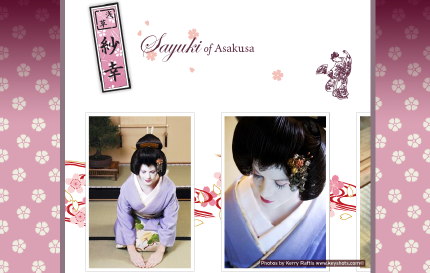
website screenshot

A documentary film-maker and academic with a doctorate in anthropology from Oxford University, Fiona Graham has just become what she says is the first non-Japanese in 400 years to debut as a geisha. But she hasn’t become a geisha for private reasons: She is now recording her life on film according to The Independent:

Sometime soon, she says, the world will see the results: a rare, scholarly inside look into one of the most closed societies in Japan. “It will be unique,” she insists. “Most Westerners who have tried to write about the traditions have failed because they never really lived the life. I’m going to represent the society that I’m living in now, as it is.”

Graham (or Sayuki as she now is called) has been doing anthropological fieldwork in Asakusa – one of the oldest of Tokyo’s six remaining geisha districts – for the past year, living in a geisha house (okiya), and participating in banquets as a trainee. She first came to Japan on an exchange programme from Melbourne aged 15. Fluent in Japanese, she has spent time working in Japanese companies and as a journalist.

It seems that it was during her fieldwork she learned to become a geisha:

The training involves learning how to walk, talk and dress, and master several skills, such as the tea ceremony and the three-stringed shamisen, and her own speciality, the Japanese bamboo flute, which she practises every day. Then there are the rules of being in an okiya, or geisha house.
(…)
Her duties will include attending parties at these venues, pouring drinks and entertaining guests. “Everything is carefully rehearsed,” she explains. “When I open a sliding door I have to be on my knees, and stand up. Then close the door again on my knees. Learning what kimono to wear and when … there are many, many little customs like that.” Despite a year of training, she says she is still “not confident” about choosing the appropriate kimono to wear.

Geishas are traditional, female Japanese entertainers, who dance, sing and chat to high-paying guests, usually men (Wikipedia on Geishas / BBC Photo journal Geisha / about.com about Geishas)

According to Fiona Graham, Geishas are “strong, independent businesswomen who control their own lives. They were among the first independent women.”

>> read the whole story in the Independent

>> first coverage by the Telegraph

The anthropologist-geisha has her own website http://www.sayuki.net/ (not so much content there yet, though)

SEE ALSO:

Book review: Ritual praxis in modern Japan

“A unique art form” – Anthropological Research on Anime

Pop goes Japanese culture: Japan’s most visible export isn’t economic, but cultural

Why cellular life in Japan is so different – Interview with anthropologist Mizuko Ito

Anthropologist examines influence of robots in Japan

website screenshot

A documentary film-maker and academic with a doctorate in anthropology from Oxford University, Fiona Graham has just become what she says is the first non-Japanese in 400 years to debut as a geisha. But she hasn't become a geisha for…
Read more

Circumcision: “Harmful practice claim has been exaggerated” – AAA meeting part IV

Is female circumcision violence against women or a feminist act? Are critics of this practice guilty of cultural imperialism? Those questions were debated at the American Anthropological Association’s annual meeting in Washington – among others by African anthropologists who have undergone the procedure themselves.

New York Times blogger John Tierney has written two interesting posts on the debate incl links to books and papers, among others by Fuambai Ahmadu. She has argued that the critics of circumcision exaggerate the medical dangers, misunderstand the effect on sexual pleasure, and mistakenly view the removal of parts of the clitoris as a practice that oppresses women. Ahmadu writes that her Westernized “feminist sisters insist on denying us this critical aspect of becoming a woman in accordance with our unique and powerful cultural heritage.”

>> read the whole post by John Tierney: “A New Debate on Female Circumcision”

>> two papers by anthropologist Fuambai Ahmadu on circumcision

In his second post, John Tierney askes anthropologist Richard Shweder for more information about he health risks, benefits, and the actual effect of the procedure on the lives of those subject to circumcision.

Shweder reviews existing research and concludes that “the harmful practice claim has been highly exaggerated and that many of the representations in the advocacy literature and the popular press are nearly as fanciful as they are nightmarish”:

The best evidence available at the moment suggests to me that the anthropologist Robert Edgerton basically had it right when he wrote about the Kenyan practice in the 1920s and 1930s as a crucible in which it is not just the courage of males but also the courage of females that gets tested:

“…most girls bore it bravely and few suffered serious infection or injury as a result. Circumcised women did not lose their ability to enjoy sexual relations, nor was their child-bearing capacity diminished. Nevertheless the practice offended Christian sensibilities”.

(…)

At the panel on “Zero Tolerance” policies held on Saturday at the American Anthropological Association meeting, one of the participants Zeinab Eyega, who runs an NGO concerned with the welfare of African immigrants in the USA, noted that these days in New York “the pain of hearing yourself described is more painful than being cut.”

Shweder thinks it is noteworthy or even astonishing that in the community of typically liberal, skeptical and critical readers of the New York Times there has been such a ready acceptance of the anti-circumcision advocacy groups’ representations of family and social life in Africa as dark, brutal, primitive, barbaric, and unquestionably beyond the pale”.

>> read the whole post: “Circumcision” or “Mutilation”? And Other Questions About a Rite in Africa

>> papers by Shweder on circumcision

More about the AAA-meeting:

New media and anthropology – AAA meeting part III

“The insecure American needs help by anthropologists” – AAA-meeting part II

Final report launched: AAA no longer opposes collaboration with CIA and the military – AAA meeting part I

Is female circumcision violence against women or a feminist act? Are critics of this practice guilty of cultural imperialism? Those questions were debated at the American Anthropological Association’s annual meeting in Washington - among others by African anthropologists who have…

Read more

Who are the people keeping the Jewish traditions alive in Cuba?

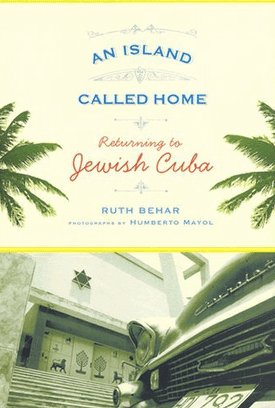
The Ann Arbor News (Michigan) interviews anthropologist Ruth Behar who has written a new book about Jewish life in Cuba. The island’s tiny Jewish community is among the most diverse in the world.

“An Island Called Home: Returning to Jewish Cuba” offers not only profiles of Jews who live in Cuba, but details the author’s own history – wherein she, at age 5, left Cuba with her family at the time of the 1959 revolution.

She tells she was surprised about how Cuban Jews try to preserve the past. A lot of young people are willing to emigrate to Israel. Many times in the book, people mention the absence of anti-Semitism in Cuba. The anthropologists explains, people in Cuba / in the Caribbean are more tolerant:

Definitely it is helpful to Jews if they live in a culture that’s more secular than in a culture that’s heavily Catholic and Christian – especially if that culture continues to say the Jews killed Christ. This kind of thing does not exactly create good feeling toward the Jews. …

But we can’t give full credit to the revolution for this, because even before ’59, Jews did not experience anti-Semitism, based on the stories that I heard from my family, my Polish grandmother. When she arrived, she said it was such a breath of fresh air from Poland that she just – people didn’t have the anti-Jewish stereotypes that they did in Poland and elsewhere in Europe.

So it was like a fresh slate. That was part of it, and I think the Caribbean is different, too, in that the African influence on Cuba is very important. The African religions are much more open and tolerant of difference.

>> read the whole interview

According to the Miami Herald, the book is “a narrative that tugs at the heart”: It’s a collection of anecdotes and observations accompanied by black and white images shot by Cuba-based photographer Humberto Mayol:

In many respects, this may be Behar’s most personal work. The University of Michigan anthropology professor has written poems and essays about the nostalgia, grief and displacement of exile. She was also awarded a MacArthur Foundation ”genius” grant 18 years ago and even has a short feature film about Cuban Sephardic Jews, Adio Kerida, to her credit. But here she lovingly intertwines her own thoughts and feelings with the more analytical observations of her profession. The result: a narrative that tugs at the heart.

>> continue reading in the Miami Herald

>> Excerpts from An Island Called Home by Ruth Behar

On her own website, she describes herself as a “cultural anthropologist who specializes in homesickness”:

I’m a memoirist who suffered from amnesia as a child after leaving Cuba. That must be why I’m obsessed with remembering and all the ways that history leaves traces on how we live in the present.

She has also started writing a web diary (a web1.0 blog)

SEE ALSO:

Kosher cell phones, kosher bus routes and kosher clothing: Israel’s Ultra-Orthodox economy

The Ann Arbor News (Michigan) interviews anthropologist Ruth Behar who has written a new book about Jewish life in Cuba. The island's tiny Jewish community is among the most diverse in the world.

"An Island Called Home: Returning to Jewish…

Read more

First issue of open access journal “After Culture” is online

The first issue of “After Culture – Emergent Anthropologies” that was planned for release in September 2006 has finally been published, Savage Minds reports.

The journal is edited by anthropologist Matthew Wolf-Meyer . In his editorial he explains that After Culture is intended as international, open access, and run primarily by graduate students. One of the central issues for the journal is: How are we to explain the worlds we interact with and perceive when “culture” as an explanatory concept, as a causal force, had been debunked?

In the first issue we find among others an interview with George Marcus:

In the interview, Marcus reviews the common pitfalls of students’ first projects and offers his thoughts towards new framings of research design that can evolve out of “research imaginaries.” These new framings expose the tensions between the opportunities and pressures of collaboration in the field and older, simpler technologies of individual knowing. They also open the door to searching for critical data, challenging well-worn fieldwork tropes, and preparing for the reception of one’s work.

>> After Culture Volume 1

SEE ALSO:

Anpere – New Open Access Anthropology Journal

New Proposals – New Open Access Journal

New journal: “Radical Anthropology” with David Graeber

Omertaa – Open access journal for Applied Anthropology

2006 – The Year of Open Access Anthropology?

American Anthropological Association opposes Open Access to Journal Articles

The first issue of "After Culture - Emergent Anthropologies" that was planned for release in September 2006 has finally been published, Savage Minds reports.

The journal is edited by anthropologist Matthew Wolf-Meyer . In his editorial he explains that After Culture…

Read more

Kosher cell phones, kosher bus routes and kosher clothing: Israel’s Ultra-Orthodox economy

For Jews, not only food needs to be kosher, the New York Times explains in an interesting article about Israel’s Ultra-Orthodox.

There are even kosher mobile phones. You cannot send text messages with them, take photographs or connect to the Internet. More than 10,000 numbers for phone sex, dating services etc are blocked. Calls to other kosher phones are cheaper and on the Sabbath any call costs $2.44 a minute, a steep religious penalty. “You pay less and you’re playing by the rules. You’re using technology but in a way that maintains religious integrity.”

A whole economic system has evolved to meet their needs, as Tamar El-Or, an anthropologist at Hebrew University explains. She has studied ultra-Orthodox shopping patterns. “There are lines of cellphones and credit cards and Internet suppliers and software and DVDs and clothes and so many things produced or altered or koshered for them, because they have a certain organized power to get the producers to make what they want.”

We read about a bus company that has special routes for the ultra-Orthodox, so that men and women are segregated, sometimes in separate buses. There are shops where you can buy special clothing. Movies and television are forbidden by many rabbies – an exemption is made for children if the intentio is educational. So in a video and music store for the Ultra-Orthodox you can find a large stock of nature documentaries: “National Geographic videos are considered fine, so long, as that there is no human nudity or sexuality, or even sexuality from animals.”

>> read the whole story in the New York Times

As we learn in an article in Science-Spirit mobile use has always been allowed but “it has been difficult to find one that didn’t contain access to the Internet or feature instant messaging plans displaying ads for worldly goods and services.” So, Israel’s ultra-Orthodox rabbis responded by convincing companies to produce a no-frills mobile phone for their community.

The introduction of the kosher phone comes at a time of intense discussion about the community’s future and the practicality of remaining so separate from the rest of Israeli culture:

The Ultra-Orthodox constitute about ten percent of Israeli Jews, or about 600,000 people. (…) They live in their own neighborhoods, have their own school systems, and, as long as they remain in religious school, are exempt from the military service required of all other Israeli citizens (except the approximately 1.5 million Palestinian Arabs living in the state). Ultra-Orthodox families have an average of seven children and most of the men study religion rather than work, relying on stipends from the government. (…) But in recent years, driven by rising poverty, cuts in government stipends and their own expanding population, the ultra-Orthodox have slowly begun to increase their participation in the largely secular Israeli society.

>> read the whole story in Science Spirit

I’ve found one article by anthropologist Tamar El-Or online:

The length of the slits and the spread of luxury: reconstructing the subordination of ultra-orthodox Jewish women through the patriarchy of men scholars (Sex Roles: A Journal of Research, Nov, 1993)

See also Wikipedia on Orthodox Judaism

For Jews, not only food needs to be kosher, the New York Times explains in an interesting article about Israel’s Ultra-Orthodox.

There are even kosher mobile phones. You cannot send text messages with them, take photographs or connect to the…

Read more