search expand

AfricaWrites – Videos from rural Africa

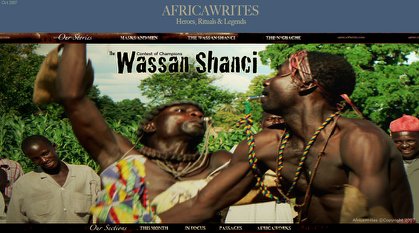
Patrick Gorham, editor of AfricaWrites: Heroes, Rituals & Legends writes to me. He created AfricaWrites several years ago “with the intent and goals of research, exploration, preservation and documentation of traditional African culture”. On the website you can watch several videos from rural Africa.

>> visit AfricaWrites.com

>> Ugotrade.com with more info on AfricaWrites

Patrick Gorham, editor of AfricaWrites: Heroes, Rituals & Legends writes to me. He created AfricaWrites several years ago "with the intent and goals of research, exploration, preservation and documentation of traditional African culture". On the website you can watch several…

Read more

When Norwegians do business in Brazil, Lowrider Culture and 9 more anthropology theses (part 1)

(LINKS UPDATED 29.10.22) Norwegian anthropologists no longer hide their master theses in distant libraries. Most theses are now available online in digital archives. Last week, more than 20 new theses (among them 11 in English) have been put online at DUO, the digital library of the University of Oslo.

On this rainy Sunday, I’ll pick out two studies:

Doing busness in Brazil. An anthropological study of the interaction between Norwegian and Brazilian business people is the title of the theses by Anita Wold. She conducted fieldwork in a Brazilian family company that recently was acquired by a Norwegian company. Furthermore, she interviewed Norwegians working in Brazil and Brazilians working in Norwegian companies.

Her point of departure: The increase in international business has created a demand for books about cultural differences in business that are easy to grasp. But books and teaching material within the field called intercultural communication is dominated by quantitative studies. “I believe anthropological theory can provide a more fruitful analytical framework for understanding communication between people with different backgrounds and knowledge”, she writes.

She shows among other things that the dominating figures within the field of intercultural communication use a problematic perspective on cultural difference. For Hofstede (2001), Trompenaars and Hampden-Turner (1997) national identity is an imprint of values and a collective “software” in peoples’ minds that produces a distinctive national behavioural pattern. Through quantitative studies these researchers have found a small set of value-based continuums of interpretation such as individuality-collectivist, masculinity-femininity, power distance etc. (see for example Hofstede’s country profiles):

I found that most of the Norwegian managers find “the Norwegian leadership style” the best way of practicing leadership. The Brazilian leadership style is considered to be more authoritarian than the Norwegian, and few of the Norwegian managers seemed to be willing to adjust their own practice.

The Norwegians, as owners and managers, are in a position where they can define the use of management techniques and practices in the companies where they are in command. However, whenever Norwegians engage with customers in Brazil, they are not in a position to define the situation and therefore have to adapt to local practices and demands in order to sell their products.

In exploring the interaction between people with different backgrounds, I have argued against the perception of culture as it is postulated by Hofstede (2001), Trompenaars and Hampden-Turner (1997). In the present study I have argued that business practices are embedded in the local context.

Thus, in order to understand the differences encountered by the Norwegian and Brazilian business people I have demonstrated the importance of placing the practices in a cultural, historic and economic context.Thus, quantitative studies and universalistic assumptions of cultural differences fail to achieve a fruitful understanding of the contextual variations.

>> download the thesis

lowrider

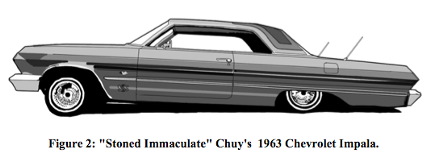
Martin Høyem has written the thesis I want my car to look like a whore. Lowriding and poetics of outlaw aesthetics. It as an extremely well written thesis and even fun to read. He captures the reader already on the first pages when he describes his first days in the field, looking for potential lowriders:

I never saw any lowrider cars in the streets, and this surprised me, since I had an impression—gathered from the material I studied before I left for the field—that the streets of LA would be packed with lowriders. I suddenly realized that my plan A of simply walking up to somebody with a lowrider asking to talk to them rested on a missing premise. I also realized I had no plan B.

At one of the first meetings with his informants, they asked him some questions:

“One thing first: Do you like Abba or Led Zeppelin?”
Chuy had presented me to everybody, in plenum, and asked that I talked a little about myself. (…) It was immediately clear to me what the right answer would be. “These guys aren’t Abba fans,” I thought to myself. And as Bourdieu points out: “Nothing more clearly affirms one’s ‘class’, nothing more infallibly classifies, than tastes in music.” (Bourdieu, 1984:18) (…) “I like Zeppelin,” I said. They all nodded and mumbled approvingly. “That was easy,” I thought.
(…)
Then one guy asked “What kind of car do you have?”
Not missing a beat—since I felt I was doing so well building credibility—I told them: “It’s a 1989 Cadillac Eldorado Biarritz. Two doors.” They didn’t like that. “Well at least it has two doors,” somebody mumbled.

For Martin Høyem it was important to contribute with new perspectives in the study of the lowrider culture:

As a result of the tendency in social studies within USA to threat themes in the light of ethnicity and gender, a major part of ethnographical studies portray the population groups they write about as exotic and describes them as physically and culturally isolated—as subcultures opposed to main-stream American culture. The same goes for descriptions of the lowrider culture, both in academic literature and in diverse types of popular culture.
(…)
The lowrider cars are traditionally described as products heavily influenced by the owner’s Mexican heritage. While there is obviously much to be said for these accounts, they often fall short of considering the class aspects in the judgment of aesthetical taste. I have pointed to data which illustrate how class background might be just as important, if not more, in an effort to analyze the cars and their owners place in the American consciousness.

Additionally, the outlaw mystique which clings to the cars and their owners is a social problem for the lowriders. (…) Perhaps the outlaw aesthetic in the lowriders play the same role as folklore did for the rise of the European romantic nationalism. Just like the scholars of that time gathered histories to demonstrate “connections with the cultural glories of supposed common ancestry” (Herzfeld 1996) the histories that are told through the outlaw aesthetic are stories seeking to establish an abstract common background.
(..)
Although the imagery tells stories of violent conflict solving, loose sexual morals, liberal use of recreational drugs and a strong focus on material values, the everyday reality for the majority of the people who parade this imagery is much more mundane; theirs is a life lived within a framework in agreement with the moral code of society.

>> download the thesis: I want my car to look like a whore. Lowriding and poetics of outlaw aesthetics

And here are the other nine new anthropology theses:

Anne Gry Venås: “School is for the lazy ones”. Local interpretations of children`s rights to education in a rural community in Guatemala

Matthew Whiting: Men & motors. Myth-making and the emulation of a past elite class

Brigt Hope: The function of the internet in the Moroccan public sphere

Marit Aune Bergstrøm: Struggling for respect and dignity. Strategies for shaping meaningful lives among persons with disability and their families in a community on the Mexican south-pacific coast

Hilde Johanne Bjugn Foss: The Hmong in the Twin Cities. Generational and gender differences in the perception of kinship, marriage and prestige

Katri Elina Matikainen: Transformative substances, knowledge and power. Affecting the course of events in a Gambian Mandinka village

Jonas Ursin-Holm Lea: Streets, skollies and coons in district six. On narratives and identity related to an area of forced removal in Cape Town, South Africa

Lene Cecilie Hellum: The face of the cowboy. Perspectives on myths and identities among Texan cowboys

Janne Waagbø: “Dancehall! – a serious thing!” Performing gender in Jamaican dancehall

UPDATE 1/10 Even more new theses in English! More in a later post.

lowrider

(LINKS UPDATED 29.10.22) Norwegian anthropologists no longer hide their master theses in distant libraries. Most theses are now available online in digital archives. Last week, more than 20 new theses (among them 11 in English) have been put online at…

Read more

New website helps save Kenai Peoples language (Alaska)

Their language is nearly dead. Maybe a new website can revitalize Kahtnuht’ana Qenaga: The Kenai Peoples Language in Alaska? For more than two years, the two anthropologists Alan Boraas and Michael Christian have taken pictures, navigated through HTML and digitized old audio recordings of Native writer Peter Kalifornsky in order to present vocabulary, grammar, stories and place names in an interactive Web site that went live last month, the Peninsula Clarion reports.

“I hope people of all ages go to it and gain insights into both the language and the culture,” Boraas says. This project is the latest in the Kenaitze Indian Tribe‘s endeavor to revitalize their Native language. Finding people who actively speak the Dena’ina language is one of the most difficult parts of revitalizing it. The credit for much of the Dena’ina revitalization goes to James Kari, who spent 30 years working on a dictionary.

>> read the whole story in the Peninsula Clarion

>> visit the website Kahtnuht’ana Qenaga: The Kenai Peoples Language

SEE ALSO:

How to save Tibetan folk songs? Put them online!

Knowledge Fades As Africa Languages Die

Modern technology revives traditional languages

Saving native languages

Inuit language thrives in Greenland

Book review: Empires of the Word: A Language History of the World

Their language is nearly dead. Maybe a new website can revitalize Kahtnuht'ana Qenaga: The Kenai Peoples Language in Alaska? For more than two years, the two anthropologists Alan Boraas and Michael Christian have taken pictures, navigated through HTML and digitized…

Read more

“Minority cultures are automatically ‘different'”

The majority-minority discourse in Canada doesn’t seem to differ from the discourse here in Norway “Anglo culture is dominant and taken for granted; minority cultures are automatically ‘different'”, Yasmin Jiwani writes in the Vancouver Sun. There, recent media attention focusing on the murders of women from the South Asian-Canadian community has invoked a now-familiar refrain — “it’s the culture.”

But as Jiwani – associate professor in the department of communication studies at Concordia University in Montreal – stresses:

The interpretation of culture favoured by proponents of this view tends to dilute the complexity of the issues and presents a static, monolithic view of culture. Cultures are dynamic, as any self-respecting anthropologist will tell you.

She explains:

If we embrace the culturalist argument, we are adhering to a view that cultural groups are static relics isolated from the mainstream. More than this, we are positing that individuals within a particular cultural formation represent the entirety of that culture.

If this were indeed true, we would have to agree that someone like Willy Pickton, an alleged mass murderer, is representative of the dominant Anglo culture. Further, whatever crimes Pickton has been charged with, it follows that such crimes are endemic to and reflective of his whole culture. There are some who would agree with this viewpoint.

That aside, the Anglo culture is a dominant culture — its norms are often taken for granted and normalized, whereas minority cultures such as South Asian come under heavy scrutiny and their practices are often highlighted as markers of cultural difference, separating these groups from the mainstream.

For instance, each time a woman from an Anglo background is murdered, do we have reporters dwelling on her cultural background? We don’t, for example, get lengthy descriptions regaling the cultural facets of the burial, the wedding, or how they met despite or in spite of the fact that all of these practices and actions are undoubtedly culturally grounded.

These descriptions, if they are mentioned, are not culturalized but rather normalized as the dominant ways of doing things. Even which culture is categorized as a “culture” depends on who is doing the defining, the classifying and for what purpose.

(…)

The lesson in this is that if the cultural group you are critiquing is powerful, chances are your critique will be silenced. If however, the cultural group you are slamming or stereotyping is not so powerful, then there is little likelihood of the critique being challenged with the same force and with the same alliances from powerful political elites.

>> read the whole article in The Vancouver Sun

SEE ALSO:

Aboriginees in Australia: Why talking about culture?

The Culture Struggle: How cultures are instruments of social power

“Quit using the word ‘culture’ wherever possible”

Thomas Hylland Eriksen, Savage Minds: An old warhorse revisited: Do we need another book about culture?

On Savage Minds: Debate on the Construction of Indigenous Culture by Anthropologists

Culture and Race: The Five Major Challenges for Anthropology

The majority-minority discourse in Canada doesn't seem to differ from the discourse here in Norway "Anglo culture is dominant and taken for granted; minority cultures are automatically 'different'", Yasmin Jiwani writes in the Vancouver Sun. There, recent media attention…

Read more

“To know what’s happening around the world, you have to study the knowledge of local people”

Recently, we cound find a portrait of anthropologist Melissa Leach in the Guardian. At the age of 35, Leach became professor of the Institute of Development Studies at Sussex University. Now, at 42 and proficient in four African languages, she has been made director of a new global research hub known as the Steps centre (social, technological and environmental pathways to sustainability).

Her research has consistently challenged public policy and the stance taken by government authorities, the Guardian writes:

In the early 1990s, when Leach was a PhD student at the School of Oriental and African Studies at the University of London, she went to Guinea in west Africa with Fairhead, then her research partner.

The area was widely assumed to be experiencing a deforestation crisis, and experts held local villagers responsible. Leach, Fairhead and a Guinean researcher discovered – by talking to the villagers, researching the area’s history and “viewing things through an anthropological lens” – that the opposite was true. The forest was in fact growing, because farmers had worked out how to turn savannah into forest.

Leach and her colleagues had shown how experts can reach wildly wrong conclusions if local knowledge and history are not taken into account. Their findings became a book, Misreading the African Landscape, and a film, Second Nature: Building Forests in West Africa’s Savannahs. A decade later, they are still being used to illustrate the power of anthropological methods.

Her new centre opened in June and hopes to develop a new approach to understanding why the gap between the poorest and the richest is growing, and to doing something about it. It promises to question the “assumption that the world is stable, predictable and knowable through a single form of knowledge that assumes one size fits all”. “We are about producing scholarly research, and playing a public and intellectual role.”

At the Steps centre, there are 18 academics representing disciplines ranging from anthropology to ecology to medicine. Academic and policy debates, she says to the Guardian, are compartmentalised into areas as agriculture or health. Rarely do the different disciplines manage to speak to one another. “We urgently need new, interdisciplinary approaches to understanding and addressing situations that combine an understanding of social, technological and environmental processes.”

>> read the whole story in the Guardian

There are already several papers to download at the website of the Steps centre.

And the centre has of course its own blog “The crossing”

Leach has been interviewed by the Guardian before, see Ground rules for research. Technology won’t help developing countries if it is not tailored to local needs and Steps towards better development.

I also found an older paper:

James Fairhead and Melissa Leach: Webs of power: forest loss in Guinea

SEE ALSO:

Primatologists go cultural – New issue of Ecological and Environmental Anthropology

How to survive in a desert? On Aboriginals’ knowledge of the groundwater system

Thailand: Local wisdom protects hometown from the onslaught of globalisation

Culture and Environment – New issue of Pro Ethnologica is online

Collaborative Ethnography: Luke Eric Lassiter Receives Margaret Mead Anthropology Award

Teamwork, Not Rivalry, Marks New Era in Research

Recently, we cound find a portrait of anthropologist Melissa Leach in the Guardian. At the age of 35, Leach became professor of the Institute of Development Studies at Sussex University. Now, at 42 and proficient in four African languages, she…

Read more