search expand

France asks anthropologist for advice on burqa-ban

France banned burqas in public schools in 2004. Now, a parliamentary commission is investigating a possible ban on burqas in public places and anthropology professor John Bowen was asked to testify on this matter, Student Life and New York Times report.

As far as I know, anthropologists aren’t very visible in public debates in France.

Bowen is the author of the book Why the French don’t like Headscarves.

According to Bowen only a few hundred women in France wear burqas. A ban, though, could potentially have a profound impact on some of those women which means they would dissappear from public spaces and stay at home.

Bowen considers it highly unlikely that a ban would ever pass. “I think that French politicians will find that it would be absurd to create a set of clothing police to decide whether what a woman is wearing on the street counts as a burqa or a niqab…or just a headscarf.”

>> read the whole story in Student Life

>> Interview with Bowen in French on nonfiction.fr

I’ve collected some Bowen related links on my earlier post Why the French Don’t Like Headscarves. There are several papers on Bowen’s website.

SEE ALSO:

Thesis: Hijab empowers women

Lila Abu-Lughod: It’s time to give up the Western obsession with veiled Muslim women

Phd-Thesis: That’s why they embrace Islam

France banned burqas in public schools in 2004. Now, a parliamentary commission is investigating a possible ban on burqas in public places and anthropology professor John Bowen was asked to testify on this matter, Student Life and New York…

Read more

For more Anthropology of Christianity

(LINKS UPDATED 26.5.2020) What is happening within Christianity today? This is a question that is exciting to study, but which has received little attention among anthropologists, says Norwegian anthropologist Edle Lerang Nes.

For hundreds of years, Christianity has been the most important religion in Europe and some other places on this planet. But while everybody is studying Islam, Christianity seems to be ignored.

As Edle Lerang Nes tells in an interview with me, parts of Christian culture actually is “endangered culture” and therefore a field for “urgent anthropology”.

Nes studied “chapel culture” – part of Revival Christianity – which broke out in Norway at the end of the 18th century. It was a layman’s movement in opposition to church authorities. A personal relationship to God was important, combined with a sober and hardworking lifestyle without dance, merriment, music, or card-playing ( >> overview Christianity in Norway). How is Christian life developping on this island? Nes conducted fieldwork on the small island if Finnøy, in Southwestern Norway where there are no pubs or restaurants, but the approximately 1,700 inhabitants can choose between five different chapels and a church.

Her research also reminds us of how important religion is for many people in rural areas that are often ignored by researchers and the mainstream press.

>> read the interview (website of the research project Culcom, University of Oslo)

There is not much material on anthropology and christianity online, but Ingie Hovland (from Anthropology Matters) has a large section of posts on her blog about the anthropology of christianity – part of her two book projects – where she also reviews several books and papers.

I found an interesting blog post about being Christian and anthropologist. Being a Christian anthropologist raises difficult questions, Katherine Cooper writes, among others because of the tenet of cultural relativism:

All practices and beliefs, whether shocking to a Westerner or not, are said to ‘make sense’ within the society that they are located. Such views cause problems for Christians. Christianity is an ultimate truth claim with an absolute framework for morality located in the character and commands of a personal God. How do we square our belief in such a claim with studying a subject that inherently denies the validity of such claims?

She also links to the paper by Dean E. Arnold Why Are There So Few Christian Anthropologists? Reflections on the Tensions between Christianity and Anthropology

Last year, anthropologist Gabriele Marranci wrote an interesting blog post called Terrorism in the name of Jesus? Everybody ignore. The Italian Christian anti-Islamic terrorist movement called Fronte Combattente Cristiano or ‘Fighting Christian Front’ has been responsible for several bomb attacks against Islamic centres and mosques:

I thought that news about the first Christian anti-Muslim terrorist group would have attracted international attention and fostered new debates. (…) But the news about a self-defined Christian terrorist and a Christian (mainly Catholic) terrorist organization has attracted virtually no attention.

SEE ALSO:

Researches neo-paganism in an overwhelmingly Catholic society

The Journals of Knud Rasmussen: The impact of Christianity among the Inuit

Explores how indigenous peoples interprete Christianity

How far have we come since anthropologists began to think about magic & religion?

Maurice Bloch: Religion is a Figment of Human Imagination

(LINKS UPDATED 26.5.2020) What is happening within Christianity today? This is a question that is exciting to study, but which has received little attention among anthropologists, says Norwegian anthropologist Edle Lerang Nes.

For hundreds of years, Christianity has…

Read more

How anthropology in Eastern Europe is changing

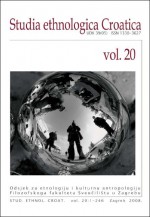
Studia ethnologica Croatica is one of those Open Access journals I’ve found recently. Their latest issue gives an overview over recent delevopments in anthropology in Eastern Europe. The texts are based on presentations made at the conference ‘New Curricula in Ethnology and Cultural Anthropology – Marking the 80th Anniversary of Croatian Ethnology’ in Zagreb.

Janusz Baranski is one of several authors who describe how anthropology in Eastern European countries has changed recently. In his paper New Polish Anthropology, he writes:

(T)he Polish tradition of anthropology differs from Western traditions in at least one aspect. Whereas the main subject of the latter were the so-called primitive cultures of the New World, colonized by Western powers; the main subject of Polish and other East European ethnologies were the so-called folk cultures.

Scholars who wanted to deal with non-European cultures did their research in Western academic centers; Bronislaw Malinowski is perhaps the best-known example. The opposition “our – foreign” or “us” and “them” was, in the East European context, identified with the opposition of “upper classes – the people” or “upper culture – lower culture”. For East European anthropologist, a peasant filled the role that the Trobriander filled for Malinowski.

He thinks he is a good example of recent shifts of interests within Polish anthropology:

I am a graduate of ethnography – this was the formal nomenclature of the discipline in the communist period (with a thesis on Slavic mythology; so, one would say, a “traditional one”); next I completed a postgraduate degree in ethnology – this is the nomenclature of the discipline in the post communist period (the thesis was on the language of political propaganda; say – a “modern one”); finally, I identify, above all, with cultural studies: my post-doctoral dissertation was on material culture and social symbolism of the material world – commodity aesthetics, fashion, lifestyle, consumer culture.

In this respect, I am a typical example of the tendency among anthropologists, mentioned by George Marcus, to shift from the first project, which is framed by the traditional field of anthropology, into the second – experimental and new for the discipline, which, he claims, is a growing tendency in American anthropology. Not only in American, as we see.

>> read the whole paper

Spiritual culture and folk medicine have become popular research topics, as Antoaneta Olteanu writes in her paper “Teaching Anthropology in Romania”:

We should not forget that, under the communist regime, we were forbidden to talk (and write) about the spiritual culture, folk mentality and folk religion (folk Christianity, demonology and such), in order to prevent their interference with the healthy vision of the communist ideology.

This was one of the reasons why, after 1989, Romanians started to publish research of both the ethnological and the anthropological approaches on peasant healing (both text and rituals, but also general representations of illness, demons, personality of the healer, ritual plants, objects and others topics (…).

>> read the whole paper

>> overview over all articles in this issue

SEE ALSO:

Interview: “Anthropology Is Badly Needed In Eastern Europe”

Doing fieldwork in Eastern Europe – New issue of Anthropology Matters

“Take care of the different national traditions of anthropology”

How can we create a more plural anthropological community?

Studia ethnologica Croatica is one of those Open Access journals I've found recently. Their latest issue gives an overview over recent delevopments in anthropology in Eastern Europe. The texts are based on presentations made at the conference ‘New Curricula in…

Read more

Militarisation of Research: Meet the Centre for Studies in Islamism and Radicalisation

We have discussed a lot about the strengthening ties between the military and universities in the USA and Britain, but similar things are happening in Scandinavia. And there is no public debate about it here.

One example is a research center that was founded last year by the Danish Ministry of Defence: the Centre for Studies in Islamism and Radicalisation.

It is part of the Department of Political Science at the University of Aarhus and focuses according to the website on radicalisation, ideologies and the international consequences of “Islamism”:

The Centre for Studies in Islamism and Radicalisation will assemble anthropologists, sociologists, political scientists and theologians, who can contribute to the understanding of what happens when Islam becomes a political ideology with the objective of overthrowing Governments.

And the role of anthropologists? (source):

The anthropological part of the project will mainly focus on processes of radicalisation, on how radicalisation manifests itself gradually, through adaptation of new world views, values and lifestyle. Data will be collected through field work and surveys. The main hypothesis is that interaction between an individual in search for identity and a radicalised group play an important role in the process of radicalisation.

It is described as an independent research institute but I wonder how free it is when the establishment of the research center is part of the U.S-led “war on terror” and the premises are so clear. The project regards terrorism as a phenomenon that is mainly linked to islam. “Islamism” is according to the Minister of Defence, Søren Gade, the biggest threat to peace on earth. The Minister of Defence said that the research findings will play a central part in Denmarks policy in their so-called “war on terror”.

This world view is also reflected in many project descriptions, for example “Islamic Radicalisation among Muslims in Denmark. A Policy-oriented Empirical Study” by Shahamak Rezaei and Marco Goli:

Islamism is designated as the primary enemy of the democratic world, the omnipresent threat, and when, at the time of writing, at least two major wars are being fought against Islamism (in Afghanistan and Iraq). A vast number of billions drained from the Western state funds are being invested in national and international security.

The aim of this project is to provide empirical knowledge about factors that characterise the processes of radicalisation among young Muslims, e.g. from faith to politics, from religion to ideology, from civic society to the enemy.

The project’s key empirical questions to be answered are:
1. Which processes characterise the movement from “normal”, cultural or religious Muslims to radical Islamists, mainly from the group of young Danes with an immigrant background from third countries?
2. What motivates this process?
3. How can we identify radical Muslims?

Or take a look at Lene van der Aa Kühle’s project, called “The Cultic Milieu“:

The development of a European Islam has not followed the expectations of most researchers. Instead of forming and reforming in a liberal and secularized manner, radical Islam has developed as perhaps the most distinctive form of European Islam.

But the question of why some Muslims become radical has not been easy to answer. Studies propose that there is no single pattern which can explain how and why some young European Muslims become radical. Marginalization, deprivation and resentment may provide part of the explanation, but Muslims who are radicalized are often fairly well integrated and at least not any more marginalized and deprived than large part of the Muslim community.

Studies have failed to find any psychological deficiencies and while the impact of radical religious authorities seems in some cases to have had an influence, in others the process seems to be one of self-radicalization.

Then there is one project with a different perspective. Jonathan Githens-Mazer actually challenges much of what is said on the website. From his description of his project “Causes and Process of Radicalisation among Young Muslims in Leicester (UK)“:

While there exists a very real threat of violent extremism in the UK, this threat comes from an extremely small minority, and many young Muslims feel as though they are under constant surveillance and scrutiny despite rejecting any form of political violence.

These same young people also often feel as though their own individual efforts to empower communities to be resilient against violent radicalisation and violent extremism aren’t being understood and/or heralded by non-Muslim communities, politicians and the police and security services.

This project will seek to act as a corrective to this neglect of Muslim community perspectives on issues of radicalisation and violent extremism – by conducting a series of qualitative structured interviews with young Muslims, their parents, community social workers and Imams from Leicester (UK).

I’m not 100% sure what I should think of this but it reminds me of a British initiative, see my earler post Protests against British research council: “Recruits anthropologists for spying on muslims”

There are lots of papers and links on the website that might be worth a study. Among the institutions they link to, we find The International Centre for the Study of Radicalisation and Political Violence.

Maximilian Forte has written several interesting posts on his Open Anthropology blog recently, among others What are the Pentagon’s Minerva Researchers Doing? and Militarizing the Social Sciences and Humanities in Canada

SEE ALSO:

The dangerous militarisation of anthropology

“War on terror”: CIA sponsers anthropologists to gather sensitive information / see also debate on this on Savage Minds

Fieldwork reveals: Bush administration is lying about the “war on terror” in the Sahara

Anthropology and Counterinsurgency: The Strange Story of Their Curious Relations

Two Books Explore the Sins of Anthropologists Past and Present

Cooperation between the Pentagon and anthropologists a fiasco?
We have discussed a lot about the strengthening ties between the military and universities in the USA and Britain, but similar things are happening in Scandinavia. And there is no public debate about it here.

One example is a research…

Read more

Journal of European Ethnology is going (a little bit) Open Access

cover

Is Open Access the new buzz-word? Do we see some change in the world of anthropology journals? Angels Trias i Valls recently announced the birth of a new open access journal, Anthropology Reviews: Dissent and Cultural Politics.

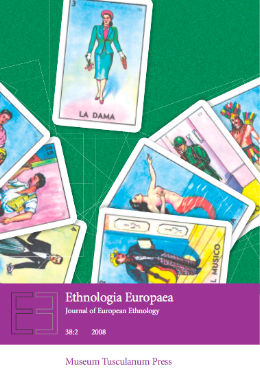
And last week, I received an email by Thomas Mogensen, the editor of Ethnologia Europaea. Journal of European Ethnology. He promoted his journal among other things by informing that they support open access publishing. Back issues (older than three volumes) are open access.

And he wrote:

As part of our policy in support of open access publishing, we also would like to offer you a free copy of one of the articles from the latest issue (vol. 38:2). You can access and distribute the article free of charge by using this link: http://www.mtp.dk/pdf/Is_East_Going_West-Or_is_the_West_Moving_East

If we take a look at the previously published volumes, we’ll find out that only back issues from 2004 and newer are freely available. Marketing Manager Niels Stern explains that they only had funds to digitize volumes published since 2001 (they were digitized in 2004). “But of course we would like to go further back”, he writes in an email to me. Being a non-profit publisher, they are still looking for funding initiatives that could aid in this respect.

At the same time, one of the larger commercial publishers is involved in a scandal. Elsevier has been lobbying against the open access movement for a long time on the grounds that open access journals can’t be trusted. Now they confirm that they have put out six fake journals. They look like peer reviewed but were sponsored by unnamed pharmaceutical companies. >> more info at Open Access News

Is East Going West – Or Is The West Moving East is the title of the open access article in the most recent issue og the Journal of European Ethnology.

For her doctoral thesis on (East) German identity-formation in today’s unified Germany, Sofi Gerber has conducted biographic interviews with persons who were born and grew up in the GDR and who now live in unified Germany.

She writes:

The most striking thing in the interviewees’ picture of the Eastern parts of Germany is their general de- scription of a society falling into decay. Contradictory to the hopes invested in the program Aufbau Ost (Re-Build the East), which has invested enormous amounts in the New Federal Republics’ infrastructure and buildings, the interviewees seem, rather, to describe an Abbau Ost (Dismantling the East). My interviewees’ narrations include an othering of big parts of Eastern Germany, as a place in which it is impossible or undesirable to live.

But the East–West boundary is not only reified, but also transcended by the interviewees:

This is articulated both implicitly, in that the interviewees stress other identifications, and explicitly, in that the dichotomisation is described as irrelevant or outdated. (…)
The identification with a region or a town can be described as superior to the East–West identification (…).
Most of the interviewees now living in Berlin identify themselves with the city, mostly because of what they describe as its openness, rawness and charm. Berlin is then not only a geographical place, but also a way of living, which is contrasted with the narrow-minded life in the countryside or the superficial life in other cities.
As described earlier, both of these contrasts can be associated with the East and the West respectively, but the special aura of Berlin can also be described as something extraordinary, transcending this dichotomisation. Even when the interviewees identify themselves with one district, this identification is often described as independent of the former border.

>> visit Ethnologia Europaea. Journal of European Ethnology

SEE ALSO:

New overview over open access anthropology journals

Open Access Anthropology in Africa – an introduction

Open access to all doctoral dissertations at Temple University

Why Open Access?

cover

Is Open Access the new buzz-word? Do we see some change in the world of anthropology journals? Angels Trias i Valls recently announced the birth of a new open access journal, Anthropology Reviews: Dissent and Cultural Politics.

And last week, I…

Read more