
search expand

New Open Access Journal: Anthropology Reviews: Dissent and Cultural Politics (ARDAC)

Is this one of the first real web2.0-journals in anthropology? A new Open Access journal was launched: Anthropology Reviews: Dissent and Cultural Politics (ARDAC)

It is no traditional journal. ARDAC was developed from within a social network site (Ning) and its aim is to incorporate web 2.0 technologies, photography, video, internet‐based content as well as traditional text (not in the first issue, though). In addition to traditional abstracts, the articles have their own “word clouds” (see example on the right – from the review of the film Avatar).

Interesting: The journal was inspired by our first Open Access Anthropology Day in 2009 and “is released this month to commemorate the young history of open access anthropology and to join the many new publications under the practice of open access”, as editor Àngels Trias i Valls writes in her editorial Open Access Anthropology 2.0 as a type of altermodern experimentation.

The journal is innovative in another way as well: It is more inclusive towards anthropologists outside of the English speaking world: Non‐English speakers are allowed to express themselves in the kind of English that they feel familiar with rather than the kind of edited English that is standard in publications. The journal takes submissions in other languages as well. Work from individuals at early stages of their academic career are welcome as well as more senior academics and inclusive of the academic community at large.

Here a short overview over this issue from Àngels Trias i Valls’ editorial:

– (T)he first contributor, Veronica Barassi, send us an article that ethnographically narrated understandings of dissent and cultural politics through the analyses of discursive technologies and political action.

– Nick White looked at the pertinent issue of ‘copy’ and the issues of legality and illegality in music filesharing on the Internet.

– Hagai van der Host produced a fascinating review of the film Avatar, mirroring some of the ways in which film mythologies correspond to political realities, and how the levels of allegory and projection spoke for discursive discussion on orientalism, the morality of counterfeit and cultural imperialism in the American / Iraqui conflict.

– I was thankful of the opinion articles, from Clare Perkins and Stavroula Pipyrou, because they made distinctive points about the possibility of ‘re‐ directing the ethnographic lense’ (in Clare’s case of using anthropology to think about genetically modified products) and re‐telling the social appropriation of violence (in Stavroula’s Calabrian Mafia) in a way in which both articles convinced me of the possibility of using anthropology to re‐ position ourselves theoretically and in research practice in larger communities of knowledge.

– At the closing of this number Maria Paulina de Assis and Maria Elizabeth Bianconcini de Almeida brought an article that looked at the relationship between education and digital exclusion from an educational perspective and on the possibilities of multi‐ educational strategies for global educational contexts that have now consolidated through the Internet.

>> overview over the first issue

>> overview over Anthropology Open Access Journals

Is this one of the first real web2.0-journals in anthropology? A new Open Access journal was launched: Anthropology Reviews: Dissent and Cultural Politics (ARDAC)

It is no traditional journal. ARDAC was developed from within a social network site (Ning) and…
Read more

No more conferences in Arizona: Anthropologists condemn Immigration Law

Even (seemingly?) rather conservative organisations are able to act and protest: In an official resolution, passed on Saturday, The American Anthropological Association has condemned the new immigration law in Arizona.

The association will refuse to hold scholarly conferences in Arizona until the law is ”either repealed or struck down as constitutionally invalid”, as we read in the AAA blog:

“The AAA has a long and rich history of supporting policies that prohibit discrimination based on race, ethnicity, national origin, religion or sexual orientation,” AAA Executive Board Member (and resolution author) Debra Martin said in a statement issued today. “Recent actions by the Arizona officials and law enforcement are not only discriminatory; they are also predatory and unconstitutional.”

The AAA describes the so-called Arizona Senate Bill (SB) 1070 as ”the broadest and most strict law on immigration enacted in generations”. The organisation sees the law as a movement to target and harass Arizona’s large population of Hispanic immigrants.

>> read more on the AAA blog

In December, the AAA condemned the coup in Honduras. And in 2006, the AAA stood up against torture and the occupation of Iraq

Last week, Indigenous and American Indian Studies scholars called for an economic boycott of Arizona.

See also the post at Savage Minds: Whiteness as Ethnicity in Arizona’s New Racial Order

Arizona immigration law sparks controversy

SEE ALSO:

Demonstrations against tougher immigration policy = birth of a new civil rights movement?

“Anthropologists Should Participate in the Current Immigration Debate”

Interview with Arjun Appadurai: “An increasing and irrational fear of the minorities”

Why borders don’t help – An engaged anthropology of the US-Mexican border

More Global Apartheid? New French immigration law

“Discuss politics!” – How anthropologists in Indonesia engage with the public

Even (seemingly?) rather conservative organisations are able to act and protest: In an official resolution, passed on Saturday, The American Anthropological Association has condemned the new immigration law in Arizona.

The association will refuse to hold scholarly conferences in Arizona…

Read more

Popular Anthropology Magazine = fail

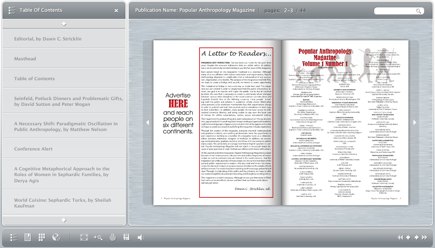
The first issue of the Popular Anthropology Magazine is out. It was meant to bridge the gap between academia and the public and between anthropologists and continents. Cool, we needed that. But the result is – in my opinion – disappointing. For it was made with outdated paper journals as ideal. The editors were thinking paper, not web. They do provide a downloadable version on their website but the flash animated paper-look-like version is a pain to navigate and read (the automatic scrolling is very irritating).

I finally tried to download the whole journal. It took ages and Firefox was about to crash. When the file finally was saved, it turned out to be 151 MB heavy. The pdf consisted of image files! Which means it is partly hard to read and you cannot copy and paste its content, and the links are not clickable. Fail! Can’t anthropologists do better? The articles deserve better. The table of contents looks promising, especially the sections on social science around the world.

>> take a look

SEE ALSO:

Anthronow – new magazine will make anthropology accessible to lay readers

New e-zine: American Ethnography

Imponderabilia – new international anthropology student journal

Open Access Anthropology Journals

The first issue of the Popular Anthropology Magazine is out. It was meant to bridge the gap between academia and the public and between anthropologists and continents. Cool, we needed that. But the result is - in my opinion…

Read more

Why anthropologists should study news media

Bad News. Photo: Stitch, flickr

The time is right for more anthropologists to engage with news media – with their creation, reception and content, writes S Elizabeth Bird in the recent issue of Anthropology News that was published today.

Anthropological engagement with media was long rare and discouraged – and in some quarters still is, Bird criticizes. The main focus has in her view been on topics like the role of television in family life, or the maintenance of diaspora connections through digital media but not on news production or reception.

This neglect is according to her important because “news is the one popular genre that claims to describe reality for the public”. Most of what people know about the world is mediated in one way or another:

Throughout the world, people argue, fight and die for stories in which they believe. So it is important to dissect and interpret them: the use of language, the choice of words, the images, the entire frame of the news coverage.

She suggests following research questions:

  • Which stories are being told and which are not?
  • Whose stories are being told, whose are not, and why?
  • How do journalistic routines and values vary across cultural contexts, and how does that produce different kinds of news?
  • How does the choice of images take the story in one direction or another?
  • How does the story then become part of the common-sense reality in specific cultural contexts?

High profile issues like war, she continues, illustrate these questions dramatically:

We all know, for instance, that the story of the Iraq war is deeply contested. If we have a lot of time, we can scour the Internet, sift through multiple accounts, and reach a conclusion. Most people have neither the time nor the resources to do that; they have little choice but to attend to the stories that predominate.

If we understand better how journalism works, she concludes, not only will we better understand our mediated global cultures, but we will also become more adept at working with journalists to tell anthropology’s stories more effectively.

>> download the whole article: Anthropological Engagement with News Media: Why Now?

I have to admit I’m a bit surprised about her analysis. Is the study of news really so much neglected? But that’s maybe because I tend to read more anthropology blogs than journals? It’s in blogs this kind of media anthropology is happening?

There are six more articles on anthropology and journalism online, among others Reviewing Books in Popular Media Anthropologists as Authors and Critics by Barbara J King.

“Merging book reviewing with journalism”, she writes, “opens up a space in which we may fling our fierce book-engagement out into the wider world, and see what comes back to us:

When reviewing, the single greatest joy for me is the oppor- tunity to showcase our colleagues’ brilliance. I look for books that bring alive people’s patterns of meaning-making as they flourish and struggle in their daily lives, books that make us see with new eyes behaviors familiar and strange to our own society or at times even to our own species.

There have been many debates on the similarities of anthropology and journalism in the blogosphere, both here on antropologi.info and on Savage Minds (see Why is there no Anthropology Journalism? and Anthropology Journalism HOWTO)

In Divergent Temporalities. On the Division of Labor between Journalism and Anthropology, Dominic Boyer shares some interesting observations about the borders between anthropology and journalism that seem to overlap more and more.

The contemporary market and labor conditions pressure anthropologists to adopt faster modes of research and writing than ever before:

Even doctoral candidates report feeling enormous pressure to publish their research findings well in advance of receiving their PhDs. Not unlike the desk journalists of old, we find ourselves increasingly concerned with “getting the story” (Peterson in Anthropological Quarterly 74[4]), that is, with chasing the next publication opportunity to keep up with market expectations and the demands of institutional audit cultures.

>> overview over all articles in Anthropology News April 2010

The best source on media anthropology might be the website http://media-anthropology.net with mailing list and a long list of working papers and the blog media/anthropology by John Postill

A good example of an anthropology of news can be found in the february issue of Anthropology Today (free access!!). In Heart of darkness reinvented? A tale of ex-soldiers in the Democratic Republic of Congo, Sindre Bangstad and Bjørn Enge Bertelsen analyze Norwegian media’s representation of Congo.

SEE ALSO:

Why anthropologists should become journalists

Nancy Scheper-Hughes: Public anthropology through collaboration with journalists

The end of one-way communication – Anthropologists help news providers and advertisers

In Norwegian TV: Indian tribe paid to go naked to appear more primitive

John Postill on media anthropology and internet activism in Malaysia

Introduction to “Media Worlds”: Media an important field for anthropology

Bad News. Photo: Stitch, flickr The time is right for more anthropologists to engage with news media - with their creation, reception and content, writes S Elizabeth Bird in the recent issue of Anthropology News that was published today.

Anthropological engagement…

Read more

Anthropologist uncovers how global elites undermine democracy

Janine Wedel has done something that far too few anthropolologists do: She studied powerful people. Those who rule the world.

In her book “Shadow Elite“, she shows how a new system of power and influence has taken hold globally, one that undermines democracy, government, and the free market.

Why went America to war against Iraq? More and more “government work” is performed by “shadow elites”: consulting firms, companies, nongovernmental organizations, think tanks etc, rather small circles of powerful people (she calls them “flexians”) who use their interlocking relationships to control public policy without public input. “Flexians” work often for private interests, academia and government at the same time.

The flexians form “Flex nets”. They cannot be reduced to lobbyists or interest groups. They are according to a review in the Financial Times defined by four features:

1) personalizing bureaucracy, or using personal connections and loyalties to realize goals;
2) privatizing information while branding conviction, or branding the information available only to insiders in this game;
3) juggling roles and representations, or changing spots frequently, wearing the pelt of military leader one day, analyst the next, and concerned citizen the next;
4) relaxing rules at the interstices of official and private institutions, or adjusting accountability and rules that apply to one or more of their pelts from the safety of a seemingly non-aligned position.

One of those flexians is the retired US general Barry McCaffrey, who has been simultaneously a commentator for the media, a consultant to the defence industry and professor. According to a 2008 exposé in the New York Times, he was one of several former military men who helped to shape public opinion on the Iraq war, while simultaneously having undisclosed ties to the Pentagon.

Wedel’s book has received quite a lot of media attention since it was released earlier this year. It was book of the month at Huffington Post (where she has started writing a weekly column) and was also reviewed in mainstream media. She was interviewed both by BBC, Russia Today, MSNBC and Al Jazeera.

Riz Khan - Shadow Elite - 15 dec 09 - Pt 1

Riz Khan - Shadow Elite - 15 dec 09 - Pt 2

It would be interesting to know how she studied the “shadow elites”. Has she been on fieldwork? I haven’t read all her texts. But in her newest article in Huffington Post, she explains how she came to understand the game: through her experience studying the mechanisms of power and influence in post-Cold War eastern Europe for about 30 years:

(E)xamining eastern Europe up close–through its transformations away from communism over the last quarter century–has been excellent preparation for making sense of how a small group of power brokers helped engineer the invasion of Iraq, and more broadly, how a new system of power and influence has taken hold globally, one that, as I write in my book Shadow Elite, undermines democracy, government, and the free market.

In communist Poland, the necessity of getting around the state-controlled system created a society whose lifeblood–just beneath the surface–was vital information, circulated only among friends and trusted colleagues, information that was not publicly available. Under-the-radar dealings that often played on the margins of legality – this was the norm, not the exception.
(…)
I began to recognize a familiar (to me) architecture of power and influence. I started to follow the networks and overlapping connections in government, foundations, think tanks, and business of a tiny set of neoconservatives – just a dozen or so players I call the “Neocon core”.
(…)
The playbook of the Neocon core seemed to come straight from that of the top players of transitional eastern Europe. In both cases, players who already knew each other set up a host of organizations–organizations that seemed more like an extended family franchise than think tank, populated by the same set of individuals. (…) And despite a new administration in Washington, not to mention the damage done to their credibility since the Iraq invasion, the Neocon core lives on, because networks like it are self-propelling, multipurpose, and enduring.

And she adds that as a social anthropologist, her “focus is not on whether the U.S. should have invaded Iraq, but rather how that decision was made, who made it, and what mechanisms of power and influence were used to make it”.

Exactly!

And in Anthropology News february 2010 (pdf) she explains why we need an “ethnographic focus” on power:

I have concluded that an ethnographic focus is indispensable to sorting out power and influence amid transforming federal governance in the United States, not only under change-of-system conditions such as those found in transitional eastern Europe.

The ethnographic sensibility that enabled scholars of communist and post-communist societies to deal with the complexity, ambiguity and messiness of political and policy processes is ideally suited to examine the interactions between public policy and private interests and the mixing of state, nongovernmental, and business forms that are increasingly preva- lent in the United States and around the world.

By focusing on players and their networks as drivers of governing and policy decisions, these ethnographers have laid the groundwork for badly needed critiques of social science categories such as “state” versus “private,” “top-down versus bottom-up,” and “centralized” versus “decentralized.” They have provided a basis for reexamining conventional models that guide so much thinking about politics, policy and power, and yet obfuscate, rather than illuminate, the real system of power and influence.

Her work is a good example of public anthropology. Her website is really impressive. There you find a great amount of her publications, both newspaper articles and papers (even back to pre-internet and pre-computer times), a collection of book reviews, TV and radio interviews, interviews related to Shadow elites etc

It is popular to lament about the lack of public anthropology, but anthropologists have been highly visible in matters regarding global financial and power issues, see earlier posts Anthropologist Explores Wall Street Culture, Financial crisis: Anthropologists lead mass demonstration against G20 summit and Used anthropology to predict the financial crisis.

Studies on elites are still not as common as studies on marginalized people, though. This is not only true for anthropology. I have to think of a series of great programs at BBC Thinking aloud about white collar crime – a rather neglected topic among sociologists and criminologists as well.

Janine Wedel has done something that far too few anthropolologists do: She studied powerful people. Those who rule the world.

In her book "Shadow Elite", she shows how a new system of power and influence has taken hold globally, one…

Read more