search expand

The Best of Neuroanthropology (etc)

One of the – in my view – most interesting anthropology blogs, Neuroanthropology, has recently celebrated post #1000 and made a list over their Top 100 Posts – based on page views (there is also a list with their personal favorites).

At the same time, the blog has moved to http://blogs.plos.org/neuroanthropology/. They are now part of the new Public Library of Science: PLoS Blogs, “a serious and powerful voice for open-access scholarship and education”. Neuroanthropology bloggers Daniel Lende and Greg Downey hope to “act as a voice for anthropology in a scholarly and public forum built around science and medicine”.

Neuroanthropology is one of the rather few outward looking anthropology blogs – writing both for fellow researchers and the interested public. There are many in-depth magazine style posts – and not only about neuroanthropology – often regarded as one of the most exciting research fields.

One of the most recent posts deals with the question: How does language affect thought and perception? while others discuss The Pitfalls and Pratfalls of Criminals or The dog-human connection in evolution or the Neuroanthropology of Morality.

Public Anthropology is a popular topic, see for example On Reaching a Broader Public or Glory Days – Anthropologists as Journalists or Student Websites and the Classroom: Anthropology Online.

A lot to explore and learn!

One of the - in my view - most interesting anthropology blogs, Neuroanthropology, has recently celebrated post #1000 and made a list over their Top 100 Posts - based on page views (there is also a list with their personal…

Read more

The return of colonial anthropology?

“A dysfunctional ethnic and tribal brawl has been the norm in Afghanistan for centuries. Afghanistan is a mess. ” Who said that? A frustrated U.S. military officer? No, a professor of anthropology, Robert L. Moore.

In his article Tribes, Corruption Ail Afghanistan in The Ledger he shares his concerns about the difficulties for “us” (=the U.S. military) to “push this contentious country into the 21st century” and turn it into a “normal, stable country” that will be “governable in the way that most nations are”.

His main point: Afghanistan is an ethnic and religious mess:

Afghanistan is a mess. It is populated by a multitude of ethnic groups, the dominant ones being Pashtun, Tajik, Hazara and Turkic. Many of these groups are further subdivided into traditional tribes whose members regard loyalty to their tribe or clan as more vital than loyalty to any nation or government. Alongside these tribal and ethnic divisions are religious differences that separate Shi’a from Sunni Muslims. The upshot of all this is that Afghanistan is not governable in the way that most nations are.

“In this harsh landscape”, he continues, “our efforts to “stabilize” Afghanistan cannot bring about rapid dramatic change”:

There are areas of Afghanistan, mainly non-Pashtun regions, where the Taliban are deeply distrusted and in these areas our troops might be welcomed. But would our fighting on behalf of, say, Tajiks (who, by the way, are ethnic cousins of Iran’s Persians) help solve Afghanistan’s long-standing problem of ethnic conflict? It is more likely to simply add another dimension to the dysfunctional ethnic and tribal brawl that has been the norm in Afghanistan for centuries.

Ethnic mess – apartheid as ideal? U.S-military=”us”. “Anthropology= serve those in power” – Sounds like 19th century colonial anthropology!

Over at Zero Anthropology, Maximilian Forte gives an overview over European press coverage of U.S. Army’s Human Terrain System and its embedding of civilian social scientists in Afghanistan and Iraq.

SEE ALSO:

Sheds light on the collaboration between science and colonial administration in Naga ethnography

Army-Anthropologists call Afghans “Savages”?

“No wonder that anthropology is banished from universities in the ‘decolonized’ world”

The dangerous militarisation of anthropology

The Five Major Challenges for Anthropology

“A dysfunctional ethnic and tribal brawl has been the norm in Afghanistan for centuries. Afghanistan is a mess. ” Who said that? A frustrated U.S. military officer? No, a professor of anthropology, Robert L. Moore.

In his article Tribes, Corruption Ail…

Read more

The world’s only anthropology professor of indie music?

Arctic Monkeys @ Explanda del Estadio Azteca. Photo: monophonic.grrrl / Mariel A. M., flickr

“Ask the indie professor” is the name of a new series in the Guardian. The indie professor in question is Wendy Fonarow. At a music festival she was recently introduced as “the world’s only professor of indie music”.

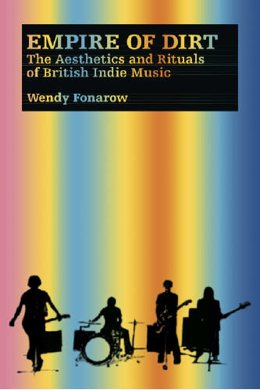
“I’m not sure if I’m the only indie professor, but I’ve spent the last 18 years recording, examining and writing about the culture of indie and the international music industry”, Wendy Fonorow writes in her opening post. Her book “Empire of Dirt: The Aesthetics and Rituals of British Indie Music” tackles questions such as “Why are drummers the most ridiculed band members?”, she adds.

The readers of this new series are invited to ask questions. “So if you are curious about why cassettes are the new vinyl, or whatever else takes your fancy, here is your chance to ask”, she writes. “And please someone ask me about why Americans think they invented indie.”

After one day, there are already more than 250 comments.

The Guardian presented her book two years ago.

Here is what she according to the Guardian writes about indie culture and religion:

“Religious narratives show up in all expressive forms, from politics to music. I see a lot of the religious narrative of Puritanism in the indie music scene; the idea that, to have the pure divine experience, it has to be direct and unmediated. So the smaller and more intimate a show is, the ‘truer’ fans believe their experience was, compared to someone who saw them later on in a bigger venue. That’s why so many people claim to have seen the Sex Pistols at the 100 Club. You can also find the aesthetic of Puritanism in the way indie people present themselves, such as childlike clothing, this idea of returning to the golden age of childhood or the musical past.”

Or here about music as ethnicity:

One of my ex-students once said ‘music is my ethnicity’. People want to find other people who are like-minded so instead of finding their ethnic identity through birth they find it through aesthetic preferences and that becomes their identity. For each one of those music movements, there are modes of display. Desmond Morris talked about how different earrings can signify where you are in the age grade of certain tribes in central Africa. To outsiders these displays are subtle or hard to notice at all.”

Interesting! But it seems the anthropologist is extremely fond of theory and might tend to over-analyse her informants. Here is how the Guardian begins the presentation:

Remember that time you were crowd surfing at an Arctic Monkeys gig and thought you were just having a drunken laugh? Rubbish! You were, in fact, being “collaborative in a unique social space, expressing super-intimacy with strangers and rejecting the self-aggrandising that comes with stage-diving”. Oh yes you were. And that time you were standing at the bar and thought you were just, well, thirsty? Not at all: you were probably just “proving your credentials as an industry professional” or “communicating to others a disinterest in the act”.

These are the theories of professor Wendy Fonarow, anthropologist at UCLA in California and the author of Empire Of Dirt: The Aesthetics And Rituals Of British Indie Music.

Her book has received a lot of positive reviews, while Pichfork reviewer William Bower is less convined by the book and its language. Check also Wendy Fonarow’s website at http://www.indiegoddess.com/

SEE ALSO:

”Eurovision produces a new form of unity”

Hindi Film Songs and the Barriers between Ethnomusicology and Anthropology

Reggae, Punk and Death Metal: An Ethnography from the unknown Bali

Multimedia Music Ethnography of Yodelling and Alphorn Blowing

“Pop culture is a powerful tool to promote national integration”

Arctic Monkeys @ Explanda del Estadio Azteca. Photo: monophonic.grrrl / Mariel A. M., flickr

“Ask the indie professor” is the name of a new series in the Guardian. The indie professor in question is Wendy Fonarow. At a music festival…

Read more

For more anthropology of climate change


Photo: The World Wants a Real Deal, flickr

In the recent issue of Imponderabilia Heid Jerstad criticizes the lack of anthropological research on climate change. Climate change is only present on the margins of anthropological research, Jerstad claims. A similar critique was formulated by Simon Batterbury in his article Anthropology and global warming: the need for environmental engagement.

But several climate anthropologists have been in the news recently. In an interview with the Borneo Post, anthropologist Bob Pokrant addresses climate change in Borneo. To tackle the climate change issue, he proposed using the ‘adaption approach’ instead of the ‘mitigation approach’:

By mitigation, we mean reducing the sources of greenhouse effect. By adaption, we mean recognising that climate change is happening and then work out a programme to reduce the social vulnerability of those affected. We have to empower the people to take the future in their own hands. In countries affected by climate change most, their people’s capacity to adapt must be built up.

Fight global warming ‘with traditional methods’, urged Pietro Laureano. architect, town planer and anthropologist. Traditional water management methods from the Sahara and Ethiopia and Iraq’s Babylon area could be used alongside newer technologies such as solar power to prevent desertification and energy wastage. See also interview with Laureano and his paper Traditional Techniques of Water Management a New Model for a Sustainable Town and Landscape. From the First Water Harvesting Surfaces to Paleolithic Hydraulic Labyrinths.

Environmental anthropologist Kenny Broad was interviewed by Hawaii 24/7. As an anthropologist “his focus is bridging the physical and social aspects of science, specifically the human-environment relationship along coastlines and the impacts of climate change.”

For as Linda Connor says, climate change is a cultural crisis, – an aspect that in her opinion is ignored in much of the technical, economic and political talk of policies and solutions.

A few weeks ago, Susan Crate’s research on climate change in Siberia was presented. On her website lots of papers can be downloaded, for example the most recent one Bull of Winter? Grappling with the Cultural Implications of and Anthropology’s Role(s) in Global Climate Change (pdf). Together with Marc Nuttall, she edited the book Anthropology and Climate Change. From Encounters to Actions. See also interview with Nuttall on CBC News “Human face of climate change: Weather out of its mind”.

At the University of Copenhagen, anthropologist Kirsten Hastrup is the leader of the interdisciplinary climate change research project Waterworlds. In an interview, she explains the relevance of historical anthropology for today’s climate change.

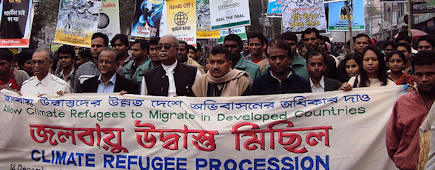
See also Climate Change and Small Island Developing States: A Critical Review by Ilan Kelman and Jennifer J. West (Ecological and Environmental Anthropology, Vol 5, No 1 (2009)) and Waterworld1: the heritage dimensions of ‘climate change’ in the Pacific by Rosita Henry and William Jeffery as well as information about climate refugees and my earlier post Why Siberian nomads cope so well with climate change. For even more literature see Bibliography for the anthropology of climate change.

Photo: The World Wants a Real Deal, flickr

In the recent issue of Imponderabilia Heid Jerstad criticizes the lack of anthropological research on climate change. Climate change is only present on the margins of anthropological research, Jerstad claims. A similar critique…

Read more

– Highlight the connections between people!

It happened already around 200 years ago: Aboriginal Australians marry Indians. Afghan cameleers open up the interior of Australia for transport and development. Indian seamen fight for Indonesian independence. And long before Australia was colonised by white settlers in 1788, Aboriginees have had longstanding relations with the Indonesian archipelago.

A few weeks ago I met Devleena Ghosh. She is conducting interesting research about the movements of people and ideas in the Indian ocean. We often link transnationalism to today’s world, but Ghosh shows that people have lived globalised lives already several hundred years ago. Australias history consists of more than white settler history.

– It is important to highlight the connections between people, she told me. It is important to challenge the popular belief that migration is something new, that people lived seperated from each other, hating each other. Because that’s not true.

I totally agree with her.

Relationships between South Asians and Australians during the colonial period and earlier have been little investigated. The same can be said of Norwegian history. It was not more than seven years ago, that the first history of immigration was written.

Because of this lack of transnational history writing, the incorrect view of the world as consisting of isolated and self-sustaining societies has been able to dominate the public and scientific discourse. This view has been a fruitful breeding ground for ethnic chauvinism, racism and – in social science – methodological nationalism (pdf).

Devleena Ghosh and her colleagues have published some open access papers:

Devleena Ghosh, Heather Goodall, Lindi Renier Todd: Jumping Ship: Indians, Aborigines and Australians Across the Indian Ocean (Transforming Cultures eJournal, Vol 3, No 1 (2008)

Devleena Ghosh, Stephen Muecke: Cultures of Trade: Indian Ocean Exchanges (Introduction) (pdf)

Goodall Heather: Port Politics: Indian Seamen, Australian unionists and Indonesian independence 1945-1947 (Labour History 94, 2008)

SEE ALSO:

How to challenge Us-and-Them thinking? Interview with Thomas Hylland Eriksen

For an Anthropology of Cosmopolitanism

Owen Sichone: Poor African migrants no less cosmopolitan than anthropologists

Beyond Ethnic Boundaries? Anthropological study on British Asian Cosmopolitans

The Double Standards of the “Uncontacted Tribes” Circus

Doctoral thesis: Towards a transnational Islam

It happened already around 200 years ago: Aboriginal Australians marry Indians. Afghan cameleers open up the interior of Australia for transport and development. Indian seamen fight for Indonesian independence. And long before Australia was colonised by white settlers in 1788,…

Read more