
search expand

How gaming wealth is reviving American Indian traditions

cover

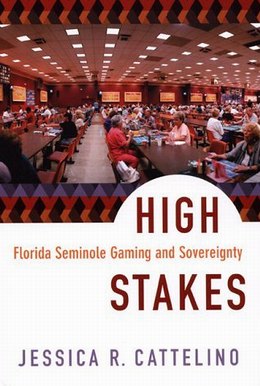
Gaming is big business for many Native American tribes. For the Seminole tribe in Florida, gaming wealth enabled them to revive traditions and celebrate their culture in previously unimaginable ways, anthropologist Jessica R. Cattelino writes in her new book High Stakes: Florida Seminole Gaming and Sovereignty.

Cattelino conducted fieldwork on the Seminoles” six reservations, attending everything from tribal council meetings to birthday parties, and learning about the texture of everyday life according to a press release.

The Seminoles are often credited with opening the door to Indian gaming in 1979. In 2006, they stunned the world in 2006 with its $965 million purchase of Hard Rock International, an empire of restaurants, performance venues, hotels and casinos in 45 countries.

Cattelino found that the Seminoles’ estimated $1 billion in annual gaming proceeds has opened the door to a wealth of opportunities.

On the one hand, more and more expensive new vehicles fill tribal parking lots and driveways. On the other hand gaming proceeds have allowed the tribe to erect an social safety net that includes universal health care, financial support for unlimited education, full senior care and generous reservation amenities, from gyms to community centers.

Furthermore, prosperity has allowed the Seminoles to revive traditions and celebrate their culture in previously unimaginable ways:

A new market for high-end Seminole crafts has emerged, fueled by the collecting potential of the Seminoles themselves. Local schools now incorporate traditional practices and native-language instruction into their curricula. New positions as cultural educators, tribal museum officials or language instructors have opened up.

Gaming has also enabled Seminoles to return to traditional tribal forms of housing and community organization:

Since the mid-1960s, the U.S. Bureau of Indian Affairs (BIA), in collaboration with the U.S. Department of Housing and Urban Development, had pushed tribal members into individual, cement-block homes arranged without regard to extended family ties. But the new wealth has allowed them to take control of tribal housing, ushering in a return of native construction styles, traditional structural elements and housing arrangements that cluster residents according to Seminole matrilineal clans, Cattelino found.

And the Seminoles use their wealth to help other communities. They have contributed to Hurricane Katrina relief, the National Museum of the American Indian in Washington, D.C., and numerous local causes.

A real sunshine story, too god to be true? Not even gaming scandals? There have been just “a few isolated issues”, we read. “Everybody expected tribal gaming to be a wide open field for organized crime,” Cattelino writes, “but the evidence just isn’t there.”

>> read the press release (UCLA Newsroom)

SEE ALSO:

Fieldwork reveals how slot machines are exploiting people

Native American Tribe Allows Gay Marriage

Dissertation: Indigenous people not always “victims of economic globalisation

How Media and Digital Technology Empower Indigenous Survival

cover

Gaming is big business for many Native American tribes. For the Seminole tribe in Florida, gaming wealth enabled them to revive traditions and celebrate their culture in previously unimaginable ways, anthropologist Jessica R. Cattelino writes in her new book High…
Read more

How the Human Terrain System people think

“They’re natural born killers. They’re good, they’re lethal, they’re fantastic. I love working with them”, says Major Robert Holbert. He was part of the first Human Terrain Team in Afghanistan in 2007 and tells his story in a fascinating interview with Lisa Wynn at Culture Matters.

The interview gives insight in the way HTS-people (“cultural advisors” for the US-army) think. And it uncovers that their way of thinking only works within their own cosmology – only as long as you accept that it is okay to colonize / occupy Afghanistan or Iraq:

Lisa Wynn: OK, well let me ask a hard question, the kind of question I can imagine opponents of HTS posing. Yes, you’re saying this saves lives, and probably that’s true. But at the same time, it facilitates a military occupation of another country. You say it’s about winning a war. But talking about winning, it takes the war for granted. In the end, you’re facilitating the U.S. occupation of another country. How would you answer that?

Robert Holbert: [sighs] I’m not going to completely disagree, it’s not… God. It is what it is. OK, you say we’re an occupying army, we’re an occupying army. If that’s how you look at it, that’s how it is. What else do you call it when you’re not from the country and you’re in it? But if you’re going to fight it, then you’re there. This is an opportunity to change the culture of the military, this is our golden hour as progressives, and yeah, we’re in a country, we’re occupying it, but I’m trying to work myself out of a job, you know.

>> continue reading at Culture Matters

It reminds me of what Kerim Friedman wrote three month ago in his post The Myth of Cultural Miscommunication (Savage Minds, 26.6.08):

Treating the military’s lack of respect for local cultural knowledge as a cultural problem which can be solved by hiring anthropologists ignores the very real ways in which the military itself operates as a system for producing knowledge about the world, and the role of local knowledge in that system.

I haven’t written about military stuff recently, so in case you’ve missed some earlier posts on this issue in the anthrosphere, you might be interested in reading that The Human Terrain System spreads to Africa, Latin America, and the Caribbean (Open Anthropology, 7.9.08) , about resistance against Pentagon’s Minerva project (military-social science partnership) (Culture Matters 5.8.08) and a review of an article by embedded journalist Steve Featherstone about the HTS entitled “Human Quicksand” (Culture Matters 29.8.08). Culture Matters provides also an annotated bibliography on HTS, Minerva, and PRISP

SEE ALSO:

Cooperation between the Pentagon and anthropologists a fiasco?

Anthropology and CIA: “We need more awareness of the political nature and uses of our work”

The dangerous militarisation of anthropology

"They’re natural born killers. They’re good, they’re lethal, they’re fantastic. I love working with them", says Major Robert Holbert. He was part of the first Human Terrain Team in Afghanistan in 2007 and tells his story in a fascinating interview…

Read more

Native American Tribe Allows Gay Marriage

cover

Gay marriage is banned in Oregon and the most states in the U.S. But if you are gay and Native American you are lucky: The Coquille Indian Tribe on the southern Oregon coast recently adopted a law that recognizes same-sex marriage.

The law extends to gay and lesbian partners all tribal benefits of marriage – even if a Coquille marries an Italian or Pakistani, The Oregonian and USA Today report.

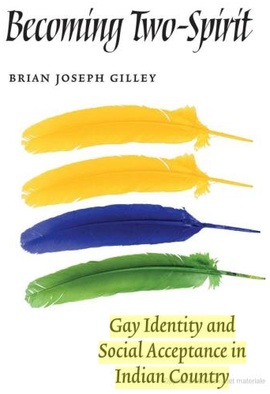
According to anthropologist Brian Gilley, The Coquilles are probably the first tribe to legalize same-sex marriage. Gilley is author of the book, “Becoming Two-Spirit: Gay Identity and Social Acceptance in Indian Country”.

The interesting thing is that many Native American tribes historically accepted same-sex relationships. But in the colonial era, Europeans tended to change that.

Native Americans not only accepted lesbian and gay people, they also respected them as prophets, hunters or healers, anthropologist Rae Trewartha writes in The New Internationalist.

English and French-Canadian fur trappers were surprised to find that there were significant numbers of men dressed as women among the Native Indians, Scott Bidstrup writes:

What intrigued them the most, however, was the esteem with which these men were held by their fellow tribesmen. These men were considered to be spiritually gifted, a special gift to the tribe by God, men with a particular insight into spiritual matters.

Native Americans with mixed gender identity are called “Two Spirit” (see also a New York Times story about a Two Spirit gathering)

The new law rises interesting legal questions, anthropologist Brian Gilley explains, Because the Coquilles have federal status, a marriage within the tribe would be federally recognized. But that would violate the Defense of Marriage Act, a law that says the federal government “may not treat same-sex relationships as marriages for any purpose.”

“The federal government could challenge the Coquille law as a way of testing the limits of tribal independence”, he says.

>> Gay marriage in Oregon? Tribe says yes (The Oregonian, 20.8.08)

>> Native American tribe to allow same-sex marriages (USA Today, 22.8.08)

SEE ALSO:

Law and multiculturalism: When law crosses borders

A subculture of hefty, hirsute gay men is attracting the attention of academics

cover

Gay marriage is banned in Oregon and the most states in the U.S. But if you are gay and Native American you are lucky: The Coquille Indian Tribe on the southern Oregon coast recently adopted a law that recognizes same-sex…

Read more

Fieldwork reveals how slot machines are exploiting people

In November, a referendum on the legalizing of slot machines in Maryland will be held. In the Washington Post, anthropologist Natasha Dow Schüll tells us how slot machines are exploiting people.

Natasha Dow Schüll has been on fieldwork in Las Vegas among gamblers and the designers of the slot machines. Her book Machine Life: Control and Compulsion in Las Vegas will be published by Princeton University Press in early 2009.

Her research, she writes has been “focused on a dramatic turn that has taken place in recent decades from social forms of gambling played at tables to asocial forms played alone at video terminals”. The machines are designed to exploit aspects of human psychology:

Without the presence of social elements such as other players or a live dealer, they are able to exit the world and enter a state where everything fades away. (…) Players enter what’s known as the “machine zone,” where even winning stops mattering; in fact, it can be unwelcome because it interrupts the flow of play. Such players only stop when their credits are consumed.

She concludes:

What revenue slot machines do generate comes not from entertaining but exploiting people. Should the government, whose role is to protect its citizens, become a partner in this ethically dubious enterprise?

>> read the whole story in the Washington Post

To Salon.com she says that the industry has successfully defined the terms of gambling addiction: It’s telling that we speak about problem gamblers, but not problem machines, problem environments, or problem business practices.

The anthropologist has put three papers on her Las Vegas research online (pdf):

Digital Gaming: The Coincidence of Desire and Design

Machines, Medication, Modulation: Circuits of Dependency and Self-Care in Las Vegas

Oasis/Mirage: Fantasies of Nature in Las Vegas

In November, a referendum on the legalizing of slot machines in Maryland will be held. In the Washington Post, anthropologist Natasha Dow Schüll tells us how slot machines are exploiting people.

Natasha Dow Schüll has been on fieldwork in Las…

Read more

New e-zine: American Ethnography

cover

Anthropologist Martin Høyem has launched the e-zine “American Ethnography”, an “internet glossy on the study of cultures”:

We cover ethnography that relates to anything we would call America. We aim to present the tradition and practice of ethnography to people who didn’t know they could be intrigued by ethnography. The goal is to help increase the interest in how we all try to understand unfamiliar cultures. This, we think, could do the world good.

As he writes to me in an email, “it’s pretty new, so there isn’t a lot of material there yet, and most of what is there is old public domain texts (previously not freely available to the general public).” Most of the texts were previously published in the journal American Anthropologist.

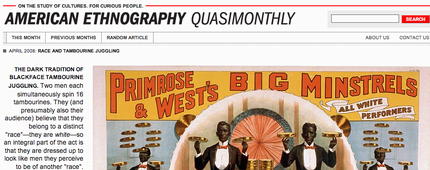
Around twelve articles are online already, including portraits of some famous anthropologists and texts about the peyote-cult – a cactus that was eaten in rituals of native Indians. The most recent issue contains articles about race and tambourine juggling. Looks interesting!

>> visit American Ethnography

Høyem has previously written a thesis about American Lowrider Culture called I want my car to look like a whore. Lowriding and poetics of outlaw aesthetics, see also my post about the thesis: When Norwegians do business in Brazil, Lowrider Culture and 9 more anthropology theses.

Høyem is currently working at Pacific Ethnography – anthropology and design

UPDATE: The discussion about American Ethnography and copyright issues is continuing over at Savage Minds, see American Ethnography, the AAA, and the Public Domain

cover

Anthropologist Martin Høyem has launched the e-zine "American Ethnography", an "internet glossy on the study of cultures":

We cover ethnography that relates to anything we would call America. We aim to present the tradition and practice of ethnography to people…

Read more