search expand

When Norwegians do business in Brazil, Lowrider Culture and 9 more anthropology theses (part 1)

(LINKS UPDATED 29.10.22) Norwegian anthropologists no longer hide their master theses in distant libraries. Most theses are now available online in digital archives. Last week, more than 20 new theses (among them 11 in English) have been put online at DUO, the digital library of the University of Oslo.

On this rainy Sunday, I’ll pick out two studies:

Doing busness in Brazil. An anthropological study of the interaction between Norwegian and Brazilian business people is the title of the theses by Anita Wold. She conducted fieldwork in a Brazilian family company that recently was acquired by a Norwegian company. Furthermore, she interviewed Norwegians working in Brazil and Brazilians working in Norwegian companies.

Her point of departure: The increase in international business has created a demand for books about cultural differences in business that are easy to grasp. But books and teaching material within the field called intercultural communication is dominated by quantitative studies. “I believe anthropological theory can provide a more fruitful analytical framework for understanding communication between people with different backgrounds and knowledge”, she writes.

She shows among other things that the dominating figures within the field of intercultural communication use a problematic perspective on cultural difference. For Hofstede (2001), Trompenaars and Hampden-Turner (1997) national identity is an imprint of values and a collective “software” in peoples’ minds that produces a distinctive national behavioural pattern. Through quantitative studies these researchers have found a small set of value-based continuums of interpretation such as individuality-collectivist, masculinity-femininity, power distance etc. (see for example Hofstede’s country profiles):

I found that most of the Norwegian managers find “the Norwegian leadership style” the best way of practicing leadership. The Brazilian leadership style is considered to be more authoritarian than the Norwegian, and few of the Norwegian managers seemed to be willing to adjust their own practice.

The Norwegians, as owners and managers, are in a position where they can define the use of management techniques and practices in the companies where they are in command. However, whenever Norwegians engage with customers in Brazil, they are not in a position to define the situation and therefore have to adapt to local practices and demands in order to sell their products.

In exploring the interaction between people with different backgrounds, I have argued against the perception of culture as it is postulated by Hofstede (2001), Trompenaars and Hampden-Turner (1997). In the present study I have argued that business practices are embedded in the local context.

Thus, in order to understand the differences encountered by the Norwegian and Brazilian business people I have demonstrated the importance of placing the practices in a cultural, historic and economic context.Thus, quantitative studies and universalistic assumptions of cultural differences fail to achieve a fruitful understanding of the contextual variations.
>> download the thesis

lowrider

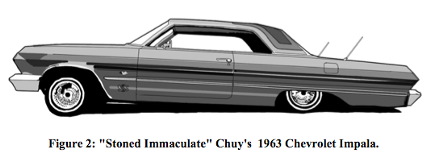
Martin Høyem has written the thesis I want my car to look like a whore. Lowriding and poetics of outlaw aesthetics. It as an extremely well written thesis and even fun to read. He captures the reader already on the first pages when he describes his first days in the field, looking for potential lowriders:

I never saw any lowrider cars in the streets, and this surprised me, since I had an impression—gathered from the material I studied before I left for the field—that the streets of LA would be packed with lowriders. I suddenly realized that my plan A of simply walking up to somebody with a lowrider asking to talk to them rested on a missing premise. I also realized I had no plan B.

At one of the first meetings with his informants, they asked him some questions:

“One thing first: Do you like Abba or Led Zeppelin?”
Chuy had presented me to everybody, in plenum, and asked that I talked a little about myself. (…) It was immediately clear to me what the right answer would be. “These guys aren’t Abba fans,” I thought to myself. And as Bourdieu points out: “Nothing more clearly affirms one’s ‘class’, nothing more infallibly classifies, than tastes in music.” (Bourdieu, 1984:18) (…) “I like Zeppelin,” I said. They all nodded and mumbled approvingly. “That was easy,” I thought.
(…)
Then one guy asked “What kind of car do you have?”
Not missing a beat—since I felt I was doing so well building credibility—I told them: “It’s a 1989 Cadillac Eldorado Biarritz. Two doors.” They didn’t like that. “Well at least it has two doors,” somebody mumbled.

For Martin Høyem it was important to contribute with new perspectives in the study of the lowrider culture:

As a result of the tendency in social studies within USA to threat themes in the light of ethnicity and gender, a major part of ethnographical studies portray the population groups they write about as exotic and describes them as physically and culturally isolated—as subcultures opposed to main-stream American culture. The same goes for descriptions of the lowrider culture, both in academic literature and in diverse types of popular culture.
(…)
The lowrider cars are traditionally described as products heavily influenced by the owner’s Mexican heritage. While there is obviously much to be said for these accounts, they often fall short of considering the class aspects in the judgment of aesthetical taste. I have pointed to data which illustrate how class background might be just as important, if not more, in an effort to analyze the cars and their owners place in the American consciousness.

Additionally, the outlaw mystique which clings to the cars and their owners is a social problem for the lowriders. (…) Perhaps the outlaw aesthetic in the lowriders play the same role as folklore did for the rise of the European romantic nationalism. Just like the scholars of that time gathered histories to demonstrate “connections with the cultural glories of supposed common ancestry” (Herzfeld 1996) the histories that are told through the outlaw aesthetic are stories seeking to establish an abstract common background.
(..)
Although the imagery tells stories of violent conflict solving, loose sexual morals, liberal use of recreational drugs and a strong focus on material values, the everyday reality for the majority of the people who parade this imagery is much more mundane; theirs is a life lived within a framework in agreement with the moral code of society.

>> download the thesis: I want my car to look like a whore. Lowriding and poetics of outlaw aesthetics

And here are the other nine new anthropology theses:

Anne Gry Venås: “School is for the lazy ones”. Local interpretations of children`s rights to education in a rural community in Guatemala

Matthew Whiting: Men & motors. Myth-making and the emulation of a past elite class

Brigt Hope: The function of the internet in the Moroccan public sphere

Marit Aune Bergstrøm: Struggling for respect and dignity. Strategies for shaping meaningful lives among persons with disability and their families in a community on the Mexican south-pacific coast

Hilde Johanne Bjugn Foss: The Hmong in the Twin Cities. Generational and gender differences in the perception of kinship, marriage and prestige

Katri Elina Matikainen: Transformative substances, knowledge and power. Affecting the course of events in a Gambian Mandinka village

Jonas Ursin-Holm Lea: Streets, skollies and coons in district six. On narratives and identity related to an area of forced removal in Cape Town, South Africa

Lene Cecilie Hellum: The face of the cowboy. Perspectives on myths and identities among Texan cowboys

Janne Waagbø: “Dancehall! – a serious thing!” Performing gender in Jamaican dancehall

UPDATE 1/10 Even more new theses in English! More in a later post.

lowrider

(LINKS UPDATED 29.10.22) Norwegian anthropologists no longer hide their master theses in distant libraries. Most theses are now available online in digital archives. Last week, more than 20 new theses (among them 11 in English) have been put online at…
Read more

Selected quotes from "On Suicide Bombing" by Talal Asad

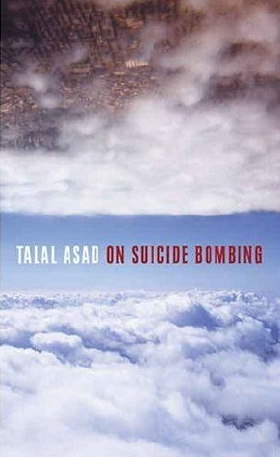
On Suicide Bombing - Cover

I’ve finished reading Talal Asad’s new book On Suicide Bombing. It belongs to the category of books I like most: It challenges common assumptions, makes us think (not so important if you agree with him all the time or not). By showing that the world is more complex, that you can look at the phenomenon from many angles, Asad does his job as anthropologist well.

In case of suicide bombing, one of his points is that suicide bombers might not be so something that special: Is there really a big difference between soldiers at war and suicide bombers? What actually is terrorism? What kind violence is labelled as “legitimate” and why? What role do common ideas about “civilized” and “uncivilized” people play in this discourse?

As Asad writes:

My argument is directed against thinking of terrorism simply as an illegal and immoral form of violence and advocates an examination of what the discourse of terror – and the perpetration of terror – does in the world of power.

Instead of a review (which I’m going to write in Norwegian), here some selected quotes.

I’ll start with the Epilogue

Western states (including Israel) have now massacred thousands of civilians and imprisioned large numbers without trial; they have abducted, tortured, and assasinated people they claim are militants and laid waste to entire countries. (…) In the long perspective of human history, massacres are not new. But there is something special about the fact that the West, having set up international law, then finds reasons why it cannot be followed in particular circumstances. I find this more disturbing than the sordid violence of individual terrorists.

It seems to me that there is no moral difference between the horror inflicted by state armies (especially if those armies belong to powerful states that are unaccountable to international law) and the horror inflicted by its insurgents. In the case of powerful states, the cruelty is not random but part of an attempt to discipline unruly populations. Today, cruelty is an indispensable technique for maintaining a particular kind of international order, an order in which the lives of some peoples are less valuable than the lives of others and therefore their deaths less disturbing.

The perception that human life has differential exchange value in the marketplace of death when it comes to “civilized” and “uncivilized” peoples is not only quite common in liberal democratic countries; it is necessary to a hierarchial global order. (…) All this is familiar stuff, and yet our media and our political potboilers remain obsessed with the ruthlessness of jihadists and the dangers of an unreformed Islam.

[teaserbreak]

Terrorism: The distinction between terrorists and armies at war

So, war is a legally sanctioned concept, and the hateful killing perpetrated by unlicenced militants is not. And yet soldiers are taught to hate the enemy they are required to kill; the fact of killing being legally sanctioned is an abstract irrelevance. In this regard, soldiers are no different from terrorists.

If the motive of military commanders is complex (they kill noncombatants but wouldn’t if they did’t have to), however, couldn’t the same be said of the terrorist whose killing of civilians is at once deliberate and yet coerced? He has reached the limit; he has no option left – or so he claims, when he argues that in order to try to prevent “the coercive transformation of (his people’s) way of life”, he must carry out immoral killings. If he kills enough civilians (so he reasons), perhaps those who are politically responsible will respod in the desired way.

So: it is not cruelty that matters in the distinction between terrorists and armies at war, still less the threat each poses to entire ways of life, but their civilizational status. What is really at stake is not a clash of civilizations (a conflict between two imcompatible sets of values but the fight of civilization against the uncivilized. In that fight, all civilized rules may be set aside.

War is (…) a collectively organized, legitimized, and moralized game of destruction that is played much more savagely by the civilized than the uncivilized.

Suicide Terrorism: How unique is suicide bombing?

So how unique is suicide bombing? If it is special – and I believe that in a sense it is – that is not because of the motives involved. (…) The uniqueness of suicidebombing (…) resides, one might say, not in its essence but in its circumstances.

Explanations of suicide fighters tend to focus on the origin of motivation. (…) That reason is often – not always – seen as being in some way pathological. Or as being alienated – that is, as not properly integrated into Western civilization.
(…)
Strenski’s redescription of motive in terms of the concept of sacrifice offers a religious model by means of which suicide bombing can be identified as “religious terrorism”. And that appellation defines the bomber as morally underdeveloped – and therefore premodern – when compared with peoples whose civilized status is partly indicated by their secular politics and their private religion and whose violence is therefore in principle disciplined, reasonable, and just.

In a recent unpublished article, May Jayyusi insists that suicide fighters must be understood in relation to new forms of political subjectivity that have been formed in the context of resistance to the particular powers that circumscribe them (46). (…) The stress here should be not on violece as such but on spontaneous action when legal political means are blocked.

Robert Pape, a political scientist, collects figures. He insists that statistics show suicide bombers must be understood as employing a strategy of war:

"I have spent a year compiling a database of every suicide bombing and attack around the globe from 1980 to 2001. (...) The data show that there is little connection between suicide terrorism and Islamic fundamentalism, or any religion for that matter. In fact, the leading instigator of suicide attacks is the Tamil Tigers in Sri Lanka, a Marxist-Leninist group whose members are from Hindu families but who are adamantly opposed to religion (they have committed 75 of 188 incidents).

Rather, what nearly all suicide terrorist campaigns have in common is a specific secular and strategic goal: to compel liberal democracies to withdraw military forces from territory that the terrorists consider to be their homeland. Religion is rarely the root cause, although it is often used as a tool by terrorist organizations in recruiting and in other efforts in service of the broader strategic objective."

(…)
Pape is right to suggest that these incidents must be set in the context of what are in effect miniwars of rebellion. But he does not mention something about the states attacked that I think is more important than their liberal democratic status: their powerful armies. The insurgents are faced with an adversary that posseses formidable military weaponry as well as methods of controlling civilian populations in occupied territory that are often very effective, and this superiority cannot be met directly

The right of liberal democratic states to defend themselves with nuclear weapons – and this seems to be accepted by the international community – is in effect an affirmation that suicidal war can be legitimate. This leads me to the thought that the suicide bomber belongs in an important sense to a modern Western tradition of armed conflict for the defense of a free political community: To save the nation (or to found its state) in confronting a dangerous enemy, it may be necessary to act without being bound by oridinary moral constraints.

Horror at Suicide Terrorism: Why do Westerners express horror at suicide terrorism?

In the Abrahamic religions, suicide is intimately connected with sin because God denies the individual the right to terminate his own earthly identity In the matter of his/her life, the individual creature has no sovereignty. (…) In antiquity, by contrast, suicide was neither a sin nor a crime, although it was typically the elites, to whom that freedom was a personal entitlement, whocould legitimately take their own lives. Political authorities could offer suicide to members of the elite as a legal option to being judically executed (Socrates is perhaps the most famous example)

Why do Westerners express horror at suicide terrorism – what is so special about it? (…) Warfare, of course, is an even greater violation of civilian “innocence”, but representations have sedimented in us so as to see that in principle war is legitimate even when civilians are killed that in principle death in war (however horrible) are necessary for the defense of our form of life. Here the language of “civilization” and “barbarism” comes readily to hand rather than the more superficial “clash of civilizations”

(…)

In the suicide bomber’s act, perhaps what horrifies is not just dying and killing (or killing by dying) but the violent appearance of something that is normally disregarded in secular modernity: the limitless pursuit of freedom, the illusion of an uncoerced interiority that can withstand the force of institutional disciplines. Liberalism, of course, disapproves of the violent exercise of freedom outside the frame of law. But the law itself is founded by and continuosly depends on coercive violence.

If modern law seeks to found or to defend a free political community with its own law, can one say that suicide terrorism (like a suicidal nuclear strike) belongs in this sense to liberalism? The question may, I think, be more significant than our comforting attempts at distinguishing the good conscience of just warriors from the evil acts of terrorists.

EARLIER POSTS ON TALALs BOOK

New York Times reviews Talal Asad’s “On Suicide Bombing”

Anthropological perspectives on suicide bombing

>> Talal Asad: Thinking About Just War (Huffington Post, updated link)

Anthropologist y Gabriele Marranci made related points in several posts on his blog, see New blog: Islam, Muslims, and an Anthropologist.

Somehow, concerning state violence, David Graeber’s views are useful here, see There never was a West! Democracy as Interstitial Cosmopolitanism

On Suicide Bombing - Cover

I've finished reading Talal Asad's new book On Suicide Bombing. It belongs to the category of books I like most: It challenges common assumptions, makes us think (not so important if you agree with him all the time or not).…

Read more

“Minority cultures are automatically ‘different'”

The majority-minority discourse in Canada doesn’t seem to differ from the discourse here in Norway “Anglo culture is dominant and taken for granted; minority cultures are automatically ‘different'”, Yasmin Jiwani writes in the Vancouver Sun. There, recent media attention focusing on the murders of women from the South Asian-Canadian community has invoked a now-familiar refrain — “it’s the culture.”

But as Jiwani – associate professor in the department of communication studies at Concordia University in Montreal – stresses:

The interpretation of culture favoured by proponents of this view tends to dilute the complexity of the issues and presents a static, monolithic view of culture. Cultures are dynamic, as any self-respecting anthropologist will tell you.

She explains:

If we embrace the culturalist argument, we are adhering to a view that cultural groups are static relics isolated from the mainstream. More than this, we are positing that individuals within a particular cultural formation represent the entirety of that culture.

If this were indeed true, we would have to agree that someone like Willy Pickton, an alleged mass murderer, is representative of the dominant Anglo culture. Further, whatever crimes Pickton has been charged with, it follows that such crimes are endemic to and reflective of his whole culture. There are some who would agree with this viewpoint.

That aside, the Anglo culture is a dominant culture — its norms are often taken for granted and normalized, whereas minority cultures such as South Asian come under heavy scrutiny and their practices are often highlighted as markers of cultural difference, separating these groups from the mainstream.

For instance, each time a woman from an Anglo background is murdered, do we have reporters dwelling on her cultural background? We don’t, for example, get lengthy descriptions regaling the cultural facets of the burial, the wedding, or how they met despite or in spite of the fact that all of these practices and actions are undoubtedly culturally grounded.

These descriptions, if they are mentioned, are not culturalized but rather normalized as the dominant ways of doing things. Even which culture is categorized as a “culture” depends on who is doing the defining, the classifying and for what purpose.

(…)

The lesson in this is that if the cultural group you are critiquing is powerful, chances are your critique will be silenced. If however, the cultural group you are slamming or stereotyping is not so powerful, then there is little likelihood of the critique being challenged with the same force and with the same alliances from powerful political elites.

>> read the whole article in The Vancouver Sun

SEE ALSO:

Aboriginees in Australia: Why talking about culture?

The Culture Struggle: How cultures are instruments of social power

“Quit using the word ‘culture’ wherever possible”

Thomas Hylland Eriksen, Savage Minds: An old warhorse revisited: Do we need another book about culture?

On Savage Minds: Debate on the Construction of Indigenous Culture by Anthropologists

Culture and Race: The Five Major Challenges for Anthropology

The majority-minority discourse in Canada doesn't seem to differ from the discourse here in Norway "Anglo culture is dominant and taken for granted; minority cultures are automatically 'different'", Yasmin Jiwani writes in the Vancouver Sun. There, recent media attention…

Read more

Good anthropological writing: “Nuclear Borderlands” and “Global Body Shopping”

Examples of good anthropological writing? In his constant search to find books he can hand to students and say: “Here is anthropology”, Christopher Kelty is two books richer in 2007: Global Body Shopping: An Indian Labor System in the Information Technology Industry by Xiang Biao’s and Nuclear Borderlands: The Manhattan Project in Post-Cold War New Mexico by Joseph Masco.

On Savage Minds he reviews both books.

Xiang’s book, he writes “could serve as an excellent starting point for a new generation of comparative ethnography of quasi-formal labor systems”. But what is body shopping? Laborers as a commodity in the new global labour market? A new form of slave trade? The anthropologist explains:

(…) a usually Indian intermediary firm hires a bunch of “qualified” Indian IT employees, deals with immigration and visa issues, and in turn sends them off to work for EU, Aus or US IT firms. Often the intermediary can be taking up to half (or more) of the employee’s wages, but they also take all the risk in terms of immigration and labor-market surpluses. It leads to lots of unemployed Indian IT workers (“benched”) milling about places like Central New Jersey and Southern Silicon Valley waiting for IT firms to take up the slack. There are all kinds of horrible results, but it has been central to making Indian labor so globally visible and accessible in the IT industry…

>> read the whole review on Savage Minds

>> read the introduction of the book

Whereas Xiang’s book was excellent for its simplicity, Masco’s book Nuclear Borderlands: The Manhattan Project in Post-Cold War New Mexico is excellent for its controlled complexity, he writes. It is “a frankly cosmological book; it is about how the bomb makes us who we are today”:

The naive anthropology student might approach New Mexico as a place with many different populations: anglo scientists, pueblo indians, neuvomexicanos, hippie anti-nuke activists — each with their own distinctive lifeworld and worldview. But Masco is having none of that: for him, the bomb is the bomb. It has determined nearly every aspect of our lives (and “our” means basically everyone on the planet) for 50 years… to say nothing of our futures. Thus, in the chapters that explore the lives and thoughts of these different groups, the same cosmological questions about the impact of Nuclear Weapons and the Cold War keep coming up—and keep providing ways to connect these seemingly diverse groups to each other: through the lab, through secrecy and hypersecurity measures, and through politics of race and sovereignty.

>> read the whole review on Savage Minds

>> read the introduction of the book

SEE ALSO:

The Secret of Good Ethnographies – Engaging Anthropology Part III

Examples of good anthropological writing? In his constant search to find books he can hand to students and say: "Here is anthropology", Christopher Kelty is two books richer in 2007: Global Body Shopping: An Indian Labor System in the…

Read more

The dangerous militarisation of anthropology

On 15 December 2006 the US Army released a new counterinsurgency manual, FM 3-24. At least one anthropologist played a role in preparing the 282-page document: Montgomery McFate. Anthropological knowledge is even considered as more important than bombs: Military generals call for for “culturally informed occupation” and ‘culture-centric warfare’. But this development undermines and endangers the work of anthropologists and will end up harming the entire discipline, Roberto J. González and David Price write in the June issue of Anthropology Today (not yet published).

The involvement of anthropologists in the preparation of the counterinsurgency manual is according to González the latest development in a trend that has become increasingly evident since 2001: the use of ‘cultural knowledge’ to wage the ‘war on terror’. FM 3-24 generally reads like a manual for indirect colonial rule – though ‘empire’ and ‘imperial’ are taboo words, never used in reference to US power, he writes and is partly inspired by T.E. Lawrence, who in 1917 published the piece ‘Twenty-seven articles’ for Arab Bulletin, the intelligence journal of Great Britain’s Cairo-based Arab Bureau.

Journals such as Military Review (published by the US Army’s Combined Arms Center) and the online Small Wars Journal have featured articles explicitly advocating a more ‘anthropological’ approach to war fighting, and some retired generals have even called for ‘culture-centric warfare’:

Testifying before the US House Armed Services Committee in 2004, Major General Robert Scales argued that ‘during the present “cultural” phase of the war… intimate knowledge of the enemy’s motivation, intent, will, tactical method and cultural environment has proven to be far more important for success than the deployment of smart bombs, unmanned aircraft and expansive bandwidth’ (Scales 2004: 2).

Interest in ‘anthropological’ expertise for battlefield application is increasingly framed in terms of ‘human terrain’, he writes:

For example, a recent article in Military Review explicitly makes the case for the creation of ‘human terrain systems’ (HTS) which are being specifically designed to address cultural awareness shortcomings at the operational and tactical levels by giving brigade commanders an organic capability to help understand and deal with ‘human terrain’ – the social, ethnographic, cultural, economic, and political elements among whom a force is operatin.

‘Human terrain’ studies date back seven years, when retired US Army Lieutenant Colonel Ralph Peters published ‘The human terrain of urban operations’ (Peters 2000). Since then others including Kipp et al. (2006) and McConnell, Matson and Clemmer (2007) have cited the need for ‘anthropological’ participation in military operations.

Meanwhile, the Pentagon has created a new project called Human Terrain System, and its director is currently recruiting social scientists to joint pilot teams in Iraq and Afghanistan as ‘cultural advisors’.

What are the consequences of anthropologists engaging in counterinsurgency work? It’s obvious that it both undermines and endangers the work of anthropologists and the life of their families and informants: It is plausible, Gonzales argues, that ‘once Thai peasants or Somali clansmen learn that some anthropologists are secretly working for the US government, they begin to suspect all other anthropologists. Fieldwork will be a lot more dangerous.

American anthropologists have been surprisingly reluctant to learn their lesson from the past, David Price reminds us in another article in Anthropology Today June 2007. Though largely unexamined, he writes, the extent of covert CIA funding of American-funded social science research during the 1950s and 1960s was extraordinary:

In the mid-1970s the US Senate discovered that a surprisingly large proportion of research grants issued during the escalation of the Vietnam War and other military Cold War incursions were either directly or indirectly funded by the CIA. Without having to account for their actions, these agencies were left free to set covert research agendas, to influence the direction in which scholars took their research, and to appropriate research for covert ends. (…)
Unwitting participation by reputable scholars channelled what appeared as innocuous academic research into covert unethical programmes. Through this practice the CIA helped build up the careers of some academics, influenced social science and behavioural research, and generally attempted to create informal networks they could tap for information to provide input into their covert goals. By their own admission, CIA money-laundering was at its most effective when funds flowed through seemingly innocent private foundations like the Human Ecology Fund.
(…)
Given that the ‘war on terror’ once again finds intelligence agencies seeking help from academia, we need to consider and evaluate these past interactions and be mindful that intelligence agencies have at times been silent consumers of our research.

He concludes:

If we do not want to go into history as collaborators with such coercive covert agencies, who may use our research to dominate and exploit the peoples we work with, then we must take decisive action now, identify and expose such programmes wherever we can, and advise our professional associations to recommend our colleagues not touch them.

It was with such concerns in mind that two resolutions were submitted to the AAA at its November 2006 annual meeting, condemning the occupation of Iraq and the use of torture, Gonzales reminds us:

Although academic resolutions are not likely to transform US government policies (much less the practices of contractors to the military) these do articulate a set of values and ethical concerns shared by many anthropologists. They could potentially extend and amplify dialogue among social scientists around issues of torture, collaboration with the military, and the potential abuse of social science in the ‘war on terror’. Anthropologists may well inspire others to confront directly – and resist – the militarization of their disciplines at this critical moment in the history of the social sciences.

UPDATE (4.7.07):

Just found the text Roberto J. Gonzalez: We Must Fight the Militarization of Anthropology, previously published in The Chronicle of Higher Education)

UPDATE (29.5.07)

Inspired by this post, Space and Culture gives us more details about the military and anthropology, among other things about “Ethnographic Intelligence”.

The Small Wars Council has opened a thread in their forum about this issue and one user wrote “maybe someone should write a counterpiece called “The Dangerous Anthropologization of the Military”.

SEE ALSO:

Protests against British research council: “Recruits anthropologists for spying on muslims”

More and more anthropologists are recruited to service military operations

Savage Minds: The Fate of McFate – Anthropology’s Relationship with the Military Revisited

“Tribal Iraq Society” – Anthropologists engaged for US war in Iraq

Anthropologist Mahmood Mamdani: “Peace cannot be built on humanitarian intervention”

Embedded anthropology? Anthropologist studies Canadian soldiers in the field

Fieldwork reveals: Bush administration is lying about the “war on terror” in the Sahara

San Jose: American Anthropologists Stand Up Against Torture and the Occupation of Iraq and AAA Press Release: Anthropologists weigh in on Iraq, torture at annual meeting

“War on terror”: CIA sponsers anthropologists to gather sensitive information / see also debate on this on Savage Minds

Anthropology and Counterinsurgency: The Strange Story of Their Curious Relations

Bush, “war of terror” and the erosion of free academic speech: Challenges for anthropology

USA: Censorship threatens fieldwork – A call for resistance

Two Books Explore the Sins of Anthropologists Past and Present

On 15 December 2006 the US Army released a new counterinsurgency manual, FM 3-24. At least one anthropologist played a role in preparing the 282-page document: Montgomery McFate. Anthropological knowledge is even considered as more important than bombs: Military…

Read more